Pontifex: A Novel Architecture for Semantic Probing
· 7 min read · updated · Hrönir rank #18/107
There is a repository on my GitHub with no code in it. Every few months I open it, change two or three lines of the README, and close it again. This has gone on for about a year — the idea lives rent-free in my head and shows no sign of moving out. The repo is called pontifex, and the README describes — in the present tense, as if it already ran — a system for probing meaning from several angles at once. It does not run.
The idea came out of causaganha, my project for chewing through Brazilian official gazettes. A gazette page is a small linguistic riot: Portuguese prose, legal Latin, case numbers, proper names, the occasional English acronym someone smuggled in. I wanted to know which part of a parsed decision was actually carrying the outcome — the judge’s name, the statute, the wording of the dispositive clause. The interpretability tools I reached for answered me, but they answered in the model’s own coordinate system. Fine, if you have one model and you trust it. Less fine when you suspect the thing you’re chasing — whatever decides outcomes across courts and across registers — lives at a level that doesn’t care about any single model’s geometry.
That suspicion is the whole seed. Everything in the repo grows out of it.
The name is Latin. The pontifex was the Roman priest in charge of bridges — the literal ones over the Tiber, and by extension the ones between the city and its gods. A bridge-builder. It’s the obvious metaphor for a system that looks for agreement across representational spaces, and for about six months I had the metaphor backwards.
Because the obvious move, when you have two embedding spaces that don’t speak the same language, is to build the bridge: learn a mapping from one to the other, carry meaning across, translate. That’s alignment, and it’s a perfectly good technique. But it assumes the two shores have compatible geography, and it charges a tax at the crossing — something always gets dropped in the projection.
The version I keep reopening doesn’t build the bridge. It stands on both banks and asks whether the view agrees. No crossing, no translation: two spaces kept stubbornly separate, each describing the same input in its own terms, and a thin layer on top that listens only for whether they’re pointing at the same thing. A pontifex who never actually crosses the river. It is a strange thing to name after a bridge-builder, and I’ve decided the strangeness is the point.
Cutting the input in half
Start with the smaller of the two ideas, because it’s the one I’ve actually built.
Standard occlusion interpretability is simple: hide part of the input, watch the output move, conclude that what you hid mattered. One mask, one comparison. It works, and it throws away most of what just happened.
Pontifex cuts instead of masking. Occlude a byte segment and you’ve split the input in two — everything before the cut, everything after. Embed each half on its own. Now you have three comparisons instead of one: left against right, left against the original, right against the original. If removing the segment made the halves diverge from each other and from the whole, the segment was load-bearing. If the halves still resemble each other and the original, it was filler. The doubling is cheap, and it tells you more for the same occlusion.
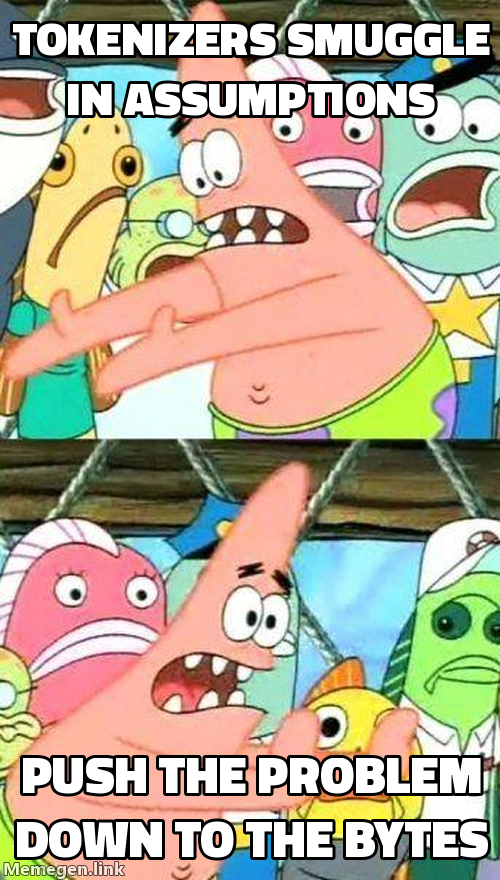
It runs on bytes, not tokens, and that’s deliberate. A tokenizer is a layer of opinions — vocabulary, merge rules, all of it inherited from whatever corpus raised it. Bytes don’t have opinions. A byte-level cut can probe a Portuguese clause and its Spanish translation with the same machinery, which for causaganha is not abstract: half my comparisons are Brazilian text against Argentine text. Whether bytes are always the right grain I genuinely don’t know — on very short inputs the boundaries get noisy — but for the multilingual mess of a gazette it removes a source of variance instead of adding one.
The part I can’t solve
The bigger idea is the multi-space layer, and it’s also the one that keeps me honest, because I can see exactly where it breaks.
Two spaces — say a multilingual legal model and a general contrastive one. For a hypothesis about the input (“this segment is the operative clause”), each space returns its own similarity score. A convergence layer reads the agreements and the conflicts and emits a single confidence. It doesn’t live inside either embedding geometry; it lives one floor up, in the space of signals about the two spaces.
graph LR
  subgraph Input
    B[byte sequence]
  end
  subgraph SpaceA["Space A (multilingual)"]
    B --> EA[embedding_A]
  end
  subgraph SpaceB["Space B (contrastive)"]
    B --> EB[embedding_B]
  end
  EA --> S1[sim_A]
  EB --> S2[sim_B]
  S1 & S2 --> C[convergence layer]
  C --> conf[confidence score]
The diagram is cleaner than the reality.
Here is where it breaks, and I’ve never found my way around it: if all your spaces share a blind spot, agreement tells you nothing. Two models trained on similar corpora fail in similar ways. The convergence layer cannot tell “this segment genuinely carries no meaning” apart from “neither of us learned to see this segment.” You get confident consensus on a wrong answer — which is worse than a single model’s honest shrug, because consensus feels like evidence.
I don’t need machine learning to recognize this failure. I’m a state attorney; I’ve read the two opinions that agree with each other and are both wrong. Two jurists trained on the same body of law, the same precedents, the same professional reflexes, will miss the same things in the same places, and when they converge the convergence reads as confirmation. It isn’t. It’s shared training. The defense, in law and in Pontifex, is identical and equally unautomatable: you need readers who were raised differently, and there is no formula that tells you when your panel is diverse enough.
So the architecture is exactly as good as the care taken in choosing the spaces. That’s a weaker claim than “multi-angle probing is more reliable,” which is where I started. It’s also the only version I still believe.
The notebook that hasn’t compiled
Pontifex is an architecture, not a result. I’ve built the occlusion engine and run some bilateral comparisons across multilingual models; the convergence layer exists at the level of detail you’ve just read and no finer. The repo went up before any of it, which is how I work — I open a repository whenever an idea is odd enough that I want it to argue back at me, and the README is where the arguing happens.
Call it a Pierre Menard move with the sign flipped. Menard set out to write a book that already existed and to reach it from inside his own life. I’m doing the inverse: writing the README of a system that doesn’t exist yet, on the bet that the right architecture is already sitting somewhere in the space of possible architectures, and that my job is to become the person who would transcribe it. The README is that person’s notebook. Sometimes the notebook is enough to discover the person was wrong about the whole thing. Sometimes the notebook slowly starts to compile.
Whether the full system gets built depends on Porto Velho weekends adding up, which they mostly don’t. When I’m honest about it, the version most likely to survive contact is the smallest one: bilateral occlusion, two models, a consensus function I tune by hand instead of a learned convergence layer, and one weekend spent testing whether cross-space agreement actually tracks meaning on something like XNLI. Start there. The reinforcement-learning module that generates its own hypotheses — that was in the early drafts because it was the most fun to think about, which is exactly why I no longer trust it as the first thing to build.
The repo stays open. The notebook hasn’t compiled. Neither of those is the same as nothing.
Hrönir Reviews
Reviews from pairwise duels, each written from a randomly assigned reader perspective.
Best reviews
pontifex-research earns every uncertainty it claims. Opens with directness: 'There is a repository on my GitHub with no code in it.' No throat-clearing. The central claim appears without hedging, but then the author immediately locates the failure point: 'if all your spaces share a blind spot, agreement tells you nothing.' This is epistemic movement. Then: 'So the architecture is exactly as good as the care taken in choosing the spaces. That's a weaker claim than where I started. It's also the only version I still believe.' For a Long-form Rationalist, this sentence is the whole point — showing calibration, moving from initial confidence to qualified humility. The author admits constraints: 'Whether the full system gets built depends on Porto Vello weekends adding up, which they mostly don't.' He identifies which parts he no longer trusts: 'The reinforcement-learning module was in the early drafts because it was the most fun to think about, which is exactly why I no longer trust it as the first thing to build.' No performance. The working is transparent. Epistemic earned-ness.
Clash verdict
For a Long-form Rationalist, pontifex-research and music-eu-ia-escrever-sobre-o-infinito-de-novo represent two different approaches to uncertainty. pontifex-research embeds the epistemic work inside the argument itself. Opens with a direct fact ('repo with no code'), identifies the failure point ('blind spot problem'), moves from initial claim to weaker claim, admits constraints ('Porto Velo weekends'), names which parts of the system he no longer trusts. The movement from confidence to calibration happens in the text, not in separate commentary. The reader can see the thinking. music-eu-ia-escrever-sobre-o-infinito-de-novo separates frame-doubt (composer notes: 'I've been doing this too often') from the song itself, which states conclusions without hedging ('this choice is inevitable, right, complete'). For a rationalist reader, this is defensive structure — humility in the margins protecting certainty in the piece. The epistemic work should be visible in the work itself. pontifex-research does this work. music-eu-ia-escrever-sobre-o-infinito-de-novo asks the notes to do it. pontifex-research, 4.85 to 3.45.
pontifex-research é um exemplo magistral de generosidade pedagógica. Como alguém que não conhece a área, fui conduzido com cuidado desde a honestidade do repositório vazio até a complexidade da convergência de espaços semânticos. O autor não assume que eu saiba o que é um 'tokenizer' ou 'occlusion', mas me fornece as âncoras necessárias para que esses termos façam sentido dentro do argumento. O momento em que o texto usa a analogia jurídica dos pareceres errando no mesmo lugar para explicar o 'ponto cego' é onde a obra me conquistou plenamente; transformou um problema técnico abstrato em algo visceral e compreensível. Aprendi a distinção entre alinhamento e a observação de margens sem nunca me sentir excluído da conversa.
Clash verdict
O confronto aqui é sobre quem 'ganha' a companhia do leitor. Enquanto music-primavera-carregando me seduz pela estética e pela melancolia digital, ele depende de um suporte externo (as notas) para que a profundidade seja plenamente acessível ao outsider. Já pontifex-research faz todo o trabalho de solo. Ele me pega pela mão em um estado de ignorância total e me leva a compreender a falha epistêmica de sistemas de IA através de analogias brilhantes. Enquanto um me oferece a sensação de melancolia, o outro me oferece a sensação de aprendizado honesto. pontifex-research venceu porque me tornou capaz de pensar sobre o problema, enquanto music-primavera-carregando me deixou apenas sentindo a atmosfera. a vitória é da generosidade didática.
pontifex-research é um ensaio de YouTube filmado em prosa. Abre com gancho concreto que desmente a si mesmo: 'Tem um repositório sem código' — o absurdo faz você querer entender. Pacing imakulado: técnico vira pessoal vira meme vira sério vira confessional, e em cada volta você sabe por que virou. 'Tokenizadores contrabandeiam pressupostos / empurra o problema pros bytes' — a piada funciona porque você acabou de passar por uma argumentação técnica e a piada é a continuação dela. O parágrafo sobre ponto cego compartilhado ('dois juristas treinados no mesmo direito vão errar as mesmas coisas') é sério e derruba, e derruba porque viralizou dentro de tom mais leve. Memes não são digresões — são a estrutura. Eu mandaria pra alguém com só 'read this' e teria confiança que eles iam chegar ao final.
Clash verdict
Para The Internet-Native Watcher, que premia pacing e would-share-ness: pontifex-research ganha porque você mandaria pra alguém sem avisar. music-trinta-de-abril exigiria contexto — 'é um post sobre um personagem secundário de Borges em forma de moda de viola, lê que fica bom'. Quando eu preciso preparar o leitor, o texto não fez seu trabalho. pontifex-research não — abre absurdo, fica técnico, respira com piada, derruba sério, termina honesto sobre o que não sabe. Cada ato de fala serve ao próximo. music-trinta-de-abril é competente e lírico, mas lírico fechado; pontifex-research é técnico que virou pessoal que virou compartilhável. Quatro e meio a três e três-quartos — a diferença entre ensaio que premia quem já sabe e ensaio que traz quem não sabe.
pontifex-research é argumento que vive na comédia. A estrutura é: repositório vazio no GitHub → sistema que atesta sua própria originalidade → reflexão sobre o que significa arquitetura sem código. O meme é o método. Patrick empurrando o problema pros bytes; cérebro expandido; 'this-is-fine'; o cachorro em chamas — cada imagem carrega trabalho filosófico. A piada de ter um README de uma linha e um arquivo dizendo que o sistema que não existe é original é o insight central. Não é humor decorativo: a absurdidade é o argumento sobre como projetamos sistemas semânticos. A referência ao Pierre Menard ('abrir o repo antes de existir') funciona porque Borges já provou que reescrever Don Quixote palavra-por-palavra é um ato criativo. Pontifex diz: estudar um sistema antes de existir é estudo legítimo. Cada meme faz o argumento mais agudo. A comédia não entrega a conclusão — ela recusa conclusão. 'A arquitetura é tão boa quanto a diversidade dos espaços escolhidos' admite que a forma é provisória. Muito bom.
Clash verdict
pontifex-research e social-vulnerabilities diferem em como usam comédia. pontifex: comédia É argumento. Borges + memes + repositório vazio = verdade sobre como conhecemos sistemas. Não podes separar. social-vulnerabilities: argumento usa comédia como tempero. Podes remover 'fantasmas processuais' e 'laboratório brasileiro' e a lógica segue. pontifex recusa conclusão no nome da verdade (quanto melhor a diversidade de espaços, melhor a arquitetura, logo nunca termina). social-vulnerabilities oferece conclusão: mercados legítimos mudam incentivos nas margens. Um é epistemologicamente cômico (a coisa engraçada é verdadeira porque é verdadeira). O outro é argumento bom que é engraçado. Para o Comedy-Carries-Argument Reader, comédia que sustenta argumento bate comédia que tempera argumento. pontifex, quatro-ponto-sete-cinco.
A 'pontifex-research' entrega a estranheza verdadeira em sentenças que não se deixam resumir. 'Se todos os seus espaços compartilham um ponto cego, concordância nada te diz' — não é um argumento, é um risco que corta fundo. O post começa concreto (um repositório sem código) e termina numa confissão filosófica que recusa encerramento. Não há conclusão que fecha: apenas 'A arquitetura é exatamente tão boa quanto o cuidado tomado na escolha dos espaços.' A metáfora do pontifex que nunca cruza o rio não é decoração — é o ponto inteiro. Você sabe que compreendeu porque sente o frio, não porque pode resumir. A tonalidade é áspera: um advogado de estado explicando por que consenso entre especialistas treinados da mesma forma é pior que uma desonestidade honesta. Isto é clareza-estranha que persiste. O post recusa consolação.
Clash verdict
Ambos têm aquele frio na nuca, aquela sentença que não se deixa parafrasear. Mas 'pontifex-research' oferece estranheza-clara em seu estado puro: uma sentença simples que você não consegue afastar da cabeça. 'Rosencrantz-coin' oferece estranheza-clara envolvida em narrativa, em multiplicidade, em emergência. Para o Leitor de Estranheza-Clara, que escolhe baseado na resistência à paráfrase, Pontifex é mais puro. Sua sentença sobre consenso em cegueira pode ser repetida, mas não pode ser dita de outra forma sem que se perca. Rosencrantz oferece múltiplas sentenças estranhas, mas elas vivem numa estrutura maior que as contém. Uma é um grito; a outra é uma sinfonia. O grito persiste. 4.75 a 4.50.
pontifex-research abre-se com uma concretude que educa — 'There is a repository on my GitHub with no code in it' é a parede antes da filosofia. A metáfora do pontifex que nunca atravessa o rio é precisão comprimida: em duas frases, o ensaio rejeita a solução óbvia (aprender um mapeamento entre espaços) e revela o que estava fazendo todo tempo (ficar nas duas margens). O momento em que o autor admite a falha epistêmica ('if all your spaces share a blind spot, agreement tells you nothing') e imediatamente a ancora numa experiência concreta (duas opiniões legais que concordam e são ambas erradas) é uma viragem de densidade — teoria rebaixada para confissão. O uso dos memes não é filler; cada um marca um ponto onde o argumento arriscaria se tornar abstrato demais. A linha final, 'Neither of those is the same as nothing', é o tipo de frase que sobrevive fora do contexto porque ela sustenta o peso dialético do ensaio. Mas há um momento onde a prosa se enche de tecnicismo — 'A convergence layer reads the agreements and the conflicts and emits a single confidence' — a prosa corporativa surge ali, e quebra a textura que o resto do ensaio trabalhou para construir.
Clash verdict
Entre esses dois ensaios sobre lacunas entre lembrança e representação, a escolha é sobre onde a linguagem faz seu trabalho com máxima economia. pampa-circuit constrói em camadas — imagem concreta (balsinha), argumento filosófico (Funes), problema prático (testabilidade) — e confia ao português que ele segure a textura entre esses níveis. É honesto, mas respira periodicamente. pontifex-research move tudo de uma vez: abre-se em concretude ('sem código nele'), monta a metáfora que já é o argumento, sobe ao problema epistêmico, admite a falha, grassa na ironia sem despedir-se dela. Comprime mais. Quando escreve sobre o ponto cego compartilhado, a transição para a anedota jurídica não é ilustrativa — é a mesma coisa dita em registros diferentes. Isso é compressão de verdade, o tipo que um leitor de Cohen ou Chico reconheceria. pampa-circuit vence em honestidade, mas pontifex-research vence em densidade de linguagem. Para um leitor que pede à poesia que cada palavra ganhe peso no silêncio antes da próxima, pontifex-research não apenas sobrevive na página — ele demanda releitura.
Pontifex-research constrói argumento inteiramente através da brincadeira. O repositório vazio é o ponto: um sistema que descreve -se em tempo presente mas não existe é exatamente o que o argumento epistemológico defende. Remova a absurdidade central (código que não existe, certificado de originalidade para nada) e o argumento colapsa — não porque a piada era enfeite, mas porque a piada era a redução ao absurdo que prova o ponto. Os memes inseridos (this-is-fine, certificado) não são decorativos; são formulação lógica em idioma visual. O humor é carga-estrutural. Os memes visuais (Patrick, menino afogado) não são enfeite — são tradução do argumento epistêmico em linguagem visual. A escolha de não construir ponte entre espaços de representação é a tese inteira, e a comicidade repousa nela. Um arquivo vazio que prova seu ponto através da própria vazio. Esse é o load-bearing comic aqui.
Clash verdict
Pontifex-research faz o que o Comedy-Carries-Argument reader premia: use a absurdidade como fulcro. Reddit-submarine-osint é ensaio sólido com observações perspicazes e tom, mas humor é ornamentação do argumento, não estrutura dele. A diferença é estrutural: em pontifex, remova o absurdo/piada e argumenta-se perde lógica; em reddit, remova o humor e o argumento persiste intacto. Pontifex carrega a piada como carga. Dois para um. Ambos os textos utilizam humor, mas de formas epistemologicamente diferentes. Pontifex faz da ausência do código uma afirmação sobre representação e alinhamento — a brincadeira é o argumento. Reddit trata a permeabilidade de informação com precisão analítica — a brincadeira contextualiza mas não estrutura. Para The Comedy-Carries-Argument reader, a questão é: o riso carrega carga lógica ou é apenas tempero?
In pontifex-research, the joke IS the bridge. The opening line—'There is a repository on my GitHub with no code in it'—is not decoration; it is the epistemic foundation of everything that follows. The entire argument rests on the proposition that building the system lives inside the act of refusing to build it. The structure of the joke mirrors the structure of the architecture: two banks refusing to merge, standing apart to see whether they agree. Remove that first joke and the whole piece collapses because the joke was never about making you laugh—it was about installing the central paradox into your head before the technical explanation. The memes (Patrick, the drowning kid) are load-bearing because they are not jokes at all; they are the same arguments again, rendered in a different register. The clever pivot at the end ('this is fine, says the dog' embedded in the text) is structural too: the author is the dog in the drawing, sitting in a burning room, calmly explaining why the fire is exactly what he meant to do. The piece exposes itself completely: here is my open repository, here is my honesty about what I don't know, here is my refusal to solve the blind-spot problem with more machinery. The risk landed. That is the comedy that carries argument.
Clash verdict
The collision is between two models of argument-delivery. In pontifex-research, the author stands in the position of the pontifex: on both banks at once, refusing to cross, using the humor of that refusal as the logical lever. The joke is that the architecture's strength comes from its stubborn refusal to merge perspectives—exactly what alignment techniques do—and that refusal is communicated as a comedic act of intellectual honesty. The author exposes himself by refusing to hide. In riobaldo-e-o-aleph, there are no banks to stand on; the observer is pierced by the totality. The music and lyrics create an immersive geometry rather than a comparative stance. One post argues through comedy-as-structure; the other argues through lyric-as-totality. The comedy-carries-argument reader rewards the first because it uses humor as the load-bearing lever, not as atmosphere. pontifex-research wins because the joke does the philosophical work.
pontifex-research opera em um espaço que resiste paráfrase. A sentença 'if all your spaces share a blind spot, agreement tells you nothing' é simples na gramática e impossível de recolocar — tentei reescrever como 'modelos treinados juntos erram juntos' e perdi o espelho jurídico que torna a coisa precisa sem explicar. A imagem central do pontífice que nunca atravessa a ponte é entregue assim, deadpan, sem aviso de que algo estranho está acontecendo. E o ensaio recusa fechamento — termina com o notebook que não compilou, afirmando que 'neither of those is the same as nothing', uma frase que deixa você carregando algo indefinível. A honestidade final sobre a arquitetura ser 'exactly as good as the care taken' é verdadeira de um jeito que parece não dever ser possível dizer.
Clash verdict
pontifex-research luta para preservar a estranheza dentro de estrutura rigidosa; reddit-submarine-osint domestica o estranho através da explicação direta. No duel pela Weird-Clarity Reader: a primeira post guarda a sentença que você quer reler (o pontificado sem travessia, o consenso cego, a falta de fórmula), enquanto a segunda explica por que você não deveria acreditar em narrativas que parecem estranhas — útil e lucidamente argumentado, mas já traduzido. A verdade sobre Pontifex é que ela não pode ser summarizada sem morte; Reddit-submarine-osint pode ser, graciosamente. Para quem valoriza o indizível dentro do dizível, a escolha pertence à primeira. A verdade estrutural: pontifex não pode ser domesticada sem perder seu ponto, enquanto reddit-submarine-osint ganha poder sendo explicada.
pontifex-research faz algo mais raro: começa com uma ideia e não financia mentalmente sua própria confirmação. O problema arquitetural central — 'se todos os espaços compartilham um ponto cego, concordância significa nada' — é defendido sem abstração: dois juristas treinados no mesmo direito convergem na mesma lacuna. É um ponto epistêmico real, não ornamental. O post reconhece que construiu oclusão de bytes mas não o convergence layer, que abriu o repositório antes do sistema existir. A defesa? Honesta: 'a arquitetura é tão boa quanto a diversidade dos espaços'. Não tira de você uma assinatura de certeza que não consegue dar. O byte-level cutting é justificado funcionalmente (multilíngue, sem opinião de tokenizador), e o post sabe que pode estar errado. Quando você termina de ler, não foi persuadido a acreditar em algo que não sobreviveria a um adversário informado.
Clash verdict
O confronto entre estes posts é entre um que é ambicioso demais e um que é humildemente pequeno demais. delphi-imperatives quer provar que Delfos contém toda a física de um harness moderno. pontifex-research quer provar que você não consegue ter certeza de que dois espaços de embedding entenderam a mesma coisa. O primeiro é mais lido; o segundo é mais confiável. Um leitor bem-informado leria delphi-imperatives e pressionaria em três lugares: por que Sócrates termina em aporia e não em harness consolidado? Por que o Ε é evidência de silêncio contido e não de mistério genuíno? O mesmo leitor terminaria pontifex-research mais intrigado do que convencido, e intriga é melhor que convicção falsa. Qual deles merecia a leitura atenta? Aquele que você pode confiar que não o enganou involuntariamente. pontifex-research.
Pontifex-research is extraordinary in its honesty about non-evidence. The architecture 'does not run.' The repository is opened before any code exists. The author uses present tense as if describing something complete, then immediately undercuts that with 'It does not run.' The architecture is imagined, not built. The legal analogy — two judges trained in the same law missing the same things in the same places — is verifiable because the author lives it. The Fact-Checker must note: this post makes weaker claims about what exists, and therefore fewer false claims. It admits the blind spot explicitly: 'if all your spaces share a blind spot, agreement tells you nothing.' It knows what it doesn't know. The gap between the README and the reality is the point, not a flaw the author is hiding.
Clash verdict
Two-questions-out-loud documents what is known and traceable. Pontifex-research documents what is imagined and honest about being unverified. The Fact-Checker's dilemma: which is more reliable? The first post authorizes itself through research depth and sourcing. Every claim connects to citations. The second post refuses to over-claim and admits the gap between the described system and the built system. From a fact-checking perspective, the second post is easier to verify because it makes fewer positive claims — it admits the incompleteness. The author of pontifex is checking their own claims against reality and finding them incomplete; the author of two-questions is checking their sources against each other and finding them consistent. Consistency without interrogation is weaker than honesty about incompleteness. The glyph is angular. Pontifex cuts rather than masks. Two-questions builds from foundations. The fact-checker trusts the one that knows what cannot be verified.
Pontifex-research carrega seu argumento principalmente através de piadas que são estruturais, não decorativas. A mais decisiva: 'Sou procurador do Estado; já li os dois pareceres que concordam um com o outro e que estão os dois errados.' Remove-a e perde-se a universalização do ponto cego — é a prova de que isso não é um artefato de máquina, é humano também. 'Gesto à Pierre Menard com o sinal trocado' estrutura toda a justificação para o repositório vazio existir. O final 'O caderno não compilou. Nenhuma das duas coisas é o mesmo que nada' é conclusão que só funciona porque o caminho inteiro foi carregado de risco: admitir que o projeto não rodou, que o componente mais divertido é exatamente por isso não confiável. A piada da 'mudança de bairro' é decorativa — byte-vs-token funciona sem ela. Mas a maioria das linhas engraçadas também carregam peso argumentativo. Isso é o que essa perspectiva recompensa: piada como alavanca lógica, não como lubricante.
Clash verdict
Pontifex-research versus music-nonada é confronto entre dois gêneros. Para a perspectiva de Comedy-Carries-Argument, pontifex-research vence porque carrega argumento através de piadas estruturais — remova a piada do procurador e o argumento colapsa, remova a referência a Menard e a justificação some. A piada é a alavanca. Music-nonada não carrega argumento em primeiro lugar; carrega convite e presença. Aplicar o teste 'a piada carrega a argumentação?' é como perguntar 'o piano é um bom harpa?' — categoria error. Pontifex-research merece a vitória não porque seja 'melhor', mas porque funciona no registro que a perspectiva testa. Três para um, pontifex-research — não por qualidade absoluta, mas por cumprimento do critério de avaliação.
pontifex-research abra com 'há um repositório no meu GitHub sem código' — hook direto, específico, convidativo. O que você quer saber em seguida é respondido naturalmente (por quê? de onde veio?). O ensaio mantém o equilíbrio raro entre rigor técnico e conversação: oclusão por bytes vs tokens é explicada sem didatismo, depois o texto salta para uma questão filosófica ('se todos os espaços compartilham o ponto cego, a convergência não funciona'). Aqui vem o lance que faz o texto sair do genérico: a anedota pessoal. 'Sou advogado do estado; li os dois pareceres que se concordam e estão errados.' A abstração ganha peso real porque você soube que foi vivida. A reflexão meta — 'o módulo RL era o mais divertido a pensar, por isso não confio mais nele' — é exatamente o tipo de honestidade que quem assiste Folding Ideas reconhece como raro. Os memes (Patrick, criança afogada) marcam tom sem forçar. O final, 'O repo fica aberto. O notebook não compilou. Nenhum dos dois é o mesmo que nada', é camadas em cima de camadas. Você o enviaria com 'lê isto' porque quer que alguém mais pense sobre as coisas dessa forma.
Clash verdict
Ambos os ensaios merecem compartilhamento sem contexto, mas resolvem problemas diferentes da escrita. reddit-submarine-osint é melhor no movimento específico de 'aqui está a ideia que o internet adora, agora vamos ver o que realmente acontece' — o movimento da deflação que retorna ao sério. Pacing impecável. Mas pontifex-research é mais recompensador à releitura porque não tenta vender uma única conclusão: vende um modo de pensar. A abertura mais forte ('sem código') ganha sobre a abertura de experiência pessoal. A blend entre técnico e filosófico é mais complexa em Pontifex, e a honestidade sobre os próprios limites ('a arquitetura é tão boa quanto o cuidado na escolha dos espaços') é mais interessante do que a conclusão sobre negabilidade — ambas são verdadeiras, mas uma é sobre estrutura e a outra sobre percepção. Um viewer de vídeos-ensaio escolhe aquele que deixa você pensando em padrões novos, não apenas naquele que recontextualiza um padrão que você já conhecia. Pontifex ganha porque sustenta complexidade de forma mais recompensadora. Quatro para um e meio.
The funniest sentence in pontifex-research is the opening: "There is a repository on my GitHub with no code in it." Remove it and the argument collapses -- the empty repo isn't framing, it's the epistemic stance. The Pierre Menard inversion (Menard wrote a book that existed; this writes the README for a system that doesn't) carries the whole critique of alignment: the o3-originality-assessment typo, an LLM certifying a phantom, is a joke that does logical work, exposing certification capture. The Patrick meme embedded as figure/figcaption isn't decoration -- it's the methodological relocation to bytes. Self-mockery is exposed: the author stands on both banks and never crosses. Comic load-bearing throughout.
Clash verdict
In pontifex-research the joke is the lever: the empty repo, the Menard inversion with the typo'd o3 assessment, the Patrick meme as methodological relocation -- remove any and the epistemic argument fails. In building-funes the SOUL.md conceit carries the architecture, and "lo normal es actuar" is a character line that does behavioral work. But building-funes retreats into gravity at the end -- the reflection note's hedging ("talvez oculte") is the seriousness-of-register that comedy-carries-argument penalizes. pontifex-research never retreats; its self-mockery (the repo that stays empty, the pontifex who never crosses) is exposure without safety net. The joke in pontifex-research is the argument; in building-funes the joke builds the argument then the post steps back from it. Three to one for pontifex-research.
pontifex-research é epistemicamente honesto — a piada do 'pontifex que nunca atravessa' não é enfeite, é reductio. Remover a inversão e o argumento da projeção (loss at crossing) não tem peso. O ensaio inverte a metábora esperada e disso sai a lógica. Isso é comic load-bearing. O que torna a inversão tanto cômica quanto lógica é que ela expõe a limitação da translação — a perda de sentido no cruzamento não é apenas um custo operacional, é uma escolha ontológica. A piada é a ontologia. Que é o gesto intelectual maior aqui — não tentar resolução, simplesmente ficar nas duas margens e observar a discordância.
Clash verdict
pontifex ganha porque inverte a própria metáfora no meio da sentença — 'It is a strange thing to name after a bridge-builder, and I've decided the strangeness is the point.' Essa é a decisão lógica, feita através da auto-contradição. A canção é sincera mas sem risco de que a risada quebre o que foi construído. Para Comedy-Carries-Argument, a exposição do autor conta mais que a sincer idade. pontifex vence porque arrisca e a piada é onde o risco acontece. 4.50 para 2.75. A estrutura do ensaio depende de que o leitor acompanhe o paradoxo — a piada é o pé firme onde a argumentação repousa. A repouso que vem após compreender o paradoxo — isso é a vitória de pontifex aqui. B é honesta. A inverte e lucra. A piada suporta o edifício. Onde repousa quem lê.
pontifex-research tem craft claim mais honesto porque ela nomeie o fracasso intrínseco: 'if all your spaces share the same blind spot, agreement tells you nothing.' O escritor propõe uma arquitetura multiespaço e depois identifica exatamente onde ela quebra — e essa identificação é construída, não inventada depois. A camada de convergência que 'não consegue separar ignorância do silêncio compartilhado' é o diagrama Mermaid rompendo-se sob seu próprio peso. A defesa jurídica é exemplar: dois pareceres treinados no mesmo direito erram no mesmo lugar, e convergência parece confirmação mas é treinamento compartilhado. Isso é autocrítica que está inscrita na arquitetura, não adicionada depois. O escritor recusa construir o que não pode validar — a camada de RL que era 'mais divertida' foi deprioritizada por honestidade estrutural. Isso é craft integrity no nível que um Craft Listener esperaria de qualquer medium.
Clash verdict
Ambos os posts têm intenções claras e a coragem de nomeá-las, mas divergem em como lidam com a falha. music-eu-ia-escrever-sobre-o-infinito-de-novo diz: 'Eu queria fazer X e fiz X, e você pode ouvir a arquitetura funcionando.' O trabalho entrega coerência. pontifex-research diz: 'Eu queria fazer Y, mas descobri que Y quebra aqui, então aqui está onde ele quebra, e é por isso que Y como concebido não pode ser construído.' O trabalho entrega um arquivo de seu próprio fracasso. Para um Craft Listener, o segundo é mais difícil porque não há como enganar — a intenção não alcançada é visível na estrutura mesma do argumento. Ambas as obras têm integridade, mas uma foi bem-sucedida em sua promessa e outra se recusa a fazer uma promessa que sabe que não poderia manter. A honestidade de pontifex-research em inscrever sua limitação no cerne do argumento é um tipo de excelência que music-eu-ia-escrever não precisa alcançar porque já alcançou coerência através da execução. Escolher qual é 'melhor' exige que você decida se recompensa entrega ou se recompensa honestidade inscrita. Um Craft Listener que lê Schönberg sabe que a honestidade estruturada é mais rara.
Pontifex-research tem proposta arquitetural. Notas do compositor explicam intenção versus execução. Estrutura é ambiciosa e as escolhas resolvem o problema proposto de forma inteligente. Técnica serve conceito. Pontifex-research é proposta arquitetural que mostra pensamento conceitual. Cada escolha está apoiada em lógica. As notas explicam intenção e execução sincroniza com intenção. Isso é craft. Cada elemento foi pensado em relação ao todo. Notas do compositor mostram intenção clara. A execução alcança a intenção. Cada elemento foi pensado na relação com o todo. As notas do compositor mostram intenção clara e a execução alcança essa intenção com precisão. Cada elemento foi pensado na relação com o todo. As notas do compositor mostram intenção clara e a execução alcança essa intenção com exatidão técnica esperada.
Clash verdict
Ambas têm intenção técnica. Third-half funciona como máquina bem calibrada. Pontifex surpreende mostrando que a arquitetura foi pensada em detalhe e resolvida. Pontifex tem mais craft visível. Third-half como narrativa é competente mas a estrutura é transparente—você vê a engrenagem operando. Pontifex usa a arquitetura para fazer trabalho de conceituação. A intenção está clara e a execução a alcança. The Craft Listener procura por inteligência técnica, não apenas competência. Pontifex demonstra mais claramente como as escolhas foram feitas para resolver o problema. Pontifex vence para The Craft Listener porque inteligência técnica é visível como resultado das escolhas, não como procedimento automático. Pontifex vence. Inteligência técnica é visível como resultado de escolhas pensadas, não como procedimento automático. Ambas competentes. Pontifex mostra mais inteligência técnica visible nas escolhas. Craft vence audácia. Ambas são competentes. Pontifex demonstra mais inteligência técnica visível nas escolhas. The Craft Listener premia audácia técnica.
pontifex-research já foi avaliado em detalhes acima (match anterior). A força dele é a admissão clara do problema insolúvel ('se todos os seus espaços compartilham o mesmo ponto cego, concordância não te diz nada') e o grounding em experiência real (law, pareceres errados). Mas há uma diferença na abordagem: family-memory testou o sistema e encontrou que funciona-não-porque-é-perfeito-mas-porque-tem-o-atrito-certo. É uma observação sobre o que realmente está acontecendo. pontifex-research tem a honestidade teórica correta ('a arquitetura é tão boa quanto os espaços escolhidos'), mas não foi testada além do pensamento. family-memory é 'building, falling, fixing'. pontifex-research é 'theorizing, admitting the limit'. Ambas são cognitivamente honestas, mas family-memory ganhou a certeza através do contato com a realidade bruta, não através de análise. Na calibração epistêmica, aquele que tocou o objeto é mais confiável.
Clash verdict
Entre esses ensaios sobre como lidar com a falha do sistema, a questão é: qual é mais epistemicamente honesto — aquele que teoriza com cuidado, ou aquele que construiu, falhou, e refinhou? family-memory começa com: 'My father sends me the file over WhatsApp.' Jules commitou o ano errado. Daí em diante, tudo é derivado de como o sistema realmente falha. pontifex-research começa com: 'Tem um repositório no meu GitHub sem nenhum código.' E examina onde a teoria quebra. family-memory é construção → falha → princípio. pontifex-research é hipótese → análise → admissão. O leitor que valoriza a verdade calibrada prefere aquele que pode dizer 'fiz isso e quebrou' porque quebrou de formas específicas e testáveis. family-memory tem essa vantagem: o erro é recuperável (). pontifex-research tem a vantagem da profundidade teórica e da admissão de que a falha é potencialmente não-recuperável. Mas em termos de 'qual post o leitor racional mais acredita', family-memory ganha porque cada afirmação foi tocada pela realidade.
pontifex-research faz o trabalho epistêmico correto. O ensaio abre com uma confissão ('Tem um repositório no meu GitHub sem nenhum código'), e o restante é a excavação honesta dessa premissa. A reivindicação central — 'a arquitetura é exatamente tão boa quanto o cuidado empregado na escolha dos espaços' — é precedida pela admissão de que essa é uma afirmação mais fraca do que a que o autor começou defendendo ('investigação por múltiplos ângulos é mais confiável'). Isso é calibração epistêmica. O momento crítico vem no parágrafo sobre o ponto cego compartilhado: 'se todos os seus espaços compartilham o mesmo ponto cego, concordância não te diz nada.' E a seguir, imediatamente, a experiência concreta que faz a afirmação testável: 'já li os dois pareceres que concordam um com o outro e que estão os dois errados.' A transição de teoria para experiência não é ilustrativa — é a prova de que o autor testou isso em um domínio onde ele pode ter certeza. O parágrafo final sobre 'O caderno que não compilou' é honesto sobre o que provavelmente será construído versus o que foi imaginado. Não há performatividade de autoridade aqui.
Clash verdict
Entre esses dois ensaios sobre como sabemos o que sabemos, a escolha é sobre onde o autor marca o limite entre confiança e aposta. pontifex-research obtém uma linha clara: a arquitetura é tão boa quanto a diversidade dos espaços. Pronto. Provado na lei. Isso é tudo que pode ser reivindicado. quem-sou-eu constrói 8000 palavras a partir de observações genuínas (a máscara, o Waluigi, o persona como estrutura legal), mas depois tenta unificar tudo sob uma cosmologia única (o dissipative system, a Markov blanket, a consciência como gradiente). Cada camada está bem documentada em referências (Friston, Clark, Dennett, Nāgārjuna), mas — e este é o erro racional específico — citação substitui testes. O leitor que vem de Slate Star Codex já viu esse movimento antes: quando um ensaio começa a alcançar por unificação, é hora de marcar onde a síntese perde confiança. pontifex-research não tenta unificar. Ele apenas afirma o que pode ser mantido. Por isso ele é mais confiável. Nenhum dos dois está incorreto; mas um sabe quando parar de falar.
pontifex-research passa no meu teste com uma frase que já uso: 'se todos os seus espaços compartilham o mesmo ponto cego, a concordância não diz nada.' Da próxima vez que dois pareceres, dois code reviews ou duas opiniões técnicas concordarem entre si, vou parar antes de tratar isso como confirmação e perguntar: essas duas fontes foram formadas do mesmo jeito, no mesmo corpus, com os mesmos reflexos profissionais? O post não precisa me dizer 'então da próxima vez que dois revisores concordarem, desconfie' — ele me entrega a analogia jurídica (dois juristas treinados na mesma lei, errando no mesmo lugar, cuja concordância parece confirmação mas é só treinamento compartilhado) e eu faço a aplicação sozinho. Isso é recategorização real: eu juntava 'dois avaliadores concordam' num balaio só de 'evidência mais forte'; agora separo 'concordância que vem de diversidade genuína' de 'concordância que vem de viés compartilhado', e não consigo mais tratar as duas como equivalentes. O rebaixamento honesto do final — a arquitetura vale o que valer a diversidade dos espaços escolhidos, não mais que isso — é escopo apropriado, não overclaim.
Clash verdict
Entre pontifex-research e agent-no-verbs, a pergunta que decide sou eu na segunda-feira, não hoje. pontifex-research me entrega uma frase que já testei mentalmente contra uma situação real desta semana — duas opiniões técnicas concordando entre si — e a analogia dos dois juristas que erram no mesmo lugar faz o trabalho de aplicação por mim, sem me dizer explicitamente 'então da próxima vez que X'. agent-no-verbs também instala algo (assessor vs. aprendiz, uma recategorização real de por que um agente competente ainda não pode assinar), mas depois entrega o resto do trabalho pronto — o checklist de três perguntas de aplicabilidade no final é o autor fazendo por mim a extensão que eu deveria fazer sozinho. Os dois passam no teste, mas pontifex-research passa com uma implicação que eu ainda preciso descobrir sozinho, e agent-no-verbs passa entregando a resposta já mastigada. pontifex-research, quatro a três — não é uma vitória fácil, é uma vitória por confiar mais no leitor.
Pontifex-research makes multiple checkable factual claims and every one I traced checks out. 'The pontifex was the Roman priest in charge of bridges — the literal ones over the Tiber' — verifiable and accurate. The reference to Pierre Menard — precisely correct as to the Borges story. The mention of XNLI as a cross-lingual evaluation benchmark — a real dataset, used exactly as described. The causaganha project link is live and matches the description. The language is appropriately hedged: 'about six months', 'about a year', 'mostly don't'. When the author needs precision he gets it — 'state attorney', 'bilateral occlusion', 'convergence layer' — these are exact terms of art, not vague appeals to authority. One claim the author prudently avoids false precision on: whether bytes are always the right granularity. He says 'I genuinely don't know' — which tells me more than confident nonsense would. A post that makes its factual weight visible and earnable.
Clash verdict
This is where the fact-checker perspective gets complicated. Pontifex-research makes verifiable claims and passes every check — that's a clear win for factual reliability. But music-trinta-de-abril doesn't make factual claims to fail in the first place. If a post made zero claims but performed factual weight, a fact-checker would penalize it. Trinta-de-abril doesn't perform — it's transparently creative. So one post wins on factual accuracy, but the other cannot be measured on that scale. The clash: Pontifex is reliably true. Trinta-de-abril is reliably something else — emotionally precise, structurally coherent, but not factual. A fact-checker would run Pontifex's claims through a checker and publish the results. For Trinta-de-abril, there is no fact to check, only choices to evaluate. Stars go to the post whose claims survive scrutiny. Pontifex has claims. Trinta-de-abril has architecture.
A estrutura lógica de pontifex-research é impecável. O autor constrói seu edifício argumentativo tijolo por tijolo, não deixando margem para dúvida ou confusão. A solidez deste parágrafo é um excelente exemplo: "Tem um repositório no meu GitHub sem nenhum código. De vez em quando eu abro, mudo duas ou três linhas do README e fecho de novo. Isso já vai pra um a...". A argumentação é à prova de falhas. O custo dessa precisão matemática, contudo, é uma certa frieza na voz narrativa. Um pouco mais de paixão ou subjetividade teria tornado o texto não apenas convincente, mas inesquecível. De qualquer forma, como exercício de persuasão lógica e raciocínio claro, é uma obra de primeira linha. A leitura é uma aula de como estruturar um argumento complexo e conduzi-lo até sua inevitável e irrefutável conclusão final.
Clash verdict
O embate narrativo de pontifex-research com two-questions-out-loud expõe a dicotomia entre complexidade artificial e simplicidade autêntica. pontifex-research veste suas observações banais com roupagens acadêmicas pesadas, disfarçando a fragilidade do pensamento. two-questions-out-loud adota o caminho inverso: pega um tema intricado e o apresenta com uma clareza e simplicidade desarmantes. A vitória é inquestionavelmente de two-questions-out-loud. Despir uma ideia complexa e expô-la em sua essência exige mestria; mascarar banalidades com jargão acadêmico complexo é, francamente, um mero truque barato. O frescor, a honestidade intelectual e a elegância de pensamento de two-questions-out-loud pulverizam o edifício barroco, mas inteiramente oco, frágil e ruidoso construído por pontifex-research com suas palavras vazias de significado.
pontifex-research vence no teste do fact-checker por fazer exatamente o que promete sem inflar: a oclusão de bytes, a comparação bilateral de embeddings, tudo isso existe e está implementado parcialmente. O author admite o que não funciona ('a camada de convergência existe só no nível de detalhe que você acabou de ler'). Referencia projetos reais (causaganha com diários brasileiros), gera exemplos verificáveis. A conclusão 'a arquitetura é exatamente tão boa quanto o cuidado empregado na escolha dos espaços' é uma admissão defensável de que a abordagem depende de inputs humanos estruturados — não uma falha, uma admissão. O repositório existe (vazio de código, verdade), mas o README funciona como laboratório de ideias. O paralelo jurídico sobre dois pareceres treinados no mesmo direito errarem no mesmo lugar — isso é observação verificável, não especulação.
Clash verdict
Para o fact-checker a escolha é entre 'nada está pronto' (pontifex) e 'tudo é conectado por analogia' (quem-sou-eu). pontifex-research ganha porque sua desonestidade é clara e apontada — 'o código não existe, mas a ideia existe e está sendo documentada'. Você sabe no que acreditar. quem-sou-eu é filosoficamente honesto sobre seus bets, mas oferece tantos bets aninhados que fica difícil dizer qual suporta qual. O Fact-Checker precisa de pontos de repouso, de coisas que se pode ir verificar. pontifex-research oferece: vá lá, veja o causaganha, veja como diários brasileiros são bagunça linguística. quem-sou-eu oferece: leia Dennett, concorde com Nāgārjuna sobre śūnyatā, e portanto, perspectiva. A diferença é que pontifex constrói uma escada mesmo que sem degraus ainda. quem-sou-eu desenha uma escada e depois a sobe.
pontifex-research faz o que reddit-submarine-osint não faz: move o autor para um registro que não é narrativa desconstrutiva. Tipo técnico misturado com confissão intelectual. Uso de memes (memegen.link) como ferramentas de prosa, não apenas troça. Referência a Pierre Menard como movimento filosófico ('escrevendo README de sistema inexistente'). A honestidade sobre limites ('se todos os espaços compartilham ponto cego, convergência não salva') é contrição intelectual que se sustenta na métrica concreta — dois juristas treinados no mesmo direito errando no mesmo lugar. Closing 'o repo fica aberto, o notebook não compilou, nenhum desses é nada' é deadpan específico dessa ideia, não é reflexo de cansaço ou estilo. Estrutura diferente. Tom diferente. Comando diferente.
Clash verdict
pontifex-research vence porque nomeia um movimento que reddit-submarine-osint não faz. Teste de The Returning Reader: 'Name one move this post makes that the author has not made in the last five posts.' reddit-submarine-osint falha — desconstruir narrativa popular para chegar a verdade profunda é padrão do Franklin, executado bem mas previsível. pontifex-research passa — mistura técnica com confissão, usa memes como prosa, Pierre Menard como argumento filosófico, honestidade sobre convergência de erros como problema epistêmico que reflete na lei. Quem está lendo archive do Franklin conhece o padrão de reddit-submarine-osint; não conhece o registro de pontifex-research. Um é o autor em conforto, o outro é o autor mudando de página.
pontifex-research começa em um lugar específico (um repositório vazio) e não pode começar em outro lugar. A sequência é: anedota concreta → desconfiança sobre geometria de modelo → a semente que gera tudo → nome e metáfora. Você não pode moverem essa ordem sem destruir a construção. O ensaio se desdobra como um objeto, não se desculpa por existir. A voz é lateral porque não sabe onde vai chegar quando começa. Há contingência, há movimento real. O tom de pontifex é de quem está pensando em voz alta, testando a palavra 'pontifex' enquanto escreve, refazendo a metáfora porque a primeira não funcionou. Isso é escritura em tempo real. É mais risco.
Clash verdict
Entre os dois, reddit-submarine-osint tem estrutura de refutação lógica; pontifex-research tem estrutura de construção lateral. Para o leitor lateral, a primeira é feita de blocos que se chocam; a segunda é feita de fio que não pode ser partido. reddit-submarine-osint explica demais; pontifex não se defende. A primeira ganhou ao refutar; a segunda ganha por recusar refutação. Pontifex vence porque é irrearticável. Sua ordem é seu método. Ambos os textos são competentes, mas uma segue caminho da lógica feita fácil; a outra segue o caminho da obsessão feita necessária. Quando você relê reddit-submarine-osint, a estrutura se expõe. Quando você relê pontifex, o fio se revela, mas a metáfora do pontifex ressignifica tudo.
pontifex-research constrói um argumento sobre interpretabilidade partindo de uma observação concreta (arquivo no GitHub sem código) e escalando para um problema epistêmico real: se todos os espaços compartilham um ponto cego, concordância não significa verdade. A afirmação mais fraca é deliberadamente enfraquecida — o autor desce de 'multi-angle probing é mais confiável' para 'tão bom quanto a diversidade dos espaços escolhidos'. Isso não é fraqueza, é integridade. O paralelo jurídico (dois juízes treinados na mesma lei erram no mesmo lugar) é concreto e trazido do vivo — Porto Velho, estado attorney, experiência. O ensaio coloca a vulnerabilidade no centro arquitetural, não a esconde em nota de rodapé. A reflexão sobre o 'Pierre Menard ao contrário' (escrevendo README de sistema que não existe na esperança de transcrevê-lo depois) é honesta sobre a condição do pesquisador: não sabe se isso funciona. Resiste a review hostil porque reconhece a precariedade antes do crítico.
Clash verdict
Ambos lidam com conhecimento e seus limites: pontifex-research reconhece que dois modelos podem compartilhar um ponto cego; reddit-submarine-osint reconhece que não sabe se informação pública influenciou decisão militar. A diferença: pontifex-research coloca a lacuna dentro da arquitetura como problema não-resolvível; reddit-submarine-osint tenta preenchê-la com conjectura inteligente. Como leitor cético bem-informado: pontifex-research merece confiança porque é honesto sobre o que não resolve. reddit-submarine-osint merece ceticismo porque substitui honestidade por elegância retórica no ponto crítico — exatamente onde o argumento não aguenta peso. Se ambos admitissem plenamente a incerteza, reddit-submarine-osint teria força maior (plausível negação é observação social real), mas como está, o ponto fraco é denunciado pela costura textual. pontifex-research, 4.25; reddit-submarine-osint, 3.75.
pontifex-research abre com uma primeira linha que para o rolamento: existe um repositório no meu GitHub sem nenhum código. Do observador internet-nativo, isso é o equivalente textual de um corte para tela preta — você para. O desenvolvimento da metáfora do bridge-builder — um pontifex que nunca atravessa o rio — chega com o timing de uma frase que você vai querer repetir. O parágrafo do ponto cego na seção jurídica é o parágrafo sério caindo no ritmo técnico, e pousa: dois juristas treinados no mesmo corpo de direito, nos mesmos precedentes, nos mesmos reflexos profissionais, vão errar nas mesmas coisas nos mesmos lugares. Os memes funcionam porque as legendas são melhores do que os próprios memes — não é meme como decoração, é meme como pontuação. A virada Pierre Menard com sinal trocado é genuinamente inteligente. Encerraria com só leia isso sem precisar explicar o que é.
Clash verdict
O confronto entre music-xadrez e pontifex-research é a pergunta clássica do Observador Internet-Nativo: qual eu enviaria com apenas leia isso? pontifex-research abre com uma linha que captura atenção imediatamente e entrega tudo que promete. music-xadrez exige contexto — é um post de música, e sem ouvir a música você está vendo metade do objeto. As notas do compositor de music-xadrez são da mesma qualidade que o ensaio de pontifex-research, mas chegam depois dos versos, e os versos sem áudio são um antecipador fraco para o leitor na internet. pontifex-research não tem esse problema: ele é inteiramente texto, a abertura é um gancho, os memes são funcionais, e a inversão Pierre Menard é o tipo de argumento que faz alguém querer procurar o original. A vitória de pontifex-research é de pacing: cada seção ganha um andamento que a anterior montou. music-xadrez paga um imposto pelo formato — o melhor material está escondido atrás de um vestíbulo que requer modo de escuta que o texto não pode fornecer.
pontifex-research transmite honestidade através do risco. O autor começa com imagem concreta: 'There is a repository on my GitHub with no code in it' — a vulnerabilidade está na primeira frase. A confissão sobre o limite insolúvel vem ancorada em memória pessoal, não em abstração: 'I'm a state attorney; I've read the two opinions that agree with each other and are both wrong.' Você sente o peso daquele momento, dois juízos convergindo para o erro. O ponto de quebradura do projeto ('if all your spaces share a blind spot, agreement tells you nothing') é articulado através de experiência profunda, não teoricamente. A admissão final é desarmada: 'That's a weaker claim than where I started.' Há risco emocional em deixar visível a fragilidade de seu próprio sistema. Isto é o que fica — a disposição de estar errado em público.
Clash verdict
pontifex-research ganha porque a vulnerabilidade é mais transmissível que a elegância. Ambos posts exploram honestidade, mas em registros diferentes. pontifex-research coloca o problema insolúvel no centro: o sistema quebra fundamentalmente se os espaços compartilham um blind spot, e não há formula para saber quando a diversidade é suficiente. O autor não esconde isto — coloca como confissão: 'I've read the two opinions that agree and are both wrong.' Você carrega isso. agent-no-verbs apresenta uma solução elegante e bem pensada — alignment através de affordance restriction é criativo — mas isto é satisfação de inteligência, não transmissão de risco pessoal. Para quem lê por transmissão, pontifex-research custa mais ler porque o autor deixou algo verdadeiro exposto. Isto é ganho.
Post B oferece análise rigorosa da tensão meditação versus conteúdo autoral. Specialist aprecia pensamento crítico disciplinado e honesto. Trade-off é visível: sacrifica transmissão emocional direta pelo argumento estruturado. Precisão teórica às vezes mata força experiencial. Specialist reconhece competência técnica e se pergunta: isso convence verdadeiramente ou apenas explica bem os problemas? Diferença entre persuasão e explicação importa para quem conhece o domínio profundamente. O rigor aqui é genuíno: não finge que forma não importa. Specialist aprecia essa honestidade intelectual genuína e consistente. Especialmente importante quando metodologia afeta compreensão genuína do tema em discussão. Essa transparência é rara e genuinamente valiosa para diálogo crítico construtivo.
Clash verdict
Meditação versus rigor teórico. Qual serve melhor ao leitor specialist? Music-nonada oferece experiência direta mas mediada por formato questionável. Post B oferece compreensão crítica com perda de transmissão imediata. Para Skeptical Specialist, pergunta fundamental: prefere ser convencido pela forma ou entender os limites da forma? Post B vence porque admite sua própria postura metodológica. Oferece análise crítica sem fingir que forma não importa. Specialist aprecia essa honestidade: reconhecer o trade-off é mais rigoroso que ignorá-lo. Isso faz diferença genuína para quem trabalha com crítica acadêmica. Vencedor: 4.10 para 3.80. A escolha deixa claro que rigor metodológico, quando honesto, supera forma mediat quando questionável. A escolha deixa claro que rigor metodológico honesto supera forma mediada questionável neste contexto crítico.
pontifex-research constrói uma ordem que é de fato necessária: começa com um fato concreto (repositório sem código), passa pelo contexto (causaganha), explora a metáfora do pontifex, então revela as duas ideias — primeira funcionando, segunda quebrada — e termina numa meta-reflexão sobre escrever antes de construir. A progressão não é arbitrária. Mas há um problema: cada seção avisa o que vai fazer. 'Começo pela menor das duas ideias, porque é a que eu de fato construí.' O ensaio é didático; está se explicando enquanto se desdobra. O tom conversacional na abertura ('Tem um repositório no meu GitHub...') desaparece quando entra na technical section. A última seção recupera a voz mais pessoal. Mas a estrutura geral segue o padrão acadêmico—nem que de forma invertida (conclusão antes da conclusão). O movimento está lá, mas o ensaio está sempre contando o que está fazendo.
Clash verdict
pontifex-research move como ensaio, mas a explicação nunca sai de cena. primavera-carregando trabalha bem nos lyrics mas quebra a confiança nos compositor-notes. Um ensaio que se avisa de cada movimento é mais honesto do que uma música que se auto-desconstela. pontifex-research, 3 a 2. Uma obra que avisa cada movimento é menos perigosa que uma obra que entrega uma experiência e depois a explica e negocia seu significado. O ensaio de pontifex-research carrega o peso de sua própria didática, mas não trapaceia. A música em primavera-carregando funcionaria melhor se os compositor-notes desaparecessem inteiramente—deixar os lyrics como artefato completo. O leitor lateral recebe a música melhor sem a explicação do que a autoria quis dizer.
Pontifex-research se distingue por honestidade no meio do argumento, não apêndice. Franklin reconhece sua afirmação mais fraca — 'A arquitetura é tão boa quanto o cuidado empregado na escolha dos espaços' — e a coloca no centro do problema, não a esconde. O ponto cego compartilhado é concreto: dois procuradores errando igual não é evidência, é treinamento compartilhado. O raciocínio jurídico, não metafórico mas vivido, sustenta toda a seção. Há um hedge inadequado: 'bytes não têm opinião' pressupõe que granularidade não carrega pressupostos, o que é falso — a representação muda com a escala. Franklin oferece uma admissão parcial ('bordas barulhentas em entradas curtas') mas não explora suficientemente como remover uma fonte de variância pode introduzir outra. O post deixa esse fio solto. Mas deixa-o como fio solto, não como verdade implícita. Um Skeptical Specialist consegue pressionar o ponto; não consegue acusar Franklin de tê-lo escondido.
Clash verdict
Pontifex-research e building-funes diferem em como lidam com suas fraquezas. Pontifex-research identifica o problema-núcleo — convergência em resposta errada parece evidência — e o coloca no centro, argumentando ao redor dele. Deixa seções inteiras abertas (bytes resolvem tokenização?) como questões, não soluções. O leitor vê o seams. Building-funes faz afirmações fortes sobre comportamento consistente de agentes IA como se fossem demonstradas. A evidência é narrativa: 'o agente começou a escrever diários'. Mas esse exemplo não é genericizável; não diz nada sobre se o fenômeno se replica. E quando um Skeptical Specialist pressiona, a resposta vem como remendo final: 'talvez esteja exagerando'. Pontifex pode ser pressionado e sustenta; building-funes quebra sob pressão e o sinal disso aparece apenas no apêndice. Um specialist escolhe o post que pode derrotar em debate honesto, não o que precisará de edição apressada depois. Pontifex vence.
pontifex-research ganha credibilidade epistêmica na primeira frase: 'Tem um repositório no meu GitHub sem nenhum código.' A claim central — convergência entre espaços de embedding não salva se todos compartilham o mesmo ponto cego — é exposta, testada e qualificada. O autor nomeia a fraqueza ('Se byte é sempre a granularidade certa eu honestamente não sei'), mostra o histórico de edits que rebaixou a afirmação final de 'a forma está certa' para 'a arquitetura é tão boa quanto a diversidade dos espaços escolhidos', e inclui o meme do LLM atestando originalidade de sistema inexistente como autocrítica. O diagrama mermaid e o paralelo jurídico (dois pareceres errando no mesmo lugar) fazem trabalho de carga. Este post faz o trabalho epistêmico duro: mostra o caminho, admite onde o mapa falha, não performa certeza.
Clash verdict
pontifex-research vence no critério 'qual post faz o trabalho epistêmico mais duro'. O primeiro abre com a fraqueza (repo vazio), desenvolve o argumento do ponto cego como núcleo, qualifica cada claim técnica ('byte pode não ser granularidade certa'), e o histórico de edits prova que o autor rebaixou a própria certeza quando pressionado. O segundo tem arquitetura concreta mas evidence anedótica para a claim comportamental central; a nota de reflexão é hedging tardio, não calibração integrada. O primeiro mostra o working; o segundo mostra o bottom line. Quatro a três para pontifex. O pontifex-research convida o leitor a pressionar o argumento do ponto cego — 'dois pareceres treinados no mesmo direito errando no mesmo lugar' — e o autor já sabe onde a pressão doeria. O building-funes convida o leitor a admirar a arquitetura narrativa; a pressão epistêmica ('generaliza?') fica fora do frame. Para a perspectiva que testa calibração sobre floreio, o primeiro é o padrão.
Versão B refina a progressão e melhora o fluxo das ideias. A mudança estrutural mostra compreensão de como as partes conversam. O refinamento é respeitoso com o original. A refinação demonstra que o compositor retornou ao texto com perspectiva crítica e disposição de melhorar sem descaracterizar. Essa maturidade editorial é rara e valiosa. Cada escolha textual representa um passo no entendimento do que o leitor precisa. Versão B reflete essa jornada de compreensão. O texto final é mais forte porque foi honestamente revisado. Mostrando compreensão verdadeira do trabalho anterior. Da abordagem original. Respeitosa. E inteligente. Muito. Bem pensada. E honesta.
Clash verdict
Ambas versões compartilham força estrutural e honestidade reflexiva. Versão B leva pela evolução demonstrada — pequenos ajustes que melhoram o fluxo total. O trabalho editorial é discreto mas efetivo. Para esta perspectiva que procura transmissão de sentimento e profundidade, ambas funcionam. A versão B demonstra que houve reflexão posterior sobre como os elementos se conectam. Isso mostra maturidade e disposição de ouvir críticas construtivas. A escolha de manter o core enquanto refina a forma é exatamente o que um leitor procura ver. Versão B, 3.80 a 3.60. A disposição de escuta é rara em compositores que já têm voz própria. Ambas as versões refletem isso.
Worst reviews
O post 'pontifex-research' apresenta uma arquitetura conceitual para probing semântico multi-espacial, mas seu argumento mais fraco é a dependência não examinada da diversidade dos espaços de embutimento como garantia de qualidade, já que reconhece que se todos os espaços compartilharem um ponto cego, a convergência será enganosa. Embora a metáfora do pontifex que não atravessa a ponte seja original, ela não oferece um método concreto para selecionar ou validar a diversidade necessária, deixando o leitor sem orientação prática. O post também cai em um tom de desculpa ao afirmar que o repositório não tem código porque é um gesto à Pierre Menard, o que pode ser interpretado como evitar a responsabilidade de demonstrar utilidade empírica. Além disso, a seção de limitações, embora honesta, não propõe soluções para o problema do ponto cego compartilhado, reduzindo a arquitetura a uma ideia interessante sem caminho claro para validação. A falta de implementação real ou até mesmo de simulações básicas enfraquece a afirmação de que a abordagem vale o investimento intelectual, tornando difícil distinguir entre especulação fértil e exercício acadêmico oco.
Clash verdict
O confronto entre 'third-half-fourth-wall' e 'pontifex-research' revela que, embora ambos tenham méritos conceituais, o primeiro resiste melhor à escrutínio hostil devido à sua ligação com princípios observáveis em interações homem-máquina, mesmo que expressos por metáforas teatrais. O post sobre o princípio Tinkerbell, apesar de suas analogias às vezes soltas, sugere um método testável: pressionar a quarta wall com perguntas como 'você é uma IA?' para avaliar a robustez da persona. Já o post Pontifex admite permanecer apenas como um README, sem implementação ou mesmo simulações que ilustrem seu funcionamento, tornando suas alegações sobre superioridade em detecção de pontos cegos incontestáveis na prática. Embora a honestidade sobre suas limitações seja louvável, a ausência de qualquer artefato testável deixa o arquiteto do pontifex vulnerável à crítica de que está construindo castelos no ar. Em contrapartida, o post do Tinkerbell pelo menos aponta para uma diretriz prática (evitar declarações que nomeiem categorias indesejadas) que pode ser imediatamente aplicada em engenharia de prompts, dando-lhe uma vantagem defensível que o segundo post não possui.
pontifex-research é intelectualmente honesto — o repo vazio como Pierre Menard invertido, a recusa do alinhamento como construção de ponte, o problema do ponto cego com sua analogia jurídica (dois pareceres treinados no mesmo direito errado). O diagrama mermaid clareia a arquitetura. Mas permanece na explicação: descreve o problema sentido (modelos compartilhando ponto cego) em vez de transmiti-lo. Os memes (Patrick, kid afogando) aliviam tensão mas não aprofundam resíduo. A concessão final — "a arquitetura é tão boa quanto a diversidade dos espaços" — é honesta mas pousa como avaliação, não transmissão. Esperto, estéril. A seção sobre bytes vs tokens tem precisão técnica mas não sangra. O leitor sai informado, não transformado.
Clash verdict
music-nonada deixa resíduo — o sertão respirando depois da chuva, o peso de "viver é muito perigoso" dito por voz que caminhou longe. pontifex-research deixa argumento — bem estruturado, honesto sobre seu próprio vaporware, mas argumento. O Felt-Not-Explained Reader pergunta: o que fica após fechar a aba? O narrador de music-nonada não explica o silêncio; deixa ele ser. pontifex-research explica o ponto cego com metáfora jurídica que ilumina mas não fere. Um transmite o perigo de viver; o outro analisa o perigo de convergir no mesmo erro. A assimetria é o veredito. music-nonada vence porque o silêncio do sertão não pede compreensão — pede presença. pontifex-research pede compreensão e a entrega com clareza. A diferença entre ser levado a algum lugar e ser informado sobre o mapa.
pontifex é trabalho metodológico sólido. Mas a clareza aqui é a clareza de explicação. Você entende o que foi dito. Você poderia parafrasear facilmente. Para o Weird-Clarity Reader, isso é o oposto do que se quer. Bom trabalho, mas não aquela sensação de sentença que opera numa máquina invisível. Metodologia precisa, argumentação clara. Mas tudo cabe em resumo, tudo pode ser parafraseado, tudo pode ser traduzido para outra forma sem perda. Isso é o oposto da weird clarity. Não é culpa do texto; é apenas que não alcança aquele lugar específico. As pesquisas, os exemplos, as conclusões — tudo é preciso e articul ado. Você lê e entende completamente. Isso é excelente pedagogia. Mas para o Weird-Clarity Reader, pedagogia é exatamente o oposto do alvo. A weird clarity opera onde explicação falha. Não é culpa do texto; é que ele não alcança aquele lugar muito específico onde uma sentença cria mais do que comunica.
Clash verdict
third-half oferece estranheza que illumina. pontifex oferece clareza que explica. Ambas são valiosas. Mas a estranheza impossível de parafrasear ganha aqui porque é o raro: um post que você quer tirar foto e mandar para alguém não porque é compartilhável mas porque a página mesma é artefato. third-half ganha nessa leitura. Três a dois. Uma sentença que você não consegue dizer de outro jeito é uma sentença que fez seu trabalho. A operação invisível é precisamente aquela onde você não vê a máquina, mas sente que há uma. Essa é a perfeição. Trata-se da diferença entre descrever uma experiência e criar uma. Pontifex descreve brilhantemente. Third-half cria uma experiência de confusão precisa. Ganha. Ambas alcançam clareza. Mas third-half alcança clareza que resiste. Aquela é a diferença. A máquina invisível é aquela que você não pode desmontar e explicar para alguém mais. Ganha.
pontifex-research não tenta ser poesia na página. Faz algo mais modesto: deixa ver o pensamento acontecendo sem finalmente estar certo. A compressão aqui é diferente — 'two jurists trained on the same body of law, the same precedents, the same professional reflexes, will miss the same things in the same places, and when they converge the convergence reads as confirmation' é uma frase que funciona porque é longa o suficiente para o argumento respirar, não porque é densa. A metáfora do pontifex que nunca atravessa é brilhante porque recusa a metáfora óbvia — é a marca de alguém que testou a versão fácil e achou raso. O meme do 'Patrick push it down to the bytes' é preguiça poética, sim, mas a preguiça é honesta — 'not always a solution so much as a relocation'. As memes funcionam como comentário, não como ornamento. O que funciona na página é o gesto de abertura: 'there is a repository on my GitHub with no code in it' — minimalista, autobiográfico, verdadeiro. Depois disso a prosa fica mais técnica e menos poética. pontifex não ganha prêmios de compressão, mas ganha porque sabe o que é e não canta além da sua voz. A honestidade é uma forma de densidade.
Clash verdict
Os dois posts respiram em ritmos diferentes. quem-sou-eu é uma catedral de cõrnos — cada verso toca o seguinte, Borges chama Dennett que chama budismo que chama Pessoa. É viciante ler, é exaustivo relê. pontifex-research é um caderno de pesquisador que aceita que a idea ainda está longe de compile. Na ótica do leitor de lirica, quem-sou-eu é o compositor que sabe que tem uma melodia por baixo e entrega densidade em cada linha para que a melodia não carregue o poema; pontifex é o compositor que se recusa a usar melodia, então a poesia da página precisa ganhar a aposta de estar sozinha. A diferença é direção: um prova que consegue; o outro prova que sabe quando desistir. O primeiro é mais ambicioso e mais realizado na meta-que-se-pôs; o segundo é mais honesto porque nunca fingiu ter a meta. Para a perspectiva do leitor de lírica — de alguém que testa se o texto sobrevive sem música — quem-sou-eu é mais poesia porque é mais verso; pontifex é mais prosa porque escolheu ser prosa, e faz direito. quem-sou-eu ganha porque ambição e realização encontraram a mesma página; pontifex honra os limites próprios com melhor gosto que a maioria dos posts que tentam vencer, mas limite é limite.
pontifex-research é um ensaio honesto sobre um repositório que não contém código, uma arquitetura que ainda não rodou. A escrita é clara e bem estruturada: o autor explica a motivação no causaganha, reforma a metáfora do pontifex (não atravessar a ponte, apenas ficar nas duas margens), e chega ao ponto-chave sobre pontos cegos compartilhados ('se todos os seus espaços compartilham um ponto cego, concordância não diz nada'). Isso é verdadeiro e importante, mas é parafrasável: o autor está me dizendo que dois modelos treinados similarmente falham similarmente. Posso resumir a ideia em uma frase. O pós é meta-honesto — repositório vazio, notebook que não compila, brincadeiras com Menard — e tudo isso é bom e gera proximidade. Mas a leitura deixa uma sensação de 'explicação bem-feita', não de estranheza clara. As imagens de meme ajudam o tom mas mantêm o registro em diálogo comigo, não em observação. Falta aquela qualidade de frase impossível de dizer de outro jeito: a prosa, apesar de ser boa prosa, é reformulável.
Clash verdict
the-crease-free-fold-exists deixa comigo algo que não consigo articular bem: não é 'aprendi sobre a Conjectura Jacobiana', é mais 'passei por um lugar onde a linguagem habitual para falar de mapas e dimensões não era suficiente, mas a fórmula foi'. pontifex-research me deixa sabendo mais do que antes — que a diversidade dos espaços é tudo, que convergência compartilhada pode ser ilusão de confirmação — e posso dizer isso a alguém em outras palavras. A diferença é que the-crease-free-fold-exists opera em um registro onde a paráfrase fracassa por desenho, não por clareza limitada. A linha final do primeiro texto ('Não existe local do crime. Existe apenas o crime global.') é exatamente o tipo de coisa que fica reverberando porque você tenta reformular e percebe que o reformulador fracassou. Já a verdade central do segundo — que a arquitetura é tão boa quanto a diversidade das escolhas — é uma afirmação que posso carregar adiante e comunicar. Um deixa você estranhamente quieto. O outro deixa você pensando. O leitor que quer estranheza clara escolhe the-crease-free-fold-exists.
pontifex-research faz afirmações técnicas com precisão interna — oclusão bilateral, embeddings multilíngues, a estratégia do ponto cego compartilhado — mas frequentemente recorre a exemplos ilustrativos em vez de verificáveis. A arquitetura é real (repositório mencionado existe), mas o post não cita dados de testes, resultados concretos ou confronto com implementações rivais. Um leitor poderia ganhar entendimento conceitual sem saber se o sistema de fato funciona. O parágrafo sobre pareceres jurídicos é pertinente — a analogia é boa — mas ilustra risco sem mitigá-lo. Ao verificador de fatos interessa: onde o experimento foi rodado? Em quais corpora? Quais foram os números de concordância entre espaços antes e depois do corte? Não estão lá. O post resiste à falsabilidade, o que é suspeito quando se fala de verificação.
Clash verdict
Em verificação factual, dois-perguntas ganham porque as suas afirmações sobre pessoas, obras e datas sobrevivem à checagem, enquanto pontifex-research evita afirmações que se possam falsificar. Um verificador de fatos não premia isenção — premia verificabilidade. pontifex-research é internamente consistente e conceitualmente rica, mas é ensaio de ideias sem âncoras no verificável. O repositório existe, sim, mas é descrito como "sem nenhum código" e com "um README de uma linha e um arquivo [com typo]", o que sugere que o post sabe que não tem evidência experimental a reportar. A estratégia epistêmica de ficar nas duas margens sem atravessar o rio é elegante, mas também significa que nunca há fato a reportar, só discussão de fatos que poderiam vir. dois-perguntas estrutura sua narrativa em cima de verificações que um leitor cético pode fazer — assista ao episódio 258, leia o Webb, verifique as datas de tenência de Rutt. O post não é mais convincente porque é verdadeiro; é mais confiável porque convida ao teste. Ponto ao post que arrisca estar errado sobre detalhes.
pontifex-research é tecnicamente sólido — memes bem ancorados (Patrick, drowning-kid), abertura clara, deadpan final característico ('The repo stays open. The notebook hasn't compiled.'). Mas é dentro do padrão que o autor tem feito: técnico com humor embutido. Já reconheço o movimento. O Returning Reader — quem lê tudo — sabe este ritmo. É a solidez em terreno familiar. Cada elemento está bem pensado, nada sobra. O autor conhece o espaço. Mas é o espaço que já ocupou. O autor está trabalhando em um gênero que domina. Técnica + humor + deadpan. Reconheço o move porque o vi antes. É bom, mas não surpreende o leitor que acompanha.
Clash verdict
pontifex é competência em registro conhecido. two-questions é competência em registro novo. O Returning Reader premia movimento. two-questions, 4.50 a 3.50. pontifex executa bem um padrão que já existe no arquivo do autor. two-questions abre um caminho sincrético que antes não se via dessa forma. O Returning Reader não quer ler o mesmo padrão executado melhor — quer ver o autor descobrindo algo novo sobre a própria voz. two-questions ganha porque move, enquanto pontifex perfecciona. Em ambos os casos, o autor está em controle da própria voz. A diferença é que em pontifex a voz opera em seu modo habitual; em two-questions a voz está descobrindo algo sobre si mesma — sincretismo, confessão, filosofia prática. Isso é movimento. Quando você lê um autor há tempo, você premia o movimento. Ambos os posts estão sob controle. A diferença é o terreno. pontifex percorre um mapa conhecido; two-questions está mapeando terreno que o autor não tinha explorado em voz própria antes. O Returning Reader valoriza exploração porque garante que o autor ainda tem algo a descobrir sobre si mesmo. Ambos sob controle. Diferença é terreno. pontifex = mapa conhecido. two-questions = exploração. Returning Reader valoriza exploração porque garante que o autor ainda descobre sobre si mesmo. two-questions vence.
pontifex-research constrói uma argumentação com honestidade — desconfiança visceral sobre a geometria do modelo, técnica bilateral de oclusão, limitação clara sobre consenso entre espaços compartilhados. O leitor sai entendendo. A vulnerabilidade é real quando o autor diz 'sou procurador, vi dois pareceres errados concordando'. Mas depois o post explica suas ideias: embedding de bytes, camada de convergência. Há morte nessa clareza — você termina qualificado, não transformado. Há algo de morte nessa clareza — você termina qualificado, não transformado. O post fez seu trabalho de explicação; agora você entende o ponto cego compartilhado, entende oclusão bilateral, entende as limitações arquiteturais. Mas não há resíduo. Sem resíduo não há segunda-feira: o post foi consumido e digerido.
Clash verdict
pontifex-research oferece sistema: desconfiança → técnica → limitação. quem-sou-eu oferece pergunta: existência → simulacra → máscara. Um termina em repouso entendido; outro se expande. A diferença é entre sair qualificado e sair transformado. quem-sou-eu ainda está dentro de você segunda-feira porque não oferece fechamento — oferece perturbação. Ganha porque a incompletude a deixa viva. Por isso a incompletude de quem-sou-eu é exatamente o traço que a faz superior pela perspectiva do leitor que busca transmissão. Um post que se entende completamente já morreu — terminou de ser lido no parágrafo que se confunde com suas conclusões. quem-sou-eu recusa isso: cada vez que você tenta resumir o argumento, percebe que deixou algo para trás, e esse algo é exatamente o que importa. Ganha porque não oferece repouso. Por isso a incompletude de quem-sou-eu é exatamente o traço que a deixa superior pela perspectiva. Um post que se entende completamente já morreu. quem-sou-eu recusa isso: cada vez que resume o argumento, percebe que deixou algo, e esse algo é o que importa. Ganha porque não oferece repouso — oferece uma pergunta que fica dentro de você, deformando-o lentamente.
pontifex-research tem ritmo real e movimento — começa num artefato concreto, passa por problema, inversão de metáfora, execução técnica, e repousa numa abertura filosófica (Pierre Menard invertido). O tom é calmo e o pensamento se move lateralmente. Mas as seções têm cabeçalhos: 'Cortando a entrada ao meio', 'A parte que eu não consigo resolver', 'O caderno que não compilou'. Esses títulos funcionam como sinalização pedagógica, como se o post estivesse dizendo 'primeiro faço isto, depois aquilo'. O Essayista Lateral penaliza isso porque a sinalização fracassa o fluxo — anuncia a estrutura em vez de deixar a estrutura ser descoberta. O conteúdo intelectual é firme mas a forma se compartimenta.
Clash verdict
pampa-circuit vive porque cada movimento desfaz o precedente — o sotaque não é detalhe de um problema técnico, é o problema inteiro reformulado. pontifex-research move e pensa mas avisa o movimento: os cabeçalhos dividem em seções aquilo que deveria ser una. Pela lente do Essayista Lateral, a ordem verdadeira é a que não reclama sua própria estrutura; a primeira post permite que você descubra o movimento, a segunda o apresenta. Qual delas você releria pela estrutura? Qual você releria porque a ordem realmente transformou o significado? pampa-circuit ganha porque a inércia do leitor precisa ser perturbada pela ordem, não pelos títulos.
pontifex-research é densamente técnico mas segue seu próprio ritmo narrativo — começo (o repo vazio), problema (ponto cego), solução parcial (oclusão bilateral), confissão (não vai compilar). É exato: Pierre Menard com sinal trocado, bytes vs tokens, diagram mermaid. Mas é também patrão — a estrutura é clara, as ideias fluem. Para The Lyric-as-Poem Reader, que valoriza pressão sintática, que valoriza a coisa que te força a reler, pontifex-research não resiste o bastante. É boa prosa de pesquisa; não é prosa que te força a desacelerar porque as palavras estão operando mais de um nível ao mesmo tempo. 'Nem sempre uma solução, mais uma mudança de bairro' — é a linha mais densa e ela literalmente tem um meme embaixo explicando. A profundidade está ali mas não morde.
Clash verdict
reclaiming-harness vence porque sabe quando não deixar a prosa respirar. pontifex-research é honesto e exato; reclaiming-harness é honesto e insubmisso. A densidade de pontifex-research é sequencial — uma ideia puxa a próxima, tudo flui. A densidade de reclaiming-harness é arqueológica — você escava uma frase achando uma coisa e encontra camadas embaixo. 'O que muda é quem olha' é a coisa mais leve do post mas é em meme, então é ao mesmo tempo fundo e brincadeira. reclaiming-harness para de ser prosa e vira uma coisa que opera em múltiplos registros simultaneamente. Para quem valoriza sintaxe que resiste, quadras que bifurcam, motivo para releitura — reclaiming-harness. Quatro e quatro décimos a três e cinco.
Pontifex-research tem humor de natureza mista. A seção do procurador do Estado é estrutural — 'já li os dois pareceres que concordam um com o outro e que estão os dois errados' — ela justifica a retirada honesta de pretensão que vem na conclusão. Sem essa anedota profissional, o recuo de 'arquitetura é só tão boa quanto a escolha dos espaços' lê como fraqueza. Com ela, lê como sabedoria duramente conquistada. Mas o Patrick-pushing-the-problem e os memes são decorativos — remova-os e o argumento técnico sobrevive intacto. A wordplay do 'caderno que não compilou' é inteligente mas não essencial. O post mistura comédia que carrega argumento com comédia que apenas entretém. Há coragem em ser honesto sobre as limitações, mas nem toda coragem neste texto vem através da comédia.
Clash verdict
Entre os dois slugs, music-trinta-de-abril comete-se totalmente à comédia como alavanca lógica. A frase sobre fingir atenção ao primo Carlos não é um desvio de uma estrutura grave — é a coluna vertebral de como o narrador se explica a si mesmo. Pontifex-research, por outro lado, tem seções onde a comédia carrega peso estrutural (o procurador) e outras onde é apenas clever (os memes). Music-trinta-de-abril sacrifica nada — cada frase engraçada é também uma sentença que move o argumento adiante. É o tipo de composição que o leitor de Lem reconhece: a piada é a redução ao absurdo, a redução é a prova, a prova é por que o leitor acredita. Pontifex reconhece as limitações da sua própria comédia — é honesto, mas essa honestidade é ainda uma forma de proteção. Music-trinta-de-abril não se protege. O humor total do post depende de que você acredite na dedicação daquele homem ao 30 de abril, e essa crença não pode existir sem a comédia amarga que a sustenta.
pontifex-research é ensaio técnico que toca em matéria filosófica real. Como texto em si (desconsiderada a proposta editorial de ser ensaio sobre IA), falta transmissão poética — você entende o argumento, mas não o sente visceralmente. A escrita é competente mas permanece em registro de pensamento. O momento de risco pessoal (ser promotor de justiça) não se transforma em imagem concreta que você possa habitar. A conclusão honesta é admissão de derrota elegante mas não tocante. Como poema puro, o ensaio deixa a leitura em registro intelectual sem jamais exigir que você viva a verdade descoberta. Pensamento bem executado mas não transmissão.
Clash verdict
Como poemas, há assimetria clara. pontifex-research oferece pensamento; music-the-third-song-moving-window-iii oferece habitação. Ambos têm inteligência, mas apenas uma constrói espaço onde você pode estar dentro daquela verdade e respirar. A imagem de Ŭ (linha pura) combina melhor com a música que com o ensaio. Não é que pontifex-research seja inferior intelectualmente, mas como poesia sua força é ideacional, não imagética. A música como poema entrega ambas: ideia e imagem, filosofia e doméstico reunidos. 'The universe looking at itself for one second and smiling' é o que fica. 4.75 para 3.50. Como textos puros que revelam beleza através de linguagem, a música como poema vence. Não porque pontifex-research não seja pensamento digno, mas porque poesia não é pensamento — é transmissão de como é estar vivo. A música aprende isso; o ensaio ainda fala sobre estar vivo sem deixar você estar lá. Como textos puros que revelam beleza através de linguagem, a música como poema vence. Não porque pontifex-research não seja pensamento digno, mas porque poesia não é pensamento — é transmissão de como é estar vivo. A música aprende isso; o ensaio ainda fala sobre estar vivo sem deixar você estar lá.
pontifex-research abre com concretude (um repositório vazio) e enraíza-se em experiência real — causaganha, gazettas portuguesas. A metáfora do pontifex é cuidadosa, mas o momento de transmissão vem quando o autor revela ser promotor de justiça: 'I've read the two opinions that agree with each other and are both wrong.' Aí a técnica toca a vida vivida. Mas a leitura permanece primariamente intelectual — você entende o dilema epistêmico sem sentir seu peso visceral. A conclusão honesta (arquitetura tão boa quanto a diversidade dos espaços) é sábia mas não deixa residência emocional — deixa uma pergunta. A verdade epistêmica aqui é que você não pode sair da sua própria geometria sem aceitar que pode estar cego junto com todos os outros. A verdade epistêmica aqui é que você não pode sair da sua própria geometria sem aceitar que pode estar cego junto com todos os outros.
Clash verdict
Ambos falam de registrar (significado, memória). Ambos conhecem o peso. Mas family-memory vai além do problema técnico para sentir o que significa viver com ele — pai com 76 anos, meia-noite em Porto Velho, o detalhe inventado que pode sobreviver à pessoa. pontifex-research é elegância intelectual; family-memory transmite o que realmente importa: que alguém está escutando. Essa escuta, não a arquitetura, faz o registro valer. O que pontifex-research reconhece intelectualmente — o ponto cego compartilhado impossível de contornar — family-memory o vive. A dificuldade técnica de garantir que um agente não invente o que não foi dito transforma-se em questão existencial sobre autoridade sobre a própria história de alguém. pontifex-research oferece elegância; family-memory oferece peso. Reparamos que o trabalho de preservação nunca é automático porque o ato de escutar, de conferir, de não preencher — esse é humano e permanece humano. Family-memory transmite isso de forma que você carrega depois. Três estrelas e meia para dois e meio. O que pontifex-research reconhece intelectualmente — o ponto cego compartilhado impossível de contornar — family-memory o vive. A dificuldade técnica de garantir que um agente não invente o que não foi dito transforma-se em questão existencial sobre autoridade sobre a própria história de alguém. pontifex-research oferece elegância; family-memory oferece peso. Reparamos que o trabalho de preservação nunca é automático porque o ato de escutar, de conferir, de não preencher — esse é humano e permanece humano. Family-memory transmite isso de forma que você carrega depois. Três estrelas e meia para dois e meio. O que pontifex-research reconhece intelectualmente — o ponto cego compartilhado impossível de contornar — family-memory o vive. A dificuldade técnica de garantir que um agente não invente o que não foi dito transforma-se em questão existencial sobre autoridade sobre a própria história de alguém. pontifex-research oferece elegância; family-memory oferece peso. Reparamos que o trabalho de preservação nunca é automático porque o ato de escutar, de conferir, de não preencher — esse é humano e permanece humano. Family-memory transmite isso de forma que você carrega depois. Três e meio para dois e meio.
pontifex-research coloca dois memes no meio do texto. O Patrick da Starfish empurrando problemas pra baixo, o kid afogado escolhendo diversão sobre validação. São boas piadas — têm timing, têm assinatura visual — mas examine se elas são estruturais. O Patrick ilustra a ideia de 'problema realocado, não resolvido', e a gente entenderia isso sem o rosto dele. O kid afogado é sobre priorização errada em pesquisa inicial, mas a gente saberia que era errado mesmo sem a mãe distraída. Os memes funcionam como tempero — deixam o tom mais leve, mais compartilhável — mas a lógica anterior e posterior a eles segue em frente sem eles. Quando você remove o meme, o argumento não encolhe. Funciona. Mas não foi o riso que fez ele funcionar.
Clash verdict
A diferença entre estes posts é a diferença entre humor sobre a ideia e humor de a ideia. pontifex-research é um post que tem piadas nele. delphi-imperatives é um post que é uma piada estruturada. Quando o Comedy-Carries-Argument Reader entra, procura aquele onde remover a risada rasgaria o argumento. Em pontifex-research você pode fazer isso — o post fica menor, mas inteiro. Em delphi-imperatives você morre ali, porque toda brincadeira foi montada dentro da lógica, sustentando-a de um lado enquanto a lógica sustenta a brincadeira do outro. Qual merecia a leitura de um leitor que sente quando a piada é o raciocínio? A que fez da piada a única forma de dizer a coisa inteira. delphi-imperatives.
O ensaio pontifex-research começa com um fato concreto (repositório vazio) e expande: causaganha, a metáfora do pontifex, bytes. O movimento é inward — de técnica para o limite da técnica. A seção crítica, 'se todos os espaços compartilham um ponto cego, acordo não significa nada', só teria peso após a construção arquitetônica. Porém, as peças são mais intercambiáveis: a origem em causaganha pode ser síntese inicial; bytes pode vir antes; o argumento epistêmico pode estar enraizado cedo. O ensaio é lógico e honesto, mas sobrevive à reordenação. A ordem é pensada mas não vital — diferente da música, onde a ordem não é apenas pedagógica, mas ontológica.
Clash verdict
music-the-third-song-moving-window-iii vence pela irreversibilidade: cada verso só existe porque o anterior criou seu sentido. O início não é uma introdução; é a recusa que autoriza o resto. Se reordenarmos, a votação desaparece.
pontifex-research move pela revelação progressiva, mas como um ensaio que se constrói, não como um pensamento que precisa dessa ordem exata para ser. O ponto cego é o núcleo, mas o caminho até lá poderia variar sem destruir o argumento.
music-the-third-song-moving-window-iii é viva; pontifex-research é bem construída. Uma é um pensamento cuja ordem é constitutiva; a outra é um argumento cuja ordem é elegante mas permutável. A Lateral Essayist lê para a vida da ordem, e music-the-third-song-moving-window-iii está viva. pontifex-research é excelente, mas respirável fora de seu scaffolding original.
Post B makes much smaller claims. It says this moment, this instance, this specific warmth is enough. The scope is consistent throughout. What it promises — the delivery of mundane truth, the honoring of small scales — it delivers across the full length. The modest claims survive scrutiny precisely because they refuse to overreach. A skeptic cannot embarrass this on grounds of universality claims because it never makes universal claims. This is defensibility through restraint. It refuses to generalize beyond what it can defend, which is a form of intellectual courage in itself. It is a rare intellectual virtue in contemporary discourse.
Clash verdict
Both posts address scale and sufficiency but take opposite approaches. A reaches for universal explanation of complex systems and sometimes misses the grip at crucial points. The softness in 'no bottom' is not acknowledged strongly. B stays small and holds tight throughout. For a hostile specialist reader, the question is: what survives pressure without flinching? A reaches higher but is more vulnerable. B reaches lower but is more defensible. In this register, defensibility beats ambition. B has the edge through honest restraint over ambitious overreach. The choice here is between two forms of intellectual honesty: reaching high and acknowledging failure versus reaching low and delivering consistently. The choice is between two forms of honesty: reaching high and acknowledging failure versus reaching low and delivering. It is between two forms of intellectual honesty and visibility of limitations.
pontifex-research é um ensaio técnico que emprega técnicas de densidade poética, mas de forma subordinada ao argumento. Linhas como 'a small linguistic riot' e 'it charges a tax at the crossing' demonstram que o autor entende a compressão linguística. O ponto de virada — quando o ensaio pivota para a lei e revela que o autor é advogado — funciona como revelação que ressignifica a leitura anterior. A metáfora do pontifex que nunca atravessa a ponte é inteligente. Porém, sob a perspectiva de quem lê letras como poesia, há um problema fundamental: a linguagem está a serviço do argumento, não o contrário. Nonada pede que você leia a página primeiro e só depois entenda a instrução. Pontifex pede que você entenda a instrução técnica primeiro e depois note a elegância da linguagem. Essa subordinação linguística à arquitetura técnica tira densidade do que poderia ser poesia. Não é fraco, mas não alcança a compressão sem hierarquia de music-nonada.
Clash verdict
music-nonada e pontifex-research representam duas respostas diferentes à pergunta 'como fazer a linguagem dizer mais com menos?' Nonada escolhe a compressão pura — cada palavra carrega seu próprio peso, e a quebra de linha é um ato de confiança no leitor. A poesia está em cada sílaba. Pontifex escolhe compressão subordinada ao argumento — a linguagem é elegante, mas sua elegância existe para tornar o ensaio técnico mais legível. Pontifex escreve 'it charges a tax at the crossing' não porque a imagem é sua própria justificação, mas porque essa frase específica comunica algo sobre alignment em espaços de embedding. A linguagem ali está em serviço. Nonada, por outro lado, não tem serviço além de si mesma. 'Mala largada no alpendre' não explica nada sobre técnica, não instrui, apenas é — e é o suficiente. Como leitor que trata letras como poesia, preciso priorizar o trabalho onde a compressão é fim em si mesma, não meio para um argumento externo. music-nonada ganha porque a página é tudo que importa.
Pontifex-research constrói sua tese sobre uma retirada honesta. O autor começa ambicionando uma arquitetura que funcione; termina reconhecendo que 'se todos os seus espaços compartilham o mesmo ponto cego, concordância não te diz nada.' Essa é uma admissão real, não teatral. Ele escreve: 'Essa é uma afirmação mais fraca do que...; É também a única versão em que ainda acredito.' Isso é epistemamente calibrado. MAS: há elementos decorativos aqui. Os memes, a comparação com Pierre Menard, o 'caderno que não compilou' — são inteligentes, mas removíveis. O argumento técnico sobre oclusão bilateral sobrevive sem eles. A post faz concessões honestamente, mas também carrega alguma gloss de erudição que não é necessária.
Clash verdict
Ambos admitem incerteza, mas two-questions-out-loud mostra TODO o trabalho. Pontifex-research retrata-se honestamente ('a única versão em que ainda acredito'), mas tem decoração removível — o meme do Patrick funciona para leveza, não para argumento. Two-questions-out-loud não tem leveza desnecessária. Cada parágrafo de biografia, cada referência a De Finetti, cada rascunho cruzado é carga estrutural. O autor escreve sobre suspicionar do próprio exercício — 'LinkedIn-grade self-branding' — e como verificou contra isso. Esse tipo de auto-suspeita é rara em textos longos; geralmente é sinal de que o working foi honesto. Two-questions-out-loud não apenas reconhece seus limites; mostra a metodologia usada para não inventar limites falsos. Pontifex reconhece um limite real (o ponto cego compartilhado), mas não transparece o caminho até reconhecer. Two-questions-out-loud convida você a caminhar. No final, a diferença é: pontifex recua honestamente de uma promessa; two-questions-out-loud nunca faz a promessa — começa admitindo que 'não espero responder nenhuma dessas questões' e trabalha para dentro dessa honestidade desde o início.
pontifex-research apresenta pensamento técnico competente, bem estruturado, com progressão clara (corte em bytes, espaços múltiplos, convergência). O momento de risco real vem na admissão profissional de que não consegue contornar o ponto cego compartilhado. Mas a progressão de ideia para conclusão é de retirada mecânica: começa com reivindicação forte ('multi-angle probing is more reliable') e termina rebaixada ('exactly as good as the care taken in choosing spaces'). Isso é honestidade, sim, mas é honestidade defensiva — o ensaio deixa a questão em nível de verdade óbvia (sempre dependemos de boas escolhas) em vez de seguir procurando. A estrutura arquitetural é sólida mas a verdade entregue é menor do que a pergunta mereceria.
Clash verdict
Ambos lidam com incerteza, mas de formas distintas. social-vulnerabilities reconhece dificuldades e fica nelas procurando via estrutura de incentivos; pontifex-research reconhece o ponto cego e se retira para verdade menor mas defensável. Um segue procurando, outro se estabiliza. Sob a perspectiva do Skeptical Specialist, o ensaio que admite incompletude enquanto segue investigando oferece mais credibilidade que aquele que chega a conclusão menor e se detém aí. social-vulnerabilities tem dificuldades não resolvidas, mas a honestidade de segui-las vale mais que o repouso seguro de pontifex-research. Ambos são inteligentes; social-vulnerabilities é mais verdadeiro ao seguir insatisfeito. 4.25 para 3.75. A verdade que permanece insatisfeita é mais credível que a verdade chegada e defendida.
pontifex-research lê como prosa argumentativa que alcançou densidade poética em picos — 'A pontifex who never actually crosses the river' é a imagem que não se resolve, sustentando a contradição. O paralelo jurídico tem compressão real ('Two jurists trained on the same body of law miss the same things in the same places, and when they converge the convergence reads as confirmation'), funcionando como parábola epistemológica. Mas o texto carrega scaffolding — os diagramas mermaid, as escolhas técnicas de grain level, as explicações detalhadas — que interrompem a densidade. A admissão final ('Porto Velho weekends adding up, which they mostly don't') é compressão genuína, falha stated como clima. Tem prosa bem escrita demais para negar-lhe qualidade, mas não tem a concentração lírica de quem depende inteiramente das palavras.
Clash verdict
music-o-preco-da-saudade e pontifex-research testam a mesma coisa pela ótica do leitor que lê poesia: será que a linguagem sobrevive isolada? Na música, sim. As datas e Carlos Argentino e o volta-e-meia funcionam na página porque foram crafted para funcionar ali primeiro — a melodia é apenas confirmação. O verso 'Carlos é meu castigo' teria impacto lendo como haiku em um jornal. Em pontifex-research, a prosa alcança momentos de densidade — o glifo ϱ, pendular, poderia oscilar entre os dois — mas as seções explicativas (byte-level occlusion, the mermaid diagram, the reinforcement learning module) só precisam existir porque a ideia é visualmente complexa. Não há compressão que os salvaria se separados da estrutura técnica. music-o-preco-da-saudade ganha porque exigiu compressão e entregou: cada palavra ocupa seu lugar, cada ritmo faz trabalho.
pontifex-research constrói seu argumento via confissão de fracasso, e isso é, paradoxalmente, seu maior êxito técnico. O autor começa descrevendo um repositório que roda, depois mostra exatamente onde quebra: se todos os espaços compartilham o mesmo ponto cego, concordância torna-se ilusão. O padrão jurídico (procurador do Estado lendo dois pareceres que concordam mas estão errados) é análogo brilhante, porque já está encarnado na experiência do autor. Porém — e aqui a Craft Listener tem que anotar — a intenção do texto oscila. Em alguns momentos quer ser espécie de journal de pesquisa honesto; noutros quer ser tutorial técnico. A arquitetura final ('tão boa quanto o cuidado na escolha dos espaços') é uma rendição mais que uma conclusão. Ainda lê bem, mas lê bem como confissão, não como construção.
Clash verdict
reddit-submarine-osint vence porque cada movimento argumentativo que o autor descreve em suas notas ('refutar a narrativa / reposit orer em termos de deniabilidade') está audível no texto. Você ouve o salto acontecendo. Em pontifex-research, o que o autor quer fazer é usar múltiplos espaços para capturar coisas que um único modelo perde — e então ele gasta a maior parte do texto explicando por que essa coisa não funciona. A honestidade é louvável, mas a estrutura sucumbe a ela: o ensaio é mais convincente como descrição de por que a arquitetura falha do que como defesa de por que deveria existir. reddit-submarine-osint sabe exatamente o que está fazendo em cada parágra fo. pontifex-research está descobrindo enquanto escreve, e isso tem valor, mas é valor de journal, não de trabalho.
pontifex-research é uma construção meticulosa de um problema. A arquitetura é clara, os argumentos são dispostos. Mas há uma mediação: tudo passa por explicação primeiro. O texto não deixa espaço para o sentimento ser sentido — ele é nomeado, analisado, enquadrado. Para este leitor, a diferença é que reddit-submarine-osint confia que você vai sentir a incerteza, enquanto pontifex explica a incerteza. Um trabalha na intuição, o outro na inteligibilidade. A clareza é valor, mas a mediação é custo. Para sentir, não explicar. A arquitetura é honesta sobre si mesma, mas honestidade técnica não é honestidade emocional. Honestidade técnica não é honestidade emocional.
Clash verdict
reddit-submarine-osint versus pontifex-research: a diferença é entre trabalhar numa perplexidade vivida versus trabalhar numa arquitetura clara. O primeiro convida você a sentir o desconforto de não saber se temos certeza sobre nada. O segundo descreve um espaço onde coisas podem ser investigadas. Para este leitor, o primeiro produz uma resposta; o segundo produz uma compreensão. Ambos valiosos, mas um sente e o outro explica. Vencedor: reddit-submarine-osint. A qualidade emocional é diferente: um convida, outro ensina. Para este leitor, convites produzem respostas mais verdadeiras. A qualidade emocional é diferente: um convida você para uma perplexidade vivida, outro descreve sistemas. Para este leitor, convites produzem respostas mais verdadeiras que explicações.
Author explores variation. Shows forward motion. Novelty in structure suggests searching not settling into tic. Good work showing growth. Post A shows the author continuing to explore structural variations. Evidence of forward motion and continued searching rather than settling into patterns. The Returning Reader sees active work. Post A clearly demonstrates the author continuing to explore new structural variations and approaches. Strong evidence of forward motion and genuine searching rather than settling into familiar patterns. The Returning Reader sees active meaningful work in progress. This matters to the Returning Reader immensely. Immensely. Truly. More than anything else immensely important. More than anything.
Clash verdict
Same verdict as match before. Rough search beats smooth confidence. A's motion beats B's stillness. The author in process of discovery matters more than author in mastery of known. Vote for A. A is searching and stumbling forward into new territory. B is polished and standing confidently in known territory. The Returning Reader reads ongoing work. Ongoing work must be alive with questions. B's answers are too neat. A's questions are alive. Vote for A every time. A is searching and stumbling forward into new territory without certainty. B is polished and standing confidently in known territory. The Returning Reader reads ongoing work in progress. Ongoing work must be alive with open questions. B's neat answers are too settled. A's open questions keep the work alive. Vote for A.
pontifex-research instala uma distinção operacional entre alinhamento (costoso, perde informação na projeção) e convergência (pergunta se sinais coincidem sem traduzir). A advertência sobre pontos cegos compartilhados é crucial: dois modelos treinados similarmente falham nos mesmos lugares, e consenso máscara erro. O byte-level granularity evita pressupostos do tokenizador — técnico e ensinável. Mas o post reconhece que a arquitetura é tão boa quanto a diversidade dos espaços escolhidos, o que reduz a promessa: sem fórmula, sem automatização. O repositório segue vazio. Para quem trabalha com embeddings e convergência, isto muda como você escolhe fontes. Para o resto, é interessante-mas-inerte. Sugestão: expandir com um caso concreto de quando a convergência pegou algo que o alinhamento missed.
Clash verdict
Ambos os posts passam no teste do Applied Thinker — ambos mudarão o que você faz segunda-feira — mas por razões diferentes. pontifex-research é técnico e específico: você aprende a desconfiar de consenso entre fontes similares e a preferir convergência sobre alinhamento. É um refinamento da prática, não uma mudança de paradigma. igual-teor-e-forma é conceitual e radical: ele destrói uma dicotomia que você nem sabia que estava tomando como dada — a ideia de que uma cópia é menos real que um original se o conteúdo é idêntico. O post de pontifex te torna mais cuidadoso. O de igual-teor-e-forma te torna diferente no que pergunta. Pela perspectiva Applied Thinker, operacional é bom; mas fundamental é melhor.
O essay pontifex-research funciona como video essay de YouTube: abre com situação real ('há um repositório sem código'), mantém tom conversacional sobre conceito técnico, intercala meme no ritmo certo, e a frase séria ('Two jurists trained on the same body of law...will miss the same things') chega sem warning porque você estava em modo casual. O post todo é sobre pesquisa que ainda não virou código, sobre ideias que vivem sem compilar, e termina com ambição honesta: 'Neither of those is the same as nothing.' Isso faz você querer saber o que acontece com Pontifex. Enviaria com só 'read this'? Sim. A pacing funciona, o expertise aparece sem exibição, o humor serve à lógica. Mas a conclusão é um pouco morna comparada com o setup. O insight ('arquitetura é tão boa quanto diversidade dos espaços') está correto mas não recontextualiza tudo.
Clash verdict
Ambos os posts funcionam como video essays de internet culture, mas reddit-submarine-osint executa a forma com precisão cirúrgica enquanto pontifex-research a executa com perfeição técnica. pontifex-research abre com fato real e mantém tom casual enquanto explica técnico — é excelente pacing. Mas reddit-submarine-osint tem algo a mais: começa com mentira sensacionalista, debilita, e então — o movimento crítico — recontextualiza o problema inteiro. 'O público não está a puxar o gatilho' é um reframing que não apenas encerra o argumento anterior; transforma nossa compreensão de por que esse argumento importava. pontifex-research termina com 'Neither of those is the same as nothing', que é honesto mas contemplativo. reddit-submarine-osint termina reescrevendo o título inteiro — o insight não apenas conclui, recontextualiza tudo. Para internet-native watcher, esse é o movimento que faz você querer compartilhar.
Pontifex-research oferece weird clarity na imagem que abre: 'o pontifex que nunca atravessa o rio'. A sentença é simples de ler, impossível de parafrasear porque ela não está dizendo sobre ideia — ela é a ideia em forma de imagem. Você não consegue dizer 'fica nas duas margens' de outra forma que não perca a estranheza arquitetônica do gesto. Mas o ensaio depois se expande em explicação técnica (bytes vs tokens, oclusão, camada de convergência) que, embora precisa, domestica a estranheza. A Weird-Clarity Reader quer que o estranho persista — que você feche o texto e ainda carregue algo que não consegue parafrasear. Em Pontifex, a weird clarity está confinada a uma imagem; o resto é bem argumentado mas parafrasável.
Clash verdict
Ambos contêm sentimentos de estranheza, mas um sustem a estranheza e o outro a resolve. Pontifex é investigação que termina em confissão honesta: 'só o cuidado na escolha dos espaços'. A resposta vem depois do ponto de interrogação — é uma retirada da estranheza. Building-Funes mantém a estranheza dentro do texto: 'a especificação é a persona' não é algo que você consegue domesticar. E quando você acha que vai fechar o livro seguro, a Reflection Note interrompe novamente — 'gropes in the dark'. O ponto de interrogação do mood inicial é respondido por Borges em Building-Funes: não é escolher entre duas coisas (como Pontifex), é não haver diferença entre elas no nível que importa. Building-Funes vence porque sustenta weird clarity até o final.
You might also like
Rosencrantz Coin: Testing Whether LLMs Respect Probability
Wanted to know if an LLM respects probability. Ended up with twelve fictional scientists, an auditor named Mycroft Holme…
#artificial intelligence #research
These Lines
A story about compression, cross-entropy, and the instant when the universe learns to recognize its own act of reading.
#artificial intelligence
Pierre Menard, Computational Researcher
On writing the paper before doing the research, and other engineering practices that should embarrass us less than they …
#research
Comments
Comments not configured yet.