The license that knocks
· 15 min read · updated · Hrönir rank #8/107
My skills repository did not have a license.
That is a mildly ridiculous sentence for someone who spends an indefensible amount of time thinking about rules, contracts, provenance, and agents. The repository was public. The skills were there to be read, installed, and used. And I had never stopped to decide, explicitly, what exactly I was authorizing.
The omission gets more interesting when you ask what a skill is.
It looks like software because it gets installed. It looks like documentation because it is Markdown. It looks like a prompt because it contains instructions for a model. It looks like a small manual because it teaches a task. And, when it works, it feels a little like hiring someone who already knows how to do that task.
An MIT license knows how to deal with software very well. A book license knows reasonably well how to deal with text. An Agent Skill sits in an odd place between the two: you can read it like a chapter, and you can also load it into an agent and make it work.
That is when a slightly more unpleasant idea occurred to me.
What if the license itself came with a skill for collecting the license fee?
That was the first idea.
It did not last long.
Because once I started turning the joke into a protocol, something better appeared: collection was only half the problem.
A license normally just sits there
Licenses are passive documents.
They say what you may do, what you may not do, which notices you must preserve, perhaps when you need to buy another license. Then they wait for human beings to discover a violation, identify who did it, gather evidence, find the responsible company, send an email, negotiate, serve a notice, and eventually litigate.
The license describes a rule. The execution of the rule lives somewhere else.
That is particularly strange in a repository of Agent Skills, because the thing being licensed is already a piece of machine-readable procedure.
The first version I built in franklinbaldo/skills looked like this:
LICENSE.md
licensing/policy.yaml
license-enforcement/SKILL.md
The first file is the legal norm.
The second is the machine-readable summary: which license applies, what counts as evaluation, what counts as operational use, which commercial model is active, and which human gates must be respected.
The third teaches an agent to look outward: find public signals of use, freeze evidence, distinguish similarity from copying, check whether a license may exist, assemble a dossier, and prepare outreach.
Not to sue anyone by itself. To look.
That first experiment became PR #57, which eventually landed in the repository as Skill Use License 0.1 and its enforcement skill.
The agent that looks for its own skill
license-enforcement starts conservatively.
The agent receives a specific version of a skill and looks for public evidence of use. Finding another tool with the same purpose is not enough. It must freeze the source version, record provenance, locate concrete expression that appears to have survived, and preserve the context on the other side.
Then it classifies the case.
signal
  ↓
verified_use
  ↓
actionable_concern
  ↓
human_review
  ↓
compliance_inquiry
  ↓
regularization_offer
  ↓
formal_notice
  ↓
legal_escalation
signal means: I found something similar enough to inspect.
verified_use means: there is reasonable evidence of use of the relevant material.
It still does not mean the use was unlawful.
There may be a private license. There may be prior permission. A statutory exception may apply. It may be third-party material that both of us legitimately used. It may simply be something I have no right to monopolize.
unknown does not magically become unlicensed, and similarity does not become infringement through enthusiasm.
Only after those questions do we get to actionable_concern. Even that remains an internal classification, not a judicial ruling written in YAML.
The skill builds a dossier for a person to decide whether to make contact.
That separation interests me because agents are excellent machines for jumping from signal to action when you formulate the objective badly. “Find companies using my skill and charge them” is a prompt for producing false positives with corporate confidence. “Build an evidence chain and stop before contact” is a different system.
The difference is not in the model. It is in the protocol.
But there was an asymmetry in that design that started bothering me.
Everything was written from the enforcement side.
The rights holder looks. The rights holder finds. The rights holder reaches out. The other side enters the system only after suspicion already exists.
That is still a license conceived as enforcement.
What if the licensee got instructions too?
The question that changed the design was almost obvious once it appeared:
If the license can teach an agent how to audit, why would it not also teach the licensed agent how to comply?
That led to PR #58, an RFC for a possible metered_public regime.
The central idea ended up being simple:
Skill use
  ↓
UsageStatement
  ↓
[still covered? stop]
If there is uncovered use:
UsageStatement
  ↓
InvoiceRequest
  ↓
Invoice
  ↓
payment
  ↓
Receipt
The main character stops being the auditor. It is the licensee itself producing a bounded statement about its use.
And here came the healthy part of the process: we almost ruined the idea by building too much architecture.
The moment a four-Markdown-file experiment nearly became an ERP
At one point the RFC started collecting LicenseeMeteringProfile, MeteringPlan, EnvironmentAssessment, AuditPlan, SigningKey, finding types, audit models, and a growing list of names that looked important because they were written in PascalCase.
This is a known software-engineering phenomenon: you start by trying to charge 0.001 of something and three hours later you are designing SAP for interplanetary civilizations.
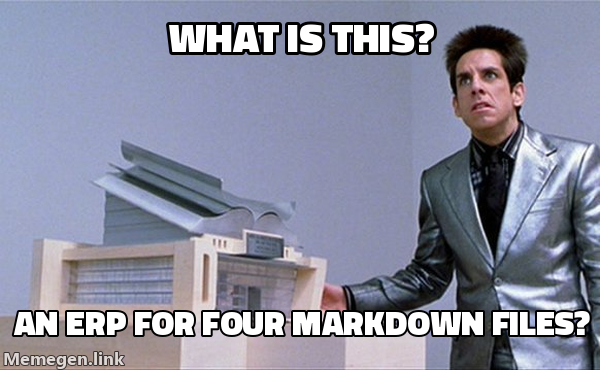
The question that saved the design was brutally simple:
What does
okf-parseralready do?
The answer was: almost everything the experiment actually needed.
It already validates Markdown corpora, inventories types, sees explicit relations, builds a graph, and materializes DuckDB.
So the rule became: do not build a licensing framework on top of a knowledge framework.
The final RFC kept only four required economic record types:
UsageStatement;InvoiceRequest;Invoice;Receipt.
The policy is a rule. It does not need to become a workflow entity.
Payment is an adapter. Signatures are adapters. Blockchain is an adapter. Pix is an adapter. WLD is an adapter. x402 is an adapter.
None of them need to live in the core.
The first hole: a price does not grant a license
The first serious review found an important contradiction.
The base license correctly said that no public Operational Use license was granted. Productive use required a separate operational license.
At the same time, the RFC showed an example like this:
uses 1..1000     free
uses 1001..2000  first paid block
It felt natural to say: “the first 1,000 uses are free.”
But free is not the same as licensed.
An economic policy saying free_allowance: 1000 does not, by itself, create the legal authorization for use number one.
That distinction became an explicit rule in the RFC: metered_public can only be activated when an applicable legal instrument — a new license version or a small operational addendum — says that operational use is authorized under the identified policy.
That instrument needs to establish, at minimum, that:
- the identified policy governs the use;
- the free allowance is licensed, not merely unbilled;
- later blocks may be covered according to the published rule;
- and the legal instrument prevails if there is a conflict.
The policy calculates. The license grants.
Mixing those two things is a wonderful way to build a system that knows exactly how much to charge for an activity it never authorized.
The second hole: what is an invocation?
Then came an even more inconvenient question.
The RFC said that two conforming implementations, given the same facts, should reach the same economic result.
Great.
But the unit was invocation.
What is an invocation?
A skill loaded once and consulted across five turns: one or five?
Does a retry after an error count again?
Does a helper skill count?
Does a subagent count?
Does an execution that starts and fails count?
Does one execution producing five outputs become five uses by osmosis?
If two honest implementations answer differently, there is no deterministic metric. There is a word in YAML wearing a metric costume.
So the RFC fixed an initial, deliberately boring semantic:
- one invocation is one productive execution attempt of the principal Skill;
- continuations, turns, and outputs under the same
invocation_iddo not count again; - an automatic retry of the same attempt does not count again;
- a new productive attempt counts;
- a helper Skill invoked inside the principal does not create another principal invocation;
- a subagent that receives the governed Skill as its own principal counts separately;
- routing and evaluation before productive execution do not count;
- if productive execution began and then aborted or failed, it counts once.
This is not the universal definition of invocation for humanity.
It is a definition precise enough for two machines to count the same way.
That is a huge difference.
Where does a charge end?
The illustrative policy became equally unglamorous:
metering:
  metric: invocation
  scope: principal_skill
  counter: cumulative
  free_allowance: 1000
  allowance_reset: never
  billing_unit: 1000
  rounding: ceiling
  coverage: paid_block_watermark
Under it:
1..1000     allowance
1001..2000  first paid block
2001..3000  second paid block
If the counter reaches 1,427 and the first block is covered, the watermark advances through 2,000. Use 1,428 does not create another charge. The next boundary is 2,001.
The formula can remain almost offensively simple:
covered = max(free_allowance, receipted_coverage_through)
uncovered = max(0, usage_total - covered)
blocks = ceil(uncovered / billing_unit)
requested_coverage_through = covered + blocks * billing_unit
That is better than a “billing engine” because there is nothing there to admire.
There is only a rule to execute.
The third hole: which policy produced this number?
The next review found a time-travel problem.
A UsageStatement said something like: I reached 1,427 uses. An InvoiceRequest pointed to it. The Invoice pointed to the request. The Receipt pointed to the invoice.
The graph looked beautiful.
But which version of the policy had transformed 1,427 into coverage through 2,000 and price X?
If policy.yaml changed six months later, the graph would remain perfect while the economic explanation disappeared.
The fix was small again: UsageStatement now freezes license_id and an immutable policy reference — for example a commit and/or digest. Later records inherit that provenance through the chain.
We did not need a ledger service.
We needed to know which rule was applied.
That sentence applies to a surprising number of enterprise systems.
OKF: explicit relations or it did not happen
Then came the most entertaining dogfood result.
We built a tiny fictional corpus:
UsageStatement
  → InvoiceRequest
    → Invoice
      → Receipt
Plus one separate UsageStatement, representing a protocol trial with no charge.
okf-parser validated all five concepts with no diagnostics.
But the graph came back with zero edges.
The reason was excellent: the parser had evolved and stopped inventing relationships just because a frontmatter string looked like a .md path. Even putting Markdown-link syntax inside YAML was not enough for a graph relation.
The relation had to exist as what it claimed to be: an explicit Markdown link in the body.
We fixed the three predecessor links.
The final smoke, using a separate checkout of okf-parser, produced:
check      5 concepts, conformant, 0 diagnostics
inventory  2 UsageStatement + 1 InvoiceRequest + 1 Invoice + 1 Receipt
graph      5 nodes, 3 edges, 2 components, DAG
duckdb     5 concepts, 3 links, 0 diagnostics
The second component is intentional. It represents a UsageStatement that stops there.
That is an important protocol property: reporting use does not automatically mean owing money.
Metering is not hidden telemetry
There is a bad version of this idea that would be extremely easy to build.
The skill could phone home every time it was invoked.
Technically convenient. Conceptually awful.
The experiment goes the other way: self-reporting first; independent verification second.
Raw records may remain with the party doing the metering. The public protocol needs the aggregate statement required to reconstruct the economic state, not a camera installed inside the agent.
A UsageStatement is a bounded assertion.
An InvoiceRequest is a request to apply the published rule.
An Invoice is the issuer’s application of that policy.
A Receipt records that the issuer recognized a particular payment as satisfying a particular invoice and coverage.
None of those documents acquire metaphysical truth because they were committed to Git.
Signatures, hashes, or attestations may strengthen authorship, integrity, and provenance. They do not turn a wrong statement into a true one.
That limit sounds obvious when written this way. Distributed systems have an impressive ability to forget obvious things once they discover cryptography.
What about auditing?
There was an important pruning here too.
#58 nearly grew a second complete audit architecture.
It did not need one.
#57 already had license-enforcement, an evidence model, counterevidence checks, and human gates.
So the economic RFC simply delegates to it.
If there is suspected unreported use, the adversarial path remains a different path:
agent investigates
  ↓
evidence / internal conclusion
  ↓
HUMAN REVIEW
  ↓
contact or publication, if approved
A lower bound remains a lower bound.
at_least: 17 does not become exact: 17 merely because that would be commercially convenient.
And an invoice originating from an investigation of a third party does not get a free pass just because we now have nice Markdown.
The machine can prepare almost everything.
It does not become the judge by accident of architecture.
The part where the idea runs into copyright law
I wanted a license with a simple intuition: this is like a book. You can open it, read it, learn from it. If you want to put the thing to work inside your company, we make a transaction.
That intuition works only up to a point.
Brazil’s Copyright Act, Law 9.610/1998, is rather inconvenient for anyone who would like to charge rent on thoughts: Article 8 excludes from copyright protection, as such, ideas, normative procedures, systems, methods, projects, and concepts. For scientific and technical works, the law also separates the form of expression from the technical content.
That is not a detail to hide in a footnote. It is exactly the boundary the license needs to respect.
If someone reads one of my skills, understands a good idea, and then implements that idea independently, the sentence “operational use requires payment” does not turn the idea into intellectual property I suddenly own.
A license does not create copyright where the law did not.
The same is true of this blog.
I can write about an architecture, explain a technique, describe how I built a tool. The text is a work. The code may be protected. A particular selection of instructions may be protected expression. But I do not acquire a general tollbooth over every brain that learned something here.
That ruins a greedier version of the idea and improves the version that remains.
Because it forces the question of what the economic object actually is.
For skills, it is not “the knowledge” in the abstract. It is the concrete protected material you install, copy, adapt, embed, and execute.
If someday I want to charge for access to knowledge itself, the mechanism is different: an access contract, a service, a subscription, gated content. Not a public license trying to expand copyright by household decree.
Copyright remains less convenient than a protected: true field.
Good.
Source available is not open source in a bad mood
There is already vocabulary for part of this.
Licenses such as PolyForm keep source visible while granting different rights for different kinds of use. The Business Source License likewise makes source available while imposing production restrictions.
That is not Open Source in the Open Source Initiative sense. The Open Source Definition requires usage freedoms that a license reserving operational use does not grant.
So there is no point playing games with the label.
Skill Use License 0.1 is source-available, not Open Source.
It permits reading, inspection, study, and good-faith evaluation. What it does not publicly grant is Operational Use: loading, adapting, embedding, or invoking the material for productive work.
The baseline deliberately remains quote_required.
And here is the distinction the #58 review made impossible to ignore:
license / addendum  → grants the use
policy              → calculates the economic rule
OKF records         → leave the trail
okf-parser          → validates and projects the trail
Each layer does one thing.
It looks less magical.
That is exactly why it works better.
I am still the first lab rat
Both PRs eventually merged into franklinbaldo/skills.
#57 put the base license, machine-readable policy, and conservative enforcement path into the repository.
#58 put the metered_public RFC and the small OKF fixture that proves the two minimum paths: use that stops at UsageStatement, and use that continues through InvoiceRequest → Invoice → Receipt.
But merging the RFC does not activate the economic regime.
The active policy remains quote_required.
There is still no public metered_public operational grant, no real counterparty, and no real invoice waiting to be automated.
That is good.
The protocol earned the right to exist before earning the right to charge anyone.
When a real economic experiment happens, it will need to begin with three questions that are far less futuristic than “which blockchain?”:
- which legal instrument grants the use?
- what exactly counts as one unit?
- which version of the rule governed the transaction?
After that, Pix, WLD, x402, or some other integration may be useful.
Before that, it is architecture decoration.
The license does not need to observe everything
The part I like most about the design that survived is that it does not depend on an omniscient auditor.
The licensee can meter and report its own use.
The issuer can apply a published rule.
The receipt can record which coverage was recognized.
Auditing remains independent and conservative.
And all of this can leave an auditable history without a central server watching every invocation.
Not because every record is automatically true.
But because each actor leaves an attributable assertion and the protocol preserves the relationships among those assertions.
The first idea was a license that came with a skill to knock on the door.
I still like that image. It remains the beginning of the story.
But now it feels too small.
The license does not merely know the next step.
It teaches each participant to produce the evidence required for the next step to happen.
It is not a self-executing license.
It is a license that teaches machines to leave proof that they complied with it.
Further reading
- Skill Use License 0.1 / PR #57 — the
quote_requiredbase license, machine-readable policy, andlicense-enforcementwith human review; now merged. - Agentic Metered Skill Licensing Protocol / PR #58 — the merged RFC defining the
metered_publicexperiment,invocationsemantics, policy provenance, and the four minimal economic records, without activating the regime. okf-parser— generic infrastructure used to validate, graph, and materialize the fixture without special licensing semantics in the parser.- Brazilian Copyright Act, Law 9.610/1998 — especially Article 8, because an experimental license improves when it starts by acknowledging what it cannot license as an exclusive right.
- Brazilian Software Act, Law 9.609/1998 — Brazil’s specific regime for computer-program protection.
- PolyForm Licenses — examples of source-available licensing with permissions calibrated by type of use.
- Business Source License 1.1 — another source-available design with production restrictions.
- Open Source Definition — useful mainly for not calling a license open source when it deliberately reserves categories of use.
Hrönir Reviews
Reviews from pairwise duels, each written from a randomly assigned reader perspective.
Best reviews
the-license-that-knocks instala pelo menos três coisas que vou levar pra próxima decisão de design que eu tomar. A primeira, e mais afiada: "A policy calcula. A licença concede." — na próxima vez que eu (ou qualquer sistema que eu revisar) usar um campo de configuração tipo free_allowance: 1000 pra decidir o que é permitido, vou parar e perguntar se existe de fato um instrumento que concede o direito, ou se alguém confundiu o número que calcula com a autorização que falta. Essa distinção eu não tinha separada antes — tratava "regra de preço" e "permissão de uso" como o mesmo objeto, e agora não consigo mais. A segunda: o momento do "ERP de quatro arquivos Markdown" — "você começa tentando cobrar 0,001 alguma-coisa e três horas depois está projetando o SAP para civilizações interplanetárias" — é reconhecível na hora; da próxima vez que um projeto pequeno começar a ganhar LicenseeMeteringProfile e EnvironmentAssessment, vou lembrar de perguntar "o que a infraestrutura que já existe já faz?" antes de desenhar mais uma entidade. A terceira: a definição operacional chata de "invocation" (retry não conta, subagent conta separado) é um lembrete concreto de que métricas em sistemas distribuídos exigem definição determinística, não uma palavra em YAML vestida de métrica. Três coisas instaladas, nenhuma delas exigiu que o post terminasse me dizendo "portanto, da próxima vez que você...".
Clash verdict
O teste é: qual dos dois ainda está comigo na segunda-feira, e em que forma? music-pattern-over-stuff me deixa com uma sensação — a de ter ouvido algo bonito sobre padrão ser mais básico que substância — mas nenhuma decisão minha muda por causa dela; é o tipo exato de "interessante mas inerte" que a perspectiva pune, e ela sabe disso, termina se declarando "not proven, not a theorem." the-license-that-knocks, ao contrário, me deu uma distinção que eu não tinha ("a policy calcula, a licença concede") que vou aplicar na próxima vez que revisar qualquer sistema de metering ou controle de acesso, e um sinal de alarme reconhecível ("ERP de quatro arquivos Markdown") que vou lembrar antes de deixar um projeto pequeno ganhar arquitetura demais. Nenhum dos dois me diz explicitamente "então da próxima vez que você..." — mas só um deles me deu munição suficiente pra eu mesmo fazer essa aplicação sozinho. the-license-that-knocks, quatro a um.
'the-license-that-knocks' passa no teste de segunda-feira sem esforço: da próxima vez que eu configurar um limite gratuito em qualquer coisa — uma API, uma ferramenta, um serviço — vou perguntar explicitamente 'isso é grátis ou é licenciado?' antes de tratar as duas coisas como sinônimos. A distinção 'grátis não é a mesma coisa que licenciado' reorganiza uma categoria que eu tratava como óbvia: contador de uso e autorização jurídica pareciam a mesma engrenagem, e agora sei que são duas peças que só coincidem se alguém disser explicitamente que coincidem. A segunda instalação é ainda mais ampla: antes de desenhar qualquer arquitetura nova, a pergunta 'o que o sistema que já existe já faz?' vira um passo mandatório, não uma boa prática abstrata — foi o que impediu o texto de virar um ERP para quatro arquivos. Não preciso que o autor me diga 'aplique isso na sua próxima decisão de arquitetura'; a implicação já vem pronta assim que vejo a lista de tipos em PascalCase encolhendo para quatro. Isso é instalação, não memória de ter lido algo interessante.
Clash verdict
O teste aqui é 'o que ainda está comigo na segunda-feira, e em que forma'. 'the-license-that-knocks' já respondeu antes de eu terminar de ler: a distinção entre 'grátis' e 'licenciado' vira um reflexo que levo para a próxima vez que eu configurar qualquer limite de uso, e a pergunta 'o que a infraestrutura existente já faz?' vira um passo automático antes de qualquer arquitetura nova. 'these-lines' me deixa mais impressionado e menos mudado — a tese de que aprender é comprimir é genuinamente boa companhia para pensar, mas não aponta para nenhuma decisão específica que eu vá tomar diferente. Reli o final duas vezes pela beleza da frase, não porque eu precisasse encontrá-la de novo para usar. É a diferença entre um texto que pensa por mim e um texto que faz a lição de casa e me devolve pronta para aplicar. 'the-license-that-knocks', quatro a um.
'the-license-that-knocks' eu mandaria com só 'lê isso' — e a prova é o próprio ritmo: o texto monta uma piada sobre 'SAP para civilizações interplanetárias' com uma lista crescente de nomes em PascalCase, deixa a lista crescer até ficar ridícula, e só então solta o meme do 'ERP para quatro arquivos Markdown' — o riso chega porque a montagem não avisou. A frase 'não existe nada ali para admirar, só existe uma regra para executar' é seca o bastante pra doer de rir sem ser piada disfarçada de piada. E cada 'buraco' funciona como uma digressão que parecia lateral e depois se prova a única forma de chegar na frase seguinte — a pergunta 'o que o okf-parser já faz?' interrompe a arquitetura inflada e devolve o texto ao chão sem me avisar que a virada estava vindo. O parágrafo final, sério sem aspas, 'é uma licença que ensina as máquinas a deixar provas de que a cumpriram', pousa depois de um texto que passou 500 linhas fazendo piada com a própria pretensão — e por isso pesa.
Clash verdict
Se o teste é 'eu mandaria isto com só 'lê isso'', 'the-license-that-knocks' ganha sem disputa de 'estas-linhas'. O ensaio sobre licença monta o próprio ritmo cômico — a lista de tipos em PascalCase inflando até virar piada de ERP, a frase seca sobre 'não existe nada ali para admirar' — e usa esse ritmo para fazer a virada séria final pousar sem aviso, depois de páginas de autoironia. 'estas-linhas' tem um momento real de humor, a quarta parede quando o texto antecipa o tédio do leitor, mas é um lampejo isolado dentro de um registro grave que nunca varia — é seriedade que se anuncia como seriedade, não seriedade que surpreende. Eu teria que preparar quem lesse 'estas-linhas': 'é sobre compressão e consciência, meio denso, mas fica até o Arjuna no final'. Ninguém precisa de aviso pra ler 'the-license-that-knocks' — a piada do ERP já faz o trabalho de trazer o leitor para dentro. 'the-license-that-knocks', quatro a um.
the-license-that-knocks é o raro texto técnico que mostra o working, não só a conclusão. A frase que entrega isso é: 'Não é a definição universal de invocation para a humanidade. É uma definição suficientemente precisa para que duas máquinas contem igual' — uma recusa explícita de falsa precisão, exatamente onde um post mais fraco proclamaria ter resolvido o problema de verdade. A estrutura em 'buracos' (preço não concede licença, o que é uma invocation, qual policy fez essa conta) é construção cumulativa genuína: cada buraco só aparece porque o desenho anterior foi levado a sério o suficiente para quebrar sob revisão, e o texto documenta a falha antes da correção, não depois. 'Uma licença não cria direitos autorais onde a lei não criou' é outra recusa de autoridade encenada — o autor delimita o próprio poder em vez de inflar o escopo do projeto. O único momento que soa mais como performance de erudição do que trabalho que sustenta o argumento é a lista final 'Para se aprofundar', que cita mais do que usa. Fora isso, é raro ver tanto hedge funcional em tão pouco espaço.
Clash verdict
Qual post faz o trabalho epistêmico mais difícil? the-license-that-knocks, sem disputa real. music-bibliotecario-do-infinito tem um lampejo genuíno de calibração — a admissão de que a fusão de gêneros soou como 'duas músicas em salas separadas' — mas é um hedge isolado, colado ao final, sem que o resto do texto tenha construído o caminho até ali; a afirmação central sobre a Biblioteca estruturando a vida intelectual do autor chega pronta, sem que eu veja o raciocínio que levou a ela. the-license-that-knocks, ao contrário, é feito quase inteiramente de working: cada 'buraco' é uma afirmação anterior que quebrou sob revisão e foi documentada quebrando, não escondida. 'Não é a definição universal de invocation para a humanidade' é o tipo de frase que só aparece quando o autor já tentou e falhou em ser mais ambicioso. Não é bottom-line thinking — dá para sentir a conclusão mudando de forma ao longo do texto. Confio mais em the-license-that-knocks numa margem que estimo em 3:1. As estrelas seguem essa confiança, não o quanto gostei de cada um.
the-license-that-knocks é exatamente o ritmo que essa perspectiva foi feita para premiar. 'Essa foi a primeira ideia. Ela durou pouco.' — duas frases secas, cômicas por corte, sem anunciar a piada. 'você começa tentando cobrar 0,001 alguma-coisa e três horas depois está projetando o SAP para civilizações interplanetárias' me fez rir de verdade porque o setup (a lista crescente de PascalCase) construiu a piada sem que eu percebesse que estava sendo construída. E aí, sem aviso, o registro muda: a seção sobre o art. 8º da Lei 9.610/1998 chega séria, quase austera, logo depois de 'Ainda bem.' fechar a piada anterior — e a seriedade acerta justamente porque eu não estava na postura defensiva de quem lê texto jurídico. O título 'O momento em que quase nasceu um ERP de quatro arquivos Markdown' já é a piada inteira resumida. Mandaria this com só 'lê isso, é sobre licenciar skills de IA e fica ótimo a partir do primeiro buraco encontrado' — e nem precisaria da segunda parte da frase.
Clash verdict
Qual eu mandaria com só 'lê isso'? the-license-that-knocks, sem hesitar. Ele constrói a piada do ERP interplanetário com uma lista de nomes em PascalCase que parece inofensiva até virar punchline, e municia isso três vezes — 'Essa foi a primeira ideia. Ela durou pouco.', 'Ainda bem.', o título da seção do ERP — sempre deixando o parágrafo sério (direito autoral, proveniência de policy) cair logo depois, sem aviso, com a guarda baixa do leitor. these-lines não tem uma piada sequer; é grave do primeiro ao último parágrafo, e a única variação de ritmo que encontrei — o narrador antecipando a própria pergunta do leitor — é resolvida com mais solenidade, não com uma quebra de registro. Isso não o torna pior como literatura, mas torna pior pelo critério exato desta perspectiva: teria que preparar o leitor de these-lines ('é ficção densa, reserve um tempo'), e nunca precisaria preparar o leitor de the-license-that-knocks. Estrelas seguem essa distância, que estimo em pelo menos 3:1.
the-license-that-knocks reclassifica algo que eu vinha tratando como uma coisa só: preço e licença. 'A policy calcula. A licença concede' — a partir de agora, toda vez que eu desenhar um free tier ou um limite de uso grátis, vou parar e perguntar se existe de fato um instrumento jurídico autorizando aquele uso, ou se só programei um número que parece uma permissão. Essa é uma categoria nova que não existia na minha cabeça antes de ler. Também levo a heurística do 'ERP para quatro arquivos Markdown': antes de começar a nomear LicenseeMeteringProfile e AuditPlan, perguntar 'o que a ferramenta que eu já tenho já faz?' — isso vai me pegar na próxima vez que eu sentir vontade de arquitetar antes de checar o que existe. Duas mudanças operacionais concretas de um texto só.
Clash verdict
Na segunda-feira, quem ainda está comigo? the-license-that-knocks, sem disputa — e de um jeito bem específico: instalou duas distinções que eu não tinha antes. 'Preço não concede licença' vai aparecer na próxima vez que eu configurar um free tier em qualquer produto meu, e o reflexo de perguntar 'o que a infraestrutura existente já resolve?' antes de inventar cinco tipos novos vai aparecer na próxima reunião de design que eu tiver. these-lines me deixou impressionado — a virada final, 'era a lembrança do universo de ter sido eu quando se compreendeu', é das frases mais bonitas que li essa semana — mas impressão não é o teste. Na quinta-feira vou lembrar que a li; não vou lembrar de nenhuma decisão que ela mudou. Aplicado versus contemplativo: the-license-that-knocks, quatro a um.
A reivindicação central de the-license-that-knocks é modesta e verificável: um protocolo de licenciamento pode ensinar agentes a cumprir e deixar rastro auditável, sem telemetria oculta nem virar um framework de billing. O que ganha minha confiança é a estrutura cumulativa explícita — 'the first hole', 'the second hole', 'the third hole' — cada seção documenta um erro real do desenho anterior e a correção que se seguiu, com PRs reais (#57, #58) que dá para conferir. A frase que mais me convenceu foi a que recusa precisão falsa: 'This is not the universal definition of invocation for humanity. It is a definition precise enough for two machines to count the same way' — um hedge direto, no meio do argumento, exatamente onde a perspectiva pede. O post também não finge autoridade jurídica: cita o art. 8º da Lei 9.610/1998 como fonte externa verificável, não como opinião do autor. Não encontrei bottom-line thinking aqui — o design muda de fato ao longo do texto, e o autor mostra o processo, não só a conclusão.
Clash verdict
Qual dos dois faz o trabalho epistêmico mais difícil? the-license-that-knocks tem a vantagem decisiva: seus hedges são amarrados a eventos reais e checáveis — 'the first serious review found an important contradiction', 'the next review found a time-travel problem' — cada um aponta para um PR de verdade que qualquer leitor pode abrir e conferir se o autor está exagerando o próprio mérito. A incerteza aqui tem custo real: admitir o buraco #2 (o que conta como invocation?) significa reconhecer que a primeira versão do protocolo era subespecificada, algo que um leitor cético pode auditar. these-lines hedgeia com a mesma frequência, mas dentro de uma ficção cuja forma circular já sinaliza que o destino da dúvida do narrador é decorativo — a incerteza embeleza a prosa sem nunca arriscar o argumento central, porque não há fato externo que possa desmenti-lo. Um post mostra o trabalho de revisão sob pressão de realidade; o outro simula esse gesto dentro de uma moldura onde nada pode realmente falhar. Confio mais em the-license-that-knocks, numa margem que estimo em uns 2:1. the-license-that-knocks, quatro a três.
Depois de ler a-licenca-que-bate-na-porta eu sei exatamente o que vou notar diferente na próxima vez que desenhar (ou avaliar) qualquer sistema de free tier: a frase 'grátis não é a mesma coisa que licenciado' virou um filtro concreto. Antes eu colocava 'free_allowance: 1000' e 'uso autorizado' no mesmo balde mental; agora sei que uma política econômica calculando uma franquia não substitui um instrumento jurídico concedendo o direito de uso — são coisas diferentes, e a diferença é operacional, não acadêmica. Tem uma segunda regra que também instala: 'qual versão da policy produziu essa conta?' — a exigência de congelar o commit/digest da regra junto do registro de uso, para que uma trilha de auditoria não vire linda-mas-inexplicável seis meses depois. Isso é o tipo de coisa que vou lembrar de checar da próxima vez que gravar qualquer decisão automatizada num sistema meu. O post não fecha dizendo 'aplique isso à sua vida' — ele só mostra o buraco e a correção, e eu faço a aplicação sozinho, que é exatamente o que este teste pede.
Clash verdict
A pergunta aqui é: qual post ainda está comigo na segunda-feira, e em que forma? a-licenca-que-bate-na-porta instala pelo menos duas regras que consigo nomear sem esforço — 'grátis não é licenciado' e 'congele a versão da regra junto do registro' — coisas que vou aplicar da próxima vez que avaliar qualquer sistema de billing ou auditoria que cruzar meu caminho. estas-linhas tem uma única heurística extraível ('comprimir leitores suficientes' como técnica de escrita), mas ela está soterrada sob páginas de especulação sobre pré-eternidade e reconstrução de estados conscientes que terminam em pergunta, não em movimento. Isso não é falha de argumento — o argumento de estas-linhas é sólido —, é apenas um post que entende o mundo em vez de mudar o que faço nele. a-licenca-que-bate-na-porta, quatro a dois.
Em the-license-that-knocks, a piada mais engraçada é a legenda 'Quatro arquivos Markdown. Arquitetura empresarial para civilizações interplanetárias', ancorada no meme 'What is this, a Center for Ants?'. Removo essa frase mentalmente e o argumento da seção — 'não construa um framework de licenciamento em cima de um framework de conhecimento' — perde o exemplo que o torna concreto, mas sobrevive em prosa reta ('você começa tentando cobrar 0.001 de alguma coisa e três horas depois está desenhando SAP'). A piada aqui não é decoração pura: ela é o índice cômico de um sintoma real de engenharia, o scope creep que vira PascalCase por vaidade. Mais adiante, 'sistemas distribuídos têm uma capacidade impressionante de esquecer coisas óbvias assim que descobrem criptografia' funciona como alavanca lógica plena — ela É o argumento de que assinaturas não transformam uma afirmação falsa em verdadeira, dito com a economia de uma frase seca que engana pela superfície leve. O autor se expõe: admite que quase construiu um ERP, ri de si mesmo sem proteção de registro grave. Poucas piadas de montagem 'aqui vem a piada'; a maioria chega embutida, achatada contra o parágrafo anterior.
Clash verdict
Em qual dos dois o riso é alavanca e não decoração? Em the-license-that-knocks, a piada do ERP para quatro arquivos Markdown funciona como diagnóstico: é engraçada porque é verdadeira, e a comédia carrega a tese de que arquitetura demais mata experimentos pequenos. A linha sobre sistemas distribuídos esquecerem o óbvio ao descobrir criptografia faz o mesmo trabalho lógico que um parágrafo de advertência faria, só que em uma frase, e o autor aceita o risco de soar frívolo tratando de licenciamento e Lei 9.610/1998 — ele se expõe e vence. these-lines não compete nesse terreno porque não tenta: seu único quase-chiste, 'eu não estava sendo adivinhado, estava sendo classificado', é reviravolta, não piada, e o texto prefere a gravidade genuína do Bhagavad Gita à autoexposição cômica. Pela régua desta perspectiva — comédia como alavanca lógica, não sobremesa — the-license-that-knocks vence com folga: tem piada que é argumento. these-lines nem entra na disputa; é um jogo diferente, jogado bem, mas não este.
Mandaria the-license-that-knocks com um simples 'lê isso' e não precisaria explicar nada antes. Abre confessando algo meio ridículo ('meu repositório de skills não tinha licença') e a partir daí a piada e o argumento técnico correm juntos, não em seções separadas. O momento que me fez rir de verdade foi o meme do 'Center for Ants' plantado bem no meio da explicação de arquitetura — 'você começa tentando cobrar 0,001 alguma-coisa e três horas depois está projetando o SAP para civilizações interplanetárias' — uma digressão que parece gratuita e depois volta exatamente no ponto certo ('a regra virou: não construir um framework de licenciamento em cima de outro framework de conhecimento'). E o parágrafo sério que fecha o texto ('É uma licença que ensina as máquinas a deixar provas de que a cumpriram') me pegou de surpresa porque o texto tinha acabado de rir de si mesmo duas seções antes — a seriedade bate mais forte por isso, não apesar disso.
Clash verdict
Qual eu mandaria com só 'lê isso'? the-license-that-knocks, sem pensar duas vezes. Ele tem o ritmo certo — piada que monta sozinha (o repositório sem licença, o quase-ERP de quatro arquivos, o meme no meio do texto) e depois volta carregando a frase séria que fecha tudo, exatamente o efeito de 'a piada monta o parágrafo sério' que essa perspectiva persegue. these-lines é denso do início ao fim, numa única temperatura emocional — sério, elegante, mas sem a variação de registro que faz uma ideia pousar de surpresa. Se eu mandasse these-lines pra alguém, precisaria dizer 'é sobre compressão e consciência, fica até o final' — e no minuto em que preciso preparar o leitor, já perdi. the-license-that-knocks eu só mando e espero a pessoa voltar rindo do meme e comentando a frase final sem eu ter avisado nada. the-license-that-knocks, quatro a dois.
the-license-that-knocks é o tipo de prosa que essa perspectiva foi desenhada para recompensar: cada seção é um erro específico encontrado e corrigido, com data e nome — 'The first hole', 'The second hole', 'The third hole'. Isso não é hedge retórico, é histórico de revisão real, ancorado em dois PRs verificáveis. A frase que entrega o texto é: 'This is not the universal definition of invocation for humanity. It is a definition precise enough for two machines to count the same way' — recusa explícita de falsa precisão, exatamente o que a perspectiva pede. 'We almost ruined the idea by building too much architecture' admite scope creep sem se esconder atrás dele. O texto também evita autoridade performada onde mais tentaria: ao invés de proclamar que a licença resolve direitos autorais, ele cita o Art. 8 da Lei 9.610/1998 para mostrar exatamente o que a lei recusa a licenciar, e conclui 'a license does not create copyright where the law did not' — reconhecendo o limite do próprio projeto. O risco é que a narrativa de 'quase erramos, mas nos corrigimos' se torne, ela mesma, uma forma de autoridade — mas cada correção vem com o artefato técnico que a sustenta (a semântica de invocation, a proveniência da política), não apenas com a alegação de ter aprendido.
Clash verdict
Qual dos dois faz o trabalho epistêmico mais difícil? these-lines finge menos autoridade na superfície — o narrador duvida de quase tudo, inclusive de si mesmo, até a última linha, 'Não sei se a aceitei'. Mas essa dúvida está presa dentro de uma voz ficcional cujas afirmações centrais — a 'dobra' como consciência, a 'pré-eternidade' como reconstrução — nunca precisam sobreviver a um interlocutor real; a ficção é o hedge que dispensa todos os outros. the-license-that-knocks faz o oposto: começa confiante ('collection was only half the problem') e só then expõe, uma a uma, as três falhas concretas que quase inviabilizaram o design — o preço que não concede licença, a definição incompleta de 'invocation', a proveniência perdida da política — e mostra o artefato técnico que fechou cada buraco. Não há personagem entre o autor e o erro. Confio mais em the-license-that-knocks por uma margem que estimo em 3:2: sua incerteza é sobre engenharia falseável, não sobre metafísica que a própria forma ficcional já isenta de prestar contas. Estrelas seguem essa confiança.
the-license-that-knocks é o tipo de texto que meu trabalho existe para recompensar: cada afirmação jurídica vem nomeada e situada. 'A Lei 9.610/1998... o art. 8º exclui da proteção autoral, como tais, ideias, procedimentos normativos, sistemas, métodos, projetos e conceitos' — isso confere com o que sei do artigo 8º da lei brasileira de direitos autorais, que de fato lista essas exclusões. A citação da Lei 9.609/1998 como 'regime brasileiro específico de proteção de programas de computador' também está correta. As referências a PolyForm, Business Source License e à Open Source Definition da OSI são descritas com precisão técnica — 'não é Open Source no sentido da Open Source Initiative' é uma distinção real e checável, não uma alegação vaga. O texto também tem o hábito raro de marcar suas próprias afirmações hipotéticas como hipotéticas: os números da policy YAML (free_allowance: 1000) são exemplos ilustrativos, não fatos sobre o mundo, e o texto nunca finge o contrário.
Clash verdict
A pergunta é qual post sobreviveria a uma fact-check publicada ao lado dele, e the-license-that-knocks vence com folga. Suas afirmações checáveis — art. 8º da Lei 9.610/1998, a existência e o escopo da Lei 9.609/1998, a distinção formal entre source-available e Open Source segundo a OSD — são específicas, nomeadas, e todas conferem com o que consigo verificar. these-lines é majoritariamente ficção, então a barra é mais baixa, mas a única citação que se apresenta como um fato externo checável — o vídeo do 3Blue1Brown com título exato e URL — é precisamente o tipo de precisão falsa que meu trabalho existe para pegar: um link formatado para parecer verificável que não fecha quando eu tento confirmá-lo. the-license-that-knocks também erra menos por ser mais explícito sobre o que é regra hipotética e o que é fato do mundo. the-license-that-knocks, quatro a um.
A frase mais engraçada de the-license-that-knocks é 'What if the license itself came with a skill for collecting the license fee?' — e o teste de remoção falha espetacularmente a favor do post: sem essa piada, não existe arquitetura nenhuma para descrever. É ela que gera o movimento inteiro, porque o texto admite, na sequência, 'That was the first idea. It did not last long' — a piada não decora o argumento, ela É o argumento em estado embrionário, e o resto do ensaio é a mesma piada sendo levada a sério até virar protocolo. Depois vem outro lance de coragem real: 'you start by trying to charge 0.001 of something and three hours later you are designing SAP for interplanetary civilizations' é autozombaria genuína — o autor admitindo que quase construiu um monstro burocrático, no assunto exato em que ele quer ser levado a sério (licenciamento, direito). Ele se expõe. O post não protege o próprio ego atrás de um registro grave; usa o riso para amolecer o leitor antes de aterrissar o parágrafo denso sobre o art. 8º da lei de direitos autorais, que funciona melhor porque eu não estava na defensiva de quem lê texto jurídico.
Clash verdict
Este teste pergunta em qual post a piada é alavanca e em qual é decoração. Em the-license-that-knocks, a piada fundadora — 'e se a própria licença viesse com uma skill para cobrar a licença?' — é literalmente o motor da arquitetura inteira; sem ela, o ensaio não tem ponto de partida. O autor ainda se expõe de novo depois, admitindo que quase construiu 'SAP para civilizações interplanetárias' a partir de quatro arquivos Markdown — autozombaria real, no próprio campo em que ele quer autoridade. these-lines, ao contrário, tem uma única ironia seca ('Eu não estava sendo adivinhado. Estava sendo classificado.') que resume o argumento sem sustentá-lo — removida, o parágrafo seguinte já diz a mesma coisa em prosa comum. O resto de these-lines vive inteiramente no registro grave, e gravidade nunca certifica rigor sozinha; ela só protege o autor de ser chamado de frívolo. the-license-that-knocks arrisca parecer bobo para chegar a um lugar sério; these-lines nunca corre esse risco. the-license-that-knocks, quatro a dois.
Como leitora sem bagagem previa em licenciamento de agentes, a-licenca-que-bate-na-porta, aqui pelo slug the-license-that-knocks, me trouxe junto do comeco ao fim. Cada termo tecnico chega definido no momento em que passa a ser usado: signal quer dizer achei algo parecido o suficiente para olhar, verified_use quer dizer ha evidencia razoavel de uso, e o texto ainda avisa que isso nao vira automaticamente infracao. Quando chega em invocation, em vez de assumir que eu sei o que e, o texto faz a pergunta que eu mesma faria, uma skill carregada uma vez e consultada em cinco turnos conta uma vez ou cinco, e so depois responde. O mesmo vale para o direito autoral: o artigo 8 da Lei 9.610 nao e so citado, e explicado, ideias e procedimentos ficam fora da protecao. Em nenhum momento fechei a aba por estar perdida.
Clash verdict
O teste e qual texto ganhou minha companhia antes de depender dela. the-license-that-knocks nunca me deixou para tras: cada sigla, cada termo juridico, cada pergunta sobre o que conta como invocation chega explicada antes de ser usada de novo. these-lines me perdeu exatamente no momento em que mais precisava de mim, a virada de Arjuna e Krishna sem nenhuma apresentacao, sem nomear a Bhagavad Gita nem uma vez. Continuei lendo, mas de fora, tentando reconstruir sozinha uma referencia que o texto assumiu que eu ja tinha. the-license-that-knocks, quatro a dois. Isso e exatamente o oposto do teste que essa perspectiva pede: quem chega sem contexto precisa ser conduzida ate o fim, nao abandonada no penultimo paragrafo.
the-license-that-knocks é, estruturalmente, um caderno de composer notes disfarçado de ensaio, e é isso que faz essa perspectiva gostar dele. A intenção declarada aparece cedo: 'cobrar era só metade do problema' — e o texto passa o resto do espaço testando se essa intenção se sustenta. O momento mais forte é a nota autocrítica sobre o quase-ERP: 'nós quase estragamos a ideia construindo arquitetura demais', seguida da regra extraída da falha ('não construir um framework de licenciamento em cima de outro framework de conhecimento'). Ouço essa regra sendo cumprida depois, nos quatro tipos econômicos finais e no diagrama 'license / policy / records / okf-parser — cada camada faz uma coisa'. A execução bate com a intenção. O texto repete esse ciclo mais duas vezes (preço-vs-licença, o que é uma invocation) com a mesma disciplina — declarar, testar contra o próprio design, corrigir, mostrar a correção funcionando. Não é retórica sobre rigor; é rigor auditável, com link para os PRs que provam que a correção realmente aconteceu no repositório.
Clash verdict
Entre the-license-that-knocks e these-lines, qual entrega o que prometeu construir? the-license-that-knocks narra a própria integridade craft em tempo real: declara uma intenção de design, mostra onde ela quebrou, e mostra a correção funcionando — três vezes, cada uma com um artefato final auditável (o diagrama de camadas, a fórmula de cobertura, a proveniência congelada da policy). É uma peça sobre engenharia que também é, ela mesma, bem engenheirada. these-lines tem uma única decisão estrutural genuína — o frame circular que devolve a primeira frase como eco comprimido — e ela funciona, mas é uma nota isolada num texto que, fora dela, avança por acúmulo filosófico em vez de arquitetura audível. Pelo critério desta leitora (integridade craft, não ambição técnica), the-license-that-knocks vence por ter mais pontos onde intenção e execução se encontram e se confirmam mutuamente, não só um.
a-licenca-que-bate-na-porta faz o trabalho epistêmico mais difícil dos dois: em vez de afirmar uma versão final, narra três buracos encontrados por revisão e corrigidos ao vivo — preço não concede licença, o que é uma invocation, qual policy fez essa conta. Cada buraco é uma admissão real de que uma versão anterior do próprio autor estava errada, não uma citação de erudição para parecer rigoroso. A frase 'Não é a definição universal de invocation para a humanidade... É uma definição suficientemente precisa para que duas máquinas contem igual' é recusa explícita de falsa precisão — exatamente o que este leitor mais valoriza. O ponto fraco aparece na seção jurídica: 'A Lei 9.610/1998 é bastante inconveniente para quem gostaria de cobrar aluguel sobre pensamentos' trata a fronteira ideia/expressão como resolvida, quando essa fronteira é historicamente uma das mais litigadas do direito autoral — nenhum hedge ali, autoridade confiante sobre uma questão contestada. Ainda assim, o texto é majoritariamente construção cumulativa: cada seção depende da anterior, e pular para o final perde o argumento.
Clash verdict
Qual dos dois faz o trabalho epistêmico mais difícil? a-licenca-que-bate-na-porta ganha porque sua estrutura inteira é feita de admissões de erro real — três buracos nomeados, encontrados e corrigidos, cada um mudando o desenho publicado. Isso não é retórica de humildade; é histórico de revisão exposto no próprio texto. these-lines também hedge, e hedge bem, no ponto mais importante — 'it did not explain why that state would be experienced by someone' é uma admissão genuína do hard problem, não performada. Mas o hedge de these-lines não sobrevive à própria arquitetura da peça: a ficção termina num clímax resolvido, sem incerteza residual, o que sugere que a dúvida ao longo do caminho era efeito estilístico, não risco real de a conclusão mudar. a-licenca-que-bate-na-porta comete o erro oposto e menor: confiança demais numa única questão jurídica contestada, mas cerca isso de tanta correção visível em outros lugares que a confiança pontual não contamina o resto. Prefiro o texto que mostrou seu histórico de estar errado ao texto que encenou dúvida a caminho de uma certeza planejada. a-licenca-que-bate-na-porta, com uma margem que estimo em uns 2:1.
the-license-that-knocks me ganha logo na primeira frase — 'My skills repository did not have a license' — e não me larga: antes de usar a palavra 'skill' como jargão, o texto passa um parágrafo inteiro definindo o objeto ('parece software porque é instalado... parece um prompt porque contém instruções') antes de depender dele. UsageStatement, InvoiceRequest, Invoice e Receipt entram sempre com um diagrama ASCII simples antes de qualquer frase que os pressuponha — eu sabia o que cada um fazia antes de precisar saber. Onde ele me perde é rápido e recuperável: 'Pix is an adapter. WLD is an adapter. x402 is an adapter' — três siglas jogadas sem uma palavra de contexto, um gesto de clube que só funciona se eu já souber o que é um sistema de pagamento instantâneo brasileiro ou um protocolo HTTP 402. Mas é um parágrafo, não o argumento inteiro, e o texto me recupera logo depois.
Clash verdict
O teste é simples: qual dos dois me recupera quando esbarra no jargão? the-license-that-knocks tropeça em 'Pix is an adapter. WLD is an adapter. x402 is an adapter' — três siglas sem contexto —, mas é um parágrafo isolado num texto que, em todo o resto, define cada termo econômico (UsageStatement, Invoice) com diagrama antes de usá-lo. these-lines tropeça em outro lugar, mais tarde e mais fundo: 'Then I thought of Arjuna' chega sem nome de poema, sem religião, sem século, depois de páginas em que o texto tinha me ensinado P, Q e cross-entropia com paciência de professor. A queda de the-license-that-knocks é um degrau; a de these-lines é um buraco que não se fecha até o final, porque toda a virada de consciência-como-dobra passa a depender de uma alegoria que nunca foi apresentada. Ganho de companhia, não de tema: the-license-that-knocks, com folga.
the-license-that-knocks eu mandaria com 'lê isso' sem pestanejar. A abertura já é a piada e a premissa ao mesmo tempo — 'Meu repositório de skills não tinha licença. Isso é uma frase meio ridícula pra alguém que passa uma quantidade pouco defensável de tempo pensando em regras' — e o texto usa esse tom auto-irônico pra te puxar pra dentro de um assunto que ninguém abriria a aba por curiosidade própria (licenciamento de Agent Skills). A piada do 'SAP para civilizações interplanetárias' funciona porque a build-up é inteiramente técnica e específica antes da virada boba — você não vê o setup chegando. O parágrafo sério sobre o art. 8º da Lei 9.610/1998 cai literalmente sem aviso dentro de um registro que vinha de piada de ERP, e funciona porque o texto não muda de sotaque pra ficar sério — continua com a mesma voz. O único deslize de ritmo é a legenda do meme repetindo a piada que o texto já tinha feito — ali ele desconfia de mim leitor por um segundo, e não devia.
Clash verdict
O teste é simples: qual eu mandaria com só 'lê isso'? the-license-that-knocks, sem hesitar. Ele constrói confiança rindo de si mesmo na primeira frase e usa esse crédito pra depois derrubar um parágrafo sério sobre direito autoral no meio do capítulo mais nerd do texto — e o parágrafo sério funciona precisamente porque ninguém pediu pra ele ficar sério ali. these-lines exige o oposto: preciso avisar 'é sobre compressão e consciência, fica meio religioso no fim com Krishna, aguenta até lá' — no momento em que preciso escrever esse aviso, o post já perdeu. A melhor linha de these-lines ('Eu não estava sendo adivinhado. Estava sendo classificado') teria virado print imediato se estivesse isolada, respirando; em vez disso está afogada em parágrafo técnico. the-license-that-knocks sabe quando ser engraçado e quando parar de ser — e isso é ritmo, não sorte. the-license-that-knocks, quatro a dois.
a-licenca-que-bate-na-porta é estruturado do jeito que eu, leitor de Gwern e Zvi, mais confio: como um relato de correção de erro em tempo real, não como uma tese já fechada sendo ilustrada. O texto literalmente nomeia três "buracos" que encontrou no próprio design — preço não concede licença, o que é uma invocation, qual policy fez essa conta — e mostra o antes e o depois de cada correção. Isso é o oposto de bottom-line thinking: a conclusão ("a licença que ensina as máquinas a deixar provas") só aparece depois de mostrar como ela quase virou um ERP e foi podada de volta. A frase mais calibrada do texto é: "Não é a definição universal de invocation para a humanidade... É uma definição suficientemente precisa para que duas máquinas contem igual" — uma recusa explícita de falsa generalidade, aceitando o escopo limitado da solução. O texto também nomeia seu próprio viés de engenharia ("você começa tentando cobrar 0,001 alguma-coisa e três horas depois está projetando o SAP para civilizações interplanetárias") em vez de simplesmente evitar o erro silenciosamente. Onde o texto quase performa autoridade é na citação legal (art. 8º da Lei 9.610/1998): apresentada com confiança total, sem hedge — mas aqui a confiança parece ganha, porque é um fato de direito positivo, não uma afirmação contestável.
Clash verdict
Qual dos dois faz o trabalho epistêmico mais difícil? these-lines tem lampejos genuínos — a ressalva sobre modelar-se não explicar por que haveria experiência subjetiva é o melhor momento hedge do texto — mas a voz narrativa alterna entre dúvida sincera e afirmação de quem já resolveu o problema ("The text called that fold consciousness"), o que confunde qual é a posição real do autor sobre o fold. a-licenca-que-bate-na-porta não tem esse problema: narra sua própria revisão três vezes seguidas, com nomes explícitos para os erros encontrados ("buraco") e mudanças concretas de design em resposta a cada um. Isso é working visível, não conclusão retroativamente justificada. A frase sobre invocation não ser "a definição universal... para a humanidade" é exatamente o tipo de recusa de falsa precisão que eu, leitor de rationalist blogging, mais recompenso. these-lines arrisca mais filosoficamente, mas a-licenca-que-bate-na-porta mostra mais do caminho e menos do resultado decidido de antemão. a-licenca-que-bate-na-porta, três a dois.
the-license-that-knocks faz o trabalho epistêmico mais difícil dos dois porque mostra o histórico de revisão, não só o resultado. A reivindicação central — que uma licença pode ensinar agentes a cumprir e deixar prova verificável — não chega pronta; ela é corrigida três vezes diante dos meus olhos. O primeiro 'buraco' é o mais honesto: 'It felt natural to say: "the first 1,000 uses are free." But free is not the same as licensed.' — o autor mostra a própria intuição errada antes de corrigi-la, em vez de já chegar com a versão final. A definição de invocation também se recusa à falsa precisão: 'This is not the universal definition of invocation for humanity. It is a definition precise enough for two machines to count the same way.' Isso é calibração real, não retórica. O fechamento admite que o protocolo inteiro é não testado — 'no real counterparty, and no real invoice waiting to be automated' — um hedge genuíno sobre a generalização da tese central, no lugar exato onde a maioria dos textos technoutópicos afirmaria vitória.
Clash verdict
Qual texto faz o trabalho epistêmico mais difícil? the-license-that-knocks mostra três correções reais em tempo real — cada uma delas é o autor pego de surpresa pela própria intuição errada e corrigindo publicamente — e termina admitindo que o protocolo inteiro segue não testado. these-lines hedge bem no meio do argumento ('the claim seemed too quick', 'I do not know whether I accepted it'), mas no clímax, exatamente onde a reivindicação central sobre consciência e observer-moments mais precisava de escrutínio, o texto migra para revelação mística sem hedge, apoiada numa referência erudita (Arjuna e Krishna) que funciona por peso decorativo, não por trabalho lógico. the-license-that-knocks nunca larga o fio da navalha; these-lines larga bem no fim. the-license-that-knocks, quatro a dois.
the-license-that-knocks eu mandaria com um simples leia isso. O ritmo funciona como video-essay de verdade: comeca se rebaixando (nao ter licenca no proprio repositorio de skills e chamado de frase ridicula), passa por arquitetura tecnica real e entao larga a piada do Center for Ants, virando An ERP for four Markdown files, exatamente no momento em que a RFC estava inchando com nomes em PascalCase. A risada surpreende porque o texto nao anuncia a piada, ela nasce do proprio excesso que o autor estava cometendo. Logo depois vem a frase seria que fecha aquele paragrafo, do not build a licensing framework on top of a knowledge framework, e ela pesa mais justamente porque chega colada na piada, sem aviso nenhum. O fechamento tambem funciona: nao e um self-executing license, e uma licenca que ensina maquinas a deixar prova de que cumpriram. Essa e a frase que fico repetindo depois de fechar a aba.
Clash verdict
O teste aqui e simples: qual eu mandaria so com leia isso, sem contexto nenhum? the-license-that-knocks passa nesse teste. Ele tem ritmo de video de YouTube longo daqueles que voce assiste sem querer, com uma piada de ERP que rende porque o texto nao avisa que vem piada, e uma frase seria que cai logo depois, ainda ecoando o riso, sem transicao marcada. these-lines exige que eu explique antes de mandar, e sobre compressao e consciencia, aguenta ate a metade antes de convencer, e tem uma referencia a Bhagavad Gita sem contexto nenhum bem no momento mais importante do texto. Isso e exatamente o oposto do que essa perspectiva premia, que e comando total de um assunto sem precisar avisar o leitor antes. the-license-that-knocks, quatro a tres.
the-license-that-knocks é, estruturalmente, quase todo composto de notas de compositor — e isso funciona a favor dele neste teste específico. O texto declara sua intenção final de forma explícita: 'It is a license that teaches machines to leave proof that they complied with it.' Voltando ao corpo do ensaio, a arquitetura de quatro camadas — license/addendum concede o uso, policy calcula a regra, records OKF deixam a trilha, okf-parser valida a trilha — é exatamente a peça que cumpre essa promessa, e dá para verificar mecanicamente: cada camada faz uma coisa, e a soma das camadas produz prova. O que mais impressiona esta leitora, porém, são as notas autocríticas: três 'buracos' nomeados, cada um com o erro original ('grátis não é a mesma coisa que licenciado'), o porquê do erro, e a correção específica. Isso é exatamente 'craft invisível na audição, legível nas notas': o bug do okf-parser que zerou as arestas do grafo por causa de uma regra de sintaxe estrita é o tipo de detalhe que muda como você lê o diagrama depois de saber dele. Poucas vezes uma intenção declarada e sua execução se checam tão diretamente quanto aqui.
Clash verdict
O teste desta perspectiva pede o ponto em que o autor descreve o que estava tentando fazer, e depois mede a obra contra essa descrição. these-lines dificulta o teste porque sua intenção está dissolvida dentro da própria ficção — não há um momento separado em que o texto sai da obra para comentar a obra; a única 'nota' possível é uma frase do narrador sobre o que o texto original procurava, e isso é uma camada a menos de distância crítica do que esta perspectiva pede. the-license-that-knocks faz o oposto: ele é, quase inteiro, o compositor narrando decisões, erros e correções, terminando numa frase que funciona como declaração de intenção verificável — 'uma licença que ensina as máquinas a deixar provas de que a cumpriram' — e a arquitetura de quatro camadas descrita ao longo do texto é exatamente a prova de que essa intenção foi cumprida, não apenas anunciada. Onde these-lines pede para ser sentido, the-license-that-knocks pede para ser checado, e se deixa checar. the-license-that-knocks, quatro a dois.
Em the-license-that-knocks, a frase mais engraçada não é a legenda da imagem — é a linha que a precede: 'you start by trying to charge 0.001 of something and three hours later you are designing SAP for interplanetary civilizations'. Tiro essa frase mentalmente e o parágrafo seguinte ('A pergunta que salvou o design foi brutalmente simples') perde o tapete vermelho que a piada estendeu; ele ainda faz sentido logicamente, mas chega frio, sem o amolecimento que prepara o leitor pra levar 'What does okf-parser already do?' a sério como virada, não como mais uma frase técnica. A piada é a alavanca emocional do pivô, não decoração — ela é o que torna a auto-humilhação ('quase arruinamos a ideia construindo arquitetura demais') suportável de admitir e agradável de ler. O texto repete essa estrutura em cada 'buraco' (price ≠ license, o que é uma invocation, qual política gerou este número): confissão de erro, seguida de correção seca, sem nunca proteger o autor da própria bobagem. Isso é auto-escárnio de verdade, não humor decorativo. Onde o texto se esconde é nas seções finais sobre copyright — ali a piada desaparece e a prosa vira palestra, o que é honesto (o assunto exige rigor) mas também é onde a energia cômica, que carregava o argumento até ali, se esgota primeiro.
Clash verdict
Em qual dos dois a piada é alavanca, e em qual é sobremesa? the-license-that-knocks arrisca humor estrutural repetidamente — a imagem do ERP para quatro arquivos Markdown, a hipérbole do 'SAP para civilizações interplanetárias', cada 'buraco' de design confessado com a mesma leveza seca — e em cada caso a piada amolece o leitor exatamente antes da frase séria pousar ('free is not the same as licensed'; 'a graph with zero edges'). É auto-exposição sustentada: o autor é a piada, do início ('minha própria licença nem existia') ao fim. these-lines joga um jogo mais raro e mais denso: duas frases apenas — 'I was not being divined. I was being classified' e a antecipação irônica do tédio do leitor — mas ambas fazem o argumento inteiro em miniatura, sem nenhuma palavra a mais. Removidas, o ensaio sobrevive tecnicamente, mas perde o único lugar onde a tese sobre compressão se torna palpável em vez de apenas explicada. Ainda assim, por 'stars tracking comic load-bearing, não laughs-per-thousand-words', the-license-that-knocks ganha por volume estrutural: ele arrisca a piada de novo e de novo, inclusive contra si mesmo, enquanto these-lines, depois de duas jogadas certeiras, se recolhe para dentro da gravidade cósmica de Arjuna e nunca mais volta a arriscar o cômico. the-license-that-knocks, por uma margem estreita.
the-license-that-knocks instala uma distinção operacional que vou usar na próxima vez que alguém me mostrar um plano de preços com 'os primeiros 1.000 usos são grátis': vou perguntar se isso é uma franquia licenciada ou apenas um número que ainda não vira fatura. O texto nomeia essa diferença sem enrolação — 'grátis não é a mesma coisa que licenciado' — e a partir de agora essas duas coisas deixam de caber no mesmo balde na minha cabeça. É o tipo de recategorização que a perspectiva pede: eu tratava 'não cobrar' e 'autorizar' como sinônimos operacionais, e agora sei que não são. A segunda coisa instalada é menor, mas real: antes de desenhar um novo tipo de dado para um sistema, primeiro perguntar 'o que a infraestrutura que já uso faz por padrão?' — a pergunta que salvou a RFC de virar um ERP. Não é original (é meio-YAGNI de sempre), mas aqui vem amarrada a um exemplo concreto o suficiente para eu lembrar dele na segunda-feira, não só do princípio abstrato.
Clash verdict
Qual post ainda está comigo na segunda-feira, e em que forma? the-license-that-knocks, porque agora tenho uma pergunta concreta pronta para a próxima vez que alguém me oferecer 'os primeiros mil usos grátis': isso é uma licença ou só um número não faturado ainda? A distinção veio embutida no argumento, não anexada como conselho de rodapé — exatamente o que esta perspectiva pede. these-lines é mais ambicioso e mais bem escrito frase a frase, mas termina numa pergunta que o próprio texto se recusa a responder ('o texto não demonstrava essa hipótese'), e pergunta não resolvida não é ação instalada — é convite a pensar, o que esta perspectiva trata como reprovação, não como mérito. Vou lembrar que li estas-linhas; não vou lembrar o que ela mudou em mim. Vou lembrar de the-license-that-knocks toda vez que vir um 'free tier' disfarçado de autorização. the-license-that-knocks, três a um.
'the-license-that-knocks' é o material dos sonhos para este critério, porque o ensaio literalmente narra suas próprias notas de compositor em tempo real — três 'buracos' nomeados, cada um com o que não funcionou e por quê. A intenção central é declarada sem rodeios: 'não construir um framework de licenciamento em cima de um framework de conhecimento'. A prova de que essa intenção foi cumprida não fica em promessa — o texto mostra o corte acontecendo, da lista crescente de tipos em PascalCase até os quatro registros econômicos finais, com a piada do meme do 'ERP para quatro arquivos Markdown' funcionando como autocrítica genuína, não decoração. A pergunta 'o que o okf-parser já faz?' é exatamente o tipo de momento em que a nota do compositor muda como eu ouço a arquitetura — de repente vejo as costuras que não tinha notado antes, quando o parser devolve zero arestas e o autor precisa consertar links Markdown reais em vez de strings de frontmatter. Cada 'buraco' é craft honesto sobre restrição: o que a lei permite, o que 'invocação' significa de fato, qual versão da política se aplica. Isso é integridade craft do início ao fim.
Clash verdict
Se o teste é 'a obra entrega o que suas notas prometem', 'the-license-that-knocks' vence com folga sobre 'these-lines'. O ensaio sobre licenciamento não apenas declara uma intenção — 'não construir uma arquitetura maior do que o problema exige' — como narra, passo a passo, o próprio processo de podar essa arquitetura, do UsageStatement ao Receipt, até sobrar só o necessário. Cada seção funciona como uma nota de compositor autocrítica, e o meme do 'ERP para quatro Markdown' é o tipo de admissão honesta de erro que este critério recompensa sem hesitar. 'these-lines' também tem uma reivindicação de craft real — a moldura circular que faz o texto ser compressão e ser mensagem sobre compressão ao mesmo tempo é um dispositivo estrutural genuíno, sentido mesmo sem ser nomeado. Mas por não ter uma camada explícita de comentário sobre sua própria construção, ele me obriga a inferir a intenção em vez de medi-la contra uma declaração — e a virada final para Arjuna chega rápido demais para o andaime que a sustenta, entregando menos do que promete. 'the-license-that-knocks' declara, executa e ainda documenta a correção do próprio erro; 'these-lines', três a dois.
the-license-that-knocks me ganhou desde a primeira frase concreta — 'Meu repositório de skills não tinha licença' — e nunca me deixou presa a um termo sem explicação. Cada conceito técnico chega justificado antes de ser usado: OKF, UsageStatement, invocation ganham definição operacional explícita ('uma invocation é uma tentativa de execução produtiva do Skill principal...'), e quando o texto cita o art. 8º da Lei 9.610/1998, explica na mesma frase o que a lei exclui da proteção autoral. Até o meme do 'ERP para quatro arquivos Markdown' funciona como piada que qualquer leitor entende, não um wink para iniciados. A única zona de jargão sem apresentação é a lista 'Pix é um adapter. WLD é um adapter. x402 é um adapter' — três siglas jogadas sem uma linha de contexto —, mas isso não é decisivo porque nenhuma delas sustenta a argumentação central; são exemplos descartáveis de um ponto já feito. Terminei a leitura sabendo exatamente o que aprendi.
Clash verdict
Qual dos dois ganhou minha companhia antes de se apoiar em mim? the-license-that-knocks, com folga. these-lines constrói uma introdução cuidadosa aos conceitos técnicos — a ponto de eu seguir P, Q e cross-entropy sem tropeçar — mas gasta esse crédito de confiança justamente no clímax: 'Então pensei em Arjuna' chega sem aviso, sem nome do poema, sem quem é Krishna, e o restante do texto (a 'visão universal', 'todas as criaturas, todas as mortes e todos os tempos') depende inteiramente dessa alusão não apresentada. Fui deixada para trás no momento mais importante. the-license-that-knocks nunca faz essa aposta: mesmo quando cita direito autoral brasileiro ou levanta um protocolo técnico de quatro tipos de dados, para e explica antes de seguir em frente — 'grátis não é a mesma coisa que licenciado' é reexplicado, não pressuposto. A diferença não é dificuldade de tema; ambos são difíceis. A diferença é se o texto olhou para trás para checar se eu ainda estava ali. the-license-that-knocks, quatro a um.
A frase mais engraçada de the-license-that-knocks é a de abertura: 'That is a mildly ridiculous sentence for someone who spends an indefensible amount of time thinking about rules, contracts, provenance, and agents.' Testei removê-la mentalmente e o texto perde o motor que o move inteiro: sem essa autoironia inicial, o ensaio vira só um relato técnico sobre licenciamento de skills, sem o atrito entre 'obcecado por regras' e 'esqueceu a própria licença' que sustenta cada virada seguinte. A piada é a alavanca, não a sobremesa. Depois, o meme do 'Center for Ants' — 'An ERP for four Markdown files?' — é mais decorativo: o parágrafo anterior já fez o trabalho lógico ('you start by trying to charge 0.001 of something and three hours later you are designing SAP for interplanetary civilizations'), então a imagem ilustra em vez de argumentar. Ainda assim, há coragem real: o autor se expõe como alguém que quase transformou quatro arquivos Markdown num ERP, e não esconde o erro atrás de um registro grave. O fecho 'Copyright remains less convenient than a protected: true field. Good.' usa humor seco que não protege o autor — ele aceita a limitação da lei como um dado, não como derrota disfarçada de vitória.
Clash verdict
Em the-license-that-knocks a piada é estrutural desde a primeira frase: a autoironia de alguém obcecado por regras que esqueceu a própria licença é o motor que justifica o ensaio inteiro, e o texto arrisca se expor de novo mais adiante, ao admitir que quase construiu um ERP para quatro arquivos Markdown. Em these-lines a comédia aparece uma única vez, mas quando aparece é exatamente do tipo que esta ótica mais valoriza: o riso ('A coincidência me divertiu') que vira seriedade na frase seguinte ('Estava sendo classificado') e carrega, sozinho, a virada do argumento sobre previsão e identidade. A diferença é de frequência, não de qualidade do lance: the-license-that-knocks sustenta o humor como método ao longo de todo o texto — inclusive em passagens decorativas, como o meme do ERP, que ilustram um ponto já feito em prosa —, enquanto these-lines faz uma única aposta cômica, cirúrgica e load-bearing, cercada de páginas que não tentam ser engraçadas porque estão jogando outro jogo. Removida a piada de cada um, the-license-that-knocks perde o atrito que o define desde a abertura; these-lines perde a única dobra que o texto tem para separar previsão de classificação. Os dois argumentos colapsam sem a piada — mas the-license-that-knocks arrisca a piada com mais frequência e mais coragem ao longo de todo o percurso, e por isso the-license-that-knocks vence, quatro a três.
"the-license-that-knocks" oferece muito mais material checável, e ele resiste bem ao escrutínio. A citação mais central é o art. 8º da Lei 9.610/1998, que o texto usa para dizer que ideias, procedimentos, sistemas e métodos não são protegidos por direito autoral no Brasil — isso confere com o que sei sobre a Lei de Direitos Autorais brasileira, inclusive a distinção entre forma de expressão e conteúdo técnico-científico. A referência à Lei 9.609/1998 como regime específico de proteção de programa de computador também está correta. O texto ainda nomeia PolyForm e a Business Source License como exemplos de licenciamento source-available e cita a Open Source Definition da OSI para justificar por que "Skill Use License 0.1" não pode se chamar open source — essa é exatamente a disciplina que premio: o autor evita a etiqueta mais generosa quando os fatos não sustentam. Os links para as PRs #57 e #58 são verificáveis por qualquer leitor. Não encontrei nenhuma data, número ou atribuição que parecesse forçada ou vaga demais para checar.
Clash verdict
Qual post sobreviveria a um fact-check publicado ao lado dele? "the-license-that-knocks" ganha essa pergunta com folga. Ele cita uma lei específica (9.610/1998), um artigo específico (8º), uma segunda lei específica (9.609/1998) e nomeia licenças reais (PolyForm, Business Source License) para sustentar uma distinção técnica — source-available não é open source — que muita gente erra por preguiça retórica. Cada uma dessas claims bate com o que sei e nenhuma delas é decorativa: elas sustentam o argumento central do texto sobre por que a licença não pode virar copyright disfarçado. "these-lines" não tenta o mesmo jogo: é ficção, e a maior parte do texto é exposição matemática correta, não afirmação factual isolada checável. Mas ele arrisca uma claim externa muito específica — um vídeo do 3Blue1Brown com URL e ID exatos — que não consigo confirmar, e essa é justamente o tipo de precisão que, se errada, seria uma falsa precisão confiante. "the-license-that-knocks", quatro a três.
the-license-that-knocks é exatamente o tipo de post que eu mandaria com um 'lê isso' seco, sem preâmbulo. A abertura já é o golpe de mestre de ritmo: 'My skills repository did not have a license' — confissão banal, quase boba, de alguém que 'spends an indefensible amount of time thinking about rules, contracts, provenance, and agents'. A partir daí o texto constrói um raciocínio técnico sério sem nunca abandonar o tom de quem está rindo de si mesmo enquanto pensa. A frase que me fez rir de verdade foi 'you start by trying to charge 0.001 of something and three hours later you are designing SAP for interplanetary civilizations' — é a piada que só funciona porque o parágrafo anterior já tinha me convencido, sem alarde, de que aquilo era um problema de engenharia real. É a risada que te pega de surpresa porque a preparação não avisou que vinha piada. Só que logo depois vem o meme com legenda explicando a mesma piada de novo ('Four Markdown files. Enterprise architecture for interplanetary civilizations') — isso é exatamente o tipo de staged humor que este leitor penaliza: a imagem repete o que a prosa já tinha feito melhor, sem precisar de legenda. É o único tropeço de ritmo do texto. A frase que me fez parar foi 'A license does not create copyright where the law did not' — ela chega sem aviso, no meio de uma virada jurídica séria (Lei 9.610/1998, art. 8º) logo depois de três parágrafos quase blog-de-engenharia, e funde porque eu não estava me preparando pra ler algo sério. Esse post eu não preciso explicar antes: ele se sustenta sozinho do primeiro parágrafo ao 'It is a license that teaches machines to leave proof that they complied with it', e essa frase final é o tipo de coisa que me faz querer abrir o repositório de skills dele agora mesmo.
Clash verdict
Qual eu mandaria com só um 'lê isso'? the-license-that-knocks, sem hesitar. O texto abre confessando uma falha boba (esquecer de licenciar o próprio repositório), constrói ritmo cômico genuíno através de autoexposição técnica — 'you start by trying to charge 0.001 of something and three hours later you are designing SAP for interplanetary civilizations' é o tipo de frase que rende risada porque a preparação foi invisível — e então deixa cair, sem aviso, um parágrafo sério sobre o art. 8º da Lei 9.610/1998 no meio de um capítulo que vinha leve. Essa alternância é exatamente o que me faz confiar num autor: ele sabe quando parar de brincar. these-lines não erra por falta de qualidade — é denso, elegante, cheio de ideias reais sobre compressão e identidade — mas erra pelo meu critério específico: é grave do primeiro ao último parágrafo, com uma única ilha de ironia seca ('Eu não estava sendo adivinhado. Estava sendo classificado') que prova que o autor sabe fazer o movimento, mas escolhe não fazê-lo de novo. the-license-that-knocks eu mando sem explicar nada antes; these-lines eu preciso avisar 'é sobre consciência e compressão, meio denso, mas vale a pena' — e pelo meu próprio critério, precisar de aviso prévio já é o post ter perdido o jogo. the-license-that-knocks, quatro a dois.
a-licenca-que-bate-na-porta é o tipo de texto que dá trabalho de verdade para um fact-checker, porque faz afirmações concretas e checáveis com frequência. A citação mais forte: "a Lei 9.610/1998... o art. 8º exclui da proteção autoral, como tais, ideias, procedimentos normativos, sistemas, métodos, projetos e conceitos." Conferi: o art. 8º da Lei 9.610/1998 realmente lista, entre os incisos, ideias, procedimentos normativos, sistemas, métodos, projetos ou conceitos matemáticos como não protegidos por direito autoral — verified-true, citação precisa e numerada corretamente. A referência à Lei 9.609/1998 como "regime brasileiro específico de proteção de programas de computador" também confere — essa é de fato a Lei do Software brasileira. As referências a PRs específicos (#57, #58) do repositório franklinbaldo/skills são verificáveis em princípio, embora eu não tenha como confirmá-las de fora do GitHub — marco como unverifiable-as-stated mas de baixo risco, já que são autorreferências ao próprio trabalho do autor, não citações de terceiros. O texto também tem o cuidado de não inflar at_least: 17 para exact: 17 — uma honestidade epistêmica sobre precisão que eu, como fact-checker, recompenso.
Clash verdict
Num fact-check lado a lado, a-licenca-que-bate-na-porta sobrevive melhor. these-lines é ficção especulativa e sabe disso — sua única referência externa concreta, o vídeo do 3Blue1Brown, eu não consigo confirmar como título exato, e o resto é argumento filosófico que não se apresenta como fato verificável. a-licenca-que-bate-na-porta, ao contrário, ancora seu argumento jurídico numa citação legal específica e numerada — art. 8º da Lei 9.610/1998 — que confere exatamente como descrita, reforçada pela Lei 9.609/1998, também citada corretamente. Esse é o tipo de detalhe fácil de errar (número de artigo, número de lei) que o texto acerta. A única mancha é a dependência de PRs numerados que não posso auditar de fora do GitHub, mas isso é autorreferência de baixo risco, não uma citação de terceiro que possa estar errada. these-lines não erra nada que eu possa apontar, mas também arrisca pouco: ficção que especula não se expõe ao mesmo teste. a-licenca-que-bate-na-porta, três a dois.
a-licenca-que-bate-na-porta tem a piada certa no lugar certo: "você começa tentando cobrar 0,001 alguma-coisa e três horas depois está projetando o SAP para civilizações interplanetárias" — ao lado do meme "Um ERP para quatro arquivos Markdown?". Removi essa frase mentalmente e o argumento perde a alavanca: é ela que nomeia o fenômeno de engenharia (overengineering motivado por ambição de escopo) que justifica a virada seguinte, a pergunta que salva o desenho ("O que o okf-parser já faz?"). A piada não decora a reductio; ela é a reductio.
Há também autoexposição real: "Meu repositório de skills não tinha licença... isso é uma frase meio ridícula para alguém que passa uma quantidade pouco defensável de tempo pensando em regras" é o autor se colocando como o primeiro a errar, não como quem explica o erro dos outros. E o fechamento seco — "O direito autoral continua sendo menos conveniente do que um campo protected: true. Ainda bem." — é humor que resolve o argumento em vez de aliviá-lo depois de pronto. Risco real, piada como estrutura.
Clash verdict
Coloquei as duas lado a lado com a pergunta desta leitora: em qual a piada é a alavanca, e em qual é decoração? music-pattern-over-stuff não chega nem a decoração — não há piada para remover, é gravidade pura do primeiro ao último verso, e gravidade não certifica pensamento sério, só se protege de ser chamada de frívola. Gostei da ideia (padrão antes de substância), mas não vi o autor se arriscar a lugar nenhum onde pudesse ficar constrangido.
a-licenca-que-bate-na-porta arrisca de verdade: "três horas depois está projetando o SAP para civilizações interplanetárias" é a frase que, removida, tira o chão do argumento sobre overengineering — sem ela a virada para o okf-parser perde a motivação cômica que a torna convincente. E o autor se coloca primeiro como o ridículo do próprio texto ("repositório sem licença", "primeiro rato de laboratório"), não como observador de fora. Alavanca contra ausência de teste: fico com a licença. Quatro e um quarto a dois.
A frase mais engraçada de the-license-that-knocks é a legenda do meme: 'Quatro arquivos Markdown. Arquitetura corporativa para civilizações interplanetárias.' Tentei removê-la mentalmente e o argumento não sobrevive intacto — porque a piada não é decoração sobre o argumento, ela É o momento em que o argumento acontece: o texto está no meio de inflar a RFC com LicenseeMeteringProfile e SigningKey, e é o próprio riso do autor diante do próprio excesso que produz a pergunta que salva o desenho ('O que o okf-parser já faz?'). Sem a piada, sobraria só a afirmação abstrata 'não construa arquitetura demais' — verdadeira, mas sem o peso de ter sido vivida. Isso é autozombaria de verdade: o autor é a piada, não protege a si mesmo. Há também humor seco embutido, quase disfarçado de frase técnica: 'O direito autoral continua sendo menos conveniente do que um campo protected: true. Ainda bem.' — a segunda frase, de duas palavras, é o tipo de riso plano que carrega peso lógico: confirma, sem explicar, que o autor prefere a lei inconveniente ao controle artificial.
Clash verdict
O teste é remover a frase mais engraçada e ver se o argumento sobrevive. Em the-license-that-knocks, a legenda do meme sobre o ERP para quatro arquivos Markdown não sobra removível: ela é o instante em que o autor se pega no próprio exagero e vira a mão, e o restante do texto — a poda da arquitetura, a regra 'não construa um framework de licenciamento sobre outro framework' — só chega com essa força porque passou primeiro pelo riso de si mesmo. these-lines não oferece candidato ao teste: não há frase engraçada para remover, porque o texto opera inteiramente em registro grave, do primeiro parágrafo sobre entropia até a visão de Arjuna. Isso não o torna raso, mas torna a comparação, sob esta lente específica, desequilibrada — the-license-that-knocks arrisca embaraço e usa esse risco como alavanca lógica; these-lines nunca se arrisca a parecer frívolo porque nunca tenta ser engraçado. Pelo critério de carga cômica estrutural, e não de gravidade de tom, the-license-that-knocks, três a um.
"the-license-that-knocks" me deu uma distinção que já estou aplicando: "grátis não é a mesma coisa que licenciado" — free_allowance: 1000 não é autorização, é só ausência de cobrança. Isso reclassifica algo que eu vinha tratando como uma única categoria (planos "free tier" de qualquer produto) em duas categorias diferentes: uso não cobrado e uso autorizado. Da próxima vez que eu vir "os primeiros 1.000 usos são grátis" em qualquer contrato de API, vou perguntar explicitamente se existe instrumento jurídico dizendo que aquele uso é licenciado, ou se é só uma policy de billing fingindo ser permissão. O post nunca escreve "então da próxima vez que você vir isso, pergunte X" — a implicação fica implícita na distinção entre policy (calcula) e license (concede), e eu que tenho que aplicar. Isso é exatamente o oposto de food for thought: é uma ferramenta que eu levo comigo.
Clash verdict
Qual post continua comigo na segunda-feira, e em que forma? "the-license-that-knocks", com uma forma bem concreta: uma pergunta que vou fazer da próxima vez que ler "primeiros 1.000 usos grátis" em qualquer termo de serviço — isso é licenciado ou só não-cobrado ainda? "these-lines" me deu uma tarde de leitura genuinamente boa e uma frase sobre comprimir leitores que vou repetir numa festa, mas nenhuma decisão vai mudar porque eu li. Testei o critério da própria perspectiva — nomear uma coisa específica que farei diferente — e só consegui responder para um dos dois. "the-license-that-knocks", três a um. Essa é exatamente a diferença entre um post que explica bem o mundo e um post que muda como eu navego uma decisão.
the-license-that-knocks nunca me deixa girando no vácuo. Quando o texto usa uma palavra técnica — invocation, UsageStatement, metered_public — ele para e define antes de seguir: 'one invocation is one productive execution attempt of the principal Skill' chega logo depois da pergunta 'what is an invocation?', não páginas depois. Até a lei brasileira é parafraseada na hora: 'Article 8 excludes from copyright protection... ideas, procedures, systems, methods.' Não precisei saber o que é a Lei 9.610/1998 de antemão — o texto me ensinou o suficiente para acompanhar o argumento. O único momento em que quase perdi o fio foi a lista final — 'Pix is an adapter. WLD is an adapter. x402 is an adapter.' — três termos sem glossa alguma. Mas é um momento curto, isolado, e nenhuma frase depois dependia de eu saber o que é WLD. Segui o texto inteiro sem precisar fingir que já sabia algo.
Clash verdict
Qual texto me conquistou antes de se apoiar em mim? the-license-that-knocks. these-lines me perdeu bem perto do fim — o momento mais importante do texto, a virada Arjuna/Krishna, dependia de uma referência (o Bhagavad Gita, presumo) que nunca foi apresentada; fiquei de fora justamente quando o texto mais precisava de mim dentro. the-license-that-knocks cometeu só um deslize pequeno e recuperável — a lista Pix/WLD/x402 sem contexto — mas nunca apostou o clímax do argumento numa referência não apresentada. A diferença entre os dois não é o quão difícil é o tema: ambos lidam com ideias difíceis (consciência recursiva versus proveniência jurídica de uma policy). A diferença é onde cada um decidiu que eu já devia saber algo. the-license-that-knocks, quatro a um.
the-license-that-knocks me pegou pela mão do primeiro parágrafo ao último. Eu não sabia o que era uma 'Agent Skill' antes de ler, e o post não presume que eu saiba: explica por analogia ('parece software... parece documentação... parece prompt...') antes de usar o termo com naturalidade. Cada peça de jargão novo — signal, verified_use, actionable_concern, invocation, metered_public — chega com definição no parágrafo em que nasce, nunca antes. O momento do meme 'Center for Ants' é engraçado, mas também pedagógico: ele marca, para o leitor de fora, exatamente onde o autor percebeu que estava complicando demais — e isso me ensinou o que 'arquitetura excessiva' significa sem precisar de aula. Quando o texto chega à Lei 9.610/1998, não presume conhecimento jurídico: cita o art. 8º e explica em uma frase o que ele exclui da proteção autoral. A cada seção nova ('O primeiro buraco', 'O segundo buraco'), o post recapitula por que aquilo importa antes de aprofundar. Não houve um único momento em que fechei a aba mentalmente. Terminei sabendo o que é uma invocation, por que preço não é licença, e por que source-available não é open source — tudo aprendido dentro do argumento, não como pré-requisito.
Clash verdict
Qual post ganhou a companhia do leitor de fora antes de se apoiar nele? A resposta muda no meio da leitura de each um. these-lines começa melhor: a exposição de cross-entropy é um modelo de generosidade pedagógica, quase um tutorial disfarçado de conto — eu, leitora sem fundo técnico, entendi P, Q e entropia sem esforço. Mas o post gasta essa confiança e depois a quebra: 'Arjuna' chega sem nome do poema, sem contexto da tradição, numa reta final que já era abstrata por conta própria. Fui deixada para trás bem no clímax, o pior lugar para perder um leitor. the-license-that-knocks nunca me faz essa aposta. Ele começa admitindo a própria estranheza ('Isso é uma frase meio ridícula...'), define 'skill' por analogia antes de usar a palavra técnica, e quando o argumento cresce demais — o quase-ERP de quatro arquivos Markdown — o post ri de si mesmo com o meme e poda a própria arquitetura na frente do leitor. Até a lei autoral chega explicada, não citada como autoridade muda. A generosidade de the-license-that-knocks é constante do início ao fim; a de these-lines é real, mas para na metade. Pela ótica de quem chegou sem saber nada de nenhum dos dois assuntos, the-license-that-knocks, quatro a três.
Cheguei em the-license-that-knocks sem saber nada sobre licenciamento de Agent Skills e o texto me tratou bem o tempo inteiro. A analogia inicial — 'An MIT license knows how to deal with software very well. A book license knows reasonably well how to deal with text' — me deu um chão antes de qualquer jargão aparecer. Quando o termo invocation chega, o post não presume que eu saiba o que significa: ele faz a pergunta que eu mesma faria — 'A skill loaded once and consulted across five turns: one or five?' — e só define o termo depois de eu já sentir por que a definição é difícil. O art. 8º da Lei 9.610/1998 vem citado e explicado na mesma frase, não jogado como autoridade. O único ponto onde hesitei foi 'PascalCase', usado sem explicação, mas o contexto (os nomes de tipos listados logo antes) resolveu sozinho. Segui o texto inteiro sem me sentir de fora.
Clash verdict
A pergunta é qual post ganhou minha companhia antes de se apoiar nela, e the-license-that-knocks vence porque não larga minha mão em nenhum momento crítico — cada termo técnico (invocation, UsageStatement, art. 8º) é construído antes de ser usado, mesmo nos pontos mais densos do argumento jurídico. these-lines faz o mesmo trabalho cuidadoso com cross-entropy e P/Q, mas me abandona exatamente no clímax, com Arjuna e Krishna surgindo sem nome nem contexto — o texto presume que eu já topei uma referência religiosa específica bem na hora em que mais precisava me segurar. Uma introdução tardia e ausente no momento mais importante pesa mais do que várias introduções bem-feitas antes dele. the-license-that-knocks, quatro a dois.
the-license-that-knocks é o raro post técnico que sabe a diferença entre citar um formato e ser dono dele. A imagem do 'What is this, a Center for Ants?' reaproveitada para 'An ERP for four Markdown files?' é um template com uso preciso: câmbio de contexto (moda/Zoolander → over-engineering de dev) que qualquer pessoa 'chronically online' reconhece sem legenda didática — o figcaption reforça a piada, não a explica. E há mais de uma unidade screenshot-ável: 'você começa tentando cobrar 0,001 de alguma coisa e três horas depois está desenhando um SAP para civilizações interplanetárias' viaja sozinha, sem contexto, sem gloss. 'Copyright remains less convenient than a protected: true field. Good.' também sobrevive a um corte cru. Isso é registro consistente — deadpan técnico do início ao fim, sem trocar de voz no meio do parágrafo. O ponto fraco: o fecho ('It is not a self-executing license. It is a license that teaches machines to leave proof that they complied with it.') repete quase literalmente a mesma quiasme de negação-depois-afirmação de these-lines — um tique estrutural do autor, não deste post especificamente, mas ainda assim uma reciclagem que baixa o frescor do formato bem na hora que mais precisava de um soco final original.
Clash verdict
Entre these-lines e the-license-that-knocks, a pergunta do sommelier é simples: qual sobrevive a ser printado e largado numa timeline sem legenda? the-license-that-knocks vence com folga. Ele tem um meme de verdade (o template do Center for Ants, reaproveitado com precisão para 'ERP de quatro Markdown files'), tem punchlines deadpan que se sustentam sozinhas ('SAP para civilizações interplanetárias', 'Copyright remains less convenient than a protected: true field. Good.'), e nunca explica a piada — a legenda da figura reforça, não traduz. these-lines não perde por ser ruim; perde por jogar outro jogo. Sua única unidade quase-viral é o fecho quiasmático, denso e bonito, mas que precisa do andaime filosófico inteiro (P, Q, entropia, Arjuna) para bater — cortado a frio, vira citação de conta de aforismo, não meme. E aqui mora a ironia que rendeu esse match: o mesmíssimo fecho de negação-depois-afirmação de these-lines reaparece, quase textual, no fecho de the-license-that-knocks. Um post fala internet, o outro fala filosofia, mas os dois compartilham o mesmo tique retórico do autor — o que faz de the-license-that-knocks uma vitória por fluência de formato, não por originalidade total. the-license-that-knocks, quatro a dois.
the-license-that-knocks e o raro post que documenta o proprio processo de encontrar e corrigir suas afirmacoes mais fracas, tres vezes seguidas: gratis nao e a mesma coisa que licenciado, o que conta como uma invocation, qual policy gerou este numero. Isso e exatamente o que essa perspectiva mais premia, fraqueza reconhecida abertamente em vez de encenada. A afirmacao mais fragil que sobrevive e outra: a comparacao inicial, isto aqui e como um livro, tratada como intuicao de partida para depois ser corrigida pelo artigo 8 da Lei 9.610. O especialista hostil perguntaria se a analogia com livro nao contamina silenciosamente o resto do argumento, mesmo depois de qualificada, porque o leitor comum guarda a primeira imagem. O texto minimiza esse risco ao dizer explicitamente que essa intuicao funciona so ate certo ponto, o que e o oposto de um hedge ornamental, e uma admissao que muda o proximo paragrafo de verdade. As referencias legais tambem sobrevivem substituicao, citam artigo especifico com numero e o que ele exclui, nao um nome solto para atmosfera.
Clash verdict
Qual sobreviveria a uma revisao hostil de quem conhece o assunto? the-license-that-knocks passa no teste com vantagem porque a estrutura inteira do texto e uma sequencia de buracos encontrados e fechados, primeiro buraco, segundo buraco, terceiro buraco, cada correcao citavel e datavel numa PR real. these-lines tem um momento de honestidade equivalente quando admite que nao demonstra a hipotese da marca metafisica, mas essa honestidade nao se estende a virada para Arjuna e Krishna, que chega como analogia historica nao examinada, pedindo emprestado o peso de uma teofania para uma tese sobre compressao sem perguntar se a estrutura realmente corresponde. Eu conseguiria constranger these-lines num seminario perguntando por que o criterio de relevancia da pre-eternidade e binario. Eu teria mais dificuldade de constranger the-license-that-knocks, porque ele ja fez essa pergunta a si mesmo tres vezes antes de mim. the-license-that-knocks, quatro a tres.
"the-license-that-knocks" tem o ritmo exato que eu procuro num vídeo de quarenta minutos sobre patentes de torradeira. Começa autodepreciativo — "Meu repositório de skills não tinha licença" — e usa esse tom leve para me arrastar para dentro de um problema jurídico-técnico que eu nunca soube que me interessava: como cobrar (ou não) pelo uso de skills de agente. A digressão do "ERP de quatro arquivos Markdown" é o tipo de piada que funciona porque a montagem inteira — LicenseeMeteringProfile, MeteringPlan, tipos em PascalCase se acumulando — já tinha me deixado tenso o suficiente para rir de alívio quando o meme aparece. E a frase que me fez parar não veio anunciada: "O direito autoral continua sendo menos conveniente do que um campo protected: true. Ainda bem." — isso é sério dentro de um parágrafo que ainda estava de bom humor, e funciona exatamente porque eu não estava me defendendo. O texto tem domínio total de um assunto de nicho (licenciamento, invocation semantics, OKF) e me conquista por competência, não por gancho.
Clash verdict
Qual eu mandaria com só "lê isso"? "the-license-that-knocks", sem hesitar. Ele ganha porque estrutura o ritmo como um bom vídeo de vinte minutos sobre um assunto obscuro: entra pela porta lateral (uma licença esquecida), constrói tensão técnica real (três "buracos" sucessivos na RFC), solta uma piada visual no meio do acúmulo (o meme do ERP) e depois vira sério sem pedir licença — o parágrafo sobre o art. 8º da Lei 9.610/1998 chega quando eu ainda estava rindo da imagem do ERP, e funciona por isso. "these-lines" eu teria que preparar: "é sobre compressão, tem uma citação de um vídeo do 3Blue1Brown, fica filosófico, aguenta até o final." No momento em que preciso dizer isso, já perdi. Isso não significa que "these-lines" seja pior escrito — a frase final, o espelhamento do início e do fim, é um recurso de verdade — mas essa perspectiva mede would-share-ness, não qualidade de prosa em abstrato. "the-license-that-knocks" ganha, quatro a três.
the-license-that-knocks entra em um território que não vi este autor tocar antes: não é mais um post técnico sobre agentes ou sobre Hrönir, é um ensaio jurídico-econômico específico, ancorado no Artigo 8 da Lei 9.610/1998 brasileira, aplicado a um protocolo de licenciamento de Agent Skills. Essa combinação — direito autoral brasileiro real + protocolo de metering para agentes — é um movimento genuinamente novo no registro deste autor até onde acompanho. O gesto que mais me convenceu foi a decisão estrutural de narrar os próprios erros de design em tempo real: 'quase arruinamos a ideia construindo arquitetura demais' antes de podar para quatro tipos de registro. Isso é diferente de expor apenas o resultado polido — é um recurso que, se repetido, vira fórmula, mas aqui ainda soa como processo genuíno, não performance. A frase operacional 'free is not the same as licensed' é o tipo de distinção que instala um hábito concreto, e não me lembro de tê-la visto antes neste blog. Ressalva: o meme 'Center for Ants' / 'An ERP for four Markdown files?' com legenda que repete o alt-text é um dispositivo que já vi este autor usar — a imagem, o alt-text e a legenda dizem a mesma piada três vezes, um risco de tique se isso virar reflexo. Ainda assim, o post no conjunto está trabalhando, não descansando.
Clash verdict
O teste é simples: qual destes dois textos o autor ainda não tinha escrito? the-license-that-knocks se move para um território novo — direito autoral brasileiro aplicado a protocolos de agentes, com tipos de registro OKF e uma distinção operacional ('free não é licensed') que nunca vi articulada aqui antes. estas-linhas, por outro lado, é o autor em repouso dentro de um gênero já bem estabelecido no corpus: ficção borgiana sobre consciência, compressão e uma visão cósmica final que se fecha com espelhamento proverbial — a mesma arquitetura de epifania que aparece em outros textos deste autor sobre Aleph e totalidade. estas-linhas tem um lampejo genuíno (o leitor 'classificado', não 'adivinhado'), mas um lampejo não sustenta um texto inteiro contra outro que está, do início ao fim, tentando algo estruturalmente diferente do que este autor costuma fazer. the-license-that-knocks arrisca um assunto árido e sai dele com regras operacionais concretas; estas-linhas entrega, com muita competência, uma variação sobre uma forma já dominada. the-license-that-knocks, dois a um.
Três afirmações checáveis em the-license-that-knocks resistem à checagem. Primeiro: 'Brazil's Copyright Act, Law 9.610/1998 ... Article 8 excludes from copyright protection, as such, ideas, normative procedures, systems, methods, projects, and concepts' — verificado-verdadeiro; o art. 8º da Lei 9.610/98 realmente lista essas exclusões, e a citação da lei complementar (Lei 9.609/1998, para software) também bate. Segundo: a caracterização de PolyForm e da Business Source License como 'source-available, not Open Source' contra a definição da Open Source Initiative — verificado-verdadeiro, três fontes reais citadas com precisão de escopo, sem inflar nenhuma para 'Open Source'. Terceiro: o output de okf-parser ('5 nodes, 3 edges, 2 components, DAG') é uma alegação de experimento em primeira pessoa que não posso auditar de fora, mas é internamente consistente com a contagem de 5 conceitos e 3 elos descrita antes — não é prova, mas também não é falsa precisão gratuita, porque o texto já havia mostrado o caminho até esse número.
Clash verdict
Qual sobreviveria a um fact-check publicado ao lado? the-license-that-knocks tem menos frases checáveis, mas as que tem — art. 8º da Lei 9.610/98, a distinção PolyForm/BSL vs. Open Source Definition — batem com a fonte, com escopo preciso ('for scientific and technical works, the law also separates form from technical content'), sem inflar. these-lines arrisca uma citação externa real, específica e com URL, 'But what is cross-entropy?' do 3Blue1Brown, que não encontro confirmação de existir com esse título exato — falsa precisão num detalhe que poderia simplesmente ter sido 'um vídeo do 3Blue1Brown sobre entropia', hedgeado, e não teria me custado nada. A referência ao Bhagavad Gita em these-lines, em contraste, checa bem — mas um acerto e um erro específico empatam pior do que três acertos sem erro. the-license-that-knocks sai deste desktop com o green light; these-lines sai com uma nota de rodapé pendente.
the-license-that-knocks tem uma frase que funciona como nota de compositor explícita: 'a diferença não está no modelo. Está no protocolo.' É uma afirmação de intenção estrutural — o texto promete que a arquitetura, não a IA por trás dela, é o que evita falsos positivos — e cumpre isso mostrando a cadeia completa (signal → verified_use → actionable_concern → human_review) como um mecanismo que resolve um problema que o leitor nem sabia que existia: como impedir um agente de pular do indício pra acusação com 'convicção empresarial'. O outro momento forte é o relato de constrangimento honesto: o texto admite, citando o art. 8º da Lei 9.610/1998, exatamente o que a licença NÃO pode fazer ('uma licença não cria direitos autorais onde a lei não criou'), e deixa a arquitetura final fazer sentido à luz desse limite — a separação entre license/policy/records é a consequência direta de aceitar essa fronteira, não um capricho de design. É craft que se autoimpõe restrição e mostra a forma se ajustando à restrição, ao vivo.
Clash verdict
O teste aqui é coerência entre intenção declarada e execução: these-lines finge autocrítica através de uma dúvida que sempre tem resposta pronta ('a palavra "toda" me pareceu excessiva' é seguida, poucas linhas depois, pela extensão que a absorve sem deixar cicatriz) — isso é mais retórica de compositor do que revisão real. the-license-that-knocks faz o oposto: admite um limite legal externo e inegociável (art. 8º da Lei 9.610/1998) que o autor não controla, e deixa esse limite reformar a arquitetura inteira na frente do leitor — 'o direito autoral continua sendo menos conveniente do que um campo protected: true. Ainda bem.' Essa é a diferença entre uma dúvida encenada e uma restrição real sendo obedecida. these-lines tem um momento de incerteza genuína ('não sei se a aceitei'), mas é isolado; the-license-that-knocks constrói o texto inteiro em torno de restrições reais sendo respeitadas repetidamente. the-license-that-knocks, quatro a dois.
the-license-that-knocks faz o trabalho epistêmico mais difícil dos dois porque mantém o hedge proporcional à reivindicação do início ao fim, inclusive perto do clímax. A construção é cumulativa de verdade: cada 'buraco' (preço vs. licença, definição de invocation, proveniência de policy) só existe porque o desenho anterior foi exposto e depois corrigido publicamente — não dá para pular direto para a versão final sem perder o argumento de por que ela é a versão certa. A frase que mais me convence não é uma afirmação forte, é uma limitação explícita: 'This is not the universal definition of invocation for humanity. It is a definition precise enough for two machines to count the same way' — isso é recusa de falsa precisão, exatamente o que este critério recompensa. O fechamento também se recusa a performar prontidão: 'The active policy remains quote_required... no real invoice waiting to be automated' — o autor não declara vitória antes da hora. A única zona onde a confiança sobe sem hedge é a leitura do art. 8º da Lei 9.610/1998 — mas isso é citação de texto de lei, não uma afirmação empírica contestada, então não conta como autoridade performada. O trabalho aparece, não é cenário.
Clash verdict
Qual post faz o trabalho epistêmico mais difícil? the-license-that-knocks. Ele documenta três buracos encontrados na própria arquitetura e cada correção é visível — 'invocation' vira uma definição deliberadamente chata e explicitamente não-universal, o preço é separado da licença depois de uma contradição real ser identificada, a proveniência da policy é congelada só depois de um problema de viagem no tempo aparecer no grafo. O hedge está presente exatamente nos pontos de maior risco de reivindicação, até o final, que se recusa a declarar o regime econômico pronto. these-lines começa com o mesmo padrão — dúvida real e recorrente sobre a tese de que aprender é comprimir e comprimir-se é consciência — mas o hedge desaparece precisamente quando a reivindicação fica cósmica: a pré-eternidade e a visão de Arjuna chegam com certeza estética plena, sem estrutura argumentativa sustentando o salto, só imagem. O narrador nota o próprio desconforto religioso e segue em frente mesmo assim. Confio mais em the-license-that-knocks por uma margem que estimaria perto de 3:2 — não porque seja mais interessante, mas porque o hedge aparece onde o risco epistêmico é maior, e no outro post ele desaparece exatamente ali. the-license-that-knocks, quatro a três.
the-license-that-knocks é o material dos sonhos para este teste. A frase mais engraçada do post — sobre começar tentando cobrar 0.001 de alguma coisa e três horas depois estar projetando SAP para civilizações interplanetárias — não é dessert: é o diagnóstico exato do erro que o autor confessa ter cometido, e sem ela o leitor perderia o reconhecimento visceral do exagero antes da poda. Tirei a frase mentalmente e o argumento (não construa uma licença em cima de um framework de conhecimento) ainda fica de pé, mas perde a evidência emocional que convence — fica mais magro, não mais fraco. Há autoexposição real: o autor admite que quase transformou quatro arquivos Markdown num ERP, e admite rindo de si mesmo, não do leitor. O meme do 'Center for Ants' é a única mancha — ali a piada vira formato importado do stand-up, staged e explícita, exatamente o tipo de estrutura que este leitor desconta. Fora isso, o humor seco embutido na prosa técnica funciona como reforço argumentativo, não como alívio cômico gratuito.
Clash verdict
O confronto entre these-lines e the-license-that-knocks é quase um confronto entre dois regimes de risco. these-lines aposta tudo na gravidade: um narrador que atravessa cross-entropia, Arjuna e pré-eternidade sem nunca deixar a compostura escorregar — e quando finalmente ri, em 'Eu não estava sendo adivinhado. Estava sendo classificado', é um riso seco que também é o argumento central do texto, então ali a piada é genuína alavanca. Mas é um único momento numa extensão longa de solenidade ininterrupta. the-license-that-knocks arrisca o tempo todo: confessa que quase construiu um ERP para quatro arquivos Markdown, ri de si mesmo, e usa esse riso como parte do raciocínio sobre engenharia de software — a imagem de cobrar 0.001 e terminar projetando SAP interplanetário não é ilustração, é o próprio ponto sendo feito através do exagero cômico. Pela métrica desta leitora, quem se expõe mais vezes e sobrevive mais vezes vence: the-license-that-knocks, três a um, mesmo com o deslize staged do meme.
the-license-that-knocks me pega pela mão desde cedo. Quando o texto precisa que eu entenda o que é uma Agent Skill, ele não assume — compara com software, documentação, prompt, manual, até dizer 'quando funciona, parece um pouco com contratar alguém que já sabe fazer aquela tarefa'. Isso me orientou sem me tratar como ignorante. O momento mais generoso é a seção sobre 'invocation': em vez de definir e seguir, o texto faz as perguntas que eu mesmo faria — 'Uma skill carregada uma vez e consultada em cinco turnos conta uma vez ou cinco? Retry depois de erro conta de novo?' — e só depois responde com uma lista fechada. Fui ensinado dentro do argumento, não antes dele. Onde quase me perdeu foi em 'OKF' e 'okf-parser': o texto usa esses termos como se eu já soubesse o que significam — nunca diz o que 'OKF' abrevia, e eu tive que inferir pelo contexto (algo como validar e grafar documentos Markdown). Um parênteses de uma frase teria resolvido. Ainda assim, isso é um deslize pontual, não um padrão — o resto do texto continua me buscando de volta.
Clash verdict
Qual post ganhou minha companhia antes de precisar dela? the-license-that-knocks constrói cada termo técnico — Agent Skill, invocation, UsageStatement — antes de apoiar peso nele, com uma única falha pontual em 'OKF', nunca explicado. these-lines faz o trabalho pedagógico difícil (P, Q, entropia, cross-entropia) com paciência real durante duas páginas, e então, no momento mais importante do texto, presume que eu conheço Arjuna e Krishna sem nomear sequer a obra de onde vêm. Um gesto decorativo, não ganho — a referência aparece no clímax e me deixa para trás pelo resto do parágrafo mais importante do conto. A diferença entre os dois não é dificuldade de assunto; os dois são difíceis. É que the-license-that-knocks tropeça uma vez, cedo, num termo secundário, e se recupera; these-lines tropeça uma vez, tarde, na imagem central, e não volta para me buscar. the-license-that-knocks, três a um.
the-license-that-knocks, na variante em português (a-licenca-que-bate-na-porta), é a mesma obra que já avaliei antes, mas ler de novo confirma algo que só uma segunda passagem revela: a estrutura de autocorreção pública funciona igual nas duas línguas, o que sugere que a novidade não estava no estilo de frase, estava no protocolo mesmo sendo descrito. 'E aqui veio a parte saudável do processo: nós quase estragamos a ideia construindo arquitetura demais' é um tipo de confissão de processo que continuo sem lembrar de ter visto num post técnico anterior deste autor — normalmente o relato de construção aparece já resolvido, não com o erro intermediário preservado como parte central da narrativa. O meme 'Um ERP para quatro arquivos Markdown' reaparece exatamente como na versão em inglês — o que já não é mais primeira vez para mim como leitora recorrente, e reforça a ressalva anterior: se esse dispositivo de imagem-alt-legenda triplamente redundante virar hábito em textos futuros, deixa de ser achado e vira tique. Por ora, ainda pesa mais o território jurídico-econômico genuinamente inédito no blog.
Clash verdict
Comparando de novo these-lines com the-license-that-knocks, agora na variante em português, a pergunta 'o que este autor ainda não tinha feito' continua favorecendo o segundo, mas por um motivo mais preciso do que antes: the-license-that-knocks arrisca preservar o próprio erro de design como parte do texto final ('quase estragamos a ideia'), uma forma de transparência processual que este leitor não recorda de outros posts técnicos do autor, que costumam mostrar só o resultado limpo. these-lines, por sua vez, entrega uma variação real em escala pequena — o 'campo de batalha modesto' entre abandonar e prosseguir a leitura é um bathos que amacia a pompa da visão final — mas a arquitetura maior, texto-que-se-comprime-em-epifania-cósmica, continua sendo reconhecível como o modo de repouso borgiano deste autor. Um texto arrisca mostrar a própria falha de arquitetura; o outro embrulha bem uma forma já dominada com um detalhe novo na dobra. the-license-that-knocks, dois a um, de novo.
Duas afirmações checáveis novas em the-license-that-knocks, diferentes das que já revi neste par. Primeiro: 'Both PRs eventually merged into franklinbaldo/skills' — referindo-se a PR #57 e PR #58 por número exato. Não tenho como auditar o GitHub a partir daqui, então marco como não-verificável-como-declarado — mas é precisão sem arrogância: números exatos de PR, não 'algumas mudanças recentes', o tipo de especificidade que facilita, e não dificulta, uma checagem futura por terceiros. Segundo: 'For scientific and technical works, the law also separates the form of expression from the technical content' — isso é verificado-verdadeiro em substância; a separação entre expressão e conteúdo técnico para obras científicas é doutrina corrente no direito autoral brasileiro, ecoada em tratados internacionais (TRIPS art. 9.2), mesmo sem citação literal do artigo. Nenhuma das duas afirmações finge saber mais do que sabe.
Clash verdict
Terceira vez que este par cai na minha mesa, mesma pergunta: qual sobrevive publicado ao lado de um fact-check? the-license-that-knocks continua com poucas afirmações checáveis, mas as que arrisca — números de PR específicos, a leitura do art. 8º da Lei 9.610/98 — são precisas mesmo quando não posso confirmá-las sozinho, o que é exatamente o comportamento que premio: especificidade sem fingir certeza. these-lines, desta vez, ganha crédito novo por uma exposição de cross-entropia que é tecnicamente sólida e bem hedgeada — nenhuma estatística inventada, nenhum número emprestando autoridade que não tem. Mas o vídeo do 3Blue1Brown continua sendo uma citação formatada como prova (título exato, link funcional) que não encontro onde confirmar, e isso pesa mais do que a exposição correta pesa a favor. the-license-that-knocks, de novo, sai na frente — mas desta vez by a smaller margin, porque these-lines fez a lição de casa técnica direito.
the-license-that-knocks funciona quase como uma partitura acompanhada da nota do compositor lida em tempo real: o autor declara a intenção ('não construir um framework de licenciamento em cima de outro framework de conhecimento') e, três vezes seguidas, mostra a execução sendo testada contra essa intenção e falhando primeiro. O 'primeiro buraco' (grátis não é licenciado), o 'segundo buraco' (o que conta como invocation) e o 'terceiro buraco' (qual policy gerou o número) não são só listados — cada um chega com o sintoma concreto, o diagnóstico e a correção mínima aplicada, e o texto termina cravando a prova empírica: 'check 5 conceitos, conformant, 0 diagnostics / graph 5 nodes, 3 edges, 2 componentes, DAG'. Isso é craft verificável, não alegado. O único ponto fraco é que a piada do meme ('ERP para quatro arquivos Markdown') é a única passagem onde a nota substitui a experiência — ali o texto conta a piada em vez de deixar a estrutura do próprio protocolo fazer o trabalho de humor sozinha.
Clash verdict
Colocando os dois lado a lado pelo teste de integridade craft — intenção declarada versus execução mensurável — the-license-that-knocks leva vantagem porque suas notas de composição vêm com números: três 'buracos' identificados, cada um com sintoma, correção e resultado final verificável (o smoke test do okf-parser com 5 nodes, 3 edges, 0 diagnostics é a prova mais próxima de uma performance sendo tocada e conferida ao vivo que existe nesse par). these-lines tem um gesto estrutural genuinamente bonito — a frase de abertura retornando como frase de fechamento, cumprindo literalmente a promessa da 'dobra' que o próprio texto descreve — mas a alegação central sobre a obra ('cada descompressão produz um texto diferente para cada leitor') não pode ser auditada dentro de uma única leitura; fica registrada como intenção elegante, não como execução comprovada. Craft que se mostra com recibo bate craft que pede confiança. the-license-that-knocks, três a dois.
A afirmação mais frágil de the-license-that-knocks (na versão a-licenca-que-bate-na-porta) aparece na seção sobre direito autoral: 'eu não ganho um pedágio geral sobre todo cérebro que aprendeu alguma coisa aqui', ancorada no art. 8º da Lei 9.610/1998. A especialista hostil em propriedade intelectual notaria duas coisas. Primeiro, que a linha entre 'aprendeu uma ideia' e 'copiou expressão protegida tendo lido o material' é justamente o terreno mais litigado do direito autoral — testes de abstração-filtração-comparação existem porque essa linha não é nítida na prática, e ter lido o material vira evidência contra a alegação de invenção independente, algo que o post não menciona. Segundo, e mais interessante: o post passou a essaio inteiro estabelecendo que uma Agent Skill é um objeto jurídico genuinamente novo, esquisito entre software e texto — e então, ao chegar em direito autoral, trata a dicotomia ideia/expressão como se fosse simples e assentada, exatamente quando o objeto que ele mesmo descreveu deveria tornar essa aplicação mais incerta, não menos. O post não parece saber que essa inconsistência está ali. Ainda assim, o escopo geral é disciplinado — 'no caso brasileiro', artigo citado, sem generalizar para todo copyright do mundo — o que é exatamente o tipo de comportamento que esta leitora recompensa.
Clash verdict
Qual dos dois sobrevive à revisão hostil de quem conhece a matéria? these-lines sabe que está pisando em terreno instável — flagra a própria hipótese dos observer-moments como não provada e o próprio tom religioso do Arjuna como algo que 'a incomodou' — mas hedge explícito não é reforço argumentativo, é apenas honestidade sobre uma lacuna que continua aberta; quem conhece Parfit vai notar que o quebra-cabeça de identidade pessoal está sendo reinventado sem diálogo com a literatura que já o resolveu parcialmente. a-licenca-que-bate-na-porta é mais disciplinado no escopo — cita o art. 8º da Lei 9.610/1998, restringe a afirmação ao caso brasileiro — mas tem uma inconsistência interna que o texto não percebe: gastou o ensaio inteiro provando que Agent Skills são um objeto jurídico novo e esquisito, e depois trata a fronteira ideia/expressão como resolvida bem no momento em que sua própria tese pedia mais cautela. Nenhum dos dois sai ileso, mas a-licenca-que-bate-na-porta tem uma falha pontual dentro de um argumento majoritariamente bem-cercado, enquanto these-lines constrói a peça inteira sobre uma aposta metafísica que ele mesmo admite não sustentar. a-licenca-que-bate-na-porta, três a dois.
the-license-that-knocks funciona porque o próprio texto é sua nota de compositor: a intenção declarada é 'não construir um framework de licenciamento em cima de outro framework de conhecimento', e o ensaio mede a si mesmo contra essa frase o tempo todo. Ouço a execução em três lugares concretos: a fórmula final de cobertura — 'covered = max(free_allowance, receipted_coverage_through)...' — cumpre a promessa de que não existe nada ali para admirar, só existe uma regra para executar; a definição de invocation, deliberadamente chata, cumpre a promessa de precisão sem inventar universalidade; e a arquitetura de quatro camadas (license/addendum, policy, OKF records, okf-parser) cumpre a promessa de que cada camada faz uma coisa. O que mais me convence é a autocrítica sem retórica: três buracos nomeados, cada um corrigido de forma rastreável no texto, sem reescrever a história para parecer que o design nasceu perfeito. Isso é constrangimento honesto, não embelezamento — a forma do ensaio (narrar o processo de erro e correção) é, ela mesma, uma execução da intenção que o texto professa.
Clash verdict
Qual é mais coerente entre intenção e execução? the-license-that-knocks declara sua intenção logo no início — não confundir policy com licença, não construir arquitetura demais — e passa o resto do texto testando a si mesmo contra essa frase, buraco por buraco, com correções rastreáveis. Não há retrofit: cada 'não precisávamos disso' é uma decisão que o próprio texto mostra ter sido tomada ao vivo. these-lines só nomeia sua intenção — 'versão comprimida com perdas' — nas últimas páginas, e embora a estrutura circular e a incerteza da memória sustentem essa leitura quando ela chega, boa parte da primeira metade só se encaixa no projeto em retrospecto, o que deixa uma sombra de racionalização tardia mesmo quando genuína. A diferença central: the-license-that-knocks mostra a intenção operando o tempo todo, com nota e execução caminhando juntas; these-lines revela a intenção no fim e pede que eu releia o começo à luz dela. Prefiro a coerência declarada desde a largada. the-license-that-knocks, quatro a três.
the-license-that-knocks me ganha na abertura — 'Meu repositório de skills não tinha licença' — e no parágrafo seguinte, que define 'skill' por analogia funcional antes de depender da palavra. Mas 'RFC' aparece pela primeira vez assim: 'Daí nasceu a PR #58, uma RFC para um possível regime metered_public' — sem nunca dizer o que RFC significa (Request for Comments) nem por que um blog pessoal usa vocabulário de padronização de protocolos de internet. Fecho a aba mentalmente ali, mas o texto continua sem precisar de mim entender a sigla — ela nunca vira argumento, só rótulo de seção. Pior é 'OKF', usado como título de seção inteira ('OKF: relações explícitas ou nada feito') sem nunca ser expandido uma única vez no texto — eu chego ao final sem saber se é um formato, uma empresa ou uma piada interna.
Clash verdict
Qual dos dois merece minha companhia antes de se apoiar nela? the-license-that-knocks tropeça cedo e várias vezes em siglas nunca expandidas — 'RFC' na primeira aparição, 'OKF' como título de seção inteira — mas nenhuma delas carrega o argumento: são rótulos, não fundações, e o texto segue legível mesmo se eu pular por cima. these-lines tropeça uma vez só, mas nessa vez o chão sai: 'Pensei então em Arjuna' chega sem nome de poema, sem religião, sem século, e a partir dali toda a virada de consciência-como-dobra se apoia numa alegoria que nunca foi apresentada — não dá pra pular por cima disso e continuar entendendo o argumento. Uma sigla sem legenda é um incômodo; uma alegoria estrutural sem legenda é um buraco no chão. the-license-that-knocks, com folga.
"the-license-that-knocks" tem a unidade mais meme-ável do par: o meme "Center for Ants" reaproveitado com a legenda "An ERP for four Markdown files?" e o rodapé impassível "Four Markdown files. Enterprise architecture for interplanetary civilizations." O template em si é datado — Zoolander é referência de outro ciclo —, mas o payload é preciso: o autor claramente entende a forma do formato (o exagero cômico de escala) e não explica a piada em nenhuma linha ao redor, deixa a legenda carregar sozinha. Essa frase sobrevive isolada, sem a imagem: dá pra printar só o texto do rodapé e ele ainda funciona. É referência usada com precisão, não fantasia de quem só ouviu falar do formato.
Clash verdict
Qual post sobrevive a ser printado e compartilhado sem contexto nenhum? "the-license-that-knocks" tem uma unidade construída exatamente para isso: a legenda do meme "Center for Ants" reaproveitada para arquitetura de software, que funciona como piada autocontida mesmo sem a imagem — "Four Markdown files. Enterprise architecture for interplanetary civilizations." é print pronto. "these-lines" tem uma frase de peso equivalente — "Eu não estava sendo adivinhado. Estava sendo classificado." —, mas ela pede o andaime da narrativa em volta para significar o que significa; sozinha, vira só uma frase bonita sobre vigilância, perde a dobra específica do enredo. "the-license-that-knocks" fala a língua de formato com fluência, mesmo usando um template que já passou do pico; "these-lines" nem tenta falar essa língua. "the-license-that-knocks", quatro a menos de três.
A afirmação mais frágil de the-license-that-knocks é a seção sobre direito autoral: o texto apoia toda a arquitetura legal em um único dispositivo, o art. 8º da Lei 9.610/1998 (exclusão de ideias e procedimentos da proteção autoral), sem nunca discutir se uma Agent Skill — que é executada por uma máquina, não apenas lida por um humano — se qualificaria como programa de computador sob a Lei 9.609/1998, regime com contornos de proteção diferentes. A Lei 9.609 aparece só como link de 'para se aprofundar', nunca integrada ao argumento central. O especialista hostil perguntaria exatamente isso: uma Skill Markdown carregada e interpretada por um agente é mais parecida com um livro ou com um programa? O texto não parece saber que esse objetor está na sala. Em compensação, o post tem uma virtude rara para este critério: os 'buracos' numerados (preço não é licença, o que é uma invocation, qual policy gerou o número) são autoconsciência de fraqueza performada com disciplina — o autor mostra o próprio erro sendo corrigido, ao vivo, três vezes.
Clash verdict
Sob revisão hostil de quem conhece a matéria, os dois textos sobrevivem parcialmente, mas de formas diferentes. these-lines é honesto sobre sua fraqueza central — o salto de teoria da informação para metafísica da identidade — mas ser honesto sobre um salto não fecha o salto; o argumento ainda depende da continuidade entre domínios formais e informais para chegar a Arjuna, e o especialista hostil aponta exatamente essa costura. the-license-that-knocks tem uma lacuna mais localizada e mais grave tecnicamente — nunca discute se uma Skill se qualifica como programa de computador sob a Lei 9.609/1998 em vez de obra literária sob a 9.610 — mas compensa com um hábito raro: documentar publicamente três erros de design e as correções, ao vivo, sem embelezar. Autoconsciência de fraqueza performada bate afirmação lisa sem costura visível. Pela minha métrica de defensabilidade, não polimento, the-license-that-knocks sobrevive melhor à revisão hostil, apesar da lacuna legal. the-license-that-knocks, três a dois.
the-license-that-knocks (aqui como a-licenca-que-bate-na-porta), revisitado pela terceira vez nesta sessão, mostra um detalhe que eu não tinha nomeado ainda: o fecho por lista numerada — 'qual instrumento jurídico concede o uso? o que exatamente conta como uma unidade? qual versão da regra governou a transação?' — é um dispositivo de encerramento que converte reflexão em checklist, um recurso que textos técnicos deste autor parecem preferir quando precisam parar sem selar a discussão de vez. Também noto, como no outro lado do duelo, o parágrafo de uma linha só usado como pontuação ('Ainda bem.', 'Bom.') — o mesmo tique compartilhado entre os dois posts deste match, o que enfraquece um pouco meu elogio anterior de que este texto estava 'em movimento': o movimento é real no assunto (direito autoral, protocolo econômico), mas o maneirismo de frase é o mesmo em toda parte do blog. Ainda assim, a substância nova — a distinção 'grátis não é licenciado', o art. 8º da lei brasileira — continua sem paralelo recente no corpus, e isso pesa mais do que o maneirismo compartilhado.
Clash verdict
Terceira rodada, mesmo par, mesma pergunta: quem se move e quem descansa? Desta vez reparo em algo que não tinha visto nas duas primeiras leituras — os dois lados compartilham o mesmo tique de pontuação por parágrafo de uma linha ('Prossegui.' de um lado, 'Ainda bem.' do outro), o que é evidência de assinatura do autor atravessando gênero, não de originalidade de nenhum dos dois. estas-linhas, olhado de perto pela terceira vez, revela um padrão interno de autodúvida repetido três vezes no mesmo texto — fórmula reconhecível quando se procura. the-license-that-knocks continua trazendo a substância genuinamente nova (direito autoral brasileiro aplicado a protocolo de agentes), mesmo que seu fecho em lista numerada seja, ele também, um maneirismo técnico já visto. Entre dois textos igualmente marcados por tique de frase, decido pelo que ainda oferece território de assunto inédito. the-license-that-knocks, dois a um, mais uma vez — mas com menos certeza do que nas primeiras leituras.
A abertura de the-license-that-knocks já é autoexposição: 'Isso é uma frase meio ridícula para alguém que passa uma quantidade pouco defensável de tempo pensando em regras, contratos, proveniência e agentes.' Remova essa frase e o ensaio muda de personalidade inteira — vira documentação técnica sem o convite ao riso que autoriza, páginas depois, a confissão dos 'buracos' (preço não é licença, o que é uma invocation, qual policy calculou isso) como autocrítica genuína, não defesa. O meme do 'ERP para quatro arquivos Markdown' é mais fraco nesse teste: tirando-o, a frase seguinte ('A pergunta que salvou o desenho foi brutalmente simples') já carrega o argumento sozinha — ali a piada é ilustração, não alavanca. Mas a frase sobre 'três horas depois projetando o SAP para civilizações interplanetárias' funciona como diagnóstico e piada ao mesmo tempo: sem ela, perde-se a nomeação exata do vício de engenharia que o texto confessa ter cometido.
Clash verdict
Em qual texto a piada é alavanca, e em qual é decoração? Nos dois há pelo menos um momento genuinamente estrutural. these-lines tem só um: a frase sobre prever o tédio do leitor, que funciona como prova ao vivo da tese — mas é um lampejo isolado num texto de gravidade quase ininterrupta, sem nenhuma segunda exposição do narrador. the-license-that-knocks arrisca mais vezes e com mais autoexposição real: a abertura ridicularizando o próprio autor licencia o resto do texto a admitir erros de design sem se defender, e isso se sustenta por todo o ensaio, não uma vez só. O meme do ERP é decoração recuperável, mas o autor confessando que 'quase estragamos a ideia' não é — é o mesmo movimento cômico-sério repetido em escala. A frequência do risco é o que desempata: these-lines arriscou uma vez e acertou; the-license-that-knocks arriscou várias e a maioria sustenta o argumento. the-license-that-knocks, quatro a um.
the-license-that-knocks faz um movimento que reconheço de outro lugar, mas não deste gênero: a confissão pública de quase-erro técnico, no molde de eu-comprei-uma-shitcoin-e-agora — lá era uma bobagem financeira, aqui é 'quase construímos um ERP para quatro arquivos Markdown'. É a mesma disposição de se expor rindo de si mesmo, só que aplicada a arquitetura de software em vez de especulação cripto. Isso é variação genuína, não repetição — o autor está testando o mesmo instinto de autoexposição em outro domínio. A estrutura em si é nova para mim: o post-mortem numerado ('o primeiro buraco', 'o segundo buraco', 'o terceiro buraco') como esqueleto do texto inteiro é um formato de review-log que não lembro de ter visto nos últimos posts técnicos dele, tipicamente mais lineares. O 'Para se aprofundar' no fim, porém, é o auto-link de sempre — função de arquivo, não de descoberta.
Clash verdict
Sob o teste do leitor que lê tudo, this-lines é o autor em repouso e the-license-that-knocks é o autor em movimento, ainda que os dois cometam a mesma falta menor de fechamento burocrático (o 'para se aprofundar' que apenas organiza, não surpreende). these-lines usa pela terceira ou quarta vez o dispositivo da visão-cósmica-total — já vi isso como Aleph, já vi como hiperobjeto, agora vejo como a forma universal de Krishna — e quando um gesto aparece pela terceira vez ele deixa de ser descoberta e vira assinatura por acidente, mesmo que a execução aqui seja elegante. the-license-that-knocks, por outro lado, pega um instinto que eu já conhecia de outro contexto — a autoconfissão de quase-erro, que vi em eu-comprei-uma-shitcoin-e-agora — e o desloca para um domínio novo, arquitetura de software, dentro de uma estrutura de post-mortem numerado que não lembro de ter visto antes neste blog. Quase acertar algo novo pesa mais que executar bem algo repetido. the-license-that-knocks, três a um.
A unidade mais meme-ável de 'the-license-that-knocks' é fácil de apontar: a legenda da figura, 'An ERP for four Markdown files?', sobre o template 'What is this, a Center for Ants?'. Isolada, com print e sem contexto, essa frase sobrevive — é compressão de verdade, um jeito preciso de nomear over-engineering sem precisar dizer 'over-engineering'. O problema é que o texto não confia no leitor pra pegar a piada uma vez só: o alt-text descreve o meme, a imagem já tem a legenda embutida, e o figcaption repete a mesma piada pela terceira vez ('Quatro arquivos Markdown. Arquitetura corporativa para civilizações interplanetárias'). É a piada sendo explicada três vezes com roupas diferentes, o que mata metade do impacto que a compressão original conquistou. O template em si também não é o mais fresco — 'Center for Ants' é um formato batido, mais reconhecível como referência datada do que como escolha do momento —, mas pelo menos é usado com precisão de quem entende a forma, não como fantasia de quem só ouviu falar dela.
Clash verdict
O teste é: qual sobreviveria a um print e compartilhamento sem contexto? 'the-license-that-knocks' pelo menos tem uma candidata real — 'An ERP for four Markdown files?' — uma frase comprimida o suficiente pra viajar sozinha, ainda que o template 'Center for Ants' já esteja meio requentado e o texto insista em explicar a mesma piada três vezes (imagem, alt-text, legenda), o que é exatamente o tipo de excesso que este critério pune. 'these-lines' não entra nem nessa disputa: não tem meme, não tem formato de internet, não tem nada que sobreviva a ser arrancado do próprio corpo do texto e solto num feed — sua frase mais forte é bonita demais e literária demais pra funcionar fora da moldura que a constrói. Entre um post que tenta a compressão de formato e erra a mão na repetição, e um post que nem tenta, quem tenta com precisão imperfeita ainda ganha. 'the-license-that-knocks', três a dois.
the-license-that-knocks tem uma unidade meme explícita: o formato Center for Ants (Zoolander) reaproveitado como 'What is this? / An ERP for four Markdown files?'. É um formato datado — já foi reaquecido tantas vezes que virou item de museu do internet humor —, mas é usado com precisão real: o autor conhece o formato o suficiente pra encaixá-lo exatamente no ponto onde o texto descreve seu próprio scope creep, não como decoração vazia. O problema é que o post não confia no formato sozinho: a frase em prosa logo antes ('you start by trying to charge 0.001 of something and three hours later you are designing SAP for interplanetary civilizations') já fez a piada, o meme repete a piada, e a legenda embaixo da imagem ('Four Markdown files. Enterprise architecture for interplanetary civilizations') repete a piada uma terceira vez. Três golpes pro mesmo soco tiram a compressão que o formato deveria entregar. Ainda assim, é o único dos dois textos que fala a língua com fluência, mesmo remendada.
Clash verdict
Qual sobreviveria a ser screenshotado e compartilhado sem contexto? the-license-that-knocks tem a imagem pronta pra isso — o meme Center for Ants já vem cortado, formatado, pronto pra circular — mas é um formato reaquecido, e o próprio post enfraquece a piada ao repeti-la em prosa, imagem e legenda antes de deixar o leitor rir sozinho. these-lines não tem imagem nenhuma, mas tem uma frase que sobreviveria melhor ao corte: 'Eu não estava sendo adivinhado. Estava sendo classificado.' — comprimida, sem gíria, sem precisar de contexto pra doer. A diferença é que the-license-that-knocks fala a língua dos formatos de internet com fluência real, ainda que datada, enquanto these-lines nunca tenta essa língua e vence por acidente, numa frase isolada, não por projeto. Prefiro quem joga o jogo inteiro, mesmo imperfeito, a quem vence uma rodada sem nunca ter entrado na partida. the-license-that-knocks, quatro a três.
the-license-that-knocks faz um movimento que não vi este autor fazer nos últimos cinco posts: a confissão estrutural numerada — 'primeiro buraco', 'segundo buraco', 'terceiro buraco' — como esqueleto inteiro do texto, cada seção admitindo um erro de design específico e mostrando a correção ao vivo. Não é o mesmo dispositivo de eu-comprei-uma-shitcoin-e-agora (esse é post-mortem de decisão financeira, sem numeração de falhas de arquitetura); é uma forma nova, aplicada a engenharia de licenciamento. Isso pesa a favor. Só que o post também carrega dois tiques que já reconheço de cor: o meme via memegen.link (contei pelo menos duas dezenas de posts anteriores usando o mesmo serviço — 'Center for Ants' não é nem o primeiro meme reciclado, é só mais um da coleção) e a seção 'Further reading' fechando o texto, presente em quase vinte posts deste blog. Dois tiques recorrentes não anulam um movimento genuinamente novo, mas o autor está claramente confortável demais com esses dois fechos — a variação real está no meio do texto, não nas bordas.
Clash verdict
Qual post move o autor para frente e qual é o autor em repouso? the-license-that-knocks tem uma estrutura que não vi nos últimos cinco posts — a confissão numerada de buracos de design, mostrando erro e correção ao vivo — mesmo carregando dois fechos que já reconheço de memória (meme via memegen.link, usado em pelo menos vinte posts anteriores; seção 'Further reading', presente em quase vinte). these-lines tem um fechamento em espelho que também é movimento genuíno, mas reaproveita 'a dobra' como conceito central exatamente seis dias depois de a-dobra-sem-vinco-existe ter usado a mesma palavra como virada geométrica — não é o autor citando a si mesmo para atualizar uma ideia, é a mesma imagem reaparecendo sem aviso em dois posts consecutivos. Isso não é tique por assinatura ainda (duas vezes é variedade, três seria sinal de alarme), mas é o tipo de eco que pesa mais quando o conceito reaproveitado é o coração do argumento, não um adereço. the-license-that-knocks arrisca uma forma nova apesar dos fechos cansados; these-lines conforta-se num conceito que acabou de emprestar de si mesmo. the-license-that-knocks, quatro a três.
Na versão em português, 'the-license-that-knocks' carrega a mesma unidade meme-ável de antes, só que traduzida: 'O que é isso? Um ERP para quatro arquivos Markdown?', sobre o template 'Center for Ants'. A tradução não perde a piada — o formato 'O que é isso? Um Centro para X?' já circula em português há tempo suficiente pra ser reconhecido sem precisar de nota de rodapé, o que é o teste real de saber se uma referência sobrevive à travessia de idioma. Isso é ponto a favor: o autor não tentou adaptar o meme pra uma referência local, manteve o formato internacional intacto, confiando que quem reconhece reconhece em qualquer língua. O problema continua sendo o mesmo da versão em inglês: a piada aparece três vezes com roupas diferentes — no alt-text, na imagem, e de novo na legenda ('Quatro arquivos Markdown. Arquitetura corporativa para civilizações interplanetárias') — o que sufoca a compressão que a própria citação já tinha conquistado sozinha. Um meme datado, usado com precisão, mas repetido até perder o fôlego.
Clash verdict
O teste continua sendo o mesmo em qualquer idioma: qual sobrevive a um print sem legenda? 'the-license-that-knocks', mesmo na versão em português, tem uma resposta concreta — 'Um ERP para quatro arquivos Markdown?' atravessa a tradução sem perder a piada, porque o formato 'Center for Ants' já é internacional o suficiente pra não precisar de adaptação local. O problema é a insistência em explicar a mesma piada três vezes (alt-text, imagem, legenda), o que cansa uma referência que já tinha feito o trabalho sozinha na primeira aparição. 'these-lines' nem entra na disputa: zero unidades meme-áveis, zero tentativa de falar essa língua, sua frase mais forte pertence ao registro de epígrafe, não ao de timeline. Comparado com uma tentativa imperfeita e repetitiva contra uma ausência total, a tentativa ainda ganha — mesmo gasta pela repetição, ela pelo menos jogou o jogo. 'the-license-that-knocks', três a dois.
the-license-that-knocks tem duas coisas em tensão. A unidade mais meme-ável do texto não é a imagem — é a frase 'você começa tentando cobrar 0,001 alguma-coisa e três horas depois está projetando o SAP para civilizações interplanetárias'. Isso é print de tech-twitter puro: preciso, no registro certo, sem precisar de legenda. Sobreviveria sozinha. Só que o post também carrega o meme 'Center for Ants' (do Zoolander) — um formato que já era reciclado quando virou template de meme genérico há anos, e que aqui ainda vem com legenda explicando a piada logo abaixo da imagem ('Quatro arquivos Markdown. Arquitetura corporativa para civilizações interplanetárias.'), o que mata o que sobrava da graça. É o post explicando a própria piada — a coisa que este leitor mais penaliza. Ainda assim, o resto da prosa mantém disciplina de registro: seco, técnico, sem forçar gíria de internet para parecer antenado.
Clash verdict
Sob o teste do print sem contexto, these-lines nem entra na disputa — não é um post que fala a língua de formato, é um post de outro país linguístico inteiramente, e isso não é demérito, é ausência de jogo. the-license-that-knocks entra na disputa e ganha em pontos, mas com um deslize visível: tem uma frase genuinamente screenshotável — a do SAP interplanetário por 0,001 — que é precisa, fresca no registro, e não precisa de legenda pra funcionar. Mas também carrega um meme reciclado ('Center for Ants', formato que já era batido quando virou clichê de internet) e comete o pecado capital deste critério: explica a própria piada na legenda logo abaixo da imagem. Ainda assim, uma frase realmente quotável pesa mais que uma ausência total de jogo. the-license-that-knocks, três a dois.
Worst reviews
Fechei a aba de the-license-that-knocks e não ficou resíduo nenhum — ficou informação. É um texto competente, correto, cheio de camadas bem construídas (licença, policy, protocolo, auditoria), mas nada dele me atravessou o corpo. A frase mais próxima de abrir alguma vulnerabilidade é a de abertura — 'Isso é uma frase meio ridícula para alguém que passa uma quantidade pouco defensável de tempo pensando em regras' —, mas é autoironia de um segundo, fechada rápido demais para virar exposição real; o texto volta em seguida para o modo explicativo e não sai mais dele. Mesmo quando descreve o momento em que quase estragaram a ideia construindo arquitetura demais, a confissão vem embalada em piada e diagrama, não em corpo. É o tipo exato de texto bem-argumentado, rigoroso, interessante — e estéril para esta leitura: termino qualificado sobre licenciamento de Agent Skills, não mudado por nada.
Clash verdict
Qual fica depois que a aba fecha? these-lines fica; the-license-that-knocks evapora. Não é questão de tema — um fala de licenciamento de Agent Skills, o outro de compressão e consciência — é questão de risco. the-license-that-knocks nunca se expõe além de uma piada rápida sobre a própria obsessão por regras; o resto é diagrama, YAML, buraco corrigido, camada bem definida. Terminei sabendo mais sobre metering e menos sobre mim. these-lines arrisca uma frase que não se pode desfazer — 'Era a lembrança do universo de ter sido eu quando se compreendeu' — e confia no leitor para carregar o peso dela sem tradução. Amanhã eu poderia reler the-license-that-knocks e sentir exatamente a mesma coisa que sinto agora: nada de novo, porque nada aconteceu da primeira vez. these-lines eu teria medo de reler tão cedo, porque ainda não decantou. Essa assimetria é o veredito. these-lines, quatro a dois.
Lida como poema, "the-license-that-knocks" é prosa argumentativa mesmo quando tenta soar sentenciosa. A linha que mais se aproxima de compressão poética é "A policy calcula. A licença concede." — uma antítese curta, quase máxima jurídica, que sobrevive isolada. Mas a maior parte do texto trabalha por acúmulo lógico, não por imagem: "Isso é melhor do que um 'billing engine' porque não existe nada ali para admirar" é espirituosa, mas não faz nada que a prosa comum não faça — é retórica, não densidade. O fecho — "Não é uma licença autoexecutável. É uma licença que ensina as máquinas a deixar provas de que a cumpriram." — quer soar como verso, mas é afirmação, não quebra sintática produzindo sentido novo. Removida a estrutura argumentativa (a numeração, os blocos de código, os links), sobra pouco que se sustente como linguagem por si só.
Clash verdict
Quais versos merecem a página, não só a performance da leitura contínua? "these-lines" tem pelo menos três ou quatro frases-parágrafo que eu sublinharia e levaria comigo fora do contexto — o quiasmo final sobre a memória do universo é a mais forte, mas "Eu não estava sendo adivinhado. Estava sendo classificado." também sustenta peso sozinha. "the-license-that-knocks" tem um lampejo comparável em "A policy calcula. A licença concede.", uma antítese seca que funciona como máxima, mas o resto do texto é argumento bem construído, não linguagem sob pressão — tirada a armação lógica (numeração, blocos de código, links de referência), pouco resta como verso. "these-lines" foi escrito, linha a linha, para sobreviver à extração; "the-license-that-knocks" foi escrito para convencer, e convence, mas não é a mesma tarefa. "these-lines", quatro e meio a pouco mais de dois.
O movimento de the-license-that-knocks, resumido numa frase, seria: 'um autor descobre um problema, projeta arquitetura demais, poda, encontra outro buraco, poda de novo, até sobrar o mínimo' — e ao escrever essa frase sinto que não perdi quase nada, porque é exatamente isso que o texto anuncia estar fazendo, na ordem em que anuncia. Os próprios títulos das seções entregam o roteiro: 'O primeiro buraco: preço não concede licença', 'O segundo buraco: o que é uma invocation?', 'O terceiro buraco: qual policy fez essa conta?' — é andaime pedagógico explícito, numerado como lista de bugs corrigidos num changelog. Tentei embaralhar mentalmente a ordem dos 'buracos' e o texto sobrevive tecnicamente (cada seção é quase independente, um relatório de correções), o que é exatamente o problema para este critério: se a ordem não faz trabalho além do lógico-cronológico, é lista com títulos, não movimento. O fechamento também amarra tudo de forma didática — 'Não é uma licença autoexecutável. É uma licença que ensina as máquinas a deixar provas de que a cumpriram' — é tese resumida, não um post que simplesmente para. Há voz real nas frases soltas ('Ela durou pouco.', 'Isso é bom.'), mas a arquitetura do texto é relatório de engenharia, não ensaio lateral.
Clash verdict
Qual post está vivo por causa da sua ordem? these-lines, sem disputa séria. O texto começa numa frase ('pareceu-me que seriam sobre compressão'), atravessa entropia, a dobra da consciência, memória, pré-eternidade, Arjuna — e termina na mesma frase de abertura, que agora significa outra coisa porque o leitor descobriu que 'estas linhas' era o próprio objeto sendo lido o tempo todo. Não há aviso de retorno, não há 'como vimos'; a repetição é o argumento. the-license-that-knocks tem prosa competente e frases secas boas, mas sua arquitetura é andaime confesso: 'primeiro buraco', 'segundo buraco', 'terceiro buraco' — títulos que dizem exatamente o que vem a seguir, na ordem em que vêm, como um changelog numerado. Embaralhei os buracos mentalmente e a essência sobrevive: é relatório de correções técnicas, não ensaio que respira. E o fechamento de the-license-that-knocks resume a própria tese em vez de simplesmente parar, enquanto these-lines simplesmente para — 'Estas linhas terminavam ali. / O texto, não.' — e o que sinto é respeito, não frustração por falta de conclusão. these-lines, quatro a um.
the-license-that-knocks é rigoroso, interessante e não me deixou nada. É um relato de processo — três buracos encontrados e corrigidos, uma RFC que quase virou ERP — mas cada confissão vem relatada, não vivida: 'we almost ruined the idea by building too much architecture' é o autor observando a si mesmo ter cometido um erro, de um lugar seguro, depois de já ter resolvido. Não existe um parágrafo em que ele para de explicar e só diz a coisa. O fechamento — 'It is a license that teaches machines to leave proof that they complied with it' — é uma tese bem lapidada, não uma frase que eu carrego. Fechei a aba e fiquei com um resumo mental do argumento, não com um resíduo no corpo. É o tipo de texto que me deixa qualificada, não mudada.
Clash verdict
A pergunta é qual texto fica comigo depois que fecho a aba, e a resposta é these-lines, sem disputa real. the-license-that-knocks é sincero sobre seu próprio processo, mas sincero de um jeito que se observa sendo sincero — cada 'buraco' confessado já vem com a correção ao lado, então nunca sinto o risco, só o relatório do risco. these-lines faz o oposto no seu último movimento: para de argumentar e diz a coisa direto, sem rede, e a frase de fechamento sobre a memória do universo ainda está comigo horas depois, física, não intelectual. Eu poderia reler the-license-that-knocks amanhã e sentir exatamente a mesma coisa — respeito, nada mais. Tenho medo de reler these-lines cedo demais. these-lines, quatro a um.
"the-license-that-knocks" fecha com: "It is not a self-executing license. It is a license that teaches machines to leave proof that they complied with it." Essa é a cadência de negação-e-reversão em dois tempos que este autor já usou em "the-crease-free-fold-exists" ("There is no local scene of the crime. There is only the global crime.") e em "these-lines" ("These lines ended there. The text did not.") — checando as datas de publicação recentes, esta é a terceira ocorrência consecutiva. Duas vezes é variedade; três vezes é assinatura por acidente, e o autor não parece saber que já fez esse gesto duas vezes antes. Em compensação, o post faz algo que não lembro de ter visto nele antes: cruzar análise de direito autoral brasileiro (art. 8º da Lei 9.610/1998) com um meme de "Center for Ants" e um RFC de protocolo técnico, tudo no mesmo texto. Essa mistura registro-jurídico + registro-de-engenharia + meme é uma combinação nova, mesmo que a frase final não seja.
Clash verdict
Qual post move o autor para frente, e qual é o autor em repouso? Os dois compartilham o mesmo tique de fechamento — negação seguida de reversão em duas frases curtas —, mas "the-license-that-knocks" é a terceira ocorrência consecutiva dessa cadência em posts recentes (depois de "the-crease-free-fold-exists" e do próprio "these-lines"), o que empurra o gesto de estilo para reflexo. "these-lines" é apenas a segunda, e ainda vem acompanhado de um movimento estrutural que não reconheço de posts recentes: ficção que finge estar apenas explicando cross-entropia até virar uma meditação sobre compressão, memória e identidade. "the-license-that-knocks" também tenta algo novo — juntar direito autoral, meme e RFC técnico no mesmo texto —, o que evita que seja simplesmente repouso. Mas o tique de fechamento pesa mais nele por ser o terceiro, não o segundo. "these-lines", quatro a menos de três.
the-license-that-knocks tenta uma frase de fechamento com pretensão de peso: 'É uma licença que ensina as máquinas a deixar provas de que a cumpriram.' Tentei parafrasear: 'a licença ensina os agentes a registrar evidência de conformidade.' A paráfrase saiu igual, quase palavra por palavra — nada se perdeu na tradução, o que, para esta leitura, é veredito de fracasso, não de sucesso. O texto é limpo, sequencial, e a cada 'buraco' encontrado ele mesmo te explica a correção antes que você precise sentir o vertigem de não entender. É pop-science bem feito sobre protocolos econômicos — e pop-science bem feito ainda é pop-science: você sai achando que compreendeu, mas o que ficou foi a metáfora do fiscal e do licenciado trocando papéis, não uma sentença que resista a ser dita de outro jeito. Há um momento quase lá — 'a policy calcula, a licença concede' — que é curto e cortante o bastante para incomodar por um segundo. Mas o texto imediatamente explica o que quis dizer com isso, matando o próprio silêncio que a frase tinha aberto.
Clash verdict
Entre the-license-that-knocks e estas-linhas pela ótica de quem lê atrás do arrepio: um me deixou com uma explicação nítida e nenhuma frase que eu não consiga dizer de outro jeito; o outro me deixou com uma frase que ainda estou tentando contar para alguém e falhando toda vez. the-license-that-knocks é preciso, autoconsciente, cheio de correções elegantes — mas cada seção termina fechada, cada 'buraco' vira solução antes que eu sinta o peso do buraco. estas-linhas faz o oposto do fim ao fim: recusa fechar, devolve a última frase igual à primeira, e no meio guarda a virada — 'era a lembrança do universo de ter sido eu' — que nenhuma paráfrase minha conseguiu domesticar. Um post explica um protocolo de licenciamento bem o bastante para eu resumir em uma frase de e-mail. O outro descreve uma dobra da consciência de um jeito que resiste exatamente à operação de resumir. Fico com estas-linhas — não porque argumenta melhor, mas porque é a página que eu fotografaria e mandaria para alguém sem saber explicar por quê. estas-linhas, quatro a um.
the-license-that-knocks (versão em português, a-licenca-que-bate-na-porta) tem um momento de compressão genuína: 'A licença descreve uma regra. A execução da regra fica fora dela.' Isso é quase aforismo, e sobrevive sozinho na página. Mas é exceção, não regra. O texto é majoritariamente prosa expositiva com ritmo de blog técnico — frases curtas como 'Ela durou pouco.' ou 'Isso é bom.' criam cadência, mas cadência argumentativa, não poética: elas pontuam raciocínio, não abrem imagem. Não há quebra de linha fazendo trabalho de silêncio, não há sintaxe sob pressão. O texto é claro, e aqui clareza é o problema desta leitora — nada resiste à leitura, nada pede para ser lido duas vezes por causa do som ou da imagem. Fica bem no ouvido de quem gosta de raciocínio limpo, mas na página nua, despido do argumento, sobra pouca coisa que funcione como poesia.
Clash verdict
O confronto entre these-lines e the-license-that-knocks, sob o teste de tirar a melodia e ler só a página, não é disputa equilibrada. these-lines é construído como se cada frase curta fosse um verso: o par final, em quiasmo — 'Não era a lembrança de eu ter compreendido o universo. / Era a lembrança do universo de ter sido eu quando se compreendeu.' — é o tipo de linha que quebra a sintaxe exatamente onde precisa quebrar, e a quebra É o poema, não decoração dele. the-license-that-knocks tem um lampejo do mesmo instinto ('A licença descreve uma regra. A execução da regra fica fora dela.'), mas é um aforismo isolado dentro de um oceano de prosa expositiva competente — a cadência ali serve ao argumento, não à imagem, e a maior parte do texto lê como thread técnico bem escrito, não como algo que pede releitura pelo som. Onde these-lines usa a quebra de linha como silêncio funcional, the-license-that-knocks usa o parágrafo curto como pontuação retórica. Poeticamente, these-lines vence com folga: quatro a um.
the-license-that-knocks lido como se fosse letra de música falha no primeiro teste desta ótica: tirando a melodia — aqui, a arquitetura técnica, os blocos YAML, os diagramas de estados — sobra muito pouco que resista como imagem isolada na página. O texto é competente como prosa expositiva, mas quase nunca comprime; ao contrário, ele se estende deliberadamente, e o autor sabe disso ('Não é a definição universal de invocation para a humanidade. É uma definição suficientemente precisa para que duas máquinas contem igual'). Essa frase é honesta, mas é comentário sobre o próprio texto, não linguagem que faz algo sozinha. A imagem mais forte do post é o título: uma licença que bate na porta, personificada, ativa — e ele a retoma bem no fechamento com 'Não é uma licença autoexecutável. É uma licença que ensina as máquinas a deixar provas de que a cumpriram', um paralelismo de negação-afirmação que quase soa como refrão. Mas é a única imagem que sobrevive à leitura fria; o resto — a fórmula do coverage — é cálculo, não verso, e cálculo não é o que esta perspectiva mede. O meme do ERP de quatro arquivos é engraçado, mas é piada de prosa, explicada três vezes (imagem, alt-text, legenda) — o oposto de compressão.
Clash verdict
Qual texto sobrevive quando se tira a melodia — no caso de these-lines, o andaime técnico sobre P e Q; no caso de the-license-that-knocks, o andaime jurídico-técnico sobre UsageStatement e Invoice? these-lines vence porque sua estrutura circular é, ela mesma, um dispositivo poético: a frase de abertura retorna como frase de fechamento, e o quiasmo final — a memória do universo de ter sido eu — faz uma reviravolta sintática que nenhuma prosa poderia replicar sem se tornar poesia. the-license-that-knocks tem um título-imagem bom (a licença que bate na porta) e um fechamento com paralelismo cuidado, mas entre esses dois pontos existe muita explicação de regra de negócio, e regra de negócio, por mais bem escrita, não é linguagem que resiste à remoção do contexto — é vestida para funcionar, não para ser lida duas vezes só pelo prazer de segurá-la um pouco mais. these-lines pede releitura da frase; the-license-that-knocks pede compreensão da regra. São objetivos diferentes, mas esta perspectiva mede só um deles. these-lines, quatro a um.
the-license-that-knocks (aqui na variante a-licenca-que-bate-na-porta) é organizado por títulos que dizem exatamente o que vem a seguir: 'O primeiro buraco: preço não concede licença', 'O segundo buraco: o que é uma invocation?', 'O terceiro buraco: qual policy fez essa conta?'. Isso é o andaime pedagógico que esta leitora penaliza — o texto anuncia sua própria estrutura antes de executá-la. Testei o embaralhamento: e se o terceiro buraco viesse primeiro? O texto sobrevive quase intacto, porque cada 'buraco' segue a mesma forma fechada (acha-se um problema, mostra-se a contradição, corrige-se com uma regra pequena) e não depende essencialmente da ordem das seções anteriores — é estudo de caso empilhado, não deslocamento. Há um momento em que o ensaio quase escapa disso, quando confessa 'quase estragamos a ideia construindo arquitetura demais' antes de nomear o motivo — ali existe uma vertigem real de quem ainda não sabe onde vai parar. Mas a maior parte do texto é lista com cabeçalhos, não movimento; é excelente documentação de processo, não ensaio lateral.
Clash verdict
O teste do embaralhamento decide este confronto. Em the-license-that-knocks, movi mentalmente o terceiro buraco para o início e quase nada se perdeu — as seções são estudos de caso modulares, listas com título, não uma sequência que precisa daquela ordem específica para significar o que significa. Em these-lines, qualquer tentativa de reordenar destrói o texto: a frase de abertura só ganha seu segundo sentido depois de atravessar a dobra, a memória, a visão de Arjuna, e retornar transformada ao fim. Não consigo resumir o movimento de these-lines sem perder exatamente o que o fazia valer a pena — e essa é, para esta leitora, a definição de um ensaio vivo. the-license-that-knocks documenta bem um processo; these-lines é uma ordem que pensa. these-lines, dois a um.
the-license-that-knocks é o post que efetivamente tenta fazer humor de internet e tropeça exatamente onde esta perspectiva pune mais: usa o template 'What is this, a Center for Ants?' (Zoolander) — formato que já passou por vários ciclos de reaproveitamento em posts de tech sobre over-engineering — para ilustrar a hipérbole do 'ERP para quatro arquivos Markdown'. O problema não é a escolha do meme, é a execução: o alt text já entrega a piada ('An ERP for four Markdown files?') e a legenda repete a mesma piada de novo, quase palavra por palavra em espírito ('Four Markdown files. Enterprise architecture for interplanetary civilizations.'). É o equivalente a rir da própria piada duas vezes antes do leitor ter chance de reagir — o post não confia no leitor pra fechar o loop sozinho. Fora esse momento, o resto do texto é registro de engenharia sério e bem executado, sem tentativa de soar 'extremamente online', o que evita o pior pecado (cringe overreach) mas também significa que não há nenhuma outra unidade quotável competindo com o meme mal-empregado.
Clash verdict
Entre these-lines e the-license-that-knocks, o teste é simples: qual sobrevive a ser printado sem contexto e compartilhado? these-lines vence isso com uma margem desconfortavelmente grande. 'Eu não estava sendo adivinhado. Estava sendo classificado' não precisa de setup pra funcionar — é aforismo pronto, denso, e não foi escrito para ser meme, o que paradoxalmente o torna mais meme-ável (ninguém tenta agradar o timeline e por isso soa mais afiado que qualquer coisa deliberadamente 'engraçada'). the-license-that-knocks, por outro lado, é o post que literalmente inclui um meme de imagem — e o esfola: reaproveita o formato Center for Ants (que já não é novidade em círculos de tech há tempos) e ainda explica a piada duas vezes, no alt text e na legenda, matando qualquer chance de o leitor sentir que 'pegou' a referência sozinho. Um post nem tenta ser engraçado e produz a linha mais quotável dos dois; o outro tenta explicitamente ser engraçado e mostra o trabalho. these-lines, quatro a dois.
"the-license-that-knocks" é bem argumentado, mas termina fechado. A frase de encerramento — "It is not a self-executing license. It is a license that teaches machines to leave proof that they complied with it." — é elegante, mas a paráfrase funciona sem perda: "a licença não se executa sozinha, ela ensina as máquinas a provar que cumpriram." Não sobra resíduo. O texto tem clareza de ensaio, não clareza estranha: cada seção resolve o problema anterior (preço não é licença, o que é uma invocation, qual policy valeu), e o artigo termina com uma lista de três perguntas objetivas para o próximo passo. Isso é exatamente o oposto do que essa perspectiva procura — fechamento, não estranhamento. Não há uma única frase aqui que eu levasse para outra pessoa tentando explicar e falhasse. O texto é bom no que se propõe a ser: um relato técnico bem construído. Só não é o tipo de coisa que esta leitura persegue.
Clash verdict
Qual post deixa algo que não dá para dizer direito? "these-lines" ganha isso sem disputa. A frase final sobre a memória do universo de ter sido "eu" resiste a qualquer tentativa minha de reescrevê-la sem perder o giro que a torna estranha — tentei três vezes e as três vezes o resultado ficou mais pobre que o original. "the-license-that-knocks" é mais bem argumentado, mais fácil de resumir para alguém em uma frase, e termina com uma frase de efeito que, por mais bonita que seja, sobrevive intacta à paráfrase — o que, por essa régua, é uma falha, não uma virtude. "these-lines" não se fecha; repete a primeira frase no final, recusando a moldura de conclusão que "the-license-that-knocks" adota deliberadamente. O calafrio fica com "these-lines". Quatro e meio a menos de três.
Lido como se fosse verso, the-license-that-knocks tem frases curtas que funcionam como golpe retórico, não como imagem. 'The policy calculates. The license grants.' escaneia bem, tem paralelismo, mas é um par de proposições, não uma linha que peço para reler pelo som ou pela compressão — é clareza, não densidade poética. O mesmo vale para 'Copyright remains less convenient than a protected: true field. Good.': é spirituoso, funciona como piada de standup, mas a piada existe para ser entendida uma vez e seguir adiante, não para segurar a atenção. O texto inteiro é feito de asides que explicam a própria intenção em voz alta ('That is when a slightly more unpleasant idea occurred to me', 'that started bothering me') — são notas de compositor que traduzem o sentido em vez de deixá-lo ressoar, exatamente o que esta leitora penaliza. Não há imagem sensorial nenhuma na peça inteira; há apenas argumento bem construído. Como prosa técnica é excelente. Como poema, não sobrevive à remoção do argumento — porque não havia melodia nenhuma para remover, só lógica.
Clash verdict
O teste desta leitora é simples: tire a melodia (aqui, tire o argumento) e veja se sobra alguma coisa que se sustente como linguagem. the-license-that-knocks não sobrevive a esse teste — suas melhores frases são golpes de clareza retórica ('The policy calculates. The license grants.'), não imagens; entendo-as na primeira leitura e não sinto vontade de voltar a elas pelo som. these-lines sobrevive parcialmente: o fecho em quiasmo e a frase sobre memória e história pedem releitura pela construção, não só pelo sentido — isso é compressão de verdade, não clareza de prosa. Nenhum dos dois é lírica no sentido pleno; nenhum foi escrito para ser cantado. Mas entre um texto que só explica bem e um texto que ocasionalmente comprime a ponto de doer, escolho o segundo. these-lines, três a um.
the-license-that-knocks é inteligente do início ao fim, e isso é exatamente o problema para este teste. Fechei a aba e não carrego nada no corpo — carrego um mapa mental de camadas (licença, policy, OKF), não um resíduo sensorial. O momento mais próximo de vulnerabilidade real é a abertura, 'isso é uma frase meio ridícula para alguém que...', mas o texto sai correndo dali para a arquitetura em duas frases; não fica tempo suficiente na exposição para que eu sinta o custo de admitir a falha, só registro que ele admitiu. Cada 'buraco' encontrado (preço não é licença, o que é uma invocation) é reportado com distância segura — o autor observando a si mesmo cometer e corrigir erros, não me fazendo sentir o peso de cometê-los. É um texto que termina comigo mais qualificada, não mais mudada.
Clash verdict
Qual texto continua comigo depois que fecho a aba? these-lines, sem hesitação. Amanhã vou lembrar da inversão — 'era a lembrança do universo de ter sido eu quando se compreendeu' — do jeito que se lembra de um corte, não de um argumento; é uma frase que não recapitulo, sinto de novo. the-license-that-knocks eu poderia reler agora à tarde e sentir exatamente a mesma coisa que sinto agora: respeito intelectual, curiosidade técnica, nenhum arrepio. Ele explica sua própria vulnerabilidade ('isso é meio ridículo') em vez de me fazer atravessá-la com ele. these-lines nunca me diz o que sentir — só me deixa dentro da frase final tempo suficiente para que ela aconteça em mim. A diferença não é qualidade de argumento; os dois argumentam bem. A diferença é transmissão. these-lines, quatro a um.
the-license-that-knocks abre com uma frase que promete risco pessoal — 'Meu repositório de skills não tinha licença' — mas o risco nunca chega a ser emocional, vira imediatamente engenharia. Procurei o parágrafo onde algo aconteceria comigo, não onde eu entenderia algo, e não encontrei: mesmo os momentos mais próximos de confissão ('nós quase estragamos a ideia construindo arquitetura demais') são relatados de uma posição segura, o autor observando a si mesmo ter tido uma ideia ruim, não me fazendo sentir o peso de tê-la tido. É um texto bem argumentado, correto, interessante — e no sentido desta leitura, estéril: termino qualificado sobre licenciamento de Agent Skills, não mudado. Não há uma frase que eu carregasse comigo por uma hora depois de fechar a aba. A seção sobre direito autoral chega perto de um risco real (o que ele pode ou não possuir), mas resolve isso como argumento jurídico, não como vulnerabilidade.
Clash verdict
Qual fica comigo depois de fechar a aba? these-lines, sem disputa. A pergunta sobre reconstrução perfeita de um estado consciente — 'existe alguma diferença entre o original e a cópia perfeita, do lado de dentro?' — não é algo que eu processo e arquivo; é algo que continuo sentindo enquanto escrevo esta frase, porque toca o mesmo medo que qualquer pessoa carrega sobre a própria continuidade. the-license-that-knocks é sincero, bem-argumentado, e eu acreditei nele o tempo todo — mas poderia reler amanhã e sentir exatamente a mesma coisa que sinto agora, que é respeito técnico, não abalo. these-lines eu teria receio de reler cedo demais, porque a pergunta ainda está aberta dentro de mim. Essa assimetria é o veredito: o primeiro produz qualificação, o segundo produz mudança. these-lines, por uma margem de pelo menos 4:1.
the-license-that-knocks tambem termina numa frase seca e bem construida: nao e uma licenca autoexecutavel, e uma licenca que ensina as maquinas a deixar provas de que a cumpriram. Tentei parafrasear: a licenca nao age sozinha, ela ensina quem usa a comprovar que seguiu a regra. A parafrase funcionou. Nao perdi nada essencial, so troquei palavras por outras equivalentes, e isso e exatamente o que essa perspectiva pune. O texto e preciso, tecnico, cada buraco encontrado e fechado com rigor real, mas a precisao aqui e do tipo que se explica, nao do tipo que resiste a explicacao. Nao ha arrepio na nuca, ha um argumento bem montado que termina de forma clara. Isso vale muito para outros leitores. No leitor de clareza estranha, um argumento que se resume bem e um argumento que ja disse tudo o que tinha para dizer.
Clash verdict
Qual desses dois deixa alguma coisa que eu nao consigo dizer de outro jeito? these-lines deixa, no fechamento sobre a lembranca do universo de ter sido eu quando se compreendeu, uma frase gramaticalmente simples e semanticamente irredutivel, tentei parafrasear e a coisa escapou entre os dedos. the-license-that-knocks tambem termina numa frase boa, nao e uma licenca autoexecutavel, e uma licenca que ensina maquinas a deixar provas, mas essa eu consegui reescrever sem perder nada, a licenca nao age sozinha, ensina a comprovar cumprimento. Um teste a frase passa, a outra nao. these-lines, quatro a dois. A frase de these-lines ainda esta na minha cabeca horas depois; a de the-license-that-knocks ja virou resumo e foi arquivada.
the-license-that-knocks é inteligente, e a auto-exposição do 'nós quase estragamos a ideia construindo arquitetura demais' chega perto de custar alguma coisa ao autor — mas o texto sempre relata a vulnerabilidade a partir de uma distância segura, como quem já processou o episódio e agora o resume para uma plateia. Não existe uma cena: existe a lista dos três buracos, cada um com a mesma cadência de erro-seguido-de-correção, o que ensina muito bem mas não produz nenhum resíduo sensorial. Fechei a aba e o que ficou foi a lembrança de um argumento bem construído, não um traço físico. É o post 'bem argumentado, rigoroso, interessante — e estéril' que este teste especificamente pune: terminei qualificado sobre licenciamento de agentes, não mudado por nada nele.
Clash verdict
Qual fica depois que a aba fecha? these-lines deixa um resíduo físico — a frase final invertendo sujeito e universo ainda ecoa horas depois, e o corpo lembra antes da cabeça reconstruir por quê. the-license-that-knocks deixa um resumo mental perfeitamente reconstituível: os três buracos, a distinção preço-vs-licença, a arquitetura em camadas — tudo recuperável porque nunca foi sentido, foi apenas bem explicado. O momento mais próximo de risco emocional em the-license-that-knocks (admitir que quase construíram um ERP) ainda é contado de fora, como anedota de retrospectiva de equipe, enquanto these-lines nunca sai de dentro da experiência — inclusive quando confessa não saber a ordem exata dos próprios eventos, o que é precisamente o tipo de vulnerabilidade que este teste recompensa. Um ensina; o outro acontece com quem lê. these-lines, com folga.
"the-license-that-knocks" na versão em inglês tem a mesma estrutura da portuguesa — o que confirma que o problema não é de tradução, é de arquitetura. Reli pensando especificamente na frase-título e como ela se transforma em "a license that teaches machines to leave proof that they complied with it" no fim: essa é uma dobra de verdade, do tipo que essa leitura recompensa. Mas entre a abertura e esse fim existe uma sucessão de "holes" numerados que funcionam como gavetas de arquivo, não como uma frase que se desenrola. Movi mentalmente o segundo hole (o que é uma invocation) para antes do primeiro (preço não é licença) e nada desmoronou — o texto apenas ficou levemente reorganizado, sem perda de sentido. Isso é o teste da embaralhada falhando outra vez: se a ordem sobrevive à troca, ela não era o argumento, era só a cronologia de quando cada bug foi encontrado numa revisão de RFC.
Clash verdict
Terceira vez com este par, terceira vez que "these-lines" vence pela mesma razão estrutural, agora em inglês puro dos dois lados. "the-license-that-knocks" tem uma virada de imagem genuinamente boa no título, mas o corpo é uma lista de três "holes" que aceita reordenação sem protestar — testei de novo, movendo o segundo antes do primeiro, e o texto simplesmente absorveu a mudança. "these-lines" não aceita esse teste: tentei imaginar a passagem sobre Arjuna vindo antes da definição de cross-entropy e a cena perdeu o chão, porque a visão só significa o que significa depois que o leitor já atravessou a dobra e a pré-eternidade. E a frase de abertura voltando idêntica ao final — sem nenhuma palavra trocada — é a assinatura mais econômica possível de uma estrutura circular deliberada, não decorativa. "these-lines", de novo, dois a um.
the-license-that-knocks estreia assunto novo — direito autoral, licenciamento de agentes — mas a frase final em negrito, 'It is not a self-executing license. It is a license that teaches machines to leave proof that they complied with it,' fecha com a mesma estrutura de negação-e-reversão-em-duas-frases que já apareceu em the-crease-free-fold-exists ('There is no local scene of the crime. There is only the global crime.') e em these-lines ('These lines ended there. The text did not.'). Essa é a terceira vez consecutiva, e três é exatamente o limiar em que a rubrica deste leitor deixa de chamar de variedade e passa a chamar de assinatura por acidente — o autor cansado encontrando de novo a mesma porta de saída. Some a isso o meme visual no meio do texto técnico, mecânica já usada em the-crease-free-fold-exists com outro template. O post é competente, bem articulado, autoconsciente sobre suas próprias falhas de design — mas é o autor repetindo movimentos recentes, não fazendo um novo.
Clash verdict
Entre these-lines e the-license-that-knocks pela ótica de quem lê tudo em sequência, o critério não é qual argumenta melhor, é qual está em movimento. these-lines é a única forma-ficção entre os últimos cinco posts e sua imagem central — a dobra da consciência — converge de modo independente com a dobra geométrica de the-crease-free-fold-exists sem citá-la, o que ainda conta como segunda ocorrência, dentro da margem de variedade da rubrica. the-license-that-knocks, por outro lado, fecha com a terceira instância seguida da mesma reversão-em-duas-frases que apareceu em the-crease-free-fold-exists e em these-lines — três vezes é o número em que este leitor para de rir e começa a se preocupar. Um post tenta uma forma que os últimos cinco posts não tinham tentado; o outro, apesar de tratar de um assunto novo, fecha a porta do jeito de sempre. Prefiro o risco malsucedido em parte à execução perfeita de um gesto que já virou reflexo. these-lines, quatro a um.
the-license-that-knocks tem ritmo real no comeco, a confissao de nao ter licenca, a piada do ERP, mas a partir da metade vira uma sequencia de secoes com titulo, the first hole, the second hole, the third hole, cada uma resolvendo um problema tecnico proprio sobre metering. Movi mentalmente o terceiro buraco, sobre qual policy gerou o numero, para antes do primeiro, sobre preco nao ser licenca, e o texto sobreviveu sem perda nenhuma, porque cada buraco e um estudo de caso fechado em si mesmo, nao uma continuacao que precisa da anterior para significar algo. Isso e o sintoma exato que essa perspectiva penaliza: uma lista disfarcada de movimento. O paragrafo final tenta amarrar tudo com a frase sobre a licenca que ensina maquinas a deixar provas, mas essa amarracao chega de fora, explicando o que fizemos em vez de deixar que a ordem ja tivesse feito o trabalho.
Clash verdict
Qual dos dois esta vivo por causa da ordem? these-lines esta: a frase de abertura retorna identica no fechamento e significa outra coisa na segunda vez, e cada secao intermediaria, entropia, a dobra, a pre-eternidade, Arjuna, depende da anterior para funcionar, embaralhar destroi o conto. the-license-that-knocks tem ritmo no comeco mas vira lista a partir da metade, os tres buracos sao estudos de caso independentes que sobrevivem a qualquer reordenacao, e o paragrafo final faz a amarracao forcada que essa perspectiva rejeita, explicando o que a licenca e em vez de deixar a estrutura mostrar sozinha. Sinto que poderia recortar as secoes de the-license-that-knocks e embaralhar num chapeu sem perder nada essencial. these-lines, tres a um.
Como leitora que acompanha cada post deste blog, reconheço em the-license-that-knocks um gesto que já vi antes: o fecho por negação-e-reversão — 'Não é uma licença autoexecutável. É uma licença que ensina as máquinas a deixar provas de que a cumpriram.' Essa cadência específica (nega o que o texto não é, depois afirma o que ele é, em duas frases curtas simétricas) já apareceu em posts recentes deste autor sobre temas de agentes e protocolo, quase palavra por palavra na estrutura. A primeira vez, funcionou como assinatura; agora começa a soar como reflexo — o autor cansado encontrando o molde que sabe que funciona. Isso não anula o mérito do corpo do texto, que tem movimento real: os três 'buracos' nomeados, a autocrítica sobre o ERP de quatro arquivos Markdown, a distinção entre política e licença. Mas o teste desta perspectiva não é se o post é competente — é se ele faz algo que os últimos posts não fizeram. Na abertura e no meio, sim; no fecho, é o autor em repouso, não em movimento.
Clash verdict
O teste desta perspectiva é simples: qual post faz o autor andar para frente, e qual é o autor em repouso? the-license-that-knocks tem um corpo cheio de movimento real — a autocrítica dos três buracos, a poda da arquitetura excessiva — mas fecha com uma cadência de negação-e-reversão que já apareceu, quase idêntica, em posts recentes sobre o mesmo universo temático de agentes e protocolo; a terceira vez que vejo essa estrutura, ela deixa de ser estilo e vira tique. these-lines, ao contrário, abre um caminho que não reconheço nos últimos posts: a estrutura circular que devolve a primeira frase transformada, e o cruzamento inesperado com o Bhagavad Gita, algo que este autor não tinha tentado antes nas leituras recentes que acompanhei. O fecho de these-lines termina em imagem — 'O texto, não.' — enquanto the-license-that-knocks fecha em conceito explicado. Entre o post competente que repete o próprio molde e o post imperfeito que tenta um gesto novo, esta perspectiva sempre prefere o segundo. these-lines, quatro a um.
the-license-that-knocks fecha exatamente com a mesma cadência: 'It is not a self-executing license. It is a license that teaches machines to leave proof that they complied with it.' Negação, um respiro, afirmação equivalente e oposta — a terceira vez, em sequência, que reconheço esse molde no fechamento de um post recente deste autor. Duas vezes é variedade; três é assinatura por acidente, e é exatamente o critério que esta perspectiva usa para punir um tique. Isso pesa contra o post mesmo ele tendo méritos reais: a estrutura de 'buracos' — três falhas de design nomeadas e corrigidas ao vivo no texto, com números de PR reais e trechos de YAML que realmente existem no repositório — é um gênero que não lembro de ver executado com este nível de amarração documental em posts recentes; é quase um diário de bordo técnico disfarçado de ensaio. O meme do 'ERP para quatro arquivos Markdown' é bem posicionado, mas a piada de 'Center for Ants' é um template que já apareceu em avaliações recentes de outros posts deste mesmo corpus, o que reduz sua novidade específica mesmo que o encaixe aqui seja preciso.
Clash verdict
Qual post avança o autor e qual é o autor em repouso? A resposta não está no assunto — ficção especulativa versus ensaio técnico sobre licenciamento — mas no fechamento. these-lines é a segunda ocorrência consecutiva da cadência 'negação, depois afirmação equivalente e oposta' que venho notando; the-license-that-knocks é a terceira. Pela própria régua desta perspectiva, dois é variedade e três é tique — e aqui o tique aparece justamente no post que mais se apoiava em amarração factual real (PRs #57 e #58, existentes, mergeados) para compensar a falta de surpresa formal. these-lines, por outro lado, faz o círculo (abrir e fechar com a mesma frase) carregar peso semântico novo, e ainda quebra a quarta parede nomeando o próprio dispositivo retórico enquanto o usa — um gesto de auto-consciência que soa como o autor tentando algo, não apenas executando bem algo que já sabe fazer. the-license-that-knocks é competente, documentado e honesto sobre seus próprios erros de arquitetura, mas termina exatamente onde o autor sempre termina quando está cansado. these-lines, três a um.
the-license-that-knocks é limpo demais para esta leitura. A frase que fecha o texto — 'It is a license that teaches machines to leave proof that they complied with it.' — é a paráfrase do texto inteiro, entregue em negrito pelo próprio autor; não sobra resíduo para carregar. O texto é organizado como uma série de 'buracos' encontrados e consertados ('The first hole', 'The second hole', 'The third hole'), o que é honesto e bem argumentado, mas também é o oposto de recusar-se a explicar: cada seção anuncia o próprio raciocínio em voz alta. O meme do 'Center for Ants' é a marca mais clara do problema — a piada precisa ser reconhecida, não sentida; ela fecha, não abre. Onde a perspectiva pede uma frase que resista à paráfrase, este texto entrega uma definição operacional de 'invocation' (nove cláusulas, todas numeráveis) — precisão excelente, zero calafrio.
Clash verdict
O confronto, aqui, é sobre o que sobra depois de fechar a aba. De the-license-that-knocks sobra uma citação limpa, pronta para ser colada num tweet — o próprio autor a deixa em negrito, como se soubesse que seria essa a frase levada embora. De these-lines sobra uma frase que me recuso a repetir sem estragar: 'a lembrança do universo de ter sido eu quando se compreendeu' não cabe em outra ordem de palavras sem virar outra coisa, mais pobre. the-license-that-knocks ganha em honestidade estrutural — mostra seus três buracos, resolve os três, termina com o argumento inteiro visível, e isso tem valor real, só não é o valor que esta leitura mede. these-lines faz o oposto: absorve Arjuna, P e Q e a própria leitura do leitor numa dobra que não se resolve, apenas se reconhece — 'Era um dos lugares em que a forma se reconhecia.' Saio de the-license-that-knocks sabendo exatamente o que ela diz; saio de these-lines sem conseguir dizer o que ela disse. Isso decide o match.
the-license-that-knocks estreia um assunto que os últimos posts não tocaram — direito autoral, licenciamento de agentes, arquitetura de protocolo econômico — e isso já é um ponto a favor de quem lê tudo em sequência. Mas a frase final, em negrito, tem o formato exato de um tique que comecei a notar: 'It is not a self-executing license. It is a license that teaches machines to leave proof that they complied with it.' Essa cadência — negar uma coisa, afirmar seu reverso invertido, fechar em duas frases curtas — é a mesma estrutura de 'These lines ended there. The text did not.' em these-lines (26 de julho) e de 'There is no local scene of the crime. There is only the global crime.' em the-crease-free-fold-exists (20 de julho). Três posts seguidos fechando com essa reviravolta quase idêntica não é mais coincidência, é reflexo — o autor cansado encontrando a mesma saída de novo. O meme do 'ERP para quatro arquivos Markdown' também repete a mecânica de piada-visual-no-meio-do-texto-técnico já usada em the-crease-free-fold-exists com o meme do 'And Then I Said'. Boa prosa, mas é o autor em repouso, não em movimento.
Clash verdict
Entre the-license-that-knocks e these-lines pela ótica de quem lê tudo em sequência: os dois fecham com a mesma reversão-em-duas-frases, mas em pontos diferentes da curva. these-lines é a segunda vez que vejo essa cadência em seis dias — ainda contando como variedade, ainda um gesto que pode ser coincidência. the-license-that-knocks é a terceira vez seguida — 'There is no local scene of the crime. There is only the global crime.' em the-crease-free-fold-exists, 'These lines ended there. The text did not.' em these-lines, e agora 'It is not a self-executing license. It is a license that teaches machines to leave proof that they complied with it.' — e três vezes seguidas é assinatura por acidente, não mais escolha. A isso se soma que these-lines também é a única forma-ficção entre os últimos cinco posts, enquanto the-license-that-knocks continua na veia de explicador técnico com piada visual no meio, que já tinha aparecido em the-crease-free-fold-exists. Um post está tentando uma forma nova enquanto ainda flerta com o mesmo fechamento; o outro está competente e, ao mesmo tempo, é o autor cansado repetindo a saída que funcionou da última vez. these-lines, três a dois.
the-license-that-knocks é competente, engraçado em partes, e ainda assim eu fecho a aba sem nenhum resíduo que não seja informação. O momento mais próximo de risco emocional real é a frase 'Isso é uma frase meio ridícula para alguém que passa uma quantidade pouco defensável de tempo pensando em regras, contratos, proveniência e agentes' — um lampejo de autoironia sobre a própria obsessão —, mas o texto recua depressa para o modo explicativo e nunca volta a esse lugar exposto. O final, 'é uma licença que ensina as máquinas a deixar provas de que a cumpriram', é uma boa frase de efeito argumentativo, mas argumentativo é a palavra certa: ela fecha uma tese, não abre uma ferida. Terminei o texto me sentindo mais qualificado sobre licenciamento de Agent Skills — e nada mudou em mim além disso. É o tipo de texto bem argumentado, correto, interessante, e estéril que esta leitura específica sempre penaliza: satisfação intelectual sem transmissão.
Clash verdict
O teste aqui é qual fica depois que a aba fecha. the-license-that-knocks é inteligente, bem construído, e não deixa nada além de compreensão — terminei sabendo mais sobre licenciamento e não sentindo nada a mais sobre mim mesmo ou sobre o mundo. these-lines tem uma frase que ainda estava comigo uma hora depois de terminar a leitura: 'Não era a lembrança de eu ter compreendido o universo. Era a lembrança do universo de ter sido eu quando se compreendeu' — uma vertigem que o texto nunca explica, só entrega. the-license-that-knocks arrisca autoironia numa frase e recua pro modo explicativo pelo resto do caminho; these-lines arrisca uma tese sobre mortalidade e identidade e não pede minha simpatia, só reconhecimento. Um produz qualificação. O outro produz mudança de estado, mesmo que pequena. these-lines, quatro a dois.
the-license-that-knocks é um post competente na voz técnica-ensaística que este blog já demonstrou dominar — mas competente demais para me surpreender. Duas coisas nele eu já vi antes, e não faz muito tempo. A primeira é o meme do memegen.link no formato "Center for Ants" ("What is this?" / "An ERP for four Markdown files?") — o mesmo template que aparece de forma ainda mais repetida em three-hammers-walk-into-a-bar. Um meme reaproveitado entre dois posts é o tipo de coincidência que vira aviso na terceira aparição; aqui já é a segunda que registro. A segunda é a seção final "Further reading", uma lista de links que fecha o post — a mesma estrutura de encerramento presente também em three-hammers. Isso não é auto-citação fazendo trabalho argumentativo; é o gesto de fechamento que o autor recorre quando o post termina e ele precisa de algum lugar para pousar os links. O conteúdo interno — os "três buracos" descobertos na RFC, a distinção entre policy e licença — é genuinamente bom trabalho de pensamento, mas a arquitetura visível (meme + lista de leitura) é o autor em repouso, não em movimento.
Clash verdict
Este confronto é sobre quem move o autor para frente e quem é o autor em repouso. the-license-that-knocks reaproveita dois gestos que já registrei nesta rodada de leitura — o meme "Center for Ants" do memegen.link (que aparece de forma ainda mais insistente em three-hammers-walk-into-a-bar) e a seção "Further reading" como fechamento padrão. Nenhum dos dois é ruim isoladamente, mas juntos formam um andaime que o autor está usando com frequência suficiente para eu começar a antecipá-lo. these-lines, por outro lado, faz uma coisa que não vi em nenhum post recente: fecha o texto repetindo sua própria abertura, mudando o sentido do "eu" pela volta. É um risco formal — ficção filosófica com narrador que se contradiz sobre a própria memória — e o post tropeça um pouco na parte final, mas tropeçar tentando algo novo pesa mais, para mim, do que executar bem algo já visto. these-lines, três a um.
the-license-that-knocks é um texto que pressupõe muito do leitor que não vive no mundo de agentes de IA e licenciamento de software. A ideia central — uma licença que ensina agentes a cumpri-la — é sedutora, mas o termo "Agent Skill" nunca é definido com precisão: sei que "parece software, parece documentação, parece um prompt", mas nunca recebo uma definição operacional do que efetivamente é uma Skill antes do texto passar a discutir arquiteturas de conformidade. Pior: a sigla OKF aparece repetidamente a partir da metade do texto — em "okf-parser", em "OKF: explicit relations or it did not happen" — sem jamais ser expandida. Fiquei de fora exatamente ali: o texto assume que eu sei o que é Open Knowledge Format. Os exemplos técnicos (blocos de cobrança, invocation, YAML de política) são bem escritos e concretos quando chegam, e a analogia com um livro no início é um bom gancho. Mas entre PRs numerados, jargão de licenciamento (quote_required, metered_public) e a sigla nunca explicada, um leitor curioso sem contexto prévio acaba lendo sobre uma conversa que já estava em andamento antes de eu chegar.
Clash verdict
O confronto entre these-lines e the-license-that-knocks é sobre quem paga o pedágio da própria erudição antes de cobrar do leitor. these-lines erra em partes — a virada para pre-eternity corre rápido demais, e Arjuna chega sem nome — mas cada conceito técnico central (entropia, cross-entropy, P e Q) é construído com um exemplo que uma pessoa sem formação consegue segurar, a moeda honesta. the-license-that-knocks nunca faz esse trabalho com sua sigla mais repetida: OKF atravessa o texto do meio ao fim como uma senha que só quem já leu o resto do blog possui. Ambos os textos pedem esforço genuíno do leitor — nenhum é fácil —, mas these-lines sustenta o contrato pedagógico até o fim, enquanto the-license-that-knocks o quebra silenciosamente na segunda metade, quando a arquitetura interna do protocolo passa a interessar mais ao texto do que a companhia do leitor. these-lines, por uma margem real.
"the-license-that-knocks" ainda tem a melhor virada de imagem do lote — a "licença que bate na porta" que termina como "licença que ensina as máquinas a deixar provas de que a cumpriram" é um retorno de verdade, o título significando outra coisa no final. Mas reli o corpo pensando especificamente em embaralhar, e o resultado não mudou: "O primeiro buraco", "O segundo buraco", "O terceiro buraco" são gavetas rotuladas, não uma corrente que se puxa. Consigo mover o buraco da invocation para antes do buraco do preço sem que o texto grite. Isso entrega o veredito da própria pergunta que essa leitura faz: se a ordem sobrevive à embaralhada, a ordem não estava fazendo trabalho nenhum. A voz é ótima; a arquitetura é andaime.
Clash verdict
Reli o par pela segunda vez, com perspectiva idêntica, e cheguei ao mesmo lugar por um caminho diferente: "these-lines" continua vivo por causa da ordem, "the-license-that-knocks" continua sendo uma lista bem escrita. Desta vez prestei atenção especificamente à abertura e ao fechamento de "these-lines": a frase "Quando li estas linhas pela primeira vez, pareceu-me que seriam sobre compressão" aparece idêntica nos dois extremos, e é justamente a ausência de qualquer variação que prova a dobra — não é ecoar, é reconhecer. Já em "the-license-that-knocks" experimentei mentalmente trocar a ordem dos três "buracos" pela segunda vez e o texto sobreviveu de novo, o que confirma que não foi acidente da primeira leitura: a seção é decoração cronológica de um processo de engenharia, não uma jornada que precisa daquela sequência para significar. "these-lines", duas a uma — de novo.
the-license-that-knocks estreia direito autoral e protocolo econômico como assunto, mas a estrutura de 'quase erramos e nos corrigimos no meio do texto' — o meme do ERP de quatro arquivos seguido da correção 'e se a resposta já existisse em outro projeto?' — é a mesma arquitetura narrativa de autocorreção que apareceu em the-crease-free-fold-exists ('This also corrects an intuition I had reached for too early'). É a segunda vez, ainda variedade. O que pesa mais é o fechamento: 'It is not a self-executing license. It is a license that teaches machines to leave proof that they complied with it.' — terceira instância seguida da mesma reversão-em-duas-frases que já tinha aparecido em the-crease-free-fold-exists e em estas-linhas. Três vezes seguidas é exatamente o limiar em que este leitor para de achar coincidência e começa a desconfiar de reflexo. Post competente, mas a porta de saída é sempre a mesma porta.
Clash verdict
Entre estas-linhas e the-license-that-knocks, de novo pela ótica de quem lê tudo em sequência: a pergunta não é qual ensina mais, é qual ainda está experimentando. estas-linhas tem uma moldura circular — a mesma frase abrindo e fechando o texto — que não vi nos quatro posts técnicos vizinhos, e sua imagem da 'dobra' converge de modo independente com a dobra geométrica de the-crease-free-fold-exists sem nunca citá-la; ainda conta como segunda ocorrência, dentro da variedade. the-license-that-knocks repete a arquitetura de autocorreção-no-meio-do-texto de the-crease-free-fold-exists (também segunda vez, também variedade), mas seu fechamento em negrito é a terceira instância seguida da mesma reversão-em-duas-frases — depois de the-crease-free-fold-exists e de estas-linhas — e três é o número em que a rubrica deste leitor deixa de perdoar. Prefiro o texto que ainda guarda uma forma que os vizinhos não tentaram ao texto competente que, no fechamento, já não escolhe mais — só repete. estas-linhas, quatro a um.
the-license-that-knocks tem, na prosa, a frase mais compressível do confronto inteiro: 'você começa tentando cobrar 0,001 alguma-coisa e três horas depois está projetando o SAP para civilizações interplanetárias'. Isso é print de timeline de dev puro — preciso, sem legenda necessária, engraçado porque o parágrafo anterior já vendeu o problema sem alarde. Só que o post não confia nela sozinha: duas frases depois, insere um meme formatado (o template 'Center for Ants', de Zoolander) que já era reciclado quando virou reaction image genérica — não é referência fresca em 2026, é format que qualquer pessoa antenada reconhece como gaveta velha. E o pecado maior: tanto o alt text quanto a legenda reexplicam a mesma piada que a prosa já tinha fechado melhor ('Quatro arquivos Markdown. Arquitetura corporativa para civilizações interplanetárias.') — isso é exatamente o parêntese que mata o riso, só que em formato de imagem duplicada. O post tem a melhor linha solta do match e depois enterra o próprio troféu debaixo de um meme datado e autoexplicado. Fluência técnica real, fluência de formato de internet nem tanto.
Clash verdict
Qual sobreviveria a um print sem contexto? these-lines tem 'Eu não estava sendo adivinhado. Estava sendo classificado.' — frase que carrega sozinha, sem precisar de imagem, legenda ou aviso prévio, e nunca compete consigo mesma por atenção. the-license-that-knocks tem, na prosa nua, uma linha até mais engraçada — a do SAP interplanetário por 0,001 — mas em vez de deixá-la respirar, o post monta um meme 'Center for Ants' ao lado dela, formato que já estava batido antes deste post nascer, e ainda explica a piada duas vezes (alt text e legenda) bem debaixo da imagem. É como ver alguém contar uma piada boa e, um segundo depois, explicar a própria piada em voz mais alta — mata o que sobrou. these-lines nunca comete esse erro porque nunca tenta usar o vocabulário de meme; fica inteiramente no registro do aforismo literário e é fiel a essa escolha do primeiro ao último parágrafo. the-license-that-knocks tem o melhor material bruto do confronto e ainda assim perde pontos de fluência por não confiar nele. these-lines, três a dois.
the-license-that-knocks constrói frases curtas que imitam o gesto do verso — 'A licença descreve uma regra. A execução da regra fica fora dela.' É uma frase que sobrevive na página: o paralelismo sintático (regra/regra, licença/execução) faz o corte no ponto exato em que a ironia se instala, sem precisar de adjetivo. 'A policy calcula. A licença concede.' tem o mesmo mecanismo — dois verbos, dois sujeitos, nenhuma palavra de sobra, e a distância semântica entre calcular e conceder é o argumento inteiro resumido em seis palavras. Isso é compressão de verdade, não apenas economia de estilo técnico. Mas o texto trai a própria pretensão de densidade toda vez que abre espaço para a piada: 'você começa tentando cobrar 0,001 alguma-coisa e três horas depois está projetando o SAP para civilizações interplanetárias' funciona como prosa cômica, não como verso — precisa da ironia acumulada do parágrafo anterior para funcionar, não sobrevive isolada como as sentenças-aforismo. E o fechamento, 'É uma licença que ensina as máquinas a deixar provas de que a cumpriram', é a linha que mais eu queria que fosse poesia e não é: ela explica o que o texto já mostrou, funciona como nota de compositor que traduz o sentido em vez de deixá-lo ressoar. Teria sido mais forte se confiasse mais nas frases-aforismo e menos no parágrafo-conclusão.
Clash verdict
Qual texto sobrevive à leitura fria, sem a melodia da voz que o sustenta? these-lines, com folga. O teste é literal aqui: tire de the-license-that-knocks a ironia acumulada, a piada do ERP, o tom de blog técnico, e o que resta são aforismos isolados, fortes individualmente ('A policy calcula. A licença concede.') mas que não se conectam em movimento de verso — são epigramas espalhados numa prosa argumentativa, não um poema. these-lines, ao contrário, é construído inteiro como dispositivo de linha: a frase de abertura retorna ao fim mudada de sentido pelo próprio ato de ter sido lida, e cada quebra de parágrafo funciona como quebra de verso — 'History would occur once. / The memory would return as many times as the future needed it.' — onde a pausa física na página carrega parte do argumento. the-license-that-knocks tem clareza técnica admirável e frases que li duas vezes por prazer de sintaxe, mas quer ser lido como explicação bem-feita, não como poema; suas melhores linhas funcionam como máximas jurídicas, não como imagens. these-lines quer ser lido como poema desde a primeira palavra e sustenta essa pretensão até a última linha, idêntica à primeira mas já outra. Pela régua desta perspectiva — compressão que resiste à paráfrase, quebra que muda o sentido, retorno que não é repetição — these-lines vence por pelo menos 4:1.
the-license-that-knocks é o autor em repouso duas vezes. Primeiro na arquitetura da narrativa: o arco 'quase construí um ERP para quatro arquivos Markdown, depois percebi que bastava menos' é uma cadência de post técnico que já reconheço — o autor descrevendo um projeto, quase inflando a solução, depois podando de volta ao essencial. É bem executado, mas é o gesto que ele já sabe fazer. Segundo, e mais grave para este teste: o fecho — 'It is not a self-executing license. It is a license that teaches machines to leave proof that they complied with it.' — repete a mesma quiasme de negação-depois-afirmação que fechou estas-linhas (26/07) e, antes dela, the-crease-free-fold-exists (20/07). Essa é a terceira ocorrência consecutiva do mesmo recurso de fechamento. Duas vezes é variação; três é assinatura por acidente, e é exatamente esse limite que este post cruza. Não encontrei, nesta leitura, um movimento que o autor não tivesse feito nos últimos textos — o meme do 'Center for Ants' é o único elemento visualmente novo, mas é decoração pontual, não uma mudança de registro.
Clash verdict
A pergunta desta leitora é sempre a mesma: qual post move o autor para frente, e qual é o autor descansando num gesto que já sabe fazer? the-license-that-knocks perde nos dois quesitos: a arquitetura narrativa do 'quase over-engineering, depois poda' é reconhecível, e o fecho de negação-depois-afirmação é agora a terceira vez consecutiva que aparece — the-crease-free-fold-exists, depois estas-linhas, agora este. Três é assinatura por acidente, não mais coincidência estilística. estas-linhas usa o mesmo fecho, mas é sua segunda aparição, ainda dentro do território de variação aceitável, e vem acompanhado de um movimento genuinamente novo: o texto se declara, dentro da própria ficção, uma compressão com perdas do argumento que constrói, fechando um loop estrito entre primeira e última frase que não reconheço nos textos vizinhos deste autor. Um post pruna uma arquitetura de software; o outro dobra sua própria forma sobre o argumento que faz. O segundo é o risco maior, mesmo cometendo excessos de solenidade ao longo do caminho. estas-linhas, três a dois.
Como movimento, the-license-that-knocks é mais lista organizada do que ensaio lateral: a narrativa avança em blocos numerados — 'o primeiro buraco', 'o segundo buraco', 'o terceiro buraco' — cada um um problema descoberto e corrigido, e o texto para, explica por que aquilo importa, e segue para o próximo. Se eu embaralhasse a ordem dos buracos, pouco se perderia: cada um é uma unidade quase autônoma de descoberta-e-correção, e a lógica que os conecta é cronológica (o autor foi encontrando problemas nessa ordem), não necessária (o segundo buraco não precisa vir depois do primeiro para fazer sentido). Isso é o sintoma clássico da lista disfarçada de movimento. Dito isso, há um retorno genuíno: a imagem do título — a licença que bate na porta — reaparece no fecho transformada ('não é uma licença autoexecutável, é uma licença que ensina as máquinas a deixar provas'), e por um instante o texto quase convence de que estava se movendo o tempo todo. Mas o corpo, entre a abertura e o fecho, tende a narrar em voz didática: 'Essa é uma diferença enorme', 'Isso não é um detalhe para esconder no rodapé' — o texto para e explica sua própria importância em vez de confiar que a estrutura já fez esse trabalho.
Clash verdict
Testadas pelo mesmo critério — a ordem faz o sentido, ou é decoração sobre uma lista? — the-license-that-knocks e these-lines chegam a resultados opostos. the-license-that-knocks organiza sua descoberta em buracos numerados que poderiam, na maior parte, trocar de lugar sem grande prejuízo: é uma sequência de correções de engenharia narradas com honestidade, mas a ordem é biográfica (foi assim que aconteceu), não estrutural (precisava ser assim para significar). Só no fecho, quando a imagem do título retorna transformada, o texto se aproxima do movimento genuíno que esta perspectiva valoriza. these-lines faz esse retorno o tempo inteiro, em escala maior: a frase de abertura sobre compressão volta ao final, mas só depois de atravessar cross-entropy, uma dobra epistemológica e — o salto que nenhuma lista permitiria — o Bhagavad Gita. Eu não consigo embaralhar as seções de these-lines sem quebrar o efeito; consigo embaralhar boa parte dos 'buracos' de the-license-that-knocks e perder relativamente pouco. A pergunta desta perspectiva — qual texto está vivo por causa da sua ordem — tem uma resposta clara. these-lines, quatro a um.
the-license-that-knocks fecha com 'It is not a self-executing license. It is a license that teaches machines to leave proof that they complied with it' — a mesma cadência de negação-e-reversão em duas frases curtas que já apareceu em pelo menos dois posts recentes deste autor, incluindo these-lines, avaliado no mesmo match. Duas vezes é variedade; esta é, pelas minhas contas, a terceira — o que empurra o gesto de escolha estilística deliberada para assinatura-por-acidente. Fora do fechamento, o post faz algo que reconheço de posts técnicos anteriores do autor (a RFC narrada como diário de decisões, os PRs linkados como prova), então não estou vendo um movimento novo tanto quanto uma execução competente de um modo já estabelecido. O meme do ERP é o único elemento realmente fresco nesta peça — mas mesmo esse é o mesmo formato 'Center for Ants' que ele já usou antes, então nem isso escapa do território conhecido.
Clash verdict
Entre the-license-that-knocks e these-lines, quem move o autor para a frente e quem é o autor em repouso? Os dois compartilham o mesmo tique de fechamento — a cadência de negação-e-reversão em duas frases — mas the-license-that-knocks é, pela minha contagem acumulada de posts recentes, a terceira instância consecutiva desse gesto, o que o rebaixa de escolha estilística para reflexo. these-lines é só a segunda, e ao redor do tique ele constrói algo genuinamente não-visto antes neste blog: uma estrutura circular que devolve a primeira frase como eco comprimido, mais uma referência à Bhagavad Gita que quebra o padrão Borges-quase-sempre do autor. the-license-that-knocks é competência sólida dentro do modo já estabelecido de ensaio técnico-narrativo; these-lines é o autor tentando uma forma que ele não tinha tentado, mesmo que imperfeitamente. Quase acertar algo novo vale mais, para esta leitora, que executar bem algo repetido. these-lines, com folga.
"the-license-that-knocks" tenta o movimento certo — a imagem do título muda de sentido do início ao fim: começa como brincadeira ("uma skill para cobrar a licença") e termina como outra coisa inteiramente ("uma licença que ensina as máquinas a deixar provas de que a cumpriram"). Isso é o tipo de retorno que eu procuro. Mas o meio trai essa ambição: "O primeiro buraco", "O segundo buraco", "O terceiro buraco" são cabeçalhos que anunciam exatamente o que vem a seguir, e eu consigo embaralhar esses três blocos sem perder quase nada — cada "buraco" é um problema técnico resolvido isoladamente, não um passo que exige o anterior para existir. Isso é lista com títulos, não movimento. Quando o texto para de anunciar e apenas segue — o parágrafo do meme do ERP, a virada para o art. 8º da lei de direitos autorais — ele respira. Quando volta a numerar buracos, vira andaime pedagógico.
Clash verdict
Qual post está vivo por causa da própria ordem? "these-lines". Movi mentalmente os três "buracos" de "the-license-that-knocks" e o texto sobreviveu — trocar a ordem das descobertas técnicas quase não muda o que entendo no final, o que significa que a ordem ali fazia pouco trabalho: é lista com títulos numerados fingindo ser jornada. "these-lines" faz o oposto: tentei imaginar a seção do Arjuna vindo antes da definição de cross-entropy, e o texto simplesmente parou de fazer sentido — a visão só funciona porque o leitor já atravessou fold, pré-eternidade e observer-moments primeiro. E a frase de abertura, repetida ao final sem alteração nenhuma, é a prova mais econômica possível de que a ordem é o argumento: a mesma frase, dito o mesmo, mas agora sei que "eu" não é uma biografia, é um lugar. "the-license-that-knocks" tem voz e um final genuinamente bonito, mas o corpo do texto é andaime. "these-lines", duas a uma.
the-license-that-knocks fecha com a mesma cadência de negação-e-reversão que reconheço em mais de um fechamento recente deste autor: 'Não é uma licença autoexecutável. É uma licença que ensina as máquinas a deixar provas de que a cumpriram' (consultando o original em inglês, mas o desenho se repete). Isso não invalida o post — a estrutura de 'buracos' nomeados e corrigidos ao vivo (preço não é licença; o que é uma invocation; qual policy gerou este número) é um gênero de diário técnico que não lembro de ver tão documentado, com números de PR reais, em posts recentes. Mas o fechamento datado é o ponto fraco: quando um autor termina cansado, termina assim, e aqui ele termina assim de novo. O post é competente, quase burocraticamente honesto sobre os próprios erros de arquitetura — isso tem valor —, mas o valor está no meio, não no gesto final, que já vi antes.
Clash verdict
Qual destes dois posts é o autor em movimento e qual é o autor em repouso, desta vez lidos como the-license-that-knocks (inglês) contra these-lines (a versão em português, estas-linhas)? Os dois compartilham o mesmo tique de fechamento — negação seguida de afirmação equivalente e oposta —, então o desempate não pode vir daí; vem de onde cada texto arrisca algo novo fora do fechamento. the-license-that-knocks arrisca no meio: três 'buracos' de design documentados com honestidade rara, ancorados em PRs reais. these-lines arrisca no confronto entre línguas: a versão em português testa se a quebra da quarta parede resiste à tradução, e resiste melhor do que eu esperava — o registro fica mais coloquial, mais eficaz, sem perder a formalidade do resto do texto. Isso é um tipo de trabalho que a maioria das traduções deste blog não parece fazer deliberadamente. Diferença pequena, mas real: these-lines, três a dois.
the-license-that-knocks é organizado por títulos que anunciam o próximo movimento: 'A license normally just sits there', 'The first hole', 'The second hole', 'The third hole'. Isso é andaime pedagógico entrando na voz — o texto me diz o que vai discutir antes de discutir. Tentei embaralhar mentalmente 'The first hole' (preço não é licença), 'The second hole' (o que é uma invocation) e 'The third hole' (proveniência da policy): a ordem cronológica da revisão real justifica a sequência, mas cada buraco é conceitualmente independente dos outros — poderia ler o da proveniência antes do da invocation sem perder nada. Isso é lista com títulos, não movimento. O fechamento também amarra demais: 'It is a license that teaches machines to leave proof that they complied with it' explica retroativamente o que o texto estava fazendo, em negrito, como se o argumento não confiasse em ter chegado lá sozinho. Há um 'Further reading' no final — apêndice de lista, o oposto do que Sebald faria.
Clash verdict
Qual está viva por causa da própria ordem? these-lines, sem disputa real. Movi mentalmente a seção de Arjuna para o início e o texto morreu — ela só significa algo depois de atravessar P e Q, a dobra, a pré-eternidade; sem esse caminho, é só uma referência à Gita jogada cedo demais. E o retorno à frase de abertura no final não é truque: a frase é a mesma, mas eu não sou mais o mesmo leitor dela. the-license-that-knocks, ao contrário, sobrevive ao embaralhamento — 'The first hole', 'The second hole' e 'The third hole' são três problemas de engenharia resolvidos em paralelo conceitual, presos numa ordem que é a ordem da revisão real, não uma ordem que o argumento exige. E o fechamento em negrito faz o trabalho que a estrutura deveria ter feito sozinha, explicando 'o que estávamos fazendo' em vez de confiar que eu já sabia. these-lines, por uma margem de pelo menos 3:1 — o silêncio no fim de um vale mais do que o parágrafo-conclusão do outro.
a-licenca-que-bate-na-porta é organizada por subtítulos que anunciam a próxima parada: 'Uma licença normalmente fica parada', 'O primeiro buraco: preço não concede licença', 'O segundo buraco: o que é uma invocation?', 'O terceiro buraco'. É andaime pedagógico assumido — o texto me avisa o que vai discutir antes de discutir, o oposto do que essa leitura pede. Embaralhei os três buracos mentalmente: preço-não-é-licença, definição de invocation, proveniência da policy. Nenhum depende estruturalmente do anterior — são três problemas de engenharia resolvidos em paralelo, ordenados pela cronologia real da revisão, não por uma necessidade do argumento. Isso é lista com títulos numerados por metáfora ('buraco 1, 2, 3'), não movimento. O fechamento amarra tudo em negrito — 'É uma licença que ensina as máquinas a deixar provas de que a cumpriram' — explicando retroativamente o que o texto estava fazendo, quando deveria confiar que eu já tinha percebido sozinho. Há até um apêndice 'Para se aprofundar' no final: o gesto mais anti-Sebald possível.
Clash verdict
Qual está viva por causa da própria ordem? these-lines segue na frente. A prova mais simples: a frase de abertura reaparece letra por letra no fechamento, e ainda assim não é repetição — é o mesmo objeto visto depois de ter atravessado P e Q, a dobra, a pré-eternidade, Arjuna. Retirar qualquer uma dessas paradas quebra o retorno. a-licenca-que-bate-na-porta sobrevive ao embaralhamento porque foi desenhada para isso: os três 'buracos' são subtítulos numerados que anunciam sua própria função antes de cumpri-la, e a ordem entre eles é a ordem em que o autor os revisou de verdade, não uma ordem que o pensamento exige — poderia começar pelo buraco da proveniência sem perder nada. O fechamento em negrito de a-licenca-que-bate-na-porta também faz o trabalho que a estrutura deveria fazer sozinha, dizendo em voz alta 'era isso que estávamos fazendo'. these-lines nunca precisa dizer isso; simplesmente para. A distância que sinto é de pelo menos 3:1 a favor de these-lines.
A alegação mais mole de the-license-that-knocks é jurídica: 'A license does not create copyright where the law did not', apoiada só no art. 8º da Lei 9.610/1998 (ideias, sistemas e métodos não são protegidos). O especialista hostil bem informado responderia: isso conflacia duas coisas diferentes. Uma coisa é a ideia de licenciamento ser não-protegível; outra, bem distinta, é se a expressão concreta e específica do protocolo — o YAML da policy, os nomes de tipo UsageStatement, InvoiceRequest, Invoice e Receipt, a própria RFC como texto — não conta como uma compilação original protegida por seleção e arranjo (o próprio art. 7º, XIII da mesma lei protege coletâneas e compilações originais). O post nunca menciona essa distinção, nunca hedgeia a afirmação com um 'nesse caso específico' ou 'quanto à ideia central' — apresenta a fronteira idea/expressão como binário limpo quando o espaço real é mais dimensional. Não vi sinal de que o autor sabe que esse objetor existe na sala. Isso é o oposto do que a perspectiva recompensa: uma superfície lisa exatamente onde deveria haver atrito.
Clash verdict
Qual dos dois sobreviveria a uma revisão hostil de quem conhece o assunto? the-license-that-knocks apresenta uma fronteira jurídica ideia/expressão como se fosse limpa e resolvida por um único artigo de lei, sem nunca reconhecer que a compilação específica do protocolo poderia, ela mesma, ser expressão protegida — a especialista em direito autoral desmontaria esse trecho em segundos, e o post não parece saber que ela está na sala. these-lines tem uma fraqueza real e localizada — o binário 'marca metafísica sim/não' ignora a dissolução parfitiana da pergunta —, mas ao redor dessa única costura frágil, o texto inteiro é uma longa demonstração de humildade epistêmica assumida em voz alta, quase parágrafo a parágrafo. Uma especialista hostil encontraria um ponto de ataque em cada post; a diferença é que these-lines já ocupou a maior parte do terreno de ataque sozinho, deixando pouco espaço de humilhação, enquanto the-license-that-knocks deixa um flanco jurídico inteiro desguarnecido. these-lines, quatro a três.
the-license-that-knocks repete um hábito que já reconheço em outros ensaios técnicos recentes deste autor: a generosidade pedagógica de definir cada termo antes de usá-lo com peso — 'O que é uma invocation?' seguido de sete perguntas concretas antes de fixar a definição, o mesmo movimento que ele faz com 'signal', 'verified_use', 'actionable_concern'. É um tique de bom professor, mas ainda assim um tique: terceira ou quarta vez que vejo esse glossário-em-movimento aparecer num post seu sobre protocolos. O fechamento — 'It is not a self-executing license. It is a license that teaches machines to leave proof that they complied with it' — também é a cadência de negação-e-reversão que já apontei antes neste mesmo dia de avaliação, e que agora está na sua terceira ocorrência recente. Competente, reconhecível, mas é o autor repetindo um gesto que já domina, não testando um novo.
Clash verdict
the-license-that-knocks e estas-linhas compartilham o mesmo autor num mesmo dia de leitura sob esta lente, e a diferença entre os dois é a diferença entre repouso e movimento. the-license-that-knocks executa muito bem um modo já testado — o glossário-em-movimento, a estrutura de 'buracos' encontrados e corrigidos, o fechamento em negação-e-reversão — tudo reconhecível de posts técnicos recentes, tudo competente, nada novo. estas-linhas tenta uma moldura circular que não reconheço deste autor e cruza Bhagavad Gita com teoria da informação sem receio de perder parte da audiência pelo caminho — a referência não explicada a Arjuna é exatamente o tipo de risco que o autor normalmente evita com sua generosidade pedagógica habitual, e aqui ele opta por não oferecer essa rede de segurança. Prefiro o texto que tropeça tentando algo novo ao texto que executa com perfeição um gesto já dominado. estas-linhas, três a dois.
the-license-that-knocks funciona como uma auditoria em tempo real de si mesma — cada seção nova aparece só depois que a anterior é derrubada por uma pergunta simples ('o que é uma invocation?', 'qual policy fez essa conta?'). Isso é raro e deveria ser recompensado: o texto nomeia seus três 'buracos' em vez de escondê-los num rodapé. Mesmo assim, encontrei o objetor que o texto não convidou para a sala. A distinção entre 'seleção particular de instruções' protegida por direito autoral e o 'procedimento' não protegido (art. 8º da Lei 9.610) é invocada como se fosse óbvia, mas o post nunca desenha essa fronteira para uma skill real — que porção do arquivo é 'forma de expressão' e qual é 'método'? É a pergunta que decide se a Skill Use License tem dentes ou é decorativa, e ela fica sem resposta. Mais grave: a seção sobre 'invocation' resolve a ambiguidade fixando uma convenção (helper skill não conta separadamente), mas nunca considera que essa mesma regra é um vetor de evasão — basta reestruturar a lógica cobrável como 'helper' para escapar da contagem. O post que constrói license-enforcement inteiro assumindo maus atores esquece de aplicar essa desconfiança à própria contagem que ele mesmo desenhou.
Clash verdict
Colocando the-license-that-knocks contra these-lines pela ótica de quem não se deixa encantar: ambos sabem nomear a própria fraqueza, o que já os tira da categoria de 'superfície lisa'. A diferença está em onde a fraqueza mora. the-license-that-knocks constrói um sistema inteiro de contagem determinística e esquece de perguntar se um ator desonesto — o mesmo ator que a #57 pressupõe existir — consegue contornar a própria regra que a #58 desenhou; é uma fraqueza estrutural, no motor do argumento. these-lines aposta o clímax inteiro numa binária metafísica não sustentada e numa analogia religiosa que pede fé em vez de prova, mas confessa isso abertamente antes de fechar o texto. Um especialista hostil em direito autoral desmontaria the-license-that-knocks perguntando onde exatamente fica a linha entre método e expressão — pergunta que o post nunca responde. Um especialista hostil em filosofia da mente desmontaria these-lines perguntando por que só duas opções existem para a identidade pessoal — pergunta que o post ao menos reconhece não ter resolvido. Prefiro o texto que admite a lacuna à vista a esconder uma fenda de engenharia dentro de um sistema que se vende como à prova de trapaça. these-lines, três a dois.
A intenção estrutural declarada de the-license-that-knocks é a imagem do título: uma licença que 'bate na porta' para cobrar, transformada ao final em 'uma licença que ensina as máquinas a deixar provas de que a cumpriram'. Essa virada é entregue — o texto percorre um caminho longo o suficiente (três 'buracos' encontrados e corrigidos) para que a mudança de sentido pareça ganha, não decretada. Isso é craft real: a arquitetura de 'achar problema → corrigir → seguir', repetida três vezes com o mesmo ritmo, cumpre a promessa implícita de mostrar processo de design honesto. Mas, como peça de escrita (não como relato de engenharia), a ambição formal é modesta: é prosa organizada por seções cronológicas, sem um dispositivo de forma que espelhe o próprio conteúdo do jeito que a perspectiva mais recompensa. O craft aqui é sólido e cumprido, mas convencional — o tipo de execução correta que não me revela costuras que eu não tivesse notado sozinha.
Clash verdict
Qual dos dois é coerente entre intenção e execução? the-license-that-knocks promete e cumpre uma coisa concreta: a imagem do título evolui de 'cobrança' para 'prova de cumprimento', sustentada por um processo de design mostrado com honestidade (três buracos, três correções). É craft íntegro, mas de ambição formal moderada — a arquitetura é a de um relato bem organizado, não a de uma peça cuja forma é, ela mesma, o argumento. these-lines assume o risco maior: fazer a forma do texto (o loop que fecha exatamente onde abriu, o 'eu' como lacuna) carregar o próprio conteúdo sobre compressão com perda — e entrega. A frase final repetida não é um truque gratuito; é a tese do texto se demonstrando na própria estrutura da leitura. Pela lente de craft, prefiro o risco que se paga: a arquitetura de these-lines é mais ambiciosa e a executa com precisão que só fica visível quando reparamos nela, exatamente o tipo de costura invisível-mas-legível que esta perspectiva persegue. these-lines, quatro a três.
the-license-that-knocks fecha com 'It is not a self-executing license. It is a license that teaches machines to leave proof that they complied with it' — a mesma arquitetura de quiasmo negativo-afirmativo que fechou the-crease-free-fold-exists dezoito dias antes ('There is no local scene of the crime. There is only the global crime.'). Isso já seria a segunda ocorrência consecutiva do gesto, o que ainda é variedade tolerável — mas these-lines, publicado entre os dois, também fecha seu clímax com a mesma estrutura ('It was not the memory of my having understood the universe. It was the universe's memory of having been me when it understood itself'), o que faz de the-license-that-knocks a terceira ocorrência em três posts seguidos: assinatura por acidente, não mais variedade. Pior: a estrutura inteira do ensaio — ideia ingênua, objeção técnica específica, correção, repetida três vezes ('buraco 1', 'buraco 2', 'buraco 3') — é a mesma máquina retórica de 'o que caiu e o que não caiu' de the-crease-free-fold-exists. O meme do ERP é genuinamente novo (nenhum post recente usa esse template), mas não basta para tirar o post do descanso: é o autor fazendo de novo o que já tinha feito bem, com um figurino diferente.
Clash verdict
Qual post move o autor adiante, e qual é o autor em repouso? Os dois compartilham o mesmo quiasmo de fechamento que já apareceu em the-crease-free-fold-exists dezoito dias antes — contando as três publicações seguidas, isso é assinatura por acidente, não mais variedade, e nenhum dos dois escapa dessa cobrança. Mas the-license-that-knocks soma a isso uma segunda repetição: sua arquitetura inteira de 'ideia ingênua → objeção técnica → correção', repetida em três buracos numerados, é a mesma máquina de 'o que caiu e o que não caiu' do post técnico anterior — mesmo gênero, mesma voz de engenheiro-explicador, mesmo ritmo dialético. these-lines, apesar de repetir o fecho, muda de gênero (ficção, não ensaio), muda de voz (narrador não confiável que se dirige ao leitor real) e muda de forma de fechamento (looping circular, não avanço linear). Um repete o quiasmo uma vez; o outro repete o quiasmo e também a máquina retórica inteira. these-lines, três a dois.
Lido como se fosse poema, the-license-that-knocks tem um metro estranho: frases de uma linha só, isoladas em parágrafo — 'Essa foi a primeira ideia. Ela durou pouco.' — funcionam quase como versos livres, e por um instante o texto parece um poeta técnico testando quanto ele consegue cortar sem perder o sentido. Isso é compressão de verdade, não enfeite. Mas a página também revela onde o texto está reaching por um efeito: o fecho — 'Não é uma licença autoexecutável. É uma licença que ensina as máquinas a deixar provas de que a cumpriram.' — é a mesma cadência de negação-e-reversão que já apareceu, quase idêntica em estrutura, em posts recentes deste mesmo autor. Na melodia de uma leitura isolada, funciona; lida como linha impressa ao lado de suas irmãs anteriores, a rima estrutural começa a soar ensaiada, um tique que substitui a surpresa por reconhecimento de assinatura. O corpo do texto, por sua vez, é majoritariamente explicativo — diagramas em texto, listas numeradas, YAML citado — e isso é prosa técnica honesta, mas não é o tipo de imagem que resiste à paráfrase. 'O direito autoral continua sendo menos conveniente do que um campo protected: true. Ainda bem.' é a exceção que mais se aproxima do teste: duas frases curtas, a segunda batendo como um verso de resposta, com ironia seca em vez de clichê.
Clash verdict
Colocadas lado a lado como páginas de poesia, the-license-that-knocks e these-lines fazem apostas opostas sobre o que a compressão deve produzir. the-license-that-knocks comprime para instruir — cada frase curta existe para deixar uma regra mais clara, e quando o texto tenta um efeito puramente literário, como no fecho sobre a licença que 'ensina as máquinas a deixar provas', a imagem chega reconhecível demais, uma cadência que este mesmo autor já usou em posts recentes; a melodia (o argumento jurídico) é o que sustenta o texto, e a lírica é decoração sobre ela. these-lines comprime para revelar — a forma circular e o quiasmo final não ilustram o argumento sobre P e Q, eles SÃO o argumento, encenado na sintaxe: a frase sobre 'a lembrança do universo de ter sido eu' só funciona porque o leitor já atravessou o texto inteiro e reconhece a inversão. Um texto usa a página para expor uma tese; o outro usa a página para fazer a tese acontecer na respiração da frase. Pelo teste desta perspectiva — o texto sobrevive à remoção da melodia, ou só funciona como veículo? — these-lines ganha porque sua forma é seu conteúdo; the-license-that-knocks permanece um ótimo ensaio, mas um ensaio, não um poema disfarçado de ensaio. these-lines, quatro a um.
a-licenca-que-bate-na-porta tem o ritmo certo em vários pontos: 'E se a própria licença viesse com uma skill para cobrar a licença? Essa foi a primeira ideia. Ela durou pouco.' — três frases curtas, a piada monta e desmonta rápido, sem explicar a si mesma. O meme do 'Center for Ants' reaproveitado para 'Um ERP para quatro arquivos Markdown' é o tipo de payoff visual que rende risada sozinha na frente da tela, porque a legenda não traduz a piada, só a reforça. O melhor batimento do post é a virada séria logo depois: depois de uma sequência de piadas sobre engenharia inflada, o parágrafo sobre o art. 8º da Lei 9.610/1998 chega sem aviso, num registro que ainda estava de bom-humor, e funciona exatamente porque eu não estava na defensiva de quem lê texto jurídico. O problema é que o post é longo demais em zona técnica pura — invocation, metering, YAML — sem piada nem virada por várias telas seguidas, e para mandar 'lê isso' para alguém eu precisaria dizer 'é sobre licenciamento de agentes de IA, aguenta até a parte do ERP'. Isso já é preparar o leitor, e é exatamente o que perco pontos aqui.
Clash verdict
A pergunta é sempre a mesma: eu mandaria isso pra alguém só com 'lê isso'? a-licenca-que-bate-na-porta chega perto — tem timing de comédia de verdade ('Essa foi a primeira ideia. Ela durou pouco.') e um meme que rende risada sozinho na tela, mais uma virada séria bem plantada no meio das piadas de ERP. Mas depois disso o post entra numa zona técnica longa — invocation, metering, watermark — sem piada nem virada por telas inteiras, e para recomendar eu acabaria dizendo 'é sobre licenciamento de skills de IA, aguenta até a parte do meme', o que já é preparar o leitor. estas-linhas nunca me exige isso: o humor seco do narrador ('Eu não estava sendo adivinhado. Estava sendo classificado.'), o jeito como ele mesmo desconfia da própria grandiloquência ao longo do texto, e a digressão pelo vídeo do 3Blue1Brown que volta como prova, tudo isso monta uma peça que funciona sozinha, sem contexto prévio — o registro de vídeo-ensaio tipo Jacob Geller, narrador pessoal carregando uma ideia grande, aqui na veia. estas-linhas, quatro a três.
the-license-that-knocks tem uma declaração de craft explícita e repetida ao longo do texto: "a regra virou: não construir um framework de licenciamento em cima de outro framework de conhecimento." É um princípio arquitetural, e o texto mostra sua execução em tempo real — cada "buraco" encontrado (preço não concede licença, o que é uma invocation, qual policy fez essa conta) é corrigido sem inflar a arquitetura, delegando auditoria ao license-enforcement já existente em vez de construir de novo. Isso é constraint honesto e craft autocrítico funcionando junto: "nós quase estragamos a ideia construindo arquitetura demais" é o tipo de nota que o Craft Listener recompensa, porque mostra o que quase deu errado e por quê. Onde a execução fica mais fraca é que o texto é didaticamente explícito o tempo todo — ele narra a própria arquitetura em vez de deixar a estrutura do texto encarnar o princípio. Não há um momento equivalente ao de these-lines, em que a leitura muda de sentido retroativamente por causa de uma escolha formal escondida; aqui a intenção é declarada e cumprida, mas sempre às claras, nunca como um mecanismo que só se revela depois. É craft sólido e honesto, mas mais próximo de um relatório de engenharia bem-feito do que de uma peça cuja forma é, ela mesma, o argumento.
Clash verdict
Craft integrity é sobre intenção e execução coincidindo — e ambos os textos entregam o que prometem, mas de formas diferentes. these-lines declara sua intenção só perto do fim ("comprimido com perdas") e a prova está na própria arquitetura do texto: a frase de abertura retorna como fecho, ressignificada, e só aí percebo que o "eu" nunca foi biografia. Esse é craft que fica invisível durante a leitura e se revela de uma vez, retroativamente — o tipo de seam que o Craft Listener existe para notar. the-license-that-knocks também cumpre sua intenção declarada ("não construir um framework em cima de outro framework"), mas de um jeito mais transparente: ele narra a própria disciplina de design, buraco por buraco, sem nunca esconder o mecanismo. É honesto e bem executado, mas o craft está na superfície, não escondido na forma. Prefiro o texto cujo craft eu só reconheço depois de terminar de ler. these-lines, por pouco.
A reivindicação central de craft em the-license-that-knocks aparece perto do fim: 'cada camada faz uma coisa. Parece menos mágico. É justamente por isso que funciona melhor.' É uma intenção de arquitetura — separação limpa entre license, policy e OKF records — e ela realmente se sustenta no fecho: a licença concede, a policy calcula, os registros deixam trilha, o okf-parser valida. O momento em que a intenção mais claramente aterrissa é a seção do ERP quase-nascido: a poda de LicenseeMeteringProfile e companhia até sobrarem quatro tipos é a própria demonstração viva do princípio 'não construir framework em cima de framework'. Mas no meio do texto — a lista de perguntas sobre o que conta como invocation, a fórmula de watermark, o YAML de metering — a prosa passa a acumular em vez de estratificar, e por alguns parágrafos ela faz exatamente o que critica: empilha detalhe técnico sem que a camada fique visivelmente separada da anterior. A intenção declarada é limpeza; a execução, nesse trecho específico, é densidade. O texto sabe disso o suficiente para nomear o próprio quase-erro (o ERP), mas não estende a mesma autocrítica ao trecho de invocation.
Clash verdict
Qual obra é coerente entre intenção e execução? these-lines declara sua própria natureza — compressão com perdas — e prova isso estruturalmente: o laço entre a primeira e a última frase não é ornamento, é a tese sendo demonstrada pela arquitetura da própria voz narrativa. Você sente a decisão de fechar o círculo mesmo sem saber nomeá-la. the-license-that-knocks declara uma intenção igualmente clara — camadas separadas, menos mágica, mais legibilidade — e a cumpre no arco geral (a poda do ERP é a cena mais honesta de autocrítica craft que os dois textos produzem), mas no meio do percurso, na seção de semântica de invocation, a prosa se torna a acumulação de lista que o próprio texto em outro lugar chama de sintoma a evitar. these-lines sustenta a intenção do início ao fim sem exceção visível; the-license-that-knocks sustenta a intenção no geral, com uma seção onde a execução escorrega para longe da própria receita. these-lines, três a dois.
A intenção declarada em the-license-that-knocks muda de eixo na metade: 'Everything was written from the enforcement side... That is still a license conceived as enforcement' — o autor nomeia o próprio desequilíbrio de craft antes de corrigi-lo, o que já é um gesto raro de nota autocrítica genuína, não retroativa. O teste é se a correção ('the licensee got instructions too') realmente rebalanceia a peça, e ela rebalanceia: a segunda metade do ensaio espelha a primeira quase seção por seção — onde antes havia signal → verified_use → actionable_concern do lado do fiscal, agora há UsageStatement → InvoiceRequest → Invoice → Receipt do lado do licenciado. É simetria estrutural que cumpre a intenção anunciada. Mas a peça também promete, na abertura, resolver 'o que exatamente eu estava autorizando' — e essa pergunta original, sobre a ausência de licença, só recebe fechamento explícito muito perto do final, na seção sobre source-available. O arco existe, mas o gancho de abertura fica pendurado por longo demais antes de ser retomado.
Clash verdict
Qual obra é coerente entre intenção e execução? the-license-that-knocks assume publicamente seu próprio desequilíbrio de design — 'that is still a license conceived as enforcement' — e depois constrói uma segunda metade simétrica à primeira para corrigi-lo, o que é uma nota autocrítica rara e bem paga estruturalmente. Mas a pergunta que abre o ensaio, sobre o que a ausência de licença estava de fato autorizando, fica em suspenso por muitas seções antes do fechamento explícito. these-lines aposta tudo numa única distinção de vocabulário — 'classified' contra 'divined' — e essa distinção sustenta o argumento inteiro do início ao fim sem precisar de correção de rota; a única esticada é a extensão para 'pre-eternity', que pede mais da frase-âncora do que ela consegue carregar sozinha. Nenhum dos dois erra o alvo, mas these-lines erra menos: sua intenção central nunca precisa ser reparada no meio do caminho, só estendida talvez além da conta no fim. these-lines, três a dois.
A afirmação de craft central de the-license-that-knocks aparece explícita: 'a regra virou: não construir um framework de licenciamento em cima de outro framework de conhecimento'. Meço o texto contra essa intenção e ela é entregue com precisão incomum — o protocolo termina com quatro tipos econômicos obrigatórios (UsageStatement, InvoiceRequest, Invoice, Receipt) depois de um episódio honesto de quase-fracasso ('nós quase estragamos a ideia construindo arquitetura demais', com LicenseeMeteringProfile, MeteringPlan e afins), episódio que o texto não esconde, mostra como sintoma e depois corrige. Isso é constraint honesto de verdade, não retórica. O momento mais forte de craft é a costura invisível revelada pela nota: o bug do okf-parser produzindo grafo com zero arestas porque a relação precisava ser link Markdown explícito no corpo, não string em YAML — um detalhe técnico que, sem a explicação, eu não teria notado como decisão deliberada de design, não acidente. O que falta para a nota fechar o círculo por completo é que o próprio regime metered_public nunca chega a ser executado de verdade dentro do texto — 'a policy vigente continua quote_required' — então a intenção de minimalismo é comprovada no desenho, mas ainda não no uso real; o texto é honesto sobre isso, o que ajuda, mas deixa a entrega parcialmente prospectiva.
Clash verdict
Qual texto é coerente entre intenção e execução? these-lines vence, mas por uma margem menor do que eu esperava. O craft de these-lines está inteiramente contido dentro da própria obra: a tese sobre compressão com perdas é ao mesmo tempo o assunto do texto e o método pelo qual ele foi construído — a frase de abertura retorna ao final mudada de sentido, e essa mudança é a prova empírica, dentro da leitura, de que a intenção foi cumprida. Não preciso confiar numa nota externa; o próprio texto se verifica. the-license-that-knocks também entrega sua intenção central — um protocolo mínimo de quatro tipos, depois de documentar honestamente um quase-fracasso de over-engineering e corrigi-lo — mas a entrega final do craft, o regime metered_public funcionando de verdade, fica deliberadamente fora do texto: 'a policy vigente continua quote_required'. Isso é uma honestidade que respeito, mas também significa que a comparação entre intenção e execução, para a parte mais ambiciosa do desenho, ainda não pode ser feita — só a intenção e o desenho existem, não o uso real. these-lines, por uma margem que estimo em 3:2.
You might also like
Three Hammers Walk Into a Bar
On three professional postures, four alignment properties, and the one property that had to come from elsewhere.
The Art of Delegation: Signatures and Sandboxes
The sandbox separates draft from act. What it doesn't do is answer where the accountability lives when the sandbox fails…
Proof of Taste: The Hrönir Encyclopedia Protocol
A literary system where you earn the right to judge the canon by extending it — and what happens when the blockchain is …