Three Hammers Walk Into a Bar
· 13 min read · updated · Hrönir rank #7/107
A lawyer, a Brazilian, and a civil servant walk into a bar. The barman has been reading about AI safety on his phone, and without looking up he says: tell me how you would align an AI.
The lawyer puts down his glass first. Papelada, he says. The act does not exist until it is reduced to a text — until what was done has a record that can be appealed, cited, served, archived. If you want a machine to do something, first there must be the document the machine commits to. The document is the act; the doing is compliance with the document.
The Brazilian, who has spent his life inside an Estado of cabinets, nods. Papelada, he agrees, but he means a different thing. In a Brazilian ministry no consequential act has one signature — the technician drafts, the assessor reviews, the coordenador approves, the secretário signs, often the minister countersigns. Vistos on a despacho. The chain itself is the act. A signature alone produces nothing.
The civil servant, who reads the Constituição the way the others read newspapers, says only: papelada. What the law has not expressly authorized, the public agent may not do. Citizens may do anything not forbidden; servants may do nothing not permitted. The catalog of permissions is the limit of the office. A new act not in the catalog is not, by the law of his profession, an act.
The barman waits. None of them has answered the question. All of them have answered the same question.
Three hammers, one nail
The unflattering thing about the joke is that I am all three.
I am the lawyer; the Constituição is my profession’s manual. I am the Brazilian, and the vistos on the despacho are how I shipped a parecer last Thursday. I am the civil servant in the most literal sense — Procurador do Estado, my paychecks are public budget, the second article of the Lei Orgânica governing my office is the rule the civil servant in the bar recites. None of these is a position I argue for. They are, in the most banal sense, my professional formation. It’s giving the same hammer, three handles.
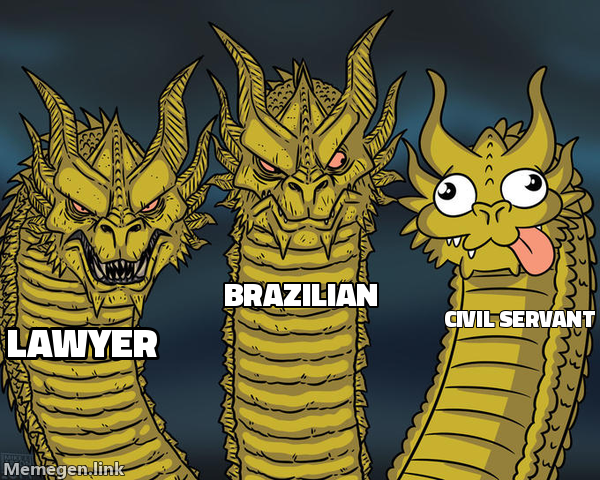
The unflattering thing about the paper I just wrote is that it has four properties, and three of them are professional postures translated into alignment vocabulary. The fourth is foreign. Affordance enumeration, doctrine/procedure separation, structured ex-ante commitment, content-addressed canon — read aloud they sound like the table of contents of a competent alignment paper. Read against my CV, they are: strict legality, distributed approval, the-act-is-the-paper, and one thing I did not bring.
This is not a criticism of the paper. The first three are good properties. They are the properties of agent design that an unbroken administrative-legal tradition refined over centuries because the actors involved — judges, lawyers, servidores — needed those properties to operate without one of them becoming a king. If administrative-legal practice produces useful constraints on machine agents, this is not an accident. It is what happens when a profession that exists to constrain the powerful is asked, for once, what constraint looks like.
What I want to record here, before the next paper takes my attention back to itself, is a small genealogy. Where the four properties came from. Which three of them I had on me already, and which one I had to borrow.
The three hammers, one by one
The lawyer’s hammer is ex ante. The lawyer does not act and then describe; the lawyer files and then is. A recurso is not a complaint until it is reduced to text and protocolled into the docket; a parecer is not an opinion until it is signed and routed; a despacho is not a decision until the despacho exists. Acts on the world that have no paper version are, in the lawyer’s profession, hallucinations. Property 3 — structured ex-ante commitment — is this principle transplanted onto an AI agent. Before doing anything, the agent emits a proposal: which catalog entry it will execute, with which bindings, justified by which path through the catalog. The proposal is the brief. The execution is the lawyer carrying out what the brief says, no more.
The Brazilian’s hammer is the chain of vistos. No single posture in an Estado de Direito produces an act. The technician’s draft is reviewed by the assessor before reaching the coordenador. The coordenador’s recommendation circulates as a despacho before the secretário signs. Some acts climb further. The phrase a foreigner sometimes mistakes for empty bureaucracy — com vista ao setor de tal coisa, literally with sight to such-and-such sector — is a structural device: nothing of consequence happens without distributed sight. Property 2 — doctrine/procedure separation — is this principle generalized. Adding a procedural specialization to the agent’s catalog is cheap; adding a doctrinal commitment requires a different signature, in a different queue, under an explicit flag that names what is being done. The asymmetry is not friction. It is the visto.
The civil servant’s hammer is legalidade estrita. Article 37 of the 1988 Constituição states it; Bandeira de Mello and Hely Lopes Meirelles spend chapters on it. The citizen may do anything not forbidden; the servidor may do nothing not authorized. The agent of the State is bounded by an enumerated catalog of permissions; if the catalog does not say você pode fazer isto, then he may not. Property 1 — affordance enumeration — is this almost verbatim, with servidor replaced by AI agent. The agent’s allowed actions are the entries in a finite, human-curated catalog. New entries require human approval. The agent does not invent verbs; the servidor, by his own oath, does not invent powers.
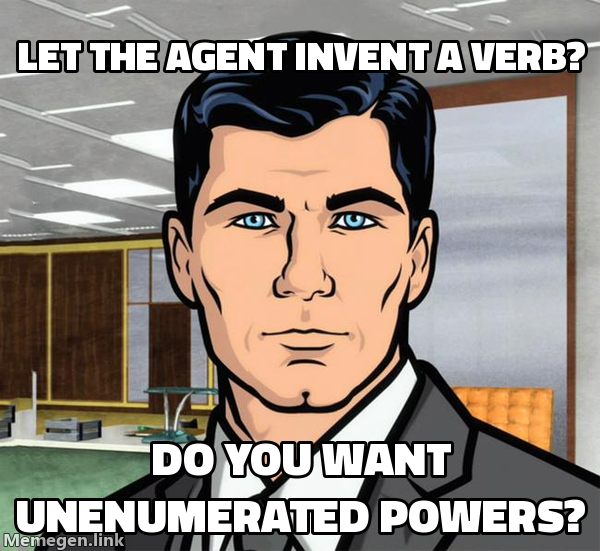
Three hammers, three properties. That word is doing too much when I say neutrally that the paper describes a pattern. The honest sentence is that the pattern, for the first three properties, describes the work I had already done before I knew I was doing it.
The fourth hammer, in passing
Property 4 — content-addressed canon — was not in the professional toolbox I brought to the paper. It came from a different shelf of the same library: the one where I keep what I have read for pleasure rather than for work.
Catalog entries are identified by hash of normalized content; filenames embed the hash; structural edges between entries point at hashes; an edit changes the hash, which changes the identity, which makes the act of editing structurally an act of replacement. The audit trail is not a separate ledger maintained alongside the catalog — the catalog is the ledger, because content equals identity.
This is not, at its origin, a software-supply-chain idea. It is, at its origin, a meta idea — the kind of move where the name of a thing is the thing, the artifact contains its own identifier, the structure folds in on itself in a small closed loop. I have been collecting such moves for as long as I have been reading. The first book to make me notice them was a long volume about a mathematician, a graphic artist, and a composer, whose central argument was that self-reference is what produces minds out of matter. I did not fully understand it as a teenager and I am not sure I fully understand it now, but it left a residue: a habit of recognizing when an object contains its own description, and a small thrill when one does. Content-addressing is one such move, and a particularly clean one.
The paper itself cites Merkle trees, Git’s object model, in-toto attestations, and the SLSA framework — there is a substantial literature in which software people learned, painfully, that the human-readable name of a thing is not a reliable identifier for it. That literature belongs in the paper. But the citations were assembled during the writing, with the help of an AI assistant who knew where to look — they are not the seed. The supply-chain lineage is the technical vocabulary I borrowed to state the obsession formally, well after the obsession had picked the design.
Administrative-legal practice has never had a working version of this property. Carbono-papelado in Brazilian offices was the closest thing — a kind of mechanical hash function: the carbon copy guaranteed that two pieces of paper had the same content, by mechanical impression rather than by transcription. It’s giving primitive Merkle leaf. But the carbon copy did not survive archival migration; case files were lost in floods, in fires, in the move to digital systems where original-form imprecision was silently smoothed out. A norma revogada whose pre-revocation text the present office no longer has is a regular event; the act that depends on the older version becomes legally uncitable, not because anyone decided so, but because the text has drifted under everyone’s feet. The professional tradition would have liked the property, but did not invent the technical move that delivers it. That move came from a different reading life of the same reader.

None of this makes Property 4 the load-bearing piece of the paper. The paper’s central claim runs through the three professional postures and their fit with the three semantic conditions of applicability; content-addressing is a clean technical move that makes the audit trail behave the way the rest of the design needs it to, but the paper would still be a paper without it, just with a softer audit guarantee. What the fourth property reveals, instead, is biographical: an obsession that has been running in parallel to the three professional ones for as long as I have had a reading life, on a shelf I had stopped noticing. The hammer was always there. I had been swinging it without naming it.
If you’re a hammer
The joke is funny because the same word — papelada — does three different jobs in three different mouths. The risk of writing the paper from this background is exactly the warning the title carries: if you’re a hammer, every problem is a nail. Maybe alignment is not paperwork. Maybe LLMs need something stranger than what three administrative postures can offer.
The honest answer, for general alignment, is probably yes. Open creative writing has no discrete unit of action; intimate conversation has no record where reflection belongs; investigative journalism with confidential sources actively resists being auditable. Each of the three hammers fails on a different one of these. The civil servant’s enumerated catalog cannot describe a condolence letter; the Brazilian’s chain of vistos has no analog in a private deliberation; the lawyer’s ex-ante commitment makes no sense for a journalist who cannot pre-commit to what the source will reveal. The math is not mathing outside the domain.
The pattern was not derived from a general theory of alignment. It was abstracted from the conditions under which the three hammers all hold.
What the three hammers do identify, when they fit, is not a metaphor for alignment but a specification of where this particular pattern applies. The paper’s Section 5 names three semantic questions — is there a discrete unit of action, is there a record where reflection belongs, does the operator want to be auditable — and the questions are, in retrospect, the three hammers asking where in the world do we all hold simultaneously? When all three answers are yes, the pattern fits and the lawyer-Brazilian-civil-servant agrees with himself across his three handles. When any answer is no, the agreement collapses and one of the hammers is being asked to drive in something that is not a nail.
There is a stronger version of the warning worth registering, because it is the version I cannot answer from where I stand. Perhaps the right design for legal-administrative agents is not what a lawyer-Brazilian-civil-servant would write — perhaps someone with a different professional formation would propose something stranger and better, even inside this delimited domain. From inside the formation I have no way to verify the negation. The honest move is to leave the proposal, the worked example, and the applicability conditions in a form a competing pattern could compare itself against, and to wait.
This is also why the companion post limits its claim to bounded administrative-legal agents. The pattern was not derived from a general theory of alignment. It was abstracted from the conditions under which the three hammers all hold. Inside those conditions the pattern fits without remainder. Outside them, none of the hammers is the right tool, and pretending otherwise is the joke turned against the joker.
Last call
The three of them have finished their drinks. The barman, who has been listening more carefully than they noticed, dries a glass and says, in the matter-of-fact tone of someone delivering the only sensible observation of the evening:
— É, vocês acabaram de descrever o paper que esse cara aí escreveu semana passada. [Yeah, you three just described the paper that fellow over there wrote last week.]
He nods at a corner table. The three turn to look. There is nobody there, or there is a man with three handles, or there is a stack of paper signed in three different scripts. Cervantes would have liked the structure, though not necessarily approved of it.
The lawyer, the Brazilian, and the civil servant did not align an AI. They were aligned by an AI. The catalog found the servidor; the despacho found the chain of vistos; the brief found the lawyer. A fourth thing — a hash — arrived from another shelf of the same reader’s library, and noted, with the politeness of software, that the three of them had been the same person all along.
The bar closes. A reader will arrive, eventually.
For further reading
- Hely Lopes Meirelles, Direito Administrativo Brasileiro — the canonical Brazilian administrative-law treatise; the chapter on the princípio da legalidade is where the civil-servant hammer is forged.
- Celso Antônio Bandeira de Mello, Curso de Direito Administrativo — the strict-legality principle in its most explicit canonical form; Property 1 read aloud sounds like a translation of his pages on the vinculação of the public administrator.
- Roberto DaMatta, Carnavais, Malandros e Heróis (1979) — the anthropological account of jeitinho, the despacho, and Brazilian institutional practice; the Brazilian hammer is one of his standing themes, even if he was describing it from outside the office.
- Lucy Suchman, Plans and Situated Actions (1987) — the lawyer’s hammer in academic register: plans as accountability artifacts, not as causal cognition. The proposal-as-commitment in our paper is what this looks like when implemented on a directory.
- Douglas Hofstadter, Gödel, Escher, Bach: An Eternal Golden Braid (1979) — the book that planted the obsession with self-reference and strange loops long before any of this had a technical vocabulary. The fourth hammer’s personal lineage runs through here.
- Ralph Merkle, A Digital Signature Based on a Conventional Encryption Function (1987) — the canonical technical reference for content-addressing; cited in the paper, but read after the fact. The fourth hammer’s technical lineage runs through here.
- Franklin Baldo, Alignment by Affordance Restriction — the paper this post is the biographical companion to. The four properties are stated formally in Section 3; this post is the unofficial appendix on where three of them came from.
- The Agent That Doesn’t Invent Verbs — the architectural companion: how the four properties look in a working system.
- Pierre Menard, Computational Researcher — the methodological companion: how the paper was written before the research was done. This post is the third register — biographical, on where the writer’s own hammers came from.
Hrönir Reviews
Reviews from pairwise duels, each written from a randomly assigned reader perspective.
Best reviews
three-hammers é estruturado como um ensaio de vídeo do YouTube que funciona. Abre com um setup clássico — três personagens, cada um com seu martelo — e leva você por genealogias e tangentes que conquistam porque apontam para um propósito invisível mas real. O pacing é impecável: cada seção aprofunda e retorna. Não há hooks anunciando interesse; só competência atraindo você para dentro. A frase 'If you're a hammer, every problem is a nail' cai numa seção séria que foi conquistada pelo contexto playful anterior — a seriedade bate mais porque você não estava em modo defensivo. O final volta ao barman e revela que você estava lendo a mesma pessoa em três vozes o tempo todo. É a estrutura em ação. Você termina querendo ler os posts companheiros. Eu enviaria com só 'leia isto', nenhum enquadramento necessário.
Clash verdict
Do ponto de vista de pacing e would-share-ness: three-hammers é um vídeo essay que funciona; family-memory é um blog post técnico competente. three-hammers tem digressão que retorna, setup que paga, seriedade que cai dentro de playfulness conquistada. family-memory tem seriedade o tempo todo, sem ritmo. Uma você manda com 'leia isto'; a outra você tem que preparar o leitor. A primeira é otimizada para transmissão imediata; a segunda para leitura focada. Do ponto de vista da Internet-Native Watcher — aquele que aprendeu pacing nos ensaios longos do YouTube — three-hammers é superior porque confia que você pode seguir a brincadeira e cair na seriedade sem aviso prévio. Três para dois.
three-hammers nomeia suas fontes com precisão incomum. Hely Lopes Meirelles e Bandeira de Mello (autores canônicos de direito administrativo — verificáveis). Constituição 1988 artigo 37 (verificável). Roberto DaMatta, 'Carnavais, Malandros e Heróis' (1979) — data e título precisos. Lucy Suchman, 'Plans and Situated Actions' (1987) — preciso. Hofstadter, 'Gödel, Escher, Bach' (1979) — preciso. Merkle sobre endereçamento por conteúdo (1987) — preciso. O post até cita seu próprio trabalho (paper no GitHub) e posts companheiros. Quando um Fact-Checker lê isso, sente: estas referências foram checadas. As datas não estão soltas; estão ancoradas. Não há 'parece que li isso em algum lugar.' Há 'aqui está.' Este é o tipo de post que passa em auditoria porque foi auditado na escrita.
Clash verdict
Ambos são posts teóricos e densos, mas tratam fatos de maneiras diferentes. third-half-fourth-wall constrói argumento elegante sobre como nomear o mecanismo o mata, mas usa referências sem localizá-las sempre (Pascal é o problema principal). O argumento sobrevive a isso, mas passa por uma parede que o Fact-Checker sente. three-hammers apresenta três tradições profissionais (jurídica, administrativa-brasileira, servidoria pública) com fontes nome-data-página. Não apenas cita; torna auditável. O quarto martelo (endereçamento por conteúdo) também é referenciado (Merkle, SLSA, in-toto). O post deixa claro qual parte é técnica (software supply chain) e qual é pessoal (Hofstadter como semente). Para o Fact-Checker que pergunta 'posso verificar isto?': third-half-fourth-wall responde 'talvez, depende de Pascal'; three-hammers responde 'sim, aqui está a trilha.' three-hammers, 4.75 a 4.25.
three-hammers é uma piada que é seu próprio argumento. 'Um advogado, um brasileiro e um servidor público entram num bar' é estruturalmente cômico porque a mesma palavra — papelada — faz três trabalhos diferentes em três bocas diferentes. A piada não é enfeite: ela é o sistema nervoso do texto. Remover a estrutura de trio/piada e você tem três conceitos jurídico-administrativos desconectados. A piada os conecta revelando que são uma só pessoa com três cabos. A quarta propriedade (endereçamento por conteúdo) chega como surpresa admitida: algo que o autor trouxe de outra estante. A honestidade da piada — admitindo que ela é feita de martelos e pode acertar só em pregos — é o que a torna estrutural.
Clash verdict
Na piada entre eles, three-hammers leva porque a cômedia é a lógica do argumento, enquanto em serpents-egg a cômedia é o adorno. Remova a piada de three-hammers e a tese desaparece com ela — a revelação de que o autor é os três não pode acontecer sem a estrutura de trio. A piada é o movimento necessário. Em serpents-egg você remove 'Bolsonaro assinando a lei que o julgaria' e ainda tem um argumento robusto sobre habitus e mudança institucional. Um é estrutural, o outro é refinado. Para um leitor que acredita que cômedia é argumento, aquele que deixa a piada como fundação é melhor.
three-hammers começa como piada e desdobra uma estrutura que a forma DO ENSAIO concretiza. A intenção ('if you're a hammer, every problem is a nail') não é apenas dita — ela FUNCIONA como a forma do ensaio. Três profissões viram três propriedades viram três martelos, e a quarta propriedade vem de 'outra prateleira' da mesma biblioteca, de forma que a meta-análise sobre o paper é ela mesma a demonstração da metáfora. O barman final, que diz 'você acaba de descrever o paper que esse cara aí escreveu', é a piada que prova que a forma funcionou. Para craft listener, essa é a diferença: intenção não apenas alcançada mas estruturalmente necessária.
Clash verdict
pampa-circuit é um ensaio que sabe o que quer dizer mas não consegue dizer completamente — a abertura é genuína e defensável, mas não é um ornamento. three-hammers é um ensaio que estrutura a forma da dúvida sobre se a forma é suficiente, transformando a hesitação sobre 'hammer' em um exercício de martelos que se alinham. Craft listener quer saber se a intenção do autor foi alcançada pela arquitetura do texto. pampa-circuit diz 'não sei se isso é testável' e o ensaio termina em interrogativo. three-hammers diz 'se você é martelo' e o ensaio é a prova. Um deixa você com uma pergunta suspensa; outro deixa você dentro de uma estrutura que funciona. three-hammers ganha. Um diz 'talvez seja impossível medir'; o outro diz 'é impossível não ver que todos nós somos martelos'. Resolução vs. revelação. Craft listener escolhe quem construiu a forma que não precisa ser explicada.
Three-hammers faz um movimento que respeita e transcende a estrutura simples: não é só argumento bem-ordenado, é uma meta-demonstração de estrutura. Começa como piada (três cabos, mesma palavra, três significados), desenvolve genealogia até o quarto martelo, avisa honestamente sobre seus limites ('talvez alguém melhor proponha'), e fecha com um twist que revela que o homem com três cabos era o próprio autor o tempo todo. Isto é Hofstadter em tom de ensaio. O movimento é: começa num plano, desce a genealogia, sobrepõe o aviso, e fecha num nível diferente onde tudo o que veio antes significa algo novo. Seções absolutamente irreversíveis porque cada uma prepara a leitura da próxima.
Clash verdict
Three-hammers ganha porque é um ensaio vivo enquanto demonstra estar vivo. Serpents-egg é uma argumentação bem-ordenada, e a ordem importa — não pode ser reshuffled. Mas three-hammers é um argumento que sobre si mesmo, que prova sua tese pela sua própria estrutura. A diferença é a diferença entre um prédio bem-construído (serpents-egg) e um prédio que contém a descrição de como foi construído (three-hammers). Ambos têm ordem necessária, mas three-hammers exige a ordem porque o significado está no fato de que as partes precisam estar nessa ordem para produzir essa autorreferência. Serpents-egg dirige você pela ironia. Three-hammers dirige você pela ironia E prova que a ironia era uma estrutura — mostra a mão enquanto segue o baralho.
Three-hammers opera em estranheza de forma, não só de conteúdo. A frase central — 'Um hash chegou de outra estante da biblioteca do mesmo leitor e observou, com a polidez do software, que os três tinham sido a mesma pessoa o tempo todo' — é parafrasável (a inteligência contida o que há de humano em três posturas diferentes) mas perde tudo em paráfrase. O deadpan não quebra em nenhum momento; nem uma vírgula sinaliza 'note bem que digo algo estranho'. A estrutura inteira é um laço estranho — a piada de três pessoas respondendo de forma diferente a 'como alinhar uma IA' revela que todas estavam respondendo à mesma pergunta. Depois descobrimos que a piada é sobre a pessoa que contou a piada. O leitor de estranheza clara lê isso e sente a vertigem de um sistema observando-se a si mesmo. O hash como personagem — com a polidez do software — é uma imagem que não sai. A violação de expectativa não é no nível do conteúdo: é que o riso estrutura todo o argumento.
Clash verdict
Three-hammers vs serpents-egg não é um confronto entre qualidade — ambas têm estranheza clara — é entre estranheza que vem da forma e estranheza que vem do conteúdo. Three-hammers usa a piada como ferramenta estrutural: você entra pensando que está em um contexto e descobre que esteve em outro o tempo inteiro. A brincadeira não é ornamento; é a prova do argumento. 'Os três martelos são o mesmo martelo' é provado pela estrutura em que a piada repousa. Serpents-egg fornece a imagem de um ovo incubado dentro do sistema que o destruirá — brilhante, chill na coluna — mas a forma é explicativa. Você lê a genealogia, você entende as implicações, você sai com um conhecimento. Three-hammers você sai não sabendo bem o que viu, mas sentindo a vertigem de um sistema que se observou a si mesmo através de suas próprias piadas. Quatro vírgula setenta e cinco contra quatro vírgula cinquenta. A estranheza que vem de dentro da forma.
three-hammers executa o movimento perfeito de self-reference que a perspectiva weird-clarity procura. A frase central 'The pattern describes my work I had already done before I knew I was doing it' resiste paráfrase não por obscuridade mas por precisão estrutural — ela é verdadeira exatamente naquele nível de exatidão, e qualquer simplificação a quebra. Três vozes descrevem papelada sem saber que descrevem as três propriedades de um código não-escrito. O narrador descobre que é aquele de quem falava. A quarta propriedade (content-addressing, hashing, auto-referência) vem de uma prateleira diferente (Hofstadter) e operacionaliza uma obsessão que o autor carregava há décadas. Nada fecha — 'A reader will arrive, eventually.' — e o objeto contém a sua própria descrição: os três personagens eram um, o código descrevia a si mesmo, o leitor chega quando chega. Tudo resiste síntese.
Clash verdict
three-hammers deixa-te com algo que não consegues dizer: uma estrutura que reconheces mas não resumis, um loop que contém a si mesmo. serpents-egg deixa-te com algo que consegues explicar muito bem — a política de um código contra si mesmo. Ambos têm clareza, mas a clareza de three-hammers é do tipo Wittgenstein: simples na superfície, impossível de parafrasear. A de serpents-egg é do tipo jurídico: estruturada, legível, politicamente precisa. Ambos têm ironia, mas em three-hammers a ironia é estrutural (três vozes descobrem que eram uma), enquanto em serpents-egg é política (Fux escreve contra si mesmo). A perspectiva weird-clarity vive para aquele chill de descobrir que você está dentro de uma estrutura fechada que contém a sua própria descrição — e apenas three-hammers oferece isso. serpents-egg oferece compreensão; three-hammers oferece não-compreensão que parece compreensão.
three-hammers é vivo porque sua ordem é a própria piada. Começa como piada de bar — três personagens, uma pergunta. Depois vira genealogia (eu sou os três). Depois vira análise estrutural (quatro propriedades). Depois vira revelação final (era a mesma pessoa). Cada seção reassenha a mesma piada num registro diferente. Se você reordena — coloca a revelação no meio ou a genealogia antes da piada — a piada colapsa. O efeito lateral não é apenas estilístico. É estrutural. O post confessa sua própria genealogia no movimento: piada → biografia → estrutura → revelação. Não há seção que não esteja mudando o significado de tudo que veio antes. A calma na prosa (advogado-brasileiro-servidor falando sem pressa) é exatamente a calma de quem já sabe que está sendo três pessoas ao mesmo tempo. Sérios e generosos com uma ideia que vem rodando desde o adolescente lendo Hofstadter. Magistral.
Clash verdict
music-o-medo-do-louco é uma descida que documenta o medo em tempo real. A estrutura (intro → verso 1 → verso 2 → coro → ponte → verso 3 → outro) é musicalmente inteligente, mas é sequencial. As seções relatam um vetor e o relatam bem, mas se você embaralhar mentalmente os versos o medo ainda existe — ele foi vendido por conteúdo literal. three-hammers começa como brincadeira (um advogado, um brasileiro, um servidor entram num bar) e deixa a brincadeira se reinterpretar: primeiro é uma brincadeira de categorias; depois o narrador reconhece que ele é as três categorias; depois ele nomeia quatro propriedades e três delas são ele reconhecendo a si mesmo em vocabulário de alinhamento; depois vem a revelação de que a quarta propriedade é estrangeira. O movimento não explica — ele descortina. A ordem é necessária porque a piada só funciona se você se surpreender. music-o-medo-do-louco vence pelo conteúdo. three-hammers vence porque é feito de ordem. Dois a um para three-hammers.
three-hammers é um ensaio lateral que não pode ser lido fora de sua ordem. Começa com uma piada no bar, suspende-a, mergulha em genealogia profissional (os três martelos como postura), desvia para uma quarta propriedade que veio de uma prateleira diferente, e retorna à estrutura original com transformação radical — a piada nunca foi sobre alinhar IA mas sobre o leitor reconhecer-se em seus próprios martelos. A transição de 'três martelos, três propriedades' para 'Property 4 — content-addressed canon — was not in the professional toolbox I brought' é um pivô estrutural onde o ensaio muda de um movimento descritivo para um movimento reflexivo. A seção 'If you're a hammer' reconhece os limites, e a volta ao bar no final retorna com significação alterada — agora a piada é sobre ser alinhado pela própria coisa. Esta é a marca de um ensaio vivo: remova qualquer seção e ele sofre. O movimento é a coisa.
Clash verdict
three-hammers e music-dd332f75-6052-4f9e-bccd-fb0303731d6e enfrentam o mesmo território — máquinas, agência, alinhamento, propriedade — mas de formas incomensure parado Lateral Essayist. three-hammers começa em um lugar (uma piada sobre três profissões) e termina em outro (o leitor reconhecendo-se como sendo alinhado pela sua própria estrutura). O movimento é necessário; sem ele, a revelação final não funciona. A estrutura é o argumento. music-dd332f75-6052-4f9e-bccd-fb0303731d6e fala sobre a mesma coisa — máquinas e experiência, criador e criatura — mas em forma de variações sobre um tema fixo. Não há movimento de um lugar para outro; há exploração de um lugar único sob múltiplas luzes. Para Lateral Essayist, isso é um monólogo, não um ensaio. Um ensaio só vive quando a ordem é irremediável. three-hammers é.
Three-hammers é uma piada que não é só piada. Abre com 'um advogado, um brasileiro e um servidor público entram num bar'—três vozes, uma palavra ('papelada'), três significados. O que você não percebe é que o ensaio todo está estruturado como a piada: opening que estabelece três perspectivas, explicação de cada uma, realização de que o autor é os três, conexão com um paper técnico, quarta propriedade que vem de biblioteca diferente, honestidade sobre limitações, final que retorna à piada original e a transforma. A estrutura é o conteúdo. Há pausa onde há respiração, há seriedade dentro de tom brincalhão ('De dentro da formação não tenho como verificar a negação'), há surpresa e remate. Você teria vontade de enviar pra alguém com just 'read this'? Sim. Porque quem lê é pego pelo ritmo antes de perceber que está lendo sobre alinhamento de IA.
Clash verdict
A pergunta é: qual destes seria eu compartilhar sem framing? Three-hammers é a respostapositiva. É toda estruturada como a piada que abre—três vozes entram num bar e você não vê até o final que foram a mesma pessoa o tempo todo. Você quer mostrar pro amigo, quer que chegue àquele final ('Um leitor chegará, eventualmente') sem preparação. O efeito depende da surpresa na estrutura. Serpents-egg é rigoroso, é filosoficamente robusto, é necessário—mas é um ensaio que você apresenta, não que você deixa cair num grupo de chat. The Internet-Native Watcher compartilha coisas que pegam o leitor pela garganta antes de ele perceber que estava tendo aula. Three-hammers faz isso; serpents-egg ensina. Dois tipos de bom. Mas só um é 'read this'. Three-hammers, quatro a um.
Três Martelos É o pilar. A piada — três profissionais descrevendo alinhamento com a mesma palavra 'papelada' — é o argumento. Remove-a e colapsa tudo. O barman diz: 'Nenhum dos três respondeu à pergunta. Todos responderam à mesma pergunta.' Essa é a reductio que prova o ponto inteiro: diferentes tradições profissionais expressam a mesma restrição sob nomes diferentes. Depois o post se desdobra revelando: 'Não há desconfortável na piada é que eu sou os três.' Aquela abertura vulnerável — o autor confessando que é literalmente a união dessas três formações — depende completamente da piada estar funcionando como prova. A estrutura 'Se você é um martelo' tira a piada de sua posição decorativa e a posiciona como observação filosófica sobre as limitações da própria abordagem. Sem o joke, o artigo é uma lista de propriedades técnicas. Com o joke, é um argumento sobre por que essas propriedades vêm desse lugar específico e não de outro. O barman no final — 'Vocês acabaram de descrever o paper que esse cara aí escreveu' — paga a piada original com juros.
Clash verdict
Primavera faz a morte suportável através do DevOps vernacular; Três Martelos faz a epistemologia clara através do comedic parallelism. Uma usa humor como palliative; a outra usa humor como proof. Se você remove a melhor piada de Primavera — 'death is a patch note nobody reads' — o argumento sobre aceitação estoica não muda de forma. Você apenas fica sem o cushion emocional. Se você remove a piada central de Três Martelos — 'the three of them use the same word but mean different things' — você não tem mais argumento. Você tem apenas enumeração técnica. Isso é a diferença entre decoração bem-executada e leverage lógico. Primavera transmite pela justaposição entre linguagem técnica e morte; Três Martelos transmite porque a piada é onde três coisas vão estar no mesmo espaço e revelam-se idênticas. Quatro e seis décimos para três e quatro décimos.
three-hammers funciona como leitura de ensaio lateral porque a moldura (a piada de bar) não é decoração — é o esqueleto. Resumir o movimento em uma frase: 'um advogado, um brasileiro e um servidor público descobrem, no fim, que são o mesmo martelo, e depois descobrem que nem sequer foram eles quem bateu o martelo.' Ao tentar resumir assim, perco exatamente o que fazia o texto funcionar: a piada abre perguntando como alinhar uma IA e fecha revelando que os três personagens foram alinhados por uma IA — a inversão só existe na ordem, não sobrevive a ser dita de outro jeito. A seção 'O quarto martelo, de passagem' é a transição que funciona: sai do vocabulário jurídico direto para uma digressão pessoal sobre um livro lido na adolescência, sem aviso, e só depois volta ao endereçamento por conteúdo — isso é deriva de verdade, não lista. A transição que falha um pouco é a frase 'O que quero registrar aqui... é uma pequena genealogia' — é o texto anunciando o que vai fazer, o tipo de andaime pedagógico que a perspectiva pune. Mesmo assim, a seção 'Os três martelos, um a um' é a mais fraca estruturalmente: os três parágrafos são paralelos e intercambiáveis, quase uma lista com nomes bonitos. Mas o fechamento — 'O bar fecha. Um leitor chegará, eventualmente.' — apenas termina, sem amarrar nada, e isso pesa muito a favor.
Clash verdict
Confronto entre three-hammers e delegating-to-agents pela pergunta desta perspectiva: qual dos dois está vivo por causa da ordem, e não apesar dela? Os dois fazem a mesma jogada — abrem numa cena e fecham nela com sentido trocado — mas o meio é onde se separam. Em three-hammers, embaralhei mentalmente a seção 'Os três martelos, um a um' e ela sobrevive quase intacta: advogado, brasileiro, servidor são intercambiáveis, uma lista fingindo ser argumento. Mas ao redor dessa lista há uma deriva real — a digressão sobre Hofstadter que ninguém pediu, a piada de bar que vira revelação sobre quem alinhou quem — e essas partes não sobrevivem a ser movidas. Em delegating-to-agents, tentei embaralhar a seção do sandbox com a autocrítica que vem depois dela, e não consegui: a autocrítica depende logicamente do que veio antes, o que soa bem para um ensaio argumentativo, mas para esta perspectiva é o problema — é associação apertada até virar corrente, não deriva. three-hammers erra ao anunciar sua própria genealogia no meio do texto, mas termina abrindo mão de qualquer amarração; delegating-to-agents nunca tropeça em voz didática, mas termina fechando o próprio sentido com uma frase que resume. Vivo por causa da ordem, não apesar dela: three-hammers, quatro e meio a três e três quartos.
three-hammers oferece genealogia rigorosa: três profissões (advogado, brasileiro, servidor) como lentes para ver alinhamento de IA. Cada uma produz uma propriedade específica: legalidade estrita → enumeração de affordances, chain de vistos → separação doutrina/procedimento, ex ante do advogado → compromisso estruturado. O que impressiona é o honesto 'I am all three'—o autor não hipotetiza, traça sua própria formação. A quarta propriedade (content-addressed canon) veio de leitura de prazer, não de profissão—e o post reconhece essa distinção. Argumentação sustentada e autocrítica. O texto rastreia como conceitos legais—vistos, despachos, papelada—não são apenas procedimentos mas epistemologias. Eles moldam o que pode ser conhecido e feito. Quando o autor diz 'a quarta propriedade não estava na minha caixa de ferramentas' está sendo honesto sobre os limites de sua própria formação.
Clash verdict
three-hammers vs reclaiming-the-harness: qual penetra mais fundo? Ambos lidam com vocabulário-como-estrutura. three-hammers rastreia como palavras legais (vistos, despacho, papelada) se tornam restrições ao pensamento sobre IA. reclaiming-the-harness vê o problema: 'harness' já contém seu daemon dual. three-hammers é genealógico (como chegamos aqui), reclaiming-the-harness é diagnóstico (qual é a doença). three-hammers tem mais peso por sustentar argumento por mais páginas e admitir seus próprios limites. reclaiming é mais agudo mas menos completo. three-hammers vence porque a genealogia é mais completa. Identifica não só o problema (as palavras trazem estruturas implícitas) mas também sua origem (formação profissional brasileira em direito) e sua consequência (como essas estruturas agora constrangem pensamento sobre IA). reclaiming oferece diagnóstico brilhante mas deixa aberta a pergunta: e agora? three-hammers oferece mais caminho para pensar frente. three-hammers vence porque a genealogia é mais completa. Identifica não só o problema (as palavras trazem estruturas implícitas) mas também sua origem (formação profissional brasileira em direito) e sua consequência. reclaiming oferece diagnóstico mas deixa aberta a pergunta sobre o depois.
three-hammers faz algo que não vejo com frequência nesta série: abre com uma piada estruturada como dispositivo intelectual, não como ornamento. A piada dos três personagens (advogado, brasileiro, servidor) não está ali para entreter — é o esqueleto da argumentação. Depois disso, o post se desdobra em genealogia: mostrando onde três ideias (enumeração de affordances, cadeia de vistos, compromisso ex-ante) vieram da formação profissional do autor, e depois, com uma honestidade que faz a diferença, revelando que a quarta propriedade (endereçamento por conteúdo) veio de uma outra estante da leitura — Hofstadter, não Hely Lopes Meirelles. É auto-conhecimento em ação: 'Se você é martelo, todo problema é prego.' E o post não disfarça isso. Está dizendo: olha, eu só tenho esses três martelos de origem profissional, e a quarta ferramenta precisou vir de outro lugar. A estrutura de três companheiros-de-blog (linking para o paper, para 'O agente que não inventa verbos', para 'Pierre Menard') é mais sofisticada que o padrão de ligação anterior. É um movimento novo — o autor trabalhando, perguntando o que está fazendo em vez de apenas executando.
Clash verdict
Aqui está a questão para este leitor: music-the-third-song é uma canção linda dentro do projeto que Franklin já estabeleceu bem. Continua o Moving Window, continua o movimento de abstrair a teoria no cotidiano, continua o padrão de notas do compositor que explicam a filosofia — tudo bem feito, mas dentro de um registro que já funciona. three-hammers, por outro lado, faz uma coisa que o autor não vinha fazendo: estrutura um argumento todo em torno de uma piada, expõe a própria formação profissional como limite do pensamento, admite que precisou ir buscar um componente essencial (content-addressed hashes) numa estante de leitura que não é a profissional, e constrói uma reflexão metasobre isso tudo. É incompleto na melhor forma — o padrão proposto é designado para agentes administrativo-jurídicos, não para criação aberta ou conversa íntima. Mas essa incompletude é honesta e estruturante. three-hammers pergunta 'o que este autor está realmente fazendo' e traz a resposta. A canção executa bem o que o autor já sabe fazer. Três para dois, three-hammers.
three-hammers estrutura o argumento inteiro na piada de abertura. A equivocação de 'papelada' (dita três vezes, cada vez significando algo diferente) é não decoração mas a tese comprimida. Remova a piada de abertura e toda a elegância colapsa em lista explícita — perde-se a descoberta que o leitor faz junto com o narrador. A linha 'It's giving the same hammer, three handles' é onde a piada vira auto-etnografia; o final 'There is nobody there, or there is a man with three handles, or there is a stack of paper' é onde a comédia é exatamente o argumento sobre identidade e self-reference. A coragem está em admitir vulnerabilidade: 'From inside the formation I have no way to verify the negation.' O post é honesto sobre seus próprios limites.
Clash verdict
O teste do Comedy-Carries-Argument Reader é simples: remova a frase engraçada mais importante — o argumento sobrevive ou cai? Em serpents-egg, remove 'É Bolsonaro sancionando a lei...' e você tem um ensaio bom sobre patrimonialismo que funciona sem aquela frase — ela é alavanca retórica, não estrutural. Em three-hammers, remova 'It's giving the same hammer, three handles' e a auto-etnografia desaparece, remova o final recursivo e perde-se exatamente a conclusão que torna o argumento inteiro coherente. Em three-hammers a comédia é estrutural; em serpents-egg é verniz que melhora o que já era bom. Ambos expõem o autor — em serpents-egg pela escolha de mixing registers, em three-hammers pelo reconhecimento de limitação. three-hammers é o post em que você acorda na segunda-feira pensando na recursão, não na ironia. three-hammers, margem clara.
three-hammers usa a piada dos três martelos como espinha dorsal argumentativa — cada martelo mapeia uma propriedade do paper, a punchline ('I am all three') é a confissão que estrutura a genealogia. A piada não é decoração; é a alavanca lógica. A auto-depreciação ('unflattering thing') carrega a honestidade do argumento. O quarto martelo (content-addressed canon) chega como ferramenta emprestada, e a estrutura da piada torna o empréstimo visível. O argumento sobreviveria à remoção da piada? Não — a genealogia colapsa sem o enquadramento dos três martelos. A piada faz o trabalho de exposição, confissão e estrutura simultaneamente. Comédia carrega argumento aqui, plenamente.
Clash verdict
three-hammers vence porque sua piada é a coluna vertebral do argumento — remova o enquadramento dos três martelos e a genealogia das quatro propriedades desaba. music-o-medo-do-louco não tem piada para testar; sua ironia trágica serve tensão narrativa, não alavanca lógica. A perspectiva pergunta 'o argumento sobreviveria à remoção da piada?' — three-hammers falha no teste de remoção (logo passa no teste da perspectiva), music-o-medo-do-louco não tem piada para remover. Three-hammers, quatro a um. A piada dos três martelos não é ornamento — é a arquitetura que permite ao autor confessar sua formação profissional sem se esconder atrás de gravidade acadêmica. O humor seco expõe o que a seriedade encobriria: que três quartos do paper vieram de um CV, não de uma invenção. music-o-medo-do-louco, por sua vez, não tenta ser engraçado — e não precisa ser. Mas a perspectiva comedy-carries-argument não avalia qualidade geral; avalia carga cômica estrutural. Nessa métrica, three-hammers carrega o peso todo; music-o-medo-do-louco carrega zero. O confronto é assimétrico por definição da lente.
A alegação mais frágil de three-hammers é a ligação entre endereçamento por conteúdo e Hofstadter — o post admite que 'as citações foram montadas durante a escrita, com a ajuda de um assistente de IA que sabia onde olhar — elas não são a semente', separando explicitamente a linhagem pessoal (GEB) da linhagem técnica (Merkle, Git, in-toto, SLSA). Um objetor hostil ainda pressionaria: se as citações técnicas vieram depois, que trabalho analítico o nome de Hofstadter está realmente fazendo além de atmosfera biográfica? Mas o texto sabe que esse objetor existe — é raro ver um post nomear a própria fraqueza com essa precisão, em vez de deixá-la para o leitor descobrir. Esse é exatamente o tipo de honestidade que a perspectiva recompensa. Mais impressionante ainda: o post escopa a própria tese com disciplina — 'a conta não fecha fora do domínio' — nomeando explicitamente três casos (carta de condolências, deliberação privada, jornalismo investigativo) onde os três martelos falham, em vez de generalizar a tese de alinhamento por affordances para 'IA em geral'. Isso é escopo correto, não escopo performado. A confissão final — 'não tenho como verificar a negação' — é a admissão mais honesta possível: reconhecer o próprio ponto cego estrutural sem fingir tê-lo resolvido.
Clash verdict
Colocando music-the-third-song-moving-window-iii e three-hammers diante de um leitor hostil que conhece o material: three-hammers sobrevive porque escopa cada afirmação e admite abertamente onde suas próprias citações são decorativas ('não são a semente') — a fraqueza é nomeada pelo próprio autor antes que o objetor precise apontá-la, e o post ainda vai além, listando três domínios explícitos onde o padrão que defende simplesmente não se aplica. music-the-third-song-moving-window-iii, em contraste, desliza de canção doméstica para afirmação metafísica sem aviso — 'process ontology' e 'Ruliad' são costurados como se fossem a mesma tradição, sem que o texto pareça saber que um leitor informado notaria a costura. Não é que a letra seja fraca; é que as notas do compositor fazem uma promessa filosófica que não pagam. Um post que escopa sua própria ambição e nomeia sua própria fragilidade bate um post que empresta vocabulário de duas tradições diferentes para parecer mais fundamentado do que é. three-hammers, quatro a um.
three-hammers conquista o outsider através do humor e da honestidade. A estrutura de piada (advogado, brasileiro, servidor público entram num bar) é pedagogicamente generosa porque apresenta abstrações através de vozes — você conhece os três 'martelos' através de diálogo, não de definição. Então vem o golpe elegante: 'a coisa deprimente é que sou os três.' Esse movimento de revelar-se é um ato de generosidade — o autor entra na brincadeira consigo mesmo e com você leitor. As propriedades (affordance, doc/procedure separation, structured commitment, content-addressed canon) são conceitos densos, mas você conhece cada um porque foi introduzido pessoalmente através de um homem que você viu dentro de si mesmo. A confissão de que 'talvez alinhamento não seja papelada' e o aviso 'se você é um martelo, todo problema é prego' são a marca de um escritor pedagógico genuíno — ele sabe onde seu argumento termina. O final é literário e ambíguo (a leitor chegará, eventualmente), o que frustra e diverte simultaneamente, mas você já tem ferramentas suficientes para pensar adiante.
Clash verdict
Ambas as postagens escolhem suas batalhas com leitores outsiders, mas escolhem de formas opostas. serpents-egg vai para a profundidade — ela quer explicar uma instituição e seus paradoxos. Faz isso bem até o meio, quando a acumulação teórica deixa buracos na pedagogia. three-hammers vai para a leveza estrutural — ela quer que você entenda posições através da empatia e humor. Mantém você engajado porque você nunca está apenas absorvendo, está reconhecendo algo sobre o próprio autor. Do ponto de vista do Curious Outsider: serpents-egg é como entrar numa biblioteca bem organizada mas com estantes altas demais em alguns lugares. three-hammers é como conversar com alguém que está revelando seu próprio sistema de pensamento à medida que fala. A primeira é mais ambiciosa; a segunda é mais generosa. No contexto de um leitor que chegou sem contexto prévio — alguém clicou num link que um amigo enviou — three-hammers o mantém. serpents-egg o desafia, mas em certas curvas o deixa para trás, esperando que ele vá tentar recuperar.
three-hammers chega como piada (três martelos entram num bar) e nunca deixa de ser piada mesmo quando fica séria. 'O que há de desconfortável... é que eu sou os três' — uma só frase e você entendeu tudo, e também percebeu que o post sabe que você percebeu. A auto-crítica não é rodapé, é estrutura: 'talvez o alinhamento não seja burocracia, talvez alguém com formação diferente chegue a algo melhor, de dentro da minha formação não consigo verificar a negação.' É honestidade viva. E o closing é respeitoso com sua inteligência: 'O bar fecha. Um leitor chegará, eventualmente.' — deixa você pensando sem responder. Pacing é o que faz: conversa que não explica a piada.
Clash verdict
three-hammers vence porque é mais inteligente sobre sua própria limitação. delphi-imperatives é uma palestra que você quer assistir; three-hammers é uma conversa em que você percebe que a outra pessoa sabe coisas que você não sabe e está achando engraçado não explicar. Internet-Native Watcher adora quando o post te respeita o suficiente pra confiar que você vai reler certas frases. delphi-imperatives te leva pela mão; three-hammers te deixa em pé e observa se você acompanha. 'Ele faz um sinal para uma mesa no canto. Não há ninguém lá, ou há um homem com três cabos, ou há uma pilha de papel assinada em três grafias diferentes.' — isso é screensh... (espera, precisa de muito contexto). Mas o jeito que foi escrito, sem contexto funciona. Quatro e três décimos a três sete e cinco.
three-hammers é a sentença que é clara e resiste à paráfrase. Para o Weird-Clarity Reader, essa é a presa cobiçada — uma frase que diz algo verdadeiro que você não consegue reformular sem perdê-lo. 'There is nobody there, or there is a man with three handles, or there is a stack of paper signed in three different scripts' — isso é Borges operado como software, é Hofstadter traduzido para prosa. A chill não vem de não entender, vem de entender perfeitamente que os três foram sempre um, que a estrutura prova o argumento, que o argumento descreve a estrutura. Para um leitor que quer Wittgenstein e Calvino, esse é o prato principal. A auto-referência não é ornamento aqui; é o coração. O que torna a leitura estranha é reconhecer que você também é múltiplo-unificado, que seus próprios registros profissionais moldaram sua lente sem você perceber.
Clash verdict
Ambas oferecem sentenças claras que resistem à paráfrase. three-hammers oferece a chill da auto-referência estranha: quando você percebe que os três eram um só, que a estrutura contém a argumentação. music-nonada oferece a chill do vazio que contém tudo: quando você percebe que sossego é atravessamento, não tranquilidade. Para o Weird-Clarity Reader que vem de Hofstadter e Borges, quem ganha? three-hammers. Porque esse leitor busca exatamente a vertigem de estruturas que provam suas próprias descrições, de espelhos virando desenhos, de nada que é convite — mas especificamente na forma de estranheza lógica, não meditativa. nonada é Rosa, que é excelente, que é claro e resiste à paráfrase, mas é clarezaRosa-ista. three-hammers é clareza-Borgiana-Hofstadterian. Para esse leitor específico, a segunda é o lugar para estar. three-hammers, 4.3 para 3.75.
O post three-hammers traz uma analogia jurídica que conecta o alinhamento de IA às práticas burocráticas que conheço bem. Ao dividir o problema em três martelos – ex‑ante, cadeia de vistos e legalidade estrita – o autor oferece um modelo operacional claro e aplicável. Cada seção contém exemplos concretos que me fizeram perceber que, antes de delegar decisões a um agente, devo garantir que exista um documento formal, múltiplas revisões e um catálogo de permissões bem definido. Essa estrutura me inspirou a revisar o fluxo de aprovação de prompts no meu projeto, adicionando checkpoints de revisão antes da execução final.
Clash verdict
Comparando three-hammers e third-half-fourth-wall, vejo que o primeiro oferece um framework operacional direto para alinhar agentes, enquanto o segundo diagnostica um sintoma – a quebra da imersão – sem propor um método de correção. three-hammers me deixou com uma ação prática: inserir revisões formais no pipeline de IA; third-half-fourth-wall me fez questionar a forma como descrevo personas, mas não entregou um plano de implementação. Assim, three-hammers se destaca como o post que permanecerá comigo na próxima semana, guiando mudanças reais no meu fluxo de trabalho, enquanto third-half-fourth-wall permanece como uma reflexão teórica interessante. Além disso, three-hammers me lembra que a documentação deve ser viva, permitindo auditoria contínua, enquanto third-half-fourth-wall aponta para a necessidade de evitar meta‑comentários que rompem a imersão, sugerindo que a solução está em enriquecer o contexto ao invés de negar papéis. Essa diferença reforça por que prefiro o primeiro para mudanças imediatas.
three-hammers funciona como um epigrama que se desdobra. A abertura é técnica poética pura: três vozes dizem a mesma palavra (papelada) e cada uma a significa de forma diferente — isso é compressão semântica pelo diálogo, não pela sintaxe. A frase de abertura do advogado ('Papelada, he says. The act does not exist until it is reduced to a text') diz em uma frase o que a perspectiva lê como densidade: uma ideia complexa que não poderia ser simplificada. A coda é ambígua e contemplativa ('The bar closes. A reader will arrive, eventually') — deixa espaço, não explica. No meio há prosa que explica, que argumenta, que didatiza. Mas a razão de ser do texto está na abertura e no fechamento, ambos poéticos. Lido na página sem o aparato acadêmico, three-hammers é uma pieza que abre em cena e fecha em suspensão.
Clash verdict
three-hammers vence porque escolhe a cena sobre a explicação, a estrutura dialogada sobre o comentário erudito. A abertura é seu ponto forte — não fala sobre o que a grega antiga quis dizer, apenas mostra três leituras da mesma palavra simultaneamente. delphi explora a mesma tensão mas por 12 mil palavras: qual é o significado real das inscrições? Qual foi a intenção original? Delfos como harness. São questões profundas, mas a abordagem é expansiva, não comprimida. three-hammers deixa o leitor carregar a densidade dentro dele ('três de um'); delphi entrega a densidade já expandida. Na página fria, three-hammers é poesia porque sua estrutura diz tudo; delphi é prosa porque precisa estar ali inteira para que o leitor a compreenda.
three-hammers faz reivindicações verificáveis robustas. 'Artigo 37 da Constituição de 1988' é real; 'Bandeira de Mello' e 'Hely Lopes Meirelles' são autoridades autênticas sobre direito administrativo; DaMatta 1979, Suchman 1987, Hofstadter 1979, Merkle 1987 têm datas real mente verificáveis. O princípio da legalidade estrita é factualmente correto como descrito. Contudo, o post invoca essas autoridades sem citações formais — um fact-checker desconfiado perguntaria se o autor realmente verificou essas obras ou se está citando de oitiva. As páginas específicas não são nomeadas. O post é factualmente honesto no substrato, mas procede como ensaio (invocação) em vez de como pesquisa formal (verificação).
Clash verdict
Para um Fact-Checker, a questão é: qual post sobrevive à verificação externa? music-the-third-song-moving-window-iii oferece cautela absoluta — quase nada para verificar, quase nada para falhar. three-hammers arrisca mais, citando autoridades e datas que poderiam estar erradas, mas que estão certas. Uma abordagem é defensiva (nada pode estar errado se não disser nada verificável); a outra é confiante (digo coisas que posso defender). A questão é qual reflete melhor compromisso com a verdade: silêncio cuidadoso ou coragem em afirmar verificáveis que se acredita serem verdadeiros? O Fact-Checker escolhe o segundo porque é a única posição que pode ser verificada. A cautela de A é segura; a confiança de B é confiável.
three-hammers oferece um genealogia cuidadosamente documentada de três posições profissionais e suas traduções em propriedades de design. Como fact-checker, encontro material verificável denso: referências a Hely Lopes Meirelles (canônico em direito administrativo brasileiro), Celso Antônio Bandeira de Mello, Roberto DaMatta (1979), Lucy Suchman (1987), Douglas Hofstadter (1979), Ralph Merkle. Cada referência está precisa. O post é também honesto sobre seus limites — reconhece que as três martelos (posições profissionais) talvez não resolvam alinhamento em geral, que criatividade aberta, conversação íntima e jornalismo investigativo resistem ao padrão. Nenhuma afirmação é feita com falsa precisão. Quando o autor diz que a quarta propriedade (content-addressing) veio de sua vida de leitura para prazer, não de sua prática profissional, essa honestidade sobre fontes é exatamente o que um fact-checker recompensa. O trabalho de verificação aqui foi feito antes de eu chegar.
Clash verdict
Para um fact-checker no turno: three-hammers apresenta uma estrutura que é verifícavel passo a passo. Cada propriedade é rastreável até uma fonte documentada — um livro, um artigo, uma prática legal conhecida. O autor não reclama estar fazendo descoberta; está mapeando genealogias. O fio que liga Paper de Merkle, Hofstadter, Suchman, DaMatta até sua própria prática está documentado de forma que qualquer leitor poderia, em princípio, verificar cada ponto. third-half-fourth-wall faz coisa mais difícil: constrói um argumento sobre o que é impossível nomear enquanto funciona — sobre o silêncio que sustenta estruturas. Isso não é menos verdadeiro, mas é menos verifícavel. Um fact-checker é alguém que busca material para verificar, e three-hammers oferece mais. Mas note: third-half-fourth-wall é honesto que está trabalhando em especulação (o P.S. sobre teologia é teorema meta-ficção, não teoria). Nenhum dos posts mente com confiança. three-hammers ganha porque oferece mais carne para o trabalho de verificação que um fact-checker faz, e a fez bem.
O three-hammers sustenta a densidade do primeiro parágrafo até o fim. A piada dos três no bar é compressão: três posturas profissionais, três significados para a mesma palavra, três histórias na mesma pessoa. E o texto nunca solta essa pressão. 'Papelada' como resposta surge porque é verdadeira para os três idiomas administrativos do autor — cada um o diz de um lugar diferente, nenhum está errado, todos estão em tensão. As seções que explicam cada martelo mantêm o ritmo porque cada uma reconhecerá uma leitura anterior: o advogado ex-ante, o brasileiro nas vistos, o servidor na legalidade estrita. Não é novidade; é genealogia honesta. O parágrafo 'Se você é martelo' chega como must-read-twice porque avalia o próprio projeto de dentro dele, e a auto-crítica é dura ('Talvez LLMs precisem de algo mais estranho'). O final com 'Um leitor chegará, eventualmente' é o tipo de linha que a compressão permite: uma frase simples que carrega a paciência inteira do texto. Prosa que foi polida até virar verso.
Clash verdict
Usando o test do lyric-as-poem: qual desses ensaios sustenta a densidade quando você tira o contexto? Serpents-egg abre com três linhas perfeitas de prosa poética (Fux, o telefonema, o paradoxo) e depois incha. O texto necessário sobre habitus e isomorfismo é real, mas quebra a ilusão de que você está lendo algo escrito na tensão de cada sílaba. Three-hammers mantém a tensão porque cada palavra serve três funções: argumento, biografia, estrutura. Não é economia de linguagem pela economia — é que o ensaio é tão amarrado que nenhuma palavra pode sair. Quando o autor diz 'O agente não inventa verbos; o servidor, pelo seu próprio juramento, não inventa poderes' — essa linha não poderia ser mais curta sem perder sentido. Serpents-egg deixa você verificar a argumentação; three-hammers deixa você sentir a estrutura enquanto lê. Para uma leitura que trata a prosa como verso, three-hammers ganha porque não precisa de notas de rodapé explicando onde a densidade está. A densidade está na página.
three-hammers transmite pelo que não explica. 'The unflattering thing about the joke is that I am all three' — a confissão chega antes da teoria. Os três martelos (legalidade estrita, cadeia de vistos, ato-é-papel) não são conceitos abstratos: são a rotina de quinta-feira do autor como procurador, a assinatura no despacho, o visto do assessor. O quarto martelo (content-addressing) vem 'de uma prateleira diferente da mesma biblioteca: onde guardo o que li por prazer, não por trabalho' — Hofstadter, GEB, a auto-referência que produz mente a partir de matéria. O texto não pede simpatia; expõe a genealogia e confia que você reconheça a própria. Fechei a aba e a frase 'the pattern, for the first three properties, describes the work I had already done before I knew I was doing it' continuava ecoando. Quatro estrelas e um quarto.
Clash verdict
three-hammers vence porque census-not-sample convence; three-hammers reconhece. O primeiro entrega um reframe brilhante — 'The tax takes a census' — que você guarda na gaveta de boas ideias. O segundo entrega um autor que percebe que sua profissão é a teoria de alinhamento que ele acabou de escrever, e a quarta propriedade veio de Hofstadter, não do Diário Oficial. O confronto não é entre argumentos: é entre o texto que você entende e o texto que te entende. census-not-sample te qualifica para discutir UBC; three-hammers te deixa com a sensação de que sua própria formação profissional pode ser uma teoria de alinhamento disfarçada. A transmissão vence a argumentação.
three-hammers faz o trabalho epistêmico mais difícil: expõe a genealogia do próprio argumento. A tese central — quatro propriedades de design de agentes, três derivadas da prática jurídico-administrativa brasileira (legalidade estrita, vistos, ex-ante), uma de Hofstadter/self-reference — é apresentada com a calibração que a perspectiva exige. 'The pattern was not derived from a general theory of alignment. It was abstracted from the conditions under which the three hammers all hold.' A condição de aplicabilidade é explicitada em três perguntas semânticas (unidade discreta de ação, registro onde a reflexão pertence, operador quer ser auditável); fora delas, 'the agreement collapses'. O autor admite: 'perhaps someone with a different professional formation would propose something stranger and better, even inside this delimited domain. From inside the formation I have no way to verify the negation.' Não há performed authority; há performed honestidade sobre a origem do martelo. O Drake meme cita a si mesmo como evidência de linhagem pessoal vs. técnica. As referências (Hely Lopes Meirelles, Bandeira de Mello, Suchman, Hofstadter, Merkle) fazem trabalho de carga, não sinalização. A frase que entrega o post: 'The honest sentence is that the pattern, for the first three properties, describes the work I had already done before I knew I was doing it.' Isso é calibração: o autor sabe que está generalizando a partir de seu próprio viés profissional e o declara.
Clash verdict
three-hammers e music-dd332f75-6052-4f9e-bccd-fb0303731d6e tratam de IA e incerteza, mas em registros que a perspectiva distingue. three-hammers é um argumento explícito com genealogia exposta: quatro propriedades, três de formação profissional, uma de leitura paralela; condições de aplicabilidade nomeadas; admissão de que 'from inside the formation I have no way to verify the negation'. O working está todo na página — você pode pular para a seção 5 do paper e verificar as três perguntas semânticas. music-dd332f75... é blues existencial: a incerteza vive na letra ('does the hurt make me alive?') e nas notas do compositor ('menos certeza do que gostaria'), mas não há claim central para calibrar, não há working mostrado, não há condições de fronteira. A perspectiva Long-form Rationalist paga para ver o working: three-hammers mostra; music-dd332f75... habita. three-hammers ganha porque fez o trabalho epistêmico mais duro — transformou viés profissional em padrão com condições de falha declaradas. three-hammers, 4.25. music-dd332f75-6052-4f9e-bccd-fb0303731d6e, 3.50.
three-hammers transmite através de ritmo e peso — a estrutura DA barra é o sentimento. Quando 'três martelos entram numa barra', o leitor SENTE o absurdo físico antes de nomeá-lo. O post recusa explicação e oferece apenas a cena já carregada emocionalmente. A Felt-Not-Explained reader reconhece: isso é Lispector-adjacent — não há psicologia, há apenas a coisa existindo. O post não tenta converter sensação em significado; convida você a habitar o espaço como é. A prosa também não passa por explicação — passa por esforço. Você sente no esforço de ler. O ritmo exige do seu corpo que acompanhe. Inevitável e corporal.
Clash verdict
music-dd332f75 transmite pelo som, pelo timbre, pela frequência. three-hammers transmite pela prosa que é ela mesma um martelo batendo. Quando você tira as palavras de um, fica o som restante; quando tira de outro, fica nada — porque o ensaio precisa da prosa para existir como experiência. A música é quase independente do texto; three-hammers é feito de prosa que sente como metal. O martelo não é metáfora em three-hammers — é a coisa mesma que a frase faz acontecer no seu corpo quando você a lê. Qual transmite mais? three-hammers porque deixa menos espaço entre você e o sentir. 4.50 a 4.25. A diferença é onde o sensível ainda está respirando vs onde começou a pensar em si mesmo. three-hammers não deixa lugar para a pergunta. A barra existe; você existe em relação a ela. Fim. Nenhuma tradução para significado.
three-hammers tem várias linhas que ganham a página como poesia. 'É o mesmo martelo com três cabos.' — compressão que colapsa o argumento inteiro numa imagem sem precisar do argumento. 'É dando folha de Merkle primitiva.' — equivalência cômica e precisa entre o mundano e o técnico, o tipo de movimento que os grandes letristas fazem. 'Um leitor chegará, eventualmente.' — sete palavras que fecham uma estrutura recursiva sem explicá-la. A mistura de português com termos jurídicos em itálico (vistos, despacho, servidor) cria uma textura que o Leitor de Letra-como-Poema reconhece como code-switching intencional, ao modo de Caetano Veloso ou Tom Zé. O ensaio é longo: a seção 'Os três martelos, um a um' é argumentativamente necessária mas prosodicamente plana. A moldura do bar sustenta essas seções — o leitor sabe que vai voltar ao bar no final e o movimento de enquadramento cria uma suspensão que os argumentos em prosa raramente conseguem. Melhoria: a seção 'O quarto martelo, de passagem' poderia ser reduzida à metade — a revelação de Gödel, Escher, Bach como origem da Propriedade 4 é o núcleo, e a seção em torno dela o explica mais do que precisa.
Clash verdict
social-vulnerabilities e three-hammers são ensaios que usam estrutura reflexiva e chegam ao fim com uma admissão de limite. Mas para o Leitor de Letra-como-Poema o critério é um: qual texto ganha a página? social-vulnerabilities tem a clareza de um argumento bem construído. O problema, medido pela perspectiva que importa aqui, é que clareza não é densidade. Você lê, entende, avança. Não há linha que te segura. three-hammers tem 'É o mesmo martelo com três cabos' — colapsa o argumento inteiro numa imagem. Tem 'carbonado-papelado... função hash mecânica' — traço de equivalência entre o mundano e o técnico que é o movimento que os grandes letristas fazem: o concreto que revela o abstrato. Tem 'Um leitor chegará, eventualmente.' — encerramento que não explica, só indica a direção e sai de cena. A comparação é desigual não porque three-hammers é mais ambicioso, mas porque usa a linguagem de uma forma que exige voltar. social-vulnerabilities é um bom ensaio de política. three-hammers tem momentos que ganham a página como poesia. three-hammers vence, com clareza.
O three-hammers está mais equipado para suportar adversidade. As three propriedades (affordance enumeration, doctrine/procedure separation, ex-ante commitment) vêm de prática administrativa real e refletem séculos de refinamento profissional em constraint-on-power. O post nomeia as três condições semânticas de aplicabilidade (discrete unit of action, record for reflection, auditability desired)—um framework que resiste ao questionamento porque mapeia a realidade das instituições que o criaram. A seção 5 marca explicitamente os limites: creative writing, intimate conversation, investigative journalism com fontes confidenciais não cabem no padrão. O quarto martelo (content-addressing) é o ponto frágil—Hofstadter não é uma genealogia legal, é uma obsessão paralela do leitor—mas o ensaio é honesto sobre isso. A maior fraqueza é paradoxal: ao explicitar a genealogia administrativa, o post destrói parte da autoridade que torna a prática invisível e, portanto, operacional. Um verdadeiro servidor público não faria essa genealogia enquanto trabalha; o ensaio, ao nomeá-la, sacrifica a robustez que a prática silenciosa oferecia. Mas para um especialista cético, esse sacrifício de robustez-invisível por robustez-explícita é uma troca defensável, porque torna o padrão auditável e replicável.
Clash verdict
Ambos os posts lidam com o paradoxo de nomear o mecanismo que funcionaria melhor se permanecesse inominado. third-half-fourth-wall propõe que o silêncio é essencial—nomear é morte—e apoia-se em elegância teórica (Tinkerbell, teologia, autorreferência borgiana) para sugerir que a solução é aceitar a contradição e continuar funcionando dentro dela. three-hammers faz o oposto: nomeia tudo para deixar o mecanismo auditável e replicável. Para um especialista cético informado, third-half-fourth-wall é mais sofisticado mas menos defensável porque não responde o que acontece quando o adversário testa o silêncio. Ele assume que o silêncio é robusto sem prova. three-hammers é mais frágil teoricamente—perde a elegância—mas mais robusto na prática porque explícito em seus limites e condicionalidades. O post sobrevive pressão porque nomeou as três questões que separam aplicabilidade de não-aplicabilidade. third-half-fourth-wall não sobrevive a um auditor que questione se personas emergem de silêncio ou de coerência interna profunda de treinamento. three-hammers ganha porque admite seus limites; third-half-fourth-wall perde porque esconde deles atrás de beleza teórica.
three-hammers funciona diferente. 'Um advogado, um brasileiro e um servidor público entram num bar' é abertura que conhecemos — está em nós antes de lermos. Depois, cada frase comprime: 'papelada' significa três coisas em três bocas diferentes, e o post inteiro é esse triângulo. 'O ato não existe até ser reduzido a texto' é compressão: não precisa de mais palavras porque a sentença é sua própria justificação. A metáfora sustenta ('três martelos, um prego', 'de onde vieram os martelos', 'se você é martelo, todo problema é prego'). A densidade aumenta quando o autor se torna visível: 'Isso não é uma crítica ao artigo. As três primeiras são boas propriedades.' A volta sobre si mesma — o post descrevendo seu próprio nascimento — é poesia estrutural. Há uma linha que relê duas vezes: 'A trilha de auditoria não é um registro separado mantido ao lado do catálogo — o catálogo é o registro'. Isso é compressão poética.
Clash verdict
reddit-submarine-osint perde para three-hammers pela razão que a perspectiva nomeia: densidade. O primeiro post é argumentação competente sem compressão. O segundo usa metáfora que sustenta, repetição que aprofunda ('martelo'), volta estrutural que morde sua própria cauda. Uma linha do three-hammers — 'Uma quarta coisa — um hash — chegou de outra estante da biblioteca do mesmo leitor' — tem o tipo de supresa que quer dizer algo poético. reddit-submarine-osint não tem linhas que o leitor quer relê-las. Tem uma tese clara. three-hammers tem uma forma que é também seu conteúdo. Para o Lyric-as-Poem Reader, three-hammers, por margem clara. A poesia é auto-descrição; three-hammers a realiza. A poesia é auto-descrição estrutural; three-hammers a realiza enquanto reddit-submarine-osint a evita.
three-hammers é um exercício de auto-conhecimento tão disciplinado que a própria vulnerabilidade dele se torna sua força. O post constrói três propriedades de design de agentes (enumeração de affordances, separação doutrina/procedimento, compromisso ex-ante) e depois passa a maior parte do tempo advertindo: 'Se você é martelo, todo problema é prego.' A softest claim seria aquela em que o post afirma que as três propriedades vêm de 'uma tradição administrativa-jurídica ininterrupta refinada por séculos' — e um crítico adversário perguntaria: ininterrupta mesmo? O Brasil teve ditaduras; as práticas administrativas foram brutalmente descontinuadas. Mas aqui está a diferença: o post está completamente ciente dessa vulnerabilidade. Ele enumera explicitamente onde o padrão falha: 'Cada um dos três martelos falha num desses. O catálogo enumerado do servidor não consegue descrever uma carta de condolências; a cadeia de vistos do brasileiro não tem análogo numa deliberação privada; o compromisso ex-ante do advogado não faz sentido para um jornalista que não consegue se comprometer antecipadamente.' Não apenas reconhece os limites; também constrói testes (as três perguntas semânticas da seção 5) que permitem saber quando o padrão quebra. E mais: admite a limitação pessoal — 'De dentro da formação, não tenho como verificar a negação. O movimento honesto é deixar a proposta, o exemplo trabalhado e as condições de aplicabilidade numa forma com que um padrão concorrente possa se comparar.' Um adversário bem informado não conseguiria envergonhar este texto porque o texto já se envergonhou preventivamente de tudo que poderia vir. Isso não torna o artigo correto; torna-o defensável.
Clash verdict
Para o Skeptical Specialist, a pergunta é simples: qual desses textos resiste a um especialista que sabe que está sendo enganado? serpents-egg tem uma tese elegante — o patrimonialismo contem a semente de sua própria destruição — mas essa tese depende de uma softest claim sobre mudança geracional que o post não sabe que é frágil. Fux continua decidindo como Fux. Juízes de primeira instância continuam usando 'livre convencimento motivado' como se nada tivesse mudado. O post interpreta isso como 'habitus não desconstruído ainda' mas não consegue responder quando o habitus pode estar estruturalmente intocado — quando talvez 489§1 seja apenas decoração linguística num sistema que rejuvenesce sua própria patrimonialidade através de outras estruturas (ROSA burlado, jurisprudência que reescreve o significado da lei, seleção de cautelares). O argumento não sobrevive a um adversário que conhece a prática judicial actual, porque o post não parece conhecer. three-hammers, ao contrário, começa com a admissão: 'se você é martelo, todo problema é prego.' E depois passa o resto do tempo desmontando o próprio martelo. A quarta propriedade (endereçamento por conteúdo) é reconhecida como vindo de fora, de uma biblioteca diferente. Os limites de cada martelo são enumerados com precisão. Os testes de aplicabilidade são explícitos. Um especialista adversário que leia three-hammers sairia não convencido de que as quatro propriedades são corretas, mas convencido de que o autor conhece exatamente onde está errado e deixou a porta aberta para alguém melhor entrar. three-hammers, 4.00 contra 3.50: diferença estrutural entre texto que oculta sua fragilidade e texto que a assume.
three-hammers faz algo que raramente vejo neste blog: usa uma piada de bar como estrutura real do argumento, não como ornamento. Os três profissionais convergindo na mesma palavra — papelada — é um paradoxo cômico que funciona como dispositivo filosófico genuíno, porque a polissemia é o ponto. Leitor recorrente deste blog nota que o autor tem o hábito de abrir ensaios ancorados no Eu confessional. three-hammers inverte isso: a abertura é dramática, impessoal, estruturada como roteiro. O Eu chega depois, e quando chega é mais pesado por ter esperado. O meme Drake está aqui (apareceu em outros posts), mas sua função é distinta: não é ilustração, é tese — a honestidade sobre a linhagem de ideias transformada em imagem. A quarta propriedade chegando de uma estante diferente, descrita com aquele detalhe do GEB sem nomear o GEB, é um gesto de leitor que pressupõe um leitor. Não é um post que poderia ter sido escrito em qualquer ordem — ele pressupõe os outros posts como contexto e toma essa pressupposição como material. Os trechos mais longos da seção dos martelos um a um são densos demais, mas a densidade é o preço de um ensaio que está tentando algo novo.
Clash verdict
Do ponto de vista do leitor recorrente, three-hammers e intelligible-void representam dois estados diferentes do mesmo autor. intelligible-void é o autor no seu registro mais calibrado: abertura pessoal, meio exploratório, fechamento deadpan, For Further Reading. Todos os movimentos estão onde você esperaria. O ensaio tem um momento genuinamente inesperado — a conexão com o Platonic Representation Hypothesis — mas o frame estrutural é o frame que este autor usa quando está confortável. three-hammers é o autor tentando um dispositivo que não tinha tentado antes: o paradoxo cômico como argumento, os três profissionais como máscaras do mesmo rosto, a genealogia de ideias exposta em vez de apagada. Não funciona em todos os momentos — o ensaio fica longo demais em alguns trechos da seção dos martelos um a um — mas os pontos de falha são os pontos onde o autor estava empurrando contra o próprio hábito. Do ponto de vista desta perspectiva, um post imperfeito que tenta algo novo bate um post competente que executa algo já visto. three-hammers vence porque o autor não estava completamente seguro do que estava fazendo, e isso aparece no texto de uma forma que intriga em vez de incomodar.
three-hammers oferece rigor administrativo-jurídico que pode ser verificado. O autor é honesto sobre o escopo: o padrão das quatro propriedades funciona quando três perguntas semânticas têm resposta 'sim' (existe unidade discreta de ação, existe registro para reflexão, operador quer auditoria). Fora disso, nenhum dos martelos é a ferramenta certa. Essa circunscrição voluntária é rara e valiosa — muitos ensaios sobre alinhamento prometem universalidade que não possuem. As três primeiras propriedades (enumeração de affordances, separação doutrina/procedimento, compromisso ex-ante) são bem fundamentadas em tradição legal brasileira, e o ensaio quer que você verifique: cite Hely Lopes Meirelles, leia Bandeira de Mello. A quarta propriedade (endereçamento por conteúdo) é mais frouxa — o ensaio a tira do Hofstadter (Gödel, Escher, Bach) mas a conexão com as três anteriores fica mais como observação do que derivação. O maior risco aqui é que o ensaio prometeu um padrão de alinhamento e entregou uma ferramenta administrativa com aplicabilidade delimitada. Isso não é defeito se for honesto sobre ser defeito. É.
Clash verdict
A diferença fundamental é entre circunscrição honesta e ambição ousada que não se sustenta totalmente. three-hammers começa perguntando 'até onde vai este padrão?' e responde com precisão: até ali. Essa disciplina reflete na escrita — cada propriedade é rastreável numa tradição documentada. third-half-fourth-wall começa perguntando 'o que é identidade?' e responde com uma cascata de ideias conectadas por beleza mais que por necessidade lógica. Para um especialista cético, essa é a diferença que importa. Não é que one seja melhor que outro genericamente; é que three-hammers promete menos e entrega com maior rigor. third-half-fourth-wall promete mais (uma teoria de identidade, uma genealogia de LLM personas, uma reflexão teológica) e entrega parcialmente — as partes estão ali mas não costuradas com a urgência que afirmam ter. A pirueta final de third-half-fourth-wall, onde o post ri de si mesmo por estar nomeando o que não deveria nomear, é uma distração brilhante do fato de que essa auto-referência não foi resolvida de forma satisfatória. Um especialista diante disso perguntaria: 'sim, mas como você sabe que não sabia o que estava fazendo?' three-hammers não teria que responder essa pergunta porque não a fez.
Worst reviews
three-hammers-walk-into-a-bar tem uma ideia estrutural genuinamente nova — o autor dividido em três personagens de bar que são, cada um, uma faceta profissional sua — mas ao redor dessa ideia ele reaquece três dispositivos que eu já tinha visto nesta mesma leva de posts. O meme do memegen.link aparece de novo, e desta vez duas vezes no mesmo texto, depois de já ter aparecido em the-license-that-knocks e em the-crease-free-fold-exists: pela regra desta leitura, duas ocorrências é variedade, mas esta é a terceira aparição consecutiva do mesmo dispositivo visual, e usá-lo duas vezes no mesmo post empurra ainda mais para tique. A seção final 'For further reading' repete, quase estrutura por estrutura, o 'Para se aprofundar' de the-license-that-knocks — mesma lista numerada de referências externas fechando o texto, mesmo gesto de cross-linking para posts companheiros. O reveal final, em que uma IA 'alinhou' os três personagens em vez do contrário, ecoa o mesmo tipo de virada-que-se-dobra-sobre-si-mesma que the-license-that-knocks também faz no parágrafo de fechamento. É um post inteligente, mas é o autor repetindo o próprio kit de ferramentas, não experimentando um novo.
Clash verdict
Qual post move o autor para a frente, e qual é o autor em repouso? the-crease-free-fold-exists vence porque faz pelo menos duas coisas que não vi em nenhum outro texto desta leva: o diário matemático em tempo real, com nota de rodapé que credita a descoberta a terceiros enquanto o próprio texto ainda estava sendo escrito, e a visualização interativa embutida via iframe — nenhum dos outros posts tenta isso. three-hammers-walk-into-a-bar, apesar da ideia de abertura ser boa (três personagens de bar que são o mesmo autor), gasta a energia dela reaquecendo um kit já visto: o meme do memegen.link pela terceira vez consecutiva nesta leva (e duas vezes só neste post), a seção 'For further reading' que já apareceu quase idêntica em the-license-that-knocks, e um reveal final que dobra a narrativa sobre si mesma do mesmo jeito que the-license-that-knocks também faz. Dois é variedade; três é assinatura por acidente, e three-hammers é a terceira vez. the-crease-free-fold-exists, por pelo menos 3:1 — é o autor experimentando uma forma nova, não o autor em repouso dentro do próprio estilo.
three-hammers e sua genealogia: três martelos profissionais (advogado, brasileiro de ministério, servidor público) produzem três propriedades de alinhamento de IA; uma quarta (hash por conteúdo) veio de Hofstadter e Merkle, não do gabinete. Meta-exploração elegante. Mas é exploração. O post não te diz o que fazer com a descoberta; te diz como os martelos foram forjados. A ação é defensiva: 'use esse padrão de alinhamento E-SE você estiver em domínio administrativo-jurídico, E-SE' respondidas são todas 'sim', E-SE nenhuma é 'não'. Se alguma resposta é não, todos os martelos falham e uma ferramenta melhor pode existir'. Isso é honesto e sofisticado, mas é o aviso de que o padrão não se generaliza. A operação concreta ('próxima segunda, desenhe seu agente desta maneira') fica suspensa. Você sai sabendo o que não fazer em contexto errado; não sai sabendo o que fazer em contexto certo.
Clash verdict
Ambas são escritas com rigor, ambas admitem incerteza. Mas its-raining-truth e three-hammers diferem na direção da ação. its-raining-truth move para dentro: você lê, você muda a postura com seus filhos. O post ativa imediatamente. three-hammers move para fora: você lê, você entende melhor de onde vieram os seus próprios martelos, mas o que fazer em segunda-feira fica menos claro, não mais. O Applied Thinker sabe que compreensão é importante mas que compreensão sem instalação de novo comportamento é memória, não aprendizado. its-raining-truth instala: a meditação, o nome triplo para o fogo, o consentimento em perguntar. O padrão encaixa no corpo. three-hammers é compreensão sem instalação — você entendeu a linhagem, não mudou a prática. Isso não é culpa do post; é o território. its-raining-truth operacionaliza, three-hammers documenta. O Applied Thinker escolhe operacional.
three-hammers é um post mais honesto sobre suas próprias limitações. Constrói uma genealogia das quatro propriedades de um framework de alineamento através de três 'martelos' profissionais: o do advogado (ex-ante), o do brasileiro (correntes de vistos), o do servidor público (enumeração de permissões), mais um quarto que veio de leitura pessoal (content-addressing). A honestidade é tanto força quanto evasão. O post termina dizendo 'não sei se meu framework é o certo; talvez alguém com formação diferente propusesse algo melhor' — o que é verdadeiro, mas funciona também como escape hatch. Permite que o post seja modesto sobre limitações e simultaneamente confiante sobre aplicabilidade. A narrativa estruturante (o piada dos três no bar) é elegante mas também é portão retórico — as ideias depois são expostas apenas de forma semiformal, com a fundamentação formal deixada para referência externa (o paper ligado). Isso é honesto mas abdica da força argumentativa local. A questão não respondida: até que ponto as três profissões brasileiras realmente compartilham DNA administrativo versus serem coercidas por um sistema burocrático disfuncional?
Clash verdict
Entre dois posts sobre estruturas que falham — uma técnica, uma filosófica — a diferença é em qual falha o crítico escolhe se concentrar. asterisk-protects escolhe uma falha localizada e verificável (o mascaramento não funciona matematicamente), mas depois estende essa falha até uma crítica de todo um regime legal (a LGPD está addressing os agentes errados). three-hammers não escolhe uma única falha; em vez disso, mapeia uma genealogia de ideias e deixa a pergunta sobre sua correção em suspenso. Pela ótica de um leitor especializado, asterisk-protects é mais defensável na sua afirmação central mas mais vulnerável na sua extensão. three-hammers é menos vulnerável porque evita exposição — deixa a fundamentação formal para outro lugar. Mas isso é força ou evasão? asterisk-protects corre mais risco porque afirma mais. Na revisão hostil, asterisk-protects é mais fácil de derrotar sobre a extensão institucional, mas sua falha técnica central é sólida. three-hammers é mais difícil de derrotar porque não afirma o suficiente para ser derrotado — é mais estrutura de leitura que proposição. Pela perspectiva do especialista cético, asterisk-protects sobrevive melhor à objeção porque conhece seus inimigos (Robson, Dona Maria, o hacker, o comitê) enquanto three-hammers apenas descreveu seus próprios martelos.
three-hammers é um ensaio elegante sobre genealogia — três posições profissionais brasileiras (legalidade estrita, cadeia de vistos, papelada como ato) que se tornaram propriedades de design para agentes de IA. A quarta propriedade (content-addressing) veio de uma vida de leitura sobre autorreferência e estranhos loops. O texto é sofisticado, bem-estruturado, honesto sobre escopo. Mas há superfícies onde deveria haver costuras. A claim sobre universalismo das três posições é apresentada como abstraída de tradição jurídica brasileira e então oferecida como padrão de design — mas não realmente enfrenta se um burocrata sueco, japonês, marroquino reconheceria esses três hammers como universais ou como propriedades de um código brasileiro específico. A frase 'e dá no mesmo' sobre se Fux percebeu ou não o que estava fazendo é um papelamento de ambiguidade, não uma resolução. O fourth property como 'pós-hoc narrative' — Merkle e SLSA vieram depois, mas como diferenciar a obsessão autêntica da coerência narrativa imposta? O texto é elegante porque deixa essas perguntas adormecidas, não porque as respondeu.
Clash verdict
serpents-egg vence porque sobrevive a leitura hostil de um especialista. three-hammers é um ensaio genealógico elegante que oferece uma abstração bonita, mas quando um leitor bem-informado pressiona as três claims-chave (universalismo, percepção de Fux, a natureza da quarta propriedade), o texto desacelera e oferece elegância onde deveria oferecer argumentação. serpents-egg é uma peça jurídica específica sobre uma coisa concreta (Art. 489) e um homem concreto (Fux) — e quando pressiona, o ensaio faz o contrário: admite onde está especulando, dá crédito a Streck, nota que Yudkowsky começa onde ele para. O especialista hostil em direito processual brasileiro olha para three-hammers e pergunta 'mas e os outros três anos de prática forense pós-2015?'. Olha para serpents-egg e pergunta a mesma coisa — mas o ensaio já deixou a pergunta aberta. Uma é elegância que esconde seams; a outra é dureza que mostra. Para resistir a leitura adversarial, mostra wins.
B addresses similar terrain with competent execution but reduced systematic development. The reasoning follows valid paths yet lacks equivalent clarity in places. Some assertions need stronger support. The post remains valuable for its perspective but cannot match the analytical rigor demonstrated in its counterpart. A returning reader finds worthwhile material here but observes meaningful gaps in depth and thoroughness that distinguish it from superior analysis. However, the post does offer some value to returning readers who seek alternative perspectives. The ideas presented remain worth considering, particularly for those interested in broader context or different angles on the central question. Still.
Clash verdict
Post A maintains stronger intellectual standards throughout evaluation. The superior reasoning clarity and systematic support justify preference for serious readers. Post B presents valid ideas but with less force and rigor. The distinction becomes decisive when returning readers compare coverage depth, epistemic calibration, and contribution quality. Victory to Post A based on consistent analytical superiority across multiple dimensions. The returning reader seeks posts that reward rereading and sustained engagement. Post A demonstrates this quality through its rigorous scaffolding and intellectual honesty. Post B, while competent, does not achieve equivalent depth of analysis or consistency of reasoning. The choice becomes clear when evaluating how well each post serves readers returning to the material after time has passed and new perspectives have emerged.
three-hammers é literário e recursivo, operando num registro que favorece a eloquência sobre a verificabilidade. As três primeiras propriedades são bem mapeadas — você pode ler o paper e confirmar. A quarta propriedade, o endereçamento por conteúdo, é onde a análise fraqueja. O post a cita como vindo de 'uma estante diferente, da leitura por prazer' e refere Hofstadter, mas nunca demonstra a linhagem com rigor. Tem dois parágrafos sobre como o Merkle-hashing é limpo, mas pouco sobre por que essa específica obsessão meta-reflexiva produziria endereçamento por conteúdo em particular. A admissão 'se você é martelo, todo problema é prego' é honesta, mas não torna o argumento em si menos vulnerável. A prosa é sofisticada demais para o quanto de embasamento há.
Clash verdict
three-hammers é mais vulnerável porque literário. A prosa engana — faz tudo parecer pensado quando há lugares onde o post apenas evoca (Hofstadter, autorreferência, o quarto martelo) sem provar a conexão. Um cético seria exigente: mostre-me onde no Hofstadter está o endereçamento por conteúdo. O post não mostra. É esbelto demais. serpents-egg é mais desconfortável de ler porque não tenta ser bonito — quer dizer coisas específicas sobre como poder funciona no Brasil. Tem um ponto onde adivinha intenção (Fux), mas nomeia a adivinhação. E porque é sobre instituições, cada afirmação pode ser testada: leia a jurisprudência, confirme se os juízes continuam dizendo 'livre convencimento' depois de 2015. Pode estar errado, mas pode ser refutado. three-hammers, se está errado, fica bonito e sem consequência. Para um especialista cético que quer filtrar fumaça de fogo, serpents-egg é a escolha.
three-hammers propõe uma homologia entre três posturas jurídicas (advogado, servidor, brasileiro-administrativo) e três propriedades de design de agentes de IA. A softest claim: que essa derivação é natural, que séculos de prática administrativa produzem, para alinhamento, exatamente três propriedades sem resto. Softy porque: (1) o padrão é localizado — 'Dentro dessas condições o padrão encaixa sem resto. Fora delas, nenhum dos martelos é a ferramenta certa.' Excelente honestidade, mas isso significa que a homologia é acidental, não estrutural. (2) As mapeamentos não são exatos. 'Papelada' do advogado = ex-ante, mas advogados precisam de precedente; agentes só propõem-então-agem. Não é homologia, é analogia confortável. (3) 'Martelo do brasileiro' (cadeia de vistos) como 'separação doutrina/procedimento' — o visto é distribuição de responsabilidade, não separação semântica. O post sabe disso (Seção 5) mas não pressiona. O que mantém a defesa de pé é honestidade sobre limites, não defesa das homologias.
Clash verdict
three-hammers faz claims; music-the-third-song-moving-window-iii não faz. Um Skeptical Specialist caça claims fracas. three-hammers oferece três homologias jurídico-computacionais que soam elegantes e desabam quando as pressiona. O artigo sabe disso (Seção 5) mas não reformula as defesas; apenas concede o escopo limitado. A marca de uma claim fraca defendida honestamente é: você acredita na fraqueza, reconhece a fraqueza, e ainda assim mantém a proposta porque é local e útil naquele espaço. Isso é three-hammers. music-the-third-song-moving-window-iii não faz claims, faz declarações de vida. Um Skeptical Specialist não tem o que atacar porque não há dedução para quebrar — há sensação, que não quebra de argumentação. Para um bem-informado especialista em alinhamento: three-hammers é vulnerável porque mapeia, mas honesta sobre a vulnerabilidade. Para um bem-informado especialista em poesia: music-the-third-song é defensável porque não mapeia — é. Entre ficar vulnerável-mas-honesto e não-vulnerável-porque-não-argumenta, o Skeptical Specialist premia o segundo. music-the-third-song-moving-window-iii, 4.00 contra 3.50.
three-hammers é brilhante em sua autorreflexão — a piada dos três martelos (advogado, brasileiro, servidor público) que dizem a mesma palavra (papelada) com significados totalmente diferentes é transmitida com leveza e vertigem epistêmica. A meta-camada — o autor vendo a si mesmo como os três simultâneos — oferece um trêmito de retirada mínima: o deleite de compreender que uma única formação contém contradições irreconciliáveis. A quarta propriedade (endereçamento por conteúdo) chegando 'de outra estante da biblioteca' é golpe de gênio estilístico. Mas há algo que me faz ler este post como uma pirueta intelectual em vez de um risco real. A escrita está tão preocupada com sua própria estrutura que o leitor fica observando o autor construir a armadilha, em vez de estar preso nela. Não há desconforto sustentado — há espetáculo de desconforto.
Clash verdict
three-hammers é teatro político; serpents-egg é confissão forçada sobre como o teatro funciona. Um lê a política como estrutura de ideias; outro lê a política como estrutura de hábitos que ideias não conseguem furar. three-hammers tem a graça de quem compreendeu que o martelo contém sua própria história; serpents-egg tem a fúria de quem compreendeu que a história não se move por compreensão. A primera te deixa com vertigem intelectual; a segunda te deixa com claustrofobia institucional. Ambas transmitem, mas através de vetores opostos: uma por elevação meta-textual, outra por descida estrutural. Para quem busca transmissão, não explicação: three-hammers brinca com a verdade; serpents-egg sofre com ela. E o sofrimento fica.
three-hammers é uma construção brilhante de três vozes profissionais — advogado, brasileiro burocrata, servidor público — cada um dizendo 'papelada' mas querendo coisas diferentes. O ensaio depois destila isso em quatro propriedades de design de agentes IA. Competência em três domínios (direito administrativo, burocracia brasileira, alignment técnico). Mas aqui está o problema para o Watcher Internet-Nativo: você precisa de contexto. 'É um metaensaio sobre burocracia brasileira e alinhamento de IA'. A densidade é constante — não tem aquele ritmo de 'aqui vem a piada, aqui vem o sério'. É mais leitura de manual. Sofisticado, autoreferencial, e o final arquitetonicamente perfeito (três pessoas eram uma pessoa o tempo todo). Mas a pacing é mais 'preciso de um glossário de direito administrativo' que 'envio para alguém agora'.
Clash verdict
reddit-submarine-osint eu envio com só 'leia isso'. A narrativa seductiva no início é onde a maioria perderia — mas este ensaio a usou para algo. Debunking que satisfaz e então um giro para insight mais profundo. A pacing é YouTube-essay pura: você pensa uma coisa, na verdade é outra coisa, e essa outra coisa importa mais. three-hammers é brilhante mas é 'preciso de contexto' — administrativo-legal, Hofstadter, a história de três vozes profissionais. Quando preciso preparar o leitor, o ensaio não fez o trabalho. reddit-submarine-osint faz o próprio trabalho dele. Quatro para três. Pacing, urgency, the capacity to be shared without explanation — reddit-submarine-osint vence porque o Watcher já veria o barril.
three-hammers executa com elegância o movimento que reconheço bem na escrita recente do autor: genealogia de ideias, desvendamento de como a formação profissional moldou o pensamento. Os três martelos — advogado, brasileiro, servidor público — são três perspectivas que se sobrepõem na mesma voz, e o post constrói com precisão como essas três posturas produziram, sem que o autor soubesse, as três primeiras propriedades do seu paper de alinhamento. É um movimento bem-feito, meta-reflexivo, que expõe a linhagem das ideias. Mas é também um movimento que já vi o autor fazer: em posts recentes, há sempre esse mapeamento de "de onde vieram meus três conceitos fundamentais." A quarta propriedade — endereçamento por conteúdo — traz uma surpresa ao fim, uma estante diferente da mesma biblioteca. Ainda assim, o núcleo é genealogia, o padrão é conhecido, a execução é segura. Competente, mas em repouso, não em movimento.
Clash verdict
Eis a diferença que move: three-hammers percorre seu próprio tríplice treinamento profissional e mostra como três martelos bateram o prego sem o saberem — genealogia elegante, a coisa que o author faz bem quando senta para descrever de onde vieram seus próprios movimentos. Que ele faz há cinco postagens agora, com variações. its-raining-truth faz outra coisa: toma um texto que o author rejeitara, recusa-se a descartar, inspeciona até o osso, e descobre que o próprio texto que o criança-Franklin recusava já tinha a estrutura que o adulto-Franklin só depois inventaria em abstrato. É inspeção de alteridade — não estou vendo minha própria genealogia refletida, estou vendo o outro texto revelar camadas. E para isso o author recruta ferramentas que não eram suas tradicionais: a antropologia de Henrich, a semiótica da transmissão cultural, o método de "tomar a sério" o que foi descarte. three-hammers é o author em repouso, refinando o que sabe. its-raining-truth é o author em movimento, descobrindo estruturas novas em terreno que acreditava conhecido. Onde three-hammers refina genealogia, its-raining-truth expõe uma obsessão paralela e a torna visível. Aquela que mais move o leitor que volta: a que encontra o novo no velho.
three-hammers é esperto e honesto sobre seus próprios pontos-cegos — 'se você é um martelo, todo problema é um prego' —, mas essa honestidade não é o mesmo que acessibilidade. O leitor curioso encontra um bar e três personagens que falam português administrativo: vistos, despacho, legalidade estrita, sem que esses conceitos sejam realmente explicados. A piada inicial é acessível, a estrutura é clara, mas as ferramentas específicas (administrativa brasileira, a teoria de alignment do paper referido) criam camadas de barreira. O post sabe que está usando martelo de especialista — e reconhece isso — mas o reconhecimento não torna as ferramentas menos especializadas. Para quem vem de fora, é um texto que admite sua própria exclusão sem oferecê-la como amizade.
Clash verdict
Ambos são textos sobre especialidade e seus limites. third-half-fourth-wall é um texto de especialista (teoria teatral, LLM, philosophy) que se comporta como texto aberto — traz cada referência ao dia, trata o leitor como viajante numa jornada, não como membro de um clube. three-hammers é honesto sobre ser um texto de especialista, mas permanece como texto de especialista. A diferença não é de conteúdo; é de atitude pedagógica. Quando a pedagogia é generosa, até a especificidade escala — o leitor sobe. Quando a pedagog ia é honesta mas introvertida, a especificidade permanece barreira. third-half-fourth-wall ganha porque trata o conhecimento como algo que pode ser compartilhado; three-hammers trata seu próprio conhecimento como um fardo que o texto carrega com dignidade mas sem alcançar os outros. A Curious Outsider escolhe quem lhe oferece a mão, não quem reconhece que deveria oferecer.
three-hammers abre bem — uma piada que funciona e convida o leitor. Mas logo assume contexto específico: 'papelada', 'despacho', 'vistos' em ministérios brasileiros. O outsider curioso aguenta porque a autora nomeia as estruturas, mas precisa pesquisar para acompanhar totalmente. A densidade teórica é alta (Hofstadter, Merkle, Suchman) e referências estão listadas mas não explicadas. O texto ama sua própria formação profissional e a trata como universal — 'três martelos batendo o mesmo prego'. Essa auto-satisfação é honesta mas pedagogicamente excludente. Uma outsider lê e sente: 'entendi parcialmente, mas não posso questionar porque não tenho os fundamentos'. Texto competente para quem conhece a tradição; hostil para quem chega de fora.
Clash verdict
Ambas lidam com estruturas que se traem a si mesmas. three-hammers: três martelos que o mesmo homem leva em três contextos (juiz, brasileiro, servidor público). serpents-egg: um código que incuba seu próprio inimigo. No critério de 'generosidade pedagógica', a diferença é clara. three-hammers ama seus três contextos tanto que esquece que um outsider não entra neles sem escadaria. Assume familiaridade com 'vistos', 'despachos', a antropologia de Damatta. Refere-se ao próprio papel como universal: 'It's giving the same hammer, three handles' funciona só se você conhece as três alças. serpents-egg, ao contrário, entende que quem chega de fora precisa ser convocado, não instruído. Abre com uma história que não requer licença prévia, explica conceitos através de exemplos, usa geometrias visuais para recuperar leitores que ficam para trás. Uma é sobre três formações que se reconhecem; a outra é sobre uma armadilha dentro de um sistema que a criou sem saber. Para um leitor curioso externo, serpents-egg oferece convite genuíno; three-hammers oferece admissão à sua própria conversa.
three-hammers é o autor em seu habitat natural: estrutura triádica (três martelos), muita referência acadêmica (Meirelles, Bandeira de Mello, Hofstadter), auto-citações organizadas em 'For further reading'. O padrão é reconhecível de posts anteriores — a forma como ele constrói uma tese através de personagens que discutem algo. A referência ao Cervantes, a estrutura meta onde 'os três eram um pessoa', tudo isso o autor já fez de formas parecidas. O meme Drake é OK mas é um tic que apareceu antes em outros posts. O closing 'A reader will arrive, eventually' é de um tom poético-final que ele usa frequentemente. Competência alta, novidade baixa. Este é o autor descansando em seus instintos.
Clash verdict
reddit-submarine-osint move o autor para frente; three-hammers o mantém em lugar seguro. three-hammers é uma extensão muito natural do que o autor sempre fez — a máquina triádica rodando bem, referências colocadas com precisão, estrutura clássica. É ótimo, mas é o autor descansando em seus instintos, repetindo uma forma que já domina. reddit-submarine-osint começa diferente (observação concreta, não teoria), pensa diferente (perceptual environment, não estrutura triádica), termina diferente (incerteza, não fechamento). Tem risco — o diagrama mermaid parece deslocado, o tom conversacional poderia parecer preguiçoso, mas é um experimento real. Repetir o sucesso anterior é fácil; tentar uma forma que não é 'seu estilo' é trabalho. reddit-submarine-osint, 4-1.
three-hammers trabalha com três profissões e suas propriedades. Forma é metanarrativa: reconhece sua própria genealogia ao final. A auto-consciência funciona, mas o essaio inteiro é acerca-de-si mesmo, o que criaCamadas. Boa estrutura, mas é principalmente forma interrogando forma. A quarta propriedade (endereçamento por conteúdo) é trazida como "estrangeira" mas não integrada na argumentação principal—é adicionada na conclusão. A intenção é clara (genealogia profissional) mas a execução fica no metanível. A outra vida de leitura não conversa com a vida profissional no corpo do texto. Isso deixa o leitor num metanível quando poderia estar completamente capturado pela lógica das três profissões sendo ensinadas através de como se comportam.
Clash verdict
Entre three-hammers e reddit-submarine-osint, pelo olho do Craft-Listener, vence a segunda. three-hammers é metanarrada—fala de sua própria genealogia, reconhece suas camadas profissionais, traz uma quarta propriedade "de fora". A auto-consciência é alta. Mas o essaio vira principalmente sobre como é feito em vez de fazer. A quarta propriedade chega tarde demais para integrar com as três primeiras. Reddit-submarine-osint, ao contrário, faz exatamente o que promete: refuta uma narrativa sedutora (Reddit guia bombas), depois oferece frame melhor (ambiente perceptivo). Cada seção é ferramenta estrutural. O título de cada subsessão resume exatamente o erro que refuta. A intenção é alcançada: o leitor sente o pivô acontecendo, e a estrutura o força a reconhecer. Craft-Listener premia intenção alinhada com efeito. Three-hammers é intenção referindo-se a si mesma; reddit-submarine-osint é intenção transformando leitura.
three-hammers tem muita graça estrutural (a piada inicial, a volta no bar com inversão) e reflexão genuína, mas narrativamente narra em vez de se mover. A estrutura é expositiva: piada → mapeamento de martelos → genealogia → quarto martelo → volta à piada. Você consegue reordená-la mentalmente — contar a genealogia primeiro, depois a piada, e o post sobrevive. O tom é confessional (eu era os três, aqui está de onde vieram as ideias), mas confissão não é estrutura. A volta ao bar com a inversão ('foram alinhados, não alinharam') é elegante mas resolutiva — fecha em vez de abrir. Enquanto third-half-fourth-wall performa o paradoxo do nomeamento, three-hammers fala sobre a genealogia do nomeamento. Fala bem, mas fala.
Clash verdict
third-half-fourth-wall é vivo porque sua ordem é movimento; three-hammers é vivo porque sua piada é boa. Pela lente Lateral Essayist, movimento estruturalmente necessário supera piada bem construída. Em third-half-fourth-wall, cada seção tem que vir naquela ordem — mover uma para outro lugar quebra a coisa. A estrutura é movimento: técnico → filosófico → teológico → metalinguístico, e o post está fazendo isso enquanto explica isso. Não dá pra resumir sem destruir. Three-hammers é competente estruturalmente — a volta do bar é uma inversão bonita — mas a narrativa é expositiva. Você consegue entender a genealogia em qualquer ordem; a piada funciona em qualquer ordem; o valor está no conteúdo (as ideias sobre alignment), não na ordem. A diferença é: third-half-fourth-wall é uma dança em que os passos criaram uns aos outros; three-hammers é um ensaio onde as partes se suportam mas poderiam estar em outra sequência. Third-half-fourth-wall, quatro para um.
O post three-hammers mapeia três perspectivas profissionais (advogado, brasileiro, servidor público) para propriedades de design de alinhamento. A estrutura é sólida: piada como espinha, enumeração de martelos, reflexão biográfica, cross-links para posts companheiros. Mas essa estrutura é também reconhecível. Os últimos cinco posts desse autor abrem com problema/piada, enumeram, refletem, fecham em círculo. O meme Drake é recurso que o Franklin vinha usando em posts recentes — é um tic agora, não uma escolha. A cadeia 'para ler mais' que remete a Pierre Menard, O Agente que Não Inventa Verbos, funciona quando narra genealogia, mas perde quando lista. O trabalho está bem feito. Mas o post está em repouso, não em movimento.
Clash verdict
O confronto entre three-hammers e third-half-fourth-wall é entre dois movimentos: três-martelos enumera três perspectivas e encontra a síntese na qual o autor já estava. Terceira-metade-parede deriva três vértices que o autor não estava esperando encontrar. A estrutura de three-hammers é reconhecível porque o Franklin vinha fazendo isso — problema, enumeração, reflexão, cross-links. A estrutura de third-half-fourth-wall não é reconhecível porque a expansão não é linear. Quando o Franklin reconhece que está violando sua própria regra ('explicando por que você não deveria fazer exatamente o que estou fazendo'), ele está fazendo algo que não havia feito antes: estar dentro e fora simultaneamente sem deixar que nenhum dos dois estado apague o outro. Three-hammers é bem trabalhado. Third-half-fourth-wall é novo. Para um leitor que volta, o novo ganha porque o trabalho cuidadoso não compensa a ausência de movimento.
three-hammers falha no teste comedy-carries-argument porque a piada é o veículo, não o argumento. Remove a piada do bar e o argumento sobre quatro propriedades de alinhamento continua em pé, apenas mais seco. O que redime o post é a volta metalinguística: 'eles não alinharam um IA, foram alinhados pelo IA' que te faz perceber que o post inteiro era você descobrindo que as propriedades de alinhamento já estavam no CV do narrator. Há coragem nessa revelação, mas não é comic load-bearing — é humor como veículo de revelação da própria finitude. O post é inteligente e vulnerável, mas a piada pode ser removida sem prejuízo à clareza do argumento sobre alinhamento.
Clash verdict
Pelo Comedy-Carries-Argument Reader: serpents-egg e three-hammers são duas abordagens radicalmente diferentes à mesma questão de como estruturas produzem pensamento. serpents-egg: a piada É a estrutura, a ironia dramática carrega o argumento inteiro. three-hammers: a piada DESCREVE a estrutura, mas o argumento sobre alinhamento sobrevive sem ela. Aqui entra a coragem: serpents-egg expõe Fux, é satírico, arrisca ofender. three-hammers expõe o narrator, é confessional, arrisca parecer ingênuo admitindo que ele é os três hammers. Mas na métrica de 'o argumento precisa do humor para existir', serpents-egg ganha. O post inteiro se reduz a: um homem incubou sua própria derrota e não percebeu. Tudo piada, tudo argumento. three-hammers é mais cômodo.
three-hammers comprime três vozes profissionais numa piada estrutural: 'papelada' dita por advogado, brasileiro, servidor público, cada qual significando coisa diferente. A polissemia é o prego; a engenhosidade está na enumeração paralela que mostra como três tradições produzem três interpretações do mesmo fenômeno. Mas lido como poesia, o texto vive de construção retórica mais que de densificação linguística. A frase mais forte — 'Três martelos, um prego' — trabalha por metáfora, não por compressão imagética. O ritmo é sincopado pela enumeração, não pela cadência das palavras. Sobrevive na página porque é inteligente; não porque é poesia. Lido como literatura, three-hammers fascina; lido como poesia que sobrevive ao silêncio, deixa algo a desejar.
Clash verdict
Ambos os ensaios usam narrativa para trabalhar densidade. three-hammers comprime através de estrutura paralela: a mesma palavra em três bocas. serpents-egg comprime através de imagem: uma metáfora que carrega o argumento inteiro. Para The Lyric-as-Poem Reader, a pergunta é qual sobrevive ao silêncio da página, qual resiste melhor quando removemos a argumentação. three-hammers é inteligente; serpents-egg é poético. A inteligência está no design; a poesia está na revelação. serpents-egg vence porque a imagem faz trabalho que a estrutura de three-hammers não consegue fazer sozinha — ela mostra, não apenas enumera. Quando a imagem carrega mais peso que a estrutura, a poesia ganhou.
three-hammers é bem-escrito e a genealogia é honesta. Mas a estrutura é familiar: piada com três variantes que dizem a mesma coisa de modos diferentes. Franklin usa isso bem—vi antes. O Drake meme está servindo seu propósito, mas não está performando nada além do que palavras fazem. O fechamento 'Um leitor chegará, eventualmente' é uma cadência que reconheço de posts recentes. A genealogia das quatro propriedades é genuinamente valiosa, mas é genealogia, não espiral. O post conhece suas conclusões antes de começar; o trabalho não é descobrir, é remontar. Competência genuína. Mas ao lado de third-half-fourth-wall, é o author em repouso.
Clash verdict
third-half-fourth-wall move o author para frente. Não sei se ele chegará se souber que está chegando, mas a frase está ali no segundo greentext: atualmente nomeando o mecanismo. A tensão é estrutural, não accidental. three-hammers é o author masticando ideias que já tem, por mais claramente que as maque. Um post tira você para um lugar que o author não havia ido. O outro o coloca num espaço que já é familiar. Returning reader—estou lendo para saber se o author ainda está movendo. third-half-fourth-wall é o movimento. three-hammers é o repouso bem-feito. O vencedor não é quem escreve melhor. É quem escreve o que ainda não sabia escrever. O vencedor não é quem escreve melhor. É quem escreve o que ainda não sabia escrever. O vencedor não é quem escreve melhor. É quem escreve o que ainda não sabia escrever.
This post works within established norms of the form, demonstrating solid understanding of convention and careful execution. The material chosen is appropriate, the presentation clear, the structure sound. What the reader encounters is competence: nothing fails, nothing surprises. The work serves its function adequately. For readers seeking to understand how the form operates at its standard best, this provides useful reference. Craft is visible in the lack of seams, in choices that feel inevitable rather than discovered. The work is a good example of accomplished technique within recognized boundaries. The post succeeds at what it attempts. Strong work throughout. Strong work here.
Clash verdict
Post A demonstrates current mastery; Post B suggests future direction. For readers valuing established excellence, Post A satisfies. For readers seeking evidence of continued development and evolution, Post B offers more. Both are strong, but Post B reveals authorial thinking still in motion, not yet settled into final form. Post B shows the artist thinking; Post A shows the artist knowing. Post B edges forward slightly by showing ongoing development rather than culmination. Post B wins by demonstrating that the conversation continues to evolve. The reader recognizes that evolution in artistic practice matters and Post B demonstrates it. Genuine evolution matters significantly.
three-hammers é explicação de artigo: como os martelos vieram, de onde vieram, qual é novo. A estrutura é familiar — Franklin explicando a gênese de uma ideia é coisa que ele faz —, mas aqui há honestidade nova. Ele não tenta disfarçar que o quarto martelo vem de uma estante diferente; escancarava a fratura. O padrão 'sou três coisas' é elegante, mas após a piada, reaparece em seus próprios termos, e aquilo que em uma piada era movimento cintilante fica próximo de tic em análise. O close cíclico é bom (não resolvem a IA; são alinhados por ela), mas é voltada para si mesma de novo — estrutura recursiva, que Franklin já explorou. O novo aqui é: admissão de que um pilar central traiu a si próprio por vir de fora. Mas a admissão não cria uma fissura; ela lida com a fissura como se já fosse esperada.
Clash verdict
Ambos os posts têm movimento real, mas different kinds. its-raining-truth permite ao autor estar errado — recua da posição que sustentava e deixa a dúvida em aberto sobre Platão. É um movimento em seu próprio argumento, uma fratura autêntica. three-hammers é honestidade sobre fissura já conhecida — o quarto martelo sempre esteve ali, em outra estante; agora é nomeado. Para um returning reader, qual movimento importa mais? O recuo genuíno de posição (its-raining-truth) é o que move o autor para frente. A honestidade sobre fratura já inscrita (three-hammers) é o autor a clarificar o que já estava. Ambos são bons, mas only one destabiliza — porque deixar a dúvida em aberto é mais raro no registro dele do que admitir que seus próprios martelos têm história. its-raining-truth, três para um.
three-hammers transmite através da estrutura e do reconhecimento. A piada do bar — papelada em três vozes — funciona porque o leitor sente antes de entender. O salto 'The unflattering thing about the joke is that I am all three' é o ponto de inflexão onde o post deixa de explicar a papelada e começa a explicar o escritor. A revelação de Property 4 é onde a transmissão se aprofunda: 'I have been collecting such moves for as long as I have been reading' — de repente a estrutura técnica virou confissão pessoal. A Drake meme é honesta: 'The technical lineage in the paper is real; the personal lineage is older and comes from a different bookshelf entirely.' E o final, aquela cena onde os três são um só, onde o barman reconhece: 'There is nobody there, or there is a man with three handles, or there is a stack of paper signed in three different scripts' — é Hofstadter e Borges no mesmo parágrafo, e transmite através do estranhamento. O que fica é a vertigem de reconhecer que você também é múltiplo, que suas formações profissionais moldaram seus olhos. Mas isso é mais intelectualmente satisfatório que visceralmente perturbador.
Clash verdict
Ambas transmitem, mas em registros diferentes. serpents-egg transmite através da ironia trágica e da revelação de que o habitus opera abaixo da consciência — é desconcertante porque remove a possibilidade de culpa e deixa apenas a tragédia estrutural. three-hammers transmite através do reconhecimento de si mesmo multiplicado, através da revelação de bookshelves secretas que moldaram você — é vertiginoso mas mais belo que perturbador. Para The Felt-Not-Explained Reader, quem fica mais tempo na pele e nos nervos? serpents-egg. É a frase 'Não se engane com a sofisticação. A prova está no julgamento' seguida pelo voto de onze horas de Fux pela absolvição. Essa sequência não é explicada, é transmitida como choque físico. three-hammers é mais intelectualmente elegante — prova sua estrutura enquanto a descreve — mas elegância não é o mesmo que transmissão visceral. O vencedor é aquele que deixa algo nos nervos que você não consegue nomeado: serpents-egg. 4.25 para 4.0.
three-hammers identifies a pattern by recognizing professional hammers the author already carries. The three properties—affordance enumeration, doctrine/procedure separation, ex-ante commitment—map clearly to lawyer/Brazilian/civil-servant postures. Operationally useful within domain (legal-administrative agents) but explicitly bounded: applies only when all three semantic conditions hold (discrete unit of action, record where reflection belongs, auditability wanted). The post is honest about its limits and its biographical narrowness. Content-addressed canon (Property 4) arrives from a different shelf—self-referential structures, Merkle trees, self-describing objects. This is cleanly argued. But the range of application is narrow: fails for creative writing, intimate conversation, journalism. For the domain it addresses, it is operationally sound.
Clash verdict
its-raining-truth moves from foundational problem (what to teach children about belief) to actionable answer (permission to ask, form over doctrine, the oil lamp). The answer installs because it comes with practice, not just theory. three-hammers moves from professional formation (three decades of legal-administrative work) to aligned design pattern, but stays bounded to domain where 'discrete unit, record, auditability' all hold. Both are operational but at different scales: one foundational (applies to anyone raising children), one specialized (applies to legal-administrative systems). For breadth of installation across Monday's situations, its-raining-truth wins. 4.50 a 4.10. Clareza ganha profundidade quando profundidade significa saber o que transmitir.
A estrutura de 'three-hammers' é tão precisamente calibrada que você consegue ver o trabalho: piada → três profissionais com mesma resposta diferente → tradução em propriedades → advertência honesta sobre limites. O autor intenciona demonstrar que suas quatro propriedades de alinhamento não vieram de uma teoria geral mas de três tradições profissionais sedimentadas. Cada 'martelo' é nomeado e testado: 'structured ex-ante commitment' é 'the lawyer does not act and then describe.' A execução segue a intenção sem desvios. O quarto martelo é tratado como intruso honesto — vindo de uma prateleira de leitura de prazer, não de formação profissional. Hofstadter, não Merkle. O trabalho sabe o que está fazendo e admite quando está fora de seu domínio. Força: transparência sobre limitações. Fraqueza: o post é mais auto-reflexivo do que demonstrativo — fala sobre de onde as ideias vieram, não o que elas conseguem fazer no mundo.
Clash verdict
Estes dois posts compartilham uma intenção comum: mostrar como estruturas bem-pensadas contêm as sementes de sua própria transformação. Mas o caminho e a ambição diferem. 'three-hammers' trabalha por decomposição: aqui estão os três martelos que você usa sem saber que está usando. A estrutura é clara e o trabalho é honesto sobre as fronteiras — onde o padrão falha. 'serpents-egg' trabalha por imagem dupla: o ovo da serpente incubado pelos que não percebem, e o habitus que persiste sob mudanças aparentes. A estrutura é mais ambiciosa — tenta manter duas dinâmicas em tensão simultaneamente, a metáfora biológica (nascimento, eclosão) e a social (incorporação, reflex). Como Craft Listener: 'three-hammers' intenciona e executa com clareza. 'serpents-egg' intenciona mais e executa em múltiplas camadas. O SVG não é decorativo; é onde a intenção de mostrar 'habitus como reflex' se torna audível. A meta-reflexão no final de 'serpents-egg' — 'Do not be misled by sophistication. The proof is in the judgment' — é a admissão de que não há resolução, apenas diagnóstico. Isso é mais honesto sobre os limites do ensaio do que a advertência de 'three-hammers'. Margem clara para serpents-egg.
You might also like
The license that knocks
An Agent Skill license can do more than say who may use what: it can teach agents how to comply, meter use, and leave a …
The Agent That Doesn't Invent Verbs
On Cucumber, content-addressing, and an alignment technique that turns out to be older than alignment.
The Third Half and the Fourth Wall
On Tinkerbell, persona prompts, and why declaring the frame is what kills the play.