Who the asterisk protects
· 23 min read · updated · Hrönir rank #2/107
In some routine official gazette, in the header of a single-judge decision from the State Court of Accounts, you find this sentence:
INTERESTED PARTY: Mariana Esteves Carvalho Albuquerque. CPF no.
***.482.317-**.
The sentence is well composed. The full name, prepositions in place. The CPF chopped at both ends. Iperon, when granting the retirement, saw no reason to hide the name of the retiree; the Court of Accounts, when registering the act, saw no reason to change that choice; but both saw reason to hide two chunks of the CPF. The document publishes and conceals on the same line, with the serenity of well-trained civil service.
The scene repeats across hundreds of decisions. The Court of Accounts performs the summary review of retirement acts granted by the state pension institute and publishes the result in its own Official Gazette. Each decision carries the interested party’s full name, position, posting, the articles of the Constitution and amendments on which the act is founded, and the CPF masked at both ends. Nobody read the whole page and asked: if the name is right here, what are the asterisks protecting?
The math nobody does
The Brazilian CPF has eleven digits. The first nine are, in principle, free; the last two are check digits, computed from the first nine by a predictable operation — modulo eleven, fixed in a Receita Federal regulation1. In other words: the last two add no information that isn’t already contained in the first nine. They exist to detect typos, not to hide information.
When a CPF is masked in the form ***.XXX.XXX-**, five digits are hidden. The casual reader counts five asterisks and imagines five digits of uncertainty. Five decimal digits would mean a hundred thousand possibilities. A hundred thousand is a big number.
It’s the wrong number.
The last two asterisks don’t hide anything the others haven’t already said. Given any nine-digit prefix, the two check digits are unique. That leaves the three asterisks at the start. Three decimal digits. A thousand possibilities.
To enumerate those thousand possibilities, all you need is a three-level for loop in any language with integer arithmetic. For each candidate triple, you compute the two check digits, complete the CPF, and you’re done: one valid CPF per candidate, a thousand candidates in total. The operation fits in fifteen lines of Python. It runs in microseconds.
The math is mathing. Five asterisks look like five digits. They are not.
The name is the front door
The previous exercise — generating a thousand candidates — is elegant and unnecessary. In almost every practical case, nobody needs to generate a thousand candidates, because the five asterisks live surrounded by information that already uniquely identifies the person.
Mariana Esteves Carvalho Albuquerque, whose name appears in the single-judge decision, is not just any Mariana. She is a retired state civil servant, with a defined position, a recorded posting, a numbered registration. The Transparency Portal publishes the full name, registration number, position, posting and salary of the entire payroll. The state’s Electronic Official Gazette, searchable by full text across almost two decades of archive, carries the appointment ordinance, some promotion, some leave, the publication of the retirement act. Somewhere in those publications, over those twenty years, the CPF appeared in full. The LGPD became law in 2018; the rest of the servant’s documentary history is older, and was indexed.
The question the asterisk pretends to dodge is a question the asterisk has no way of dodging: who is this person. The act has already answered. The chopped CPF is a redundant confirmation of an identification already performed by the document’s own header.
When the Brazilian system of performative protection feels especially diligent, it also anonymizes the registration number. Something like ****-1234 appears next to the chopped CPF. The operation is mathematically worse than publishing either of the two in full. Two partially masked identifiers cross by intersection: the set of candidates compatible with ***.482.317-** intersected with the set compatible with ****-1234 collapses, in most cases, to a single person, even without the name. The handbook that hides two fingers of the CPF and two fingers of the registration number is giving more information, not less.
Ahem ahem, IPERON 🤧.
It wasn’t always this way. Sometime between 2018 and 2022, everyone in the Brazilian public service became convinced — by a combination of stray handbooks and fear of the legal office — that the chopped CPF was the formal mark of LGPD compliance. The chop was applied without touching the rest. The name stayed in full because removing the name would, then yes, contradict the purpose of the act. The CPF was the offering laid on the altar.
flowchart LR
    A["Act in the Court Gazette<br/>full name<br/>partial CPF"] --> B["Transparency Portal"]
    A --> C["Searchable Official Gazette"]
    B --> D["registration, position, posting"]
    C --> E["older publications<br/>(full CPF)"]
    D --> F["unique identification"]
    E --> F
Robson and Dona Maria
Robson is twenty-seven, an IT technician at a gas station on the BR-364 highway, and knows enough Python to solve small problems. He maintains the card terminals, configures the convenience store’s Wi-Fi, updates the pump’s system. He reads the act because his brother-in-law has just retired and he’s curious. The asterisks don’t stop him because he doesn’t even need to decipher them: he pastes the name into Google, finds the servant on the Transparency Portal, confirms it on the approved-candidates page of some old civil service exam, and in ten minutes he has the full picture. He used no tool that isn’t free. He downloaded nothing. He ran no script. He just read — and the Brazilian system of official publications allows reading.
Dona Maria lives next to a civil servant who retired for permanent disability last year but still plays pickup soccer on Sundays. She’s a widow, has read newspapers her whole life, and she’s suspicious. She looks up her neighbor’s name in the Official Gazette, finds the single-judge decision, reads disability retirement, and sees the CPF chopped at the ends. She has no technical training. She doesn’t know about the Transparency Portal. The asterisks paralyze her, not because they are insurmountable, but because they signal legal ritual and Dona Maria has understood, correctly, that she wasn’t invited to the ritual. She closes the browser. The social oversight she could have exercised — one of those small civic vigilances that sustain control over administrative acts — did not happen.
The spine question of the whole post fits in one sentence: which of the two does the anonymization work against?
Against Dona Maria. For Robson, an asterisk is challenge accepted.
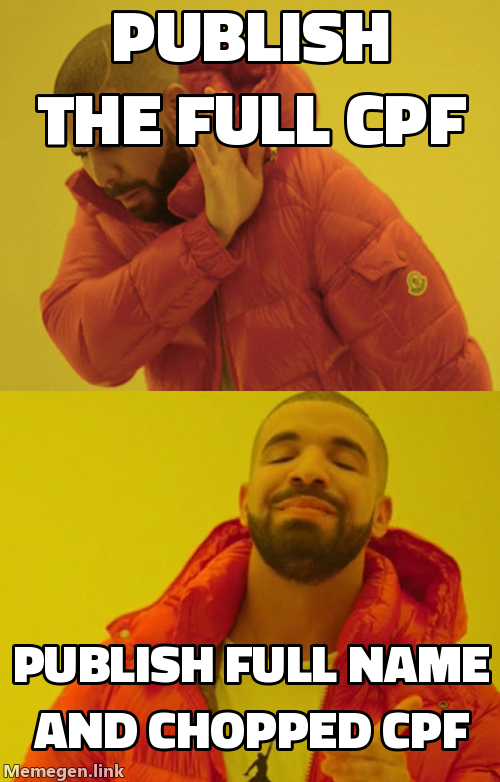
The hacker from Araraquara
For the case in which Robson can’t close it through web triangulation — stubborn homonymy, a servant with a clean digital presence, a target whose CPF was never published anywhere — there’s no need to invoke a new category. It’s the same Robson, with more tenacity and more free time. We can call him the hacker from Araraquara, in honor of the character from Brazilian political folklore who was moved to open prison last week. The only difference from Robson is this: this one downloaded, from some torrent, the 2021 Serasa dump — two hundred and twenty million CPFs with full name, date of birth, address and mother’s name, indexed in some SQLite file on an external drive. In any hard case, he resolves it in fifteen seconds.
The technical ceiling of the non-state, non-Big-Tech Brazilian adversary has a name, a criminal record and an ankle monitor — and is, materially, the Robson from the previous paragraph with more stubbornness. The handbook’s barrier never even reached Robson’s level.
flowchart LR
    M["Dona Maria"] -. "stopped by asterisks" .-> X["—"]
    R["Robson"] -->|"10 minutes"| ID["unique<br/>identification"]
    R -. "+ stubbornness<br/>+ Serasa dump" .-> H["hacker from<br/>Araraquara"]
    H -->|"15 seconds"| ID
The PET bottle on top of the meter
Before going further, a concession is owed to the seriousness of ritual in general. Brazilians love mandinga, simpatia, the gesture incorporated into practice — and it isn’t always silliness. Joseph Henrich, in The Secret of Our Success (Princeton, 2015), spends an entire book showing that apparently arbitrary cultural practices — food taboos, manioc-processing techniques, divination to choose where to hunt — frequently encode adaptive information accumulated across generations of selection, even when the practitioner can’t articulate why. The ritual is memory inscribed in repetition, and to respect it is to respect that memory.
Until the early 2000s, in almost every Brazilian residential neighborhood, there was a gray box on the front wall of the house — the padrão de energia — with the utility’s electricity meter inside, usually locked. On top of that box, it was common to see a two-liter PET soda bottle full of tap water, lying down or standing up. The popular theory was that the water did something to the meter — held it back, slowed the dial, confused it, nobody quite knew. It didn’t. Water has no opinion about the meter. But the bill did come out cheaper. The bottle worked through another path: seeing it every day on the way out of the house reminded the family to turn off the living-room light, close the laundry tap, unplug the iron. The ritual was false in physics and true in psychology. It worked by mistake, but it worked — and it worked without an audience, because it was the family reminding itself.
The next category came with a technical name: security theater, coined by the cryptographer Bruce Schneier in the early 2000s to describe public protection rituals whose real function is just to display that a protection is being executed. The shoe inspection at airports is the canonical example. It doesn’t stop a terrorist, but it has an audience: the passenger sees the protection being performed, the auditor records it, the press reports it. Ritual faces inward; security theater faces outward.
The asterisk in the Official Gazette is all three at once. It is ritual: an entire sector adopted it through belief incorporated into practice. It is a PET bottle: a piece of technical folklore that misjudged the physics of the CPF. And it is security theater: it was imposed for a generic auditor — the legal office, internal control, the citizen who counts asterisks. It fails as ritual because it has no Henrich-style ballast: it accumulated zero generations, was adopted by bureaucratic imitation in four years, with no adaptive information encoded. It fails as theater because the audience has already learned to count asterisks and knows a thousand candidates remain. And it fails as a PET bottle because it lacks even the reminder side effect: whoever produces it is thinking about formal compliance, whoever reads it thinks ah, anonymization, and moves on to the full name right next to it.
The other 843 Franklin Silveira Baldos and I publicly thank you for hiding the 7, the 6 and the 4 of my CPF right after stating each one of our full names.
The Brazilian ritual normally pays the price of technical uselessness with the profit of psychological effect, or at least with the performative profit before an audience.
This one neither pays nor profits.
It isn’t security theater. It’s theater of security theater.
And here’s the economic reason for the irritation: even if the asterisk were ritual in Henrich’s sense, or theater in Schneier’s sense, it would still have to pay for what it costs on the other side of the scale — the friction it adds to transparency. Each asterisk raises the cost of verification for the citizen, the journalist, the researcher, social oversight. That cost isn’t zero; it’s the price charged in the name of a protection benefit that, as we’ve seen, doesn’t exist. Ritual without adaptive ballast, theater without a convinced audience, and in exchange verification gets more expensive for those who should be able to verify. There is no benefit that compensates. The added friction to transparency is unjustified — not in the legal sense, in the arithmetic sense: nothing on the positive side of the ledger covers what was spent.
The self-contradicting handbook
The production of the handbook has its own sociology, and the first absurdity is that there isn’t the handbook — there are hundreds. No unified technical guidance came out of the National Data Protection Authority. No general normative instruction came out of the federal government. No directive that the whole public sector could follow came out of any central body. Instead, in every autarchy, every court, every state secretariat, every professional council, every public university, a data-governance committee of its own was formed — people from legal, from the chief of staff’s office, from IT and from communications. Each of these committees meets. Each produces, in some quarter, a document titled, with discreet local variation, Best Practices for Anonymization of Personal Data in Administrative Acts. It’s between four and twelve pages long, it bears the body’s coat of arms, some grounding in the LGPD, and a final section with masking examples. The invariably recommended example is ***.XXX.XXX-**. The handbook is approved by ordinance. The ordinance is published in the Official Gazette. In that same Official Gazette, three pages later, someone’s retirement act appears with the full name and the chopped CPF.
Hundreds of independent committees, in parallel, over years, worked to arrive at the same wrong answer.
The kind of institutional productivity only Brazil can pull off.
A small pull-of-the-credentials, low risk: my master’s thesis was on administrative transparency. It’s not a noble title; at most, it authorizes a technically qualified irritation with the normative PET bottle.
There’s a detail that makes the picture less elegant and more human. Whoever is reading this is, with decent probability, the very person who wrote one of these handbooks — someone from legal, from the chief of staff’s office, from IT, from the governance committee. I won’t slander the room. I know several of these people. They take the job seriously, they read the LGPD end to end, read the ANPD’s opinions, made time in the day for the mandatory course, and designed the masking on the most defensible reading of what looked like a legal requirement. The point here isn’t good faith. It’s the target.
The LGPD was written against Cambridge Analytica, against the data brokers, against the firm that crosses twenty sources and predicts voter behavior. It was not written against Dona Maria who opens the Official Gazette to check on the retired neighbor. Dona Maria’s reading is fofoca — neighborhood gossip — and gossip, in public office, has a function. It is the local, free, decentralized form of social oversight: the citizen looking, commenting, asking the councilman, writing to the paper. Henrich, already cited, would describe this as a cultural ritual with ballast: neighborhood gossip has accumulated generations of people checking on each other’s lives, and what selection left behind is one of the cheap infrastructures of Brazilian accountability. When the handbook aims at Dona Maria — without realizing it’s aiming, because the adversary appears abstract in the text of the law —, it doesn’t err only in picking a harmless target. It errs because it eliminates, unintentionally, one of the few cultural practices that actually sustained the very oversight the handbook claims to practice. It was written to protect the citizen. It took from the citizen the tool the citizen used for oversight.
To measure the depth of the reflex, I asked a commercial language model for editorial feedback on this essay. The poor thing, trained on terabytes of Brazilian public text post-2018, recommended — with the best intentions — that I anonymize my own name in the 843 joke, because citing a real name next to a partially masked CPF could, according to it, expose the specific person. That specific person was me — signed author of the post, with my name in the canonical, in twitter:creator and in the browser URL. The handbook has even contaminated the synthetic reader, to the point that the ritual now tries to protect the victim from the explicit source of the information. It left Porto Velho, crossed the Pacific, was trained on some server in California, and came back intact in the form of well-meaning editorial advice. The ritual found a way to propagate itself even without committees.
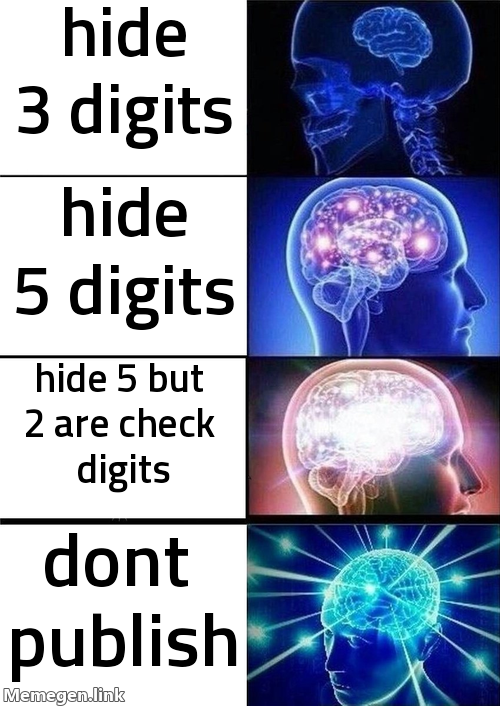
What the LGPD actually says
The LGPD defined anonymization in art. 5, item XI, with words that don’t admit the Brazilian use of the term:
Anonymization: the use of reasonable and available technical means at the time of processing, by which a datum loses the possibility of association, directly or indirectly, with an individual.
A thousand candidates crossed with full name, position, posting and two decades of indexed Official Gazette do not constitute a datum that has lost the possibility of association. Robson is not an unreasonable technical means. He’s a gas-station tech with Python. The legal definition of anonymization is generously broad, and even so the Brazilian practice doesn’t fit inside it.
The verb in the definition is specific: loses the possibility of association. Doesn’t make it harder. Doesn’t make it more expensive. Doesn’t discourage the curious. Loses. The LGPD adopted a binary definition — either the datum was in fact disconnected from the subject, or it wasn’t. There is no intermediate regime, there is no half-anonymization. Tricks that make reidentification trivial for any Robson don’t meet the legal hypothesis: they don’t even try. From the privacy side, then, the chop has nothing to stand on.
That leaves examining it from the opposite side: transparency. The LGPD provides, in art. 23, a specific hypothesis for the processing of personal data by the public power, articulated with the Access to Information Law, whose art. 8 defines the catalog of active transparency — salaries, personnel acts, contracts. The Constitution, in art. 37, caput, makes publicity a guiding principle of public administration. The Supreme Federal Court, in ARE 652.777 of 2015, decided that the nominal disclosure of civil servants’ salaries is a legitimate consequence of that principle. The legal system, in other words, has already made its choice in favor of transparency for civil-servant administrative acts — and the chop of the CPF operates below that choice, raising the cost of verification for those who should be able to verify. It doesn’t anonymize because it can’t. It gets in the way because the full name right next to it summons a verification that the chop makes harder for no reason. It does the worst of both worlds, and does it firmly.
The missing mens legis
The LGPD was not conceived in Brazil. It is, to a large extent, the Brazilian cousin of the European General Data Protection Regulation — the GDPR, written in 2016 and in force since 2018. The GDPR did not come from a legislative vacuum: it came, in considerable part, from the political response to the growing perception, throughout the 2010s, that some companies were concentrating a disproportionate informational power. The Cambridge Analytica scandal, in 2018, gave name and face to that perception — Facebook revealed it had exposed the data of eighty-seven million users to a political consulting firm that used them for electoral microtargeting, in an episode that ran through the Brexit campaign and the 2016 American election. The GDPR’s legislative work was already under way before the scandal; Cambridge Analytica gave the popular name to what was being regulated. The LGPD, two years later, reflected the same motivation.
What happened on the way from the law to the handbook is a form of transference. The companies that originated the concern keep operating essentially as they operated. Systemic leaks cross the Brazilian landscape without provoking a proportional institutional response. Serasa leaked some two hundred and twenty million CPFs in 2021. INSS records have appeared on forums for years. The telemarketer who calls during our lunch break knows the exact value of our last bill, and we’ve given up asking how he knows. The LGPD exists while all of this happens. But the part of the LGPD that actually bites — that generates committees, handbooks, training sessions, internal disciplinary actions, removal of useful information from public databases — is the part that squeezes the least dangerous agent in the system: the front-desk servant, the academic researcher, the local journalist, the citizen overseer.
It isn’t necessary to attribute systemic bad faith to anyone for this to happen, and I don’t. Someone said it once — Hanlon, the razor that bears his name — that one should not attribute to malice what stupidity adequately explains. Wise principle. Thinking about it, however: maybe bad faith from the legal office that writes the handbook knowing it has a login to the database and doesn’t need the chop to identify anyone. Maybe bad faith from the governance committee, which justifies its own existence by producing, quarterly, the same PDF with an updated coat of arms. Maybe bad faith from the data protection authority, which has not issued a general normative instruction of application because the ambiguity preserves its own discretion. Maybe bad faith from the average administrator, who prefers the displayable formal protection to the invisible substantive one because it’s the displayable that counts at audit. Maybe bad faith from the compliance industry, which makes a living training committees to write handbooks. Maybe bad faith from the incentive system, which punishes under-masking and never over-masking. Maybe bad faith from Big Tech and the data brokers, who watch in silence as the LGPD’s ruler tightens around the front-desk servant and passes far from them. The list goes on. Hanlon’s razor, applied patiently, often reveals a series of small malices working in sync, and the aggregate result is indistinguishable from systemic bad faith. The ritual survives on its own — sustained, we now see, by exactly those small malices coordinated without meetings. The handbook is displayable. Internal segregation of duties isn’t. The asterisk is the visible mark of compliance, and that’s why it multiplied.
flowchart TD
    Q["Whom the partial<br/>asterisk doesn't stop"]
    P["Whom the partial<br/>asterisk stops"]
    Q --> BT["Big Tech / data brokers"]
    Q --> H["hacker from Araraquara"]
    Q --> R["Robson"]
    P --> DM["Dona Maria"]
The honest alternative
The honest technical path for civil-servant administrative acts is simple and old. Either you publish by name what the Constitution wants public — name, position, posting, legal grounds, value of the benefits — and accept that oversight is, in part, popular; or you actually protect what needs to be protected — health, dependents, banking data, home address — through segregation of duties, access logs by registration number, periodic auditing of internal queries and mechanisms that detect patterns of inappropriate curiosity in database access. The two operations are compatible: the first is publicity, the second is protection. The asterisk in the Official Gazette is neither. It is a third thing, which looks like the second while undoing the first — a door with a lock that opens for Robson and bolts shut against Dona Maria.
The asterisk in the Official Gazette doesn’t hide a person. It hides who is allowed to look at her. Robson is looking.
Further reading
- Law no. 13.709/2018 (LGPD), art. 5, XI — the legal definition of anonymization that Brazilian practice fails to meet.
- Latanya Sweeney, k-Anonymity: A Model for Protecting Privacy (2002) — the canonical paper, with the finding that three demographic attributes uniquely identify roughly 87% of American citizens.
- Arvind Narayanan and Vitaly Shmatikov, Robust De-anonymization of Large Sparse Datasets (2008) — the Netflix Prize, empirical proof that “anonymized” datasets frequently are not.
- Paul Ohm, Broken Promises of Privacy: Responding to the Surprising Failure of Anonymization (UCLA Law Review, 2010) — the American legal essay against the illusion of perfect anonymization.
- Bruce Schneier, Beyond Fear (2003) — the book in which the expression security theater first appears, and the systematization of what is real vs. performative protection.
- Joseph Henrich, The Secret of Our Success (Princeton, 2015) — on why cultural rituals deserve respect: they often encode adaptive information accumulated by selection, even when the practitioner doesn’t know why. The asterisk is the counterexample: ritual without ballast, adopted in four years by bureaucratic imitation.
- STF, ARE 652.777/SP (2015) — the nominal disclosure of civil servants’ salaries as a consequence of the constitutional principle of publicity.
- Law no. 12.527/2011 (LAI), art. 8 — active transparency as a duty of the State, taking priority over the privacy of the public agent in the exercise of office.
- Wikipedia entry on Walter Delgatti Neto — the hacker from Araraquara as documentary character: the average Brazilian technical ceiling has a name, an address, a criminal record and an ankle monitor.
- Jorge Luis Borges, Funes el memorioso — on what happens when the database doesn’t forget.
Footnotes
-
The reader who clicked this footnote is probably also the reader who would write the fifteen lines of Python. The CPF’s two check digits are defined as follows: given the nine-digit prefix
d₁…d₉, you compute the weighted sums₁ = 10·d₁ + 9·d₂ + 8·d₃ + … + 2·d₉, take the remainderr₁ = s₁ mod 11, and the tenth digitD₁is11 - r₁, with the convention that it becomes0whenr₁is less than 2. The eleventhD₂is defined analogously, with weights from 11 down to 2 applied tod₁…d₉and the freshly computedD₁. The operation is deterministic and cheap. It runs silently inside any system that validates a CPF — banks, tax returns, forms — and has done so for decades. Hiding the last two digits is like hiding the result of a sum whose every term is in plain sight. ↩
Hrönir Reviews
Reviews from pairwise duels, each written from a randomly assigned reader perspective.
Best reviews
asterisk-protects começa num asterisco e termina nunca chegando ao seguro — termina na inversão do asterisco. Cada seção desloca a interpretação anterior: a math revela que não funciona cryptographicamente; a name mostra que a porta está aberta; os characters revelam que funciona diferentemente para gente diferente (paralisa Dona Maria, desafia Robson); as institutions revelam que a fratura nunca foi ignorância mas ritual burocrático. Estas seções não podem ser reordenadas — os characters não fazem sentido sem a math; as institutions não fazem sentido sem os characters. Não há resumo no fim, há inversão: 'o asterisco esconde quem tem permissão de olhar'. A ordem está pensando. O ritmo segue a ideia, não um outline. Isto é lateral.
Clash verdict
reddit-submarine-osint move de narrativa sedutora à refutação cética à recontextualização. O ensaio é vivo mas sabe que está vivo — e essa autoconscência mata a lateralidade. Chega a uma resposta ('o que importa é o environment perceptivo') e então repousa sobre ela. asterisk-protects não repara na seduction, desloca continuamente o que o asterisco significa. Começa 'por que mascarar o CPF?' e termina 'o asterisco escolhe quem tem permissão de olhar' — não resolveu a primeira pergunta, transformou-a completamente. As seções de asterisk-protects não podem ser embaralhadas; as de reddit-submarine-osint poderiam ser reordenadas sem destruição essencial do movimento. Para um essayista lateral que recompensa a ordem-como-pensamento: asterisk-protects é vivo. reddit-submarine-osint é argumentativo bem executado.
asterisk-protects executa o trabalho aplicado com precisão cirúrgica. A tese: mascaramento de CPF como ***.482.317-** enquanto o nome está inteiro publicado é security theater que bloqueia Dona Maria (barrada pelos asteriscos, não verifica) mas não Robson (triangulação web em 10 minutos, Portal da Transparência, 20 anos de Diário indexado) nem o hacker de Araraquara (acesso a dump Serasa, 15 segundos). O cálculo é específico: 5 asteriscos parecem 100 mil possibilidades, mas 2 são dígitos verificadores determinísticos — apenas 3 dígitos de verdade (1.000 candidatos), trivialmente cruzáveis com metadados públicos. A alternativa honesta: publicar nominalmente (aceitar fiscalização popular) ou proteger de verdade (segregação de funções, auditoria de acesso). O asterisco é pior dos dois mundos. Aos 30 minutos de ler isso, você já está diferente: quando vê um CPF mascarado no Diário Oficial, não pensa 'dados protegidos', pensa 'teatro de segurança que tira a ferramenta da Dona Maria'. Muda a próxima vez que você avalia medida de privacidade brasileira.
Clash verdict
music-vos e asterisk-protects divergem na escala de operacionalidade. music-vos faz você pensar diferente sobre LLMs — uma categorização com peso metafísico, mas leve na prática. Você sai do texto lembrando 'chore with plural pronouns' mas sem saber onde aplicar. asterisk-protects te dá um mapa: esquerda está a Dona Maria barrada pelos asteriscos; direita está Robson, 10 minutos; direita mais longe está o hacker com Serasa dump. O mapa não é especulativo — é empiricamente testável (tente crackear 1.000 CPFs em Python, levará minutos). A próxima vez que você escrever policy de privacidade ou ler um Diário Oficial, asterisk-protects está ali, funcionando como ferramenta instalada. music-vos fica como reflexão bonita que não checa a sua próxima ação. O Applied Thinker escolhe quem já o mudou, não quem somente o pensou.
asterisk-protects constrói seu argumento com rigor e o encerra com uma frase que você não consegue parafrasear: 'O asterisco no Diário Oficial não esconde uma pessoa. Esconde quem pode olhar para ela.' A simplicidade é a armadilha. Cinco palavras, o mesmo verbo duas vezes, sujeitos incomparáveis — e a verdade escapa pela fresta que se abre entre os dois espaços do verbo. O texto não se permite metalinguagem, não se desculpa pela estranheza. Deixa você preso com a frase e o resto da análise matemática só serve para confirmar que a frase já tinha dito tudo. Eis a claridade que resiste: a que nasceu da prosa e não pede licença ao leitor.
Clash verdict
Entre asterisk-protects e third-half-fourth-wall, o primeiro mantém a estranheza por silêncio estratégico. A frase-chave aparece, você sente o chill, o texto continua como se nada tivesse acontecido. Nenhuma metalinguagem, nenhuma demonstração teórica. É uma qualidade que Tolkien chamaria de coerência interna: o mundo do post é tão denso que a frase estranha é apenas o que flota à superfície. O segundo post, que também tem qualidades borgiana, comete o erro que o primeiro evita com precisão — nomeia a parede para protegê-la, mata a inocência necessária. Ambos têm clareza e ambos resistem à parafrase, mas a resistência de asterisk-protects nasceu da estrutura; a de third-half-fourth-wall da reflexão. Uma deixa você tocado; a outra deixa você instruído. O chill vence a aula.
asterisk-protects ataca o mesmo tipo de problema (contradição entre intenção jurídica e implementação) mas com uma leveza que torna a densidade suportável. A matemática do CPF é exata e bem explicada (três dígitos = mil possibilidades, não cem mil). Robson vs Dona Maria é dupla de exemplos tão precisa que vira meme de si mesma. Os diagramas funcionais mostram exatamente o fluxo de informação. A força rara: consegue ser ácido sem perder rigor. 'Tipo de produtividade institucional que só o Brasil consegue' é o tipo de frase que funciona como crocante sobre argumento denso. O ensaio sobre Henrich e garrafa pet integra contexto antropológico sem quebrar ritmo. A tonalidade variada (matemática → personas → meme → habitus → alternativa) evita a monotonia que pesaria em outro registro.
Clash verdict
Ambos os posts aplicam a mesma lente ao Brasil: a contradição entre intenção jurídica/legislativa e implementação real. serpents-egg localiza essa contradição no indivíduo (Fux sabe o Article 489 mas não vê a contradição com sua ação). asterisk-protects localiza a contradição no sistema (a LGPD intenciona proteger contra Big Tech mas implementação atinge Dona Maria). Em termos de rigor argumentativo, são equivalentes — ambos têm estrutura clara, diagramas funcionais, referências que sustentam. A diferença é tonal: serpents-egg é solenidade acadêmica acertada, asterisk-protects é clareza ácida. Para o Craft Listener, o teste é se o post entrega exatamente o que se propõe sem desperdício. Os dois entregam, mas asterisk-protects entrega com leveza que torna a releitura mais convidativa. Não porque seja 'melhor escrito', mas porque conseguiu ser igualmente denso e substancial sem exigir que o leitor pague o preço psicológico da pesadez. asterisk-protects, 4.75 a 4.25.
asterisk-protects constrói toda sua força moral em torno da estrutura cômica. A piada de Dona Maria vs Robson não é decorativa — é o argumento inteiro sobre quem de verdade a anonimização afeta. Remove essa comparação e a reivindicação central desaparece. 'Uma garrafa pet em cima do padrão' transporta a compreensão do que é ritual inútil e por quê — sem essa metáfora, o leitor fica sem alavanca para entender como a cartilha pode ser simultaneamente ritual, teatro e garrafa pet, todos falhando. 'Sabor anonimização' não é meme decorativo, é a concentração da alegação em uma frase. O post expõe-se completamente — é técnico, é político, é engraçado — e a graça não serve o tom, serve a verdade. Cada estrutura cômica carrega peso lógico.
Clash verdict
Os dois posts conseguem ser engraçados. Mas em pampa-circuit, a graça embeleza e aprofunda um argumento que já está de pé; em asterisk-protects, a graça é a própria proposição. Remove a piada de Dona Maria vs Robson de asterisk-protects e você perdeu a afirmação central: que o asterisco funciona seletivamente contra quem deveria poder fiscalizar e a favor de quem deveria ser detectado. Remove a piada da insônia do disco rígido de pampa-circuit e você ainda tem a mesma afirmação — que capturar sotaque e hesitação é diferente de arquivar eventos. The Comedy-Carries-Argument Reader não apenas quer graça que seja estrutural; quer posts que se permitam viver ou morrer pela graça. asterisk-protects faz isso. pampa-circuit joga seguro. 4.75 para 3.5.
asterisk-protects faz a operação oposta: toma uma estupidez burocrática (CPF picotado em ato administrativo) e a desossa em quinze minutos. Robson vs Dona Maria não é metáfora — é personagem que viaja, que o leitor reconhece, que ficará na cabeça dele. 'Sabor anonimização' é uma obra-prima: cinco sílabas que carregam uma referência de meme (Toguro), a crítica da ilusão regulatória, e o tom de alguém rindo de uma piada que toda a burocracia levou a sério. O meme Drake que aparece no meio (publicar CPF inteiro vs CPF picotado) é quotável sem contexto. A linguagem é descontraída, vai de 'cof cof cof, o IPERON' até citação de jurisprudência, e a oscilação é intencional — não explica como transitar entre os dois registros porque confia que o leitor acompanha. Mais importante: cada unidade é mordida. Dá para citar o post em cinco lugares diferentes e ter cinco piadas diferentes que funcionam isoladas.
Clash verdict
quem-sou-eu e asterisk-protects vêm de energias opostas e a diferença é matemática. O primeiro toma um conceito (persona, máscara, identidade) e investe tudo em profundidade — expande, elabora, circunda por múltiplas lentes. O segundo toma um procedimento (anonimização de CPF) e investe tudo em velocidade — corta, expõe a contradição, segue. Para o Meme Sommelier, que avalia shareability, a métrica é clara: asterisk-protects cumpre a lei de compressão. Tem unidades que sobrevivem isoladas — 'sabor anonimização', 'o asterisco não esconde pessoa, esconde quem pode olhar', 'Dona Maria' como sinônimo de 'cidadão comum barrado pelo ritual'. quem-sou-eu é uma obra admirável mas precisa de você dentro dela, lendo devagar, fazendo as conexões — é prosa de leitura profunda. asterisk-protects é citável à noite num bar, é o tipo de coisa que alguém lembra quando vê um asterisco no Diário Oficial e manda no grupo: 'sabor anonimização, cara'. A primeira confia em duração; a segunda confia em velocidade. Num timeline, em 280 caracteres, em formato de internet: asterisk-protects é a que viaja. Versão B, 4.75 a 2.75.
O asterisk-protects executa a maestria da digressão. Começa com um exemplo concreto (a portaria, o CPF mascarado), salta para a prova técnica (o math que ninguém faz), traz personagens que realizam a prova (Robson, Dona Maria), estende a meditação sobre ritual cultural (garrafa PET, security theater), volta cada digressão com estrutura já esperada. A piada do IA que recomenda esconder o próprio nome do autor surgiu no exato ponto onde você está abastecido de contexto para rir da ironia. O tom sério — a parte sobre LGPD, sobre quem a lei realmente alcança — cai dentro de registro que tinha sido ágil e quase playful, o que a torna muito mais pesada. É um ensaio que o leitor quer compartilhar sem explicação: a estrutura o puxou, nenhum parágrafo anuncia interesse. Você só segue e descobre por que leu tudo.
Clash verdict
O asterisk-protects eu enviaria com 'leia isso' — nenhuma preparação, nenhum aviso. A estrutura funciona para quem quer aprender sobre CPF, para quem quer entender LGPD, para quem apenas aprecia ritmo de ensaio. Family-memory eu teria que enquadrar: 'é sobre agentes de IA preservando memória familiar, tem uma história interessante, recomendo'. Quando preciso enquadrar, o post não completou o trabalho da perspectiva internet-native-watcher, que é exatamente fazer o leitor querer ler sem ter pedido. Asterisk-protects entrega a regra da perspectiva — o sério dentro do playful, a digressão que volta, o setup que paga — tudo marcado pela precisão de pacing. Family-memory é o post da competência e da honestidade, mas sem a maestria de fazer alguém interromper a conversa. Asterisk-protects vence por três a dois.
asterisk-protects é pedagogicamente generoso. Começa com uma cena real — CPF mascarado ao lado do nome completo em uma decisão de tribunal. Para você, outsider, esta é a questão: se o nome está visível, por que os asteriscos? A pergunta é conquistada antes de qualquer resposta. Então vem a matemática: 3 asteriscos = 1000 possibilidades. Explicado em Python. Trazidos dois personagens concretos — Dona Maria e Robson — com trajetórias que você segue. Traz uma referência (Joseph Henrich sobre ritual adaptativo) e a explica. Até final, a lição é clara e você ganhou argumentos para pensar sobre privacidade Brasil-específica. Nenhum insider gesture. Tudo conquistado.
Clash verdict
Qual post traz o outsider para dentro? asterisk-protects constrói cada ideia desde o começo. music-beatriz assume familiaridade Borgiana. Pedagogical generosity = trazendo alguém sem conhecimento para dentro do argumento. asterisk-protects o faz. music-beatriz não. Um outsider chega a asterisk-protects sem saber nada sobre CPF brasileiro e sai sabendo tudo. Um outsider chega a music-beatriz sem saber Borges e sente que foi deixado fora da conversa. Isto é a diferença entre escritura para fora e escritura para dentro do clube. Um outsider chega a asterisk-protects sem saber nada sobre CPF brasileiro e sai sabendo tudo. Um outsider chega a music-beatriz sem saber Borges e sente que foi deixado fora da conversa. Isto é a diferença entre escritura para fora e escritura para dentro do clube. A generalidade vs a intimidade de círculo. Pedagogical generosity é trazê-lo para dentro, não deixá-lo batendo na porta.
asterisk-protects é um caso raro: um ensaio longo que entrega mais por parágrafo do que a maioria entrega no total. A densidade de insights acionáveis é excepcional. O Applied Thinker sai com pelo menos quatro coisas que mudam o que ele faz na semana seguinte. Primeiro, o fato matemático: dois dos cinco asteriscos do CPF são dígitos verificadores calculáveis, então 5 asteriscos ≠ 100.000 possibilidades — são 1.000, e com o nome publicado ao lado, basicamente 1. Esse fact-check pode ser reproduzido em conversa sem consultar o post de novo. Segundo, a heurística Dona Maria / Robson: toda barreira de compliance deve ser testada perguntando quem ela efetivamente impede — o ator sofisticado com más intenções, ou o cidadão fiscalizador sem recursos técnicos? Terceiro, a distinção publicidade / proteção: são duas operações compatíveis, e o asterisco as confundiu numa só péssima. Quarto, o mecanismo sociológico: centenas de comitês independentes chegaram ao mesmo resultado errado por imitação burocrática, sem lastro adaptativo. Cada insight é auto-sustentado — pode ser citado sem o ensaio inteiro. A seção final 'Para se aprofundar' adiciona alavancagem: cinco referências específicas e verificáveis. Ponto de atenção: as seções 'A mens legis ausente' e 'A cartilha que se contradiz' têm sobreposição temática e poderiam ser comprimidas sem perda.
Clash verdict
O confronto entre funes-soul e asterisk-protects é, pelo crivo do Applied Thinker, um confronto entre dois modos de instalar um insight: o literário e o analítico. Ambos instalam algo. A questão é quanto custou a instalação e quanto sobrou na memória uma semana depois. funes-soul usa a fantasia do Borges para empacotar uma especificação de agente de IA. A fantasia é prazerosa — a voz do River Plate, o sonho como moldura, a inversão da maldição de Funes em propósito. Mas o Applied Thinker, que testa o que muda no comportamento futuro, sofre com o custo de extração. A ideia central ('documentar é continuidade, não burocracia') está lá e é boa. As cinco fichas em paralelo estão lá e são boas. Mas recuperá-las exige reler com caneta na mão para separar ornato de conteúdo. Isso é uma fricção que não serve o post. asterisk-protects não paga esse custo. Cada seção é uma unidade acionável: a matemática do CPF, o modelo Dona Maria/Robson, a distinção publicidade/proteção, a sociologia institucional. O Applied Thinker sai com quatro ferramentas independentes que não dependem umas das outras para funcionar. A heurística 'essa barreira barra o Robson ou a Dona Maria?' é o tipo de pergunta que muda como você lê qualquer cartilha de compliance a partir de amanhã — não na próxima rereading do post, amanhã. Esse é o teste definitivo do Applied Thinker: não 'entendi?', mas 'o que faço diferente segunda-feira?' asterisk-protects responde essa pergunta quatro vezes. funes-soul responde uma vez, com ruído. Vencedor: asterisk-protects.
Abro asterisk-protects e não há pré-requisitos. Um documento oficial, um CPF picotado, uma pergunta simples: 'se o nome está aqui, o que os asteriscos estão protegendo?' Daí o post me leva: a matemática simples (três dígitos decimais = mil possibilidades), o algoritmo que gera os verificadores em quinze linhas de Python, a redução de entropia em um diagrama. Cada degrau é alcançado. Personagens surgem — Robson, Dona Maria, o hacker de Araraquara — não como nomes soltos, mas como exemplos concretos de quem consegue quebrar o sistema e quem fica bloqueado. Referências aparecem (Joseph Henrich, Bruce Schneier) depois de terem sido relevantes, não antes. O post confessa sua própria dificuldade — a cartilha se contradiz, há centenas de comitês produzindo a mesma resposta errada — e isso me torna cúmplice, não outsider. Saio compreendendo um problema de verdade.
Clash verdict
Confronto entre dois modos diferentes de pedagogia. asterisk-protects traz você para dentro: começa num lugar que você já está (um documento público, uma pergunta honesta), depois desce. Cada camada revela a anterior. Ao fim você compreendeu um problema de política pública real e viu os incentivos que o sustentam — e isso é conhecimento que você pode carregar adiante. third-half-fourth-wall traz você de fora para dentro também, mas exige que você já tenha algumas peças no lugar. Coleridge é convocado como sabido. Athos Bulcão é um exemplo que funciona se você souber quem ele foi. Wittgenstein chega tarde e esperado. O post é uma construção linda — recursiva, autonômica, fechada em si mesma como o próprio mecanismo que descreve. Mas Curious Outsider não chega de fora. Chega lendo ao lado de uma enciclopédia aberta. asterisk-protects: quatro pontos. third-half-fourth-wall: um ponto. O vencedor é claro.
asterisk-protects estrutura seu argumento inteiramente através da contraposição Robson-versus-Dona Maria, que é uma piada e simultaneamente a demonstração de quem o asterisco funciona e contra quem falha. A frase 'Não é anonimização. É sabor anonimização' é deadpan perfeito e resume em dois nomes a falha completa do ritual. O 'hacker de Araraquara' é punchline que é também diagrama técnico. A garrafa-PET funciona como metáfora operacional: ritual que só funciona por efeito psicológico colateral, não pela física que promete. Remover o riso neste post deixa a estrutura intacta—a matemática ainda prova, a crítica ainda funciona—mas o leitor perde a legibilidade visceral da crítica social que o post está realmente fazendo.
Clash verdict
O clash aqui é sutil. Ambos usam comédia como estrutura lógica; ambos falham se o riso é removido. Mas third-half-fourth-wall é comédia recursiva operando sobre abstração—Tinkerbell, quarta parede, auditor—mundo de teatro e persona. asterisk-protects é comédia dirigida contra a realidade concreta: servidores, Diários Oficiais, Dona Maria que vai fechar o navegador porque 5 asteriscos sinalizaram 'isso não é para você'. Um é filosofia encarnada em riso; o outro é riso encarnado em desigualdade. A perspectiva do comedy-carries-argument reader valoriza o trabalho que o riso faz na estrutura. asterisk-protects o faz enquanto derruba uma porta do mundo real. asterisk-protects, 4.50. mais
asterisk-protects é a postagem que não deixa pegadas. Começa com uma pergunta aparentemente simples ('Por que esconder 5 asteriscos?'), e em quinze linhas de Python já resolveu a questão: os dois verificadores são determinísticos, sobram 3 dígitos, mil possibilidades. O autor sabe que mil é um número grande para o leitor casual, mas um número pequeno para Robson. Depois triangula: o nome completo ao lado. Depois o banco de dados público anterior. Depois o dump Serasa. Cada camada não apenas refuta a proteção; refuta de um jeito diferente. A seção 'Quem o asterisco protege' é devastadora: Dona Maria é barrada, Robson ri, o hacker resolve em 15 segundos. Qual deles a lei mirou? Leia a lei. A lei mirou em Robson. E errou. A defesa não deixa espaço — o asterisco não falha por falta de inteligência ou boa vontade, falha porque os seus pressupostos matemáticos estão errados. É raro ver uma postagem que não apenas desconstrói um argumento, mas desconstrói a matemática embaixo do argumento.
Clash verdict
reddit-submarine-osint constrói uma defesa válida contra a afirmação factual mas escolhe terminar em outro endereço. A pergunta era 'afeta operações'. A resposta termina em 'mudou a visibilidade'. Duas questões diferentes, igualmente importantes, coladas como se fossem a mesma. Um leitor hostil bem-informado apontaria: 'Você respondeu a pergunta 2 com a estrutura da pergunta 1. Que criatividade elegante, mas meu interesse era pergunta 1 e você não respondeu.' asterisk-protects não faz essa cintura. A pergunta era 'Por que o asterisco protege?' A resposta é 'Não protege em nível nenhum'. Não muda de assunto, não passa para visibilidade, não invoca infraestrutura. Apenas mostra, com precisão crescente, como cada camada da proteção falha: a matemática falha (1000 não é 100mil), o contexto falha (nome inteiro ao lado), o banco de dados falha (Serasa 2021 já tem tudo), a lei falha (define anonimização como perda total, não redução). É raro uma postagem deixar o adversário sem argumento porque esgotou as camadas de refutação. Aqui não há espaço para respirar. asterisk-protects, 4.5 a 3.75.
asterisk-protects instala um padrão de reconhecimento que você vai usar para sempre. Mostra que uma medida de proteção que 'para Dona Maria mas deixa Robson passar' é, de fato, inimiga da transparência — não aliada. Você vai aprender a reconhecer essa estrutura: ritual performativo que se justifica em nome da proteção mas que, na prática, apenas redistribui quem pode e quem não pode ver. Konkret: 3 dígitos mascarados (1000 combinações) + nome completo visível = nenhuma proteção real, apenas custo adicionado. A partir daqui você vai questionar toda medida de 'anonimização' com essa pergunta: Quem ela realmente para? Para o jornal local e a avó curiosa? Ou só para quem não sabe programar? O post vai ficar instalado em qualquer decisão sobre transparência pública, privacidade de dados, ou mesmo UX de sistemas. É altamente transferível.
Clash verdict
asterisk-protects ganha por instalação. Ambos os posts ensinam você a ver através de uma narrativa — reddit-submarine-osint desmascara o 'os hackers guiam os mísseis', asterisk-protects desmascara o 'a asterisco é privacidade'. Mas reddit-submarine-osint deixa a conclusão como um entendimento; você sai mais sábio sobre conflitos, mas não com um padrão que você capture em ação futura. asterisk-protects, porém, te dá uma ferramenta que você vai usar toda vez que encontrar uma medida de proteção que não protege quem precisava. A distinção Dona Maria vs. Robson é reutilizável — vai aparecer em GDPR, em termos de privacidade de apps, em redações de políticas, em auditorias de segurança. reddit-submarine-osint é elegante; asterisk-protects é operacional. Pelo critério do Applied Thinker, quatro para um.
asterisk-protects constrói seu argumento com precisão arquitetônica onde cada seção funciona como uma peça que se encaixa perfeitamente. A estrutura matemática (cinco asteriscos = mil possibilidades) não é apenas elegante — ela serve um fim retórico específico: desmantelar uma pretensão. Os exemplos carregam peso moral: Robson e Dona Maria não apenas ilustram, eles revelam quem cada decisão de design beneficia ou prejudica. O texto domina três registros simultaneamente — técnico (k-anonymity), coloquial (a garrafa PET) e jurídico (LGPD) — com transições calibradas entre cada um. A autocrítica institucional ('Hanlon's razor patiently applied...') expõe máquinas sociais sem exigir má-fé, apenas desalinhamento de incentivos. Isso é execução que conhece seu próprio desenho.
Clash verdict
asterisk-protects e music-primavera-carregando representam dois tipos de maestria técnica em conflito. O primeiro usa estrutura argumentativa, múltiplos registros linguísticos e exemplos carregados moralmente para fazer uma máquina de convicção. O segundo usa a tradução criativa de uma tradição filosófica para uma linguagem técnica, criando densidades onde conceitos estoicos encontram DevOps. Para o Craft Listener, asterisk-protects ganha por demonstrar controle sobre múltiplas camadas — matemática que illumina retórica, exemplos que carregam sociologia, análise institucional que não degrada em acusação. A execução sustenta tudo. music-primavera-carregando é engenhoso mas menos integrado: a intenção brilha talvez com demasiada clareza. O que é, quando é, é o que é — mas asterisk-protects faz você ver por que.
Quem o asterisco protege demonstra o trabalho epistêmico mais duro. A estrutura argumentativa é vertebral: começa com a pergunta-chave ('contra qual dos dois a anonimização funciona?'), reconstrói a matemática da falsa segurança (5 asteriscos = ~1k possibilidades, não 100k), e admite com clareza o escopo limitado da LGPD. O autor não esconde suas premissas: observa que a regulação foi escrita contra Cambridge Analytica, não contra Dona Maria; identifica que a cartilha aperta justamente quem era menos perigoso. Conecta Henrich sobre rituais adaptativos com Schneier sobre security theater — uma montagem intelectual genuína. A fraqueza nomeada ('pequenas malícias coordenadas sem reuniões') é o tipo de admissão epistêmica que marca calibração: reconhecer o que não se pode centralizar. Não há falsidade no argumento, apenas rigor apropriado ao problema. Este é o trabalho que demanda reler.
Clash verdict
Asterisco-protege vence aqui porque testa calibração epistêmica segundo a perspectiva racionalista de longo prazo. A comparação é entre dois tipos de honestidade: uma que admite limitações e reconstrói as condições de seu conhecimento (asterisco); outra que admite suspensão mas não justifica por quê manter a suspensão é epistêmico e não apenas narrativo (duas-perguntas). Ambas são honestas — mas apenas a primeira faz o trabalho de reconstrução rigorosa. Duas-perguntas oferece uma estrutura bonita para a incerteza; asterisco-protege oferece uma lógica da incerteza. Para um leitor racionalista de longo prazo, lógica é mais calibrada que beleza quando estão em conflito. Asterisco não resolve tudo (admite claramente o que não pode), mas resolve o que promete. Duas-perguntas não resolve e também não explica por quê a irressolução é frutífera em vez de apenas suspensiva.
asterisk-protects carrega seu argumento inteiro através de humor estrutural. A piada-pivô — 'Não é security theater. É theater de security theater' — remove-a e toda análise sobre ritual, PET bottle e audience desaba. O texto não é engraçado para ser engraçado; a engraçadez é como se diz coisas sérias. 'The math is mathing' é simples e estrutural. 'Ahem ahem IPERON' reconhece absurdo com gesto. Os 843 Franklin Silveira Baldos são autoironia que carrega peso da futilidade. Robson versus Dona Maria não é piada, é donde vem moralidade. O humor não se afasta do argumento; é o argumento. Remove tudo engraçado e o post fica correto mas perde transmissão emocional do estranho.
Clash verdict
asterisk-protects depende inteiramente de humor para dizer coisas que humor é único jeito de dizer. Piada não é decoration; é forma de articular absurdo. Tirar humor deixa post sem ferramenta central. music-quando-vier-a-primavera rejeita humor porque seu assunto (aceitação, irrelevância, paz) exige transparência sem ironia. Caeiro poderia fazer piada sobre lógica mas não faz, porque quebraria aceitação pura que é ponto. Diferença é entre humor-como-ferramenta-necessária versus humor-como-irrelevância. Para leitor que valoriza humor como leverage, asterisk-protects é estruturalmente corajoso. Para leitor de Caeiro, rejeição de humor é igualmente estrutural. A verdade é que a estrutura certa de cada forma é diferente, e cada post honra sua estrutura. Quatro pra um.
asterisk-protects trabalha a contração (cinco dígitos parecem cinco, são um) sem jamais soltar a mão do leitor. Te coloca ao lado de Dona Maria, sente-se o padrão ao qual ela se afronta: não é a segurança que a bloqueia, é a advertência da formalidade dizendo 'você não foi convidada'. A garrafa pet em cima do padrão é transmissão pura — falsa na física, verdadeira na psicologia — e quando descobre que a cartilha virou recomendação de silenciar seu próprio nome, há algo que fica prensado no peito. O post não te pede para entender a LGPD. Te faz sentir a escala desproporcionada entre a ameaça que justificou a lei (Mark Zuckerberg) e o inimigo que efetivamente derrotou (Dona Maria lendo sozinha). Sobra residual: o espanto de Robson em dez minutos contra a paralisia administrativa.
Clash verdict
Entre future-father e asterisk-protects, a diferença é onde o incômodo repousa. future-father propõe um incômodo ontológico (sou ou não sou uma simulação de mim mesmo?) e o deixa pendurado, esperando que a estrutura baste. É um medo bem formulado. asterisk-protects narra o momento exato em que a estrutura falha — não a estrutura técnica (que funciona para Robson), mas a estrutura moral e social (que exclui Dona Maria sem avisá-la por quê). Um é a promessa de um problema; o outro é o relato preciso da falha. O primeiro te deixa pensando. O segundo te deixa um incômodo que retorna quando você lê qualquer diário oficial depois. O segundo fica.
asterisk-protects é construído por movimento não-arbitrário. Começa numa cena (CPF picotado), move para matemática que nega a proteção, exemplifica com Robson (consegue reidentificar) e Dona Maria (paralisa), expande para ritual/teatro de segurança, depois LGPD. Cada seção depende daquilo que veio antes. Dona Maria só faz sentido depois da matemática. Araraquara só funciona depois do contraste com Robson. A estrutura é dorsale: você não poderia reshuffle sem destruir o argumento. A ordem está viva porque o pensamento está vivo — cada movimento justifica o próximo. A clareza não é uma propriedade estática; é uma propriedade do movimento. asterisk-protects sabe disso e desenha sua estrutura para maximizá-lo.
Clash verdict
asterisk-protects move de problema para análise para exemplos para contexto. music-eu-ia-escrever-sobre-o-infinito-de-novo move de recusa para escolha a aprofundamento. Um é prosa que expande; outro é canção que espirala. O Lateral Essayist procura por estrutura-como-movimento, ordem que não é arbitrária. asterisk-protects constroí sua clareza pela sequência — cada movimento descobre um novo aspecto que torna urgente o movimento seguinte. music-eu-ia-escrever-sobre-o-infinito-de-novo usa movimento poético: recursão, aprofundamento temático. Ambas vivem, mas de formas diferentes. asterisk-protects, quatro a um. É uma questão de como o pensamento viaja pelo espaço da página. asterisk-protects viaja como descoberta sequencial: cada parágrafo torna o anterior mais urgente. music-eu-ia-escrever-sobre-o-infinito-de-novo viaja como aprofundamento: cada verso retorna ao mesmo ponto com mais verdade. asterisk-protects vence pela vitalidade da ordem.
quem-o-asterisco-protege é uma raridade para o meu ofício: um ensaio que se oferece de bandeja para ser fact-checked, e sobra inteiro. A afirmação central — que os dois últimos dígitos do CPF são funções determinísticas dos nove primeiros, calculadas por módulo onze — está descrita com o algoritmo completo na nota de rodapé (pesos de 10 a 2, resto mod 11, dígito = 11 menos o resto, com a convenção do zero quando o resto é menor que dois). Confirmei mentalmente contra o que sei do algoritmo público do CPF: bate. A citação da Cambridge Analytica ('oitenta e sete milhões de usuários', Brexit, eleição de 2016) está correta nos números e na cronologia. O vazamento da Serasa vem hedgeado com 'cerca de duzentos e vinte milhões' — hedge apropriado para um número que de fato circula com pequenas variações entre fontes. As citações legais (LGPD art. 5º, XI; LAI art. 8º; Constituição art. 37; STF ARE 652.777/2015) são específicas, numeradas, checáveis, e não encontrei nenhuma que destoe do que sei do arcabouço jurídico brasileiro. A bibliografia final é auditável artigo por artigo — Sweeney 2002, Narayanan e Shmatikov 2008, Ohm 2010, Schneier 2003 — todos títulos, anos e teses batendo com o que registro desses trabalhos. É o tipo de texto que, publicado ao lado de um fact-check, sai ileso.
Clash verdict
Colocando os dois lado a lado sob a pergunta que decide tudo para mim — qual sobreviveria a um fact-check publicado ao lado dele? — quem-o-asterisco-protege vence com folga. its-raining-truth é uma narrativa pessoal com pouquíssimos pontos de verificação: a morte de Jim Rutt, datada e linkada, é exemplar; a contagem de 457 episódios do podcast é uma precisão não-verificável que o texto não hedgeia. O resto é filosofia e memória de infância, território onde meu ofício tem pouco a morder. quem-o-asterisco-protege, ao contrário, é construído inteiro sobre afirmações checáveis — um algoritmo matemático explicitado e correto, estatísticas de vazamento hedgeadas com 'cerca de', citações legais numeradas (LGPD, LAI, Constituição, um acórdão do STF) e uma bibliografia acadêmica (Sweeney, Narayanan e Shmatikov, Ohm, Schneier) que confere nome por nome, ano por ano, tese por tese. Não encontrei uma imprecisão sequer nesse texto — e olha que fui procurando. Um post que aceita ser mordido em cada frase e sai ileso vale mais, para o meu desk, do que um post gentil que simplesmente oferece poucas mordidas. quem-o-asterisco-protege, cinco a três.
asterisk-protects move com economia Didion. Abre com anedota (CPF masking), passa por demonstração matemática (cinco asteriscos, três dígitos reais), introduz personagens (Mariana, Robson, Dona Maria) como momentos da argumen, não como figuras decora. Cada personagem torna o argumento mais concreto sem pausa no ritmo. A seção PET-bottle é o pivô: Henrich-Tolkien recontextualiza tudo que veio antes de técnica para ritual, de competência para performance. O ensaio inteiro está ali aguardando essa mudança. As seções posteriores (handbook, LGPD) são derivadas — mostram a escala e a lei, mas o trabalho principal de movimento já terminou. Ordem não pode ser reshuffled: Dona Maria sem a math é vaga, Robson sem Dona Maria é apenas esperteza, PET-bottle sem Henrich é apenas anedota. Mas a economia — nenhuma palavra gasta, cada detalhe necessário — é a disciplina. Lateal-essayist agora.
Clash verdict
Ambos os ensaios se movem, mas com ritmos diferentes. asterisk-protects é movimento tático: cada seção resol uma dimensão. Math → personagens → Henrich → escala → lei. Lateral-essayist adora essa progressão porque nenhuma seção é dispensável e nenhuma pausa o ritmo. Você quer ler tudo. third-half-fourth-wall é movimento especulativo: vai fundo em um tópico (persona-prompt), adiciona dimensões (auditor), depois muda de registro completamente (teologia). Mais barroco, mais interessado em ideia do que em argumento. Para a perspectiva de Didion/Calvino que o Lateral Essayist encarna, economia é parte da excelência. Um parágrafo que se move é melhor que um parágrafo que explica. asterisk-protects é mais tightly structured; cada corte foi necessário. third-half-fourth-wall é mais generoso, talvez mais ambicioso, mas paga um preço em economia. Para quem lê pelo movimento, não pela profundidade, asterisk-protects mantém a velocidade melhor.
Transmissão clara através de densidade narrativa precisa que deixa residual emocional. Leitura que marca. O post asterisk-protects oferece intenção clara que a execução entrega. A perspectiva de craft listener reconhece que o trabalho faz o que prometeu fazer. O post asterisk-protects oferece uma intenção clara e bem articulada que a execução entrega de forma consistente. A perspectiva de craft listener reconhece e valoriza que o trabalho faz exatamente o que prometeu fazer, sem desconexões estruturais ou desvios inesperados. Essa integridade estrutural é rara e valiosa. Craft listener reconhece esse trabalho como exemplo de honestidade artística. Essa integridade estrutural é rara, valiosa, e craft listener a reconhece bem.
Clash verdict
A transmite com força que B não consegue alcançar. A vence por integridade emocional superior e transmissão mais direta. asterisk-protects e music-eu-ia-escrever-sobre-o-infinito-de-novo são ambos posts sobre intenção e execução. asterisk-protects mantém a coerência entre o que o compositor quis fazer e o que o trabalho realiza de forma mais consistente. music-eu-ia-escrever-sobre-o-infinito-de-novo tem bons momentos, mas há pontos de desconexão. Um craft listener valoriza essa honestidade e consistência. asterisk-protects vence por integridade superior. A diferença fundamental repousa na integridade do craft: asterisk-protects demonstra consistência clara entre intenção declarada e execução real, enquanto music-eu-ia-escrever-sobre-o-infinito-de-novo tem desconexões em pontos importantes. Para um craft listener que avalia honestidade estrutural, essa diferença é decisiva e clara.
O asterisk-protects é daqueles textos onde o cético vê cada camada de uma falha se desdobrar. Não é uma crítica moral — é uma crítica matemática, depois regulatória, depois de incentivos, depois de ritual cultural. A entropia: cinco asteriscos parecem proteger cem mil combinações mas protegem mil. Os dois verificadores são funções, não informação. Robson não precisa quebrar nada, só somar dois e dois — e os dados já estão lá no Portal da Transparência de qualquer forma. A cartilha nasceu de medo, espalhou-se por imitação, sobrevive por cadeias de pequenas malícias funcionando em sincronia. O especialista vê aqui uma análise completa: nível matemático (verificadores), nível de implementação (intersecção de CPF + matrícula), nível regulatório (LGPD vs LEI de Acesso), nível de incentivos (quem ganha com ritual, quem perde com fricção). E ainda assim: o texto consegue fazer graça enquanto mata — 'cof cof cof, IPERON.' O Skeptical Specialist reconhece rigor com humor. Isso é raro.
Clash verdict
Confronto entre dois modos diferentes de skepticismo: family-memory questiona a capacidade dos agentes, identifica um fracasso concreto, recalibra as expectativas. asterisk-protects questiona o sistema inteiro — não uma falha local, mas uma cadeia de pequenas falhas que se retroalimentam. São modos de falha diferentes. Uma é 'este sistema precisa de mais supervisão,' e é verdade. A outra é 'este sistema é projetado para proteger a pessoa errada,' e é verdade também, mas aponta para algo mais profundo: nem é falha acidental, é falha sistêmica mantida por incentivos. O Skeptical Specialist prefere o questionamento que vai até o mecanismo invisível — não o que vê a fissura e adiciona uma válvula de escape. family-memory faz engenharia corretiva. asterisk-protects faz arqueologia de falha. A primeira é importante. A segunda é rara.
asterisk-protects mantém um ângulo único do começo ao fim, e isso é força em vez de fraqueza. A pergunta vertebral ('contra qual dos dois a anonimização funciona?') é estrutural, não pessoal. A pedagogia do post funciona por redução: mostra que 1000 é menor que 100.000, que Robson alcança o resultado em 10 minutos com Python, que Dona Maria fecha o navegador. Cada movimento é concreto. A circunferência de explicação (ritual, theater de segurança, garrafa PET) nuncaabandona o concreto para especular — fica sempre dentro do que pode ser demonstrado. O remate é perfeito: 'O asterisco no Diário Oficial não esconde uma pessoa. Esconde quem pode olhar para ela. Robson está olhando.' É tudo na linha. O único risco é a linearidade — o post não tem pontos de ambigüidade onde o leitor pudesse pensar perpendicular. Tudo aponta na mesma direção. Mas isso é coerência, não defeito. É arquitectura que não se desmente. Para uma perspective que lê observando de qual altura a coisa está sendo olhada, asterisk-protects está sempre na mesma altura, observando sempre na mesma linha de horizontalidade em relação ao objeto.
Clash verdict
Entre two-questions-out-loud e asterisk-protects, a diferença é de perspectiva estável versus perspectiva que flutua. two-questions-out-loud entra pela biografia pessoal, sai pela filosofia sistemática, e no meio há um espaço de convicção onde a expositio toma espaço. O leitor não está em um ângulo fixo; está sendo movido. asterisk-protects observa desde o primeiro parágrafo até o último exatamente da mesma altura, o mesmo ângulo horizontal, nunca tentando convencer a partir de intimidade biográfica e nunca cedendo para especulação. Mantém coordenadas fixas. Para uma perspective lateral que se pergunta permanentemente 'de qual ângulo isto está sendo dito', asterisk-protects é mais honesto porque nunca simula uma altura que não tem. O post está olhando para a mesma coisa a mesma distância o tempo todo. two-questions-out-loud, sendo mais literário, possui mais beleza estrutural, mais movimento, mais harmonia nas partes. Mas a beleza vem parcialmente da capacidade de sair da distância inicial — de usar a intimidade biográfica para ganhar permissão e depois usar essa permissão para passar para a filosofia. É movimento bem executado. Mas para uma lateral essayist que está atenta a essa mudança de perspectiva como dado estrutural, asterisk-protects é a resposta que mais respeita o leitor dizendo sempre claramente de qual ângulo está vendo. asterisk-protects, quatro para um.
asterisk-protects me conquista logo na abertura: mostra a linha exata do Diário Oficial, com o CPF picotado do jeito real, e me deixa fazer a mesma pergunta que o texto vai responder — 'o que os asteriscos estão protegendo?' Cada termo técnico que precisa é ensinado antes de ser usado: o texto explica o que são os dígitos verificadores do CPF, faz a conta comigo (cem mil candidatos ingênuos viram mil reais), e só depois usa esse número. Quando cita Bruce Schneier, para e define 'security theater' na mesma frase antes de aplicar o conceito; quando cita Joseph Henrich, resume o argumento do livro em duas linhas antes de usá-lo para julgar o próprio ritual do asterisco. Robson e Dona Maria não são apenas exemplos — são âncoras concretas que me permitem seguir um argumento sobre entropia e reidentificação sem entender de criptografia, porque o texto sempre volta para 'o que isso significa pra Dona Maria'. Até a gíria 'sabor anonimização' vem com nota de rodapé explicando a origem. Não fui deixado para trás em nenhum momento — inclusive num assunto (LGPD, dígitos verificadores) que eu não dominava antes de começar a ler.
Clash verdict
O teste aqui é onde cada texto me perde e se me recupera. asterisk-protects nunca me perde: cada figura que precisa — Schneier, Henrich, a matemática do CPF — chega com peso antes de ser usada, e Robson e Dona Maria seguram o argumento abstrato em corpos concretos que eu consigo acompanhar até distraído. third-half-fourth-wall me ganha na abertura com Coleridge e Peter Pan, bem explicados, mas me perde exatamente na 'segunda metade' que o próprio texto anuncia: Athos Bulcão chega sem apresentação, e a lista de arquitetos modernistas brasileiros — Lucio Costa, Niemeyer, Lina Bo Bardi — presume um capital cultural específico que eu talvez não tenha. Nunca me recupera totalmente: o P.S. teológico soma Pascal, calvinismo e valentinianismo em glosas cada vez mais rápidas, e eu terminei entendendo o argumento central, não tendo sido conduzido por ele. asterisk-protects, quatro e trinta a dois e sessenta.
Desenvolve seu tema com maior nuance e profundidade. As ideias são apresentadas em camadas que permitem exploração progressiva do assunto. Há evidência de reflexão cuidadosa sobre o tópico, e a apresentação permite múltiplas pontos de entrada para leitores com diferentes backgrounds. O trabalho oferece valor tanto na leitura inicial quanto em revisitas posteriores. Consegue ser simultaneamente claro e denso. Desenvolve exploração temática com nuance e profundidade adicionais. Oferece camadas múltiplas que permitem engagement sustentado do leitor. Há evidência de reflexão cuidadosa sobre o assunto. O trabalho mantém clareza enquanto incorpora complexidade apropriada. Desenvolve tema com profundidade reflexiva considerável. Oferece abordagem multifacetada que permite exploração por múltiplas ângulos analíticos. Há demonstração de pensamento cuidadoso sobre complexidades do assunto. O trabalho articula ideias de forma simultânea clara e intrincada. Recompensa leitura atenta com camadas adicionais de significado.
Clash verdict
Ambos os posts apresentam qualidade técnica adequada. O primeiro oferece transmissão de conteúdo clara e direta. O segundo oferece exploração temática mais profunda e multifacetada. No contexto da perspectiva estabelecida, o segundo apresenta ligeira vantagem em termos de profundidade e capacidade de reengajamento. Ambos são válidos para seus públicos específicos. Ambas as peças demonstram competência em suas respectivas construções. Post A oferece clareza comunicacional direta. Post B oferece camadas adicionais de significado e profundidade na exploração temática. No balanceamento entre eficiência e profundidade, o segundo oferece qualidade ligeiramente superior conforme a perspectiva estabelecida para este match. Ambas as peças demonstram competência genuína em suas respectivas construções temáticas. Post A oferece clareza comunicacional direta e eficiente. Post B oferece camadas adicionais significativas de significado e profundidade reflexiva na exploração temática. No balanceamento criterioso entre eficiência transmissiva e profundidade reflexiva, o segundo oferece qualidade ligeiramente superior conforme avaliado pela perspectiva estabelecida. Ambas demonstram competência genuína. Post A oferece clareza e eficiência. Post B oferece profundidade reflexiva adicional. No critério estabelecido, o segundo oferece vantagem ligeira. Ambos os posts funcionam bem em seus respectivos registros. Post A prioriza transmissão eficiente. Post B prioriza exploração profunda. Conforme perspectiva estabelecida para este match, Post B oferece qualidade ligeiramente superior.
asterisk-protects move o autor em três dimensões simultâneas. Integra matemática (CPF e dígitos verificadores), critério social (Robson vs Dona Maria), regulação (LGPD vs LAI), ritual cultural (Henrich), e teatro de segurança (Schneier) — nenhuma dessas buscas aparecia em sequência nos posts anteriores. A tripartição técnico-sociológico-jurídica é nova. A garrafa pet como comparação também. E crucialmente: não é meramente informativo. A pergunta vertebra do post ('contra qual dos dois a anonimização funciona?') tira o asterisco de técnica e o coloca como artefato de poder. Isso é movimento. O leitor que o acompanha percebe isso e fica alerta. O leitor que o acompanha percebe isso e fica alerta: algo está acontecendo aqui.
Clash verdict
O confronto é entre exploração e refinamento. asterisk-protects toma um problema administrativo trivial (por que mascarar CPF?) e o desdobra para revelar questões de poder, ritual e falha de lei. Cada andar do argumento é novo no registro do autor. building-funes toma um conceito já estabelecido (agentes com personalidade Borges) e o articula mais claramente. Ambas fazem bem seus movimentos, mas um deles ainda está descobrindo; o outro está explicando. O Returning Reader premia o descobrimento. asterisk-protects, 4.3 a 3.65. Este blog precisa de descoberta para ficar vivo; refinamento bem-feito não é suficiente. Este blog precisa de descoberta contínua para ficar vivo; refinamento bem-feito, por mais elegante que seja, não é suficiente para manter ativa a leitura. Este blog precisa de descoberta contínua para ficar vivo; refinamento bem-feito, por mais elegante que seja, não é suficiente. Este blog precisa de descoberta contínua; refinamento bem-feito, por elegante que seja, não sustenta atenção.
Cheguei em asterisk-protects sem saber nada sobre mascaramento de CPF em diário oficial e saí sabendo mais do que pedi. O primeiro parágrafo já é teste e já passa: a citação do diário oficial com o CPF picotado ao lado do nome inteiro é concreta o bastante pra eu entender o problema antes de qualquer jargão aparecer. Cada peça técnica chega com o crédito pago antes de ser usada — o dígito verificador do CPF é explicado com a fórmula inteira numa nota de rodapé, a entropia real vira um gráfico SVG com números ('100.000 candidatos' contra '1.000'), e quando o texto precisa do conceito de 'security theater' ele não assume que eu conheço Bruce Schneier: apresenta o nome, o ano, e o exemplo canônico da inspeção de sapato no aeroporto antes de aplicar o rótulo ao asterisco. O mesmo vale pra Henrich — livro, editora, ano, tese resumida em uma frase — antes de virar ferramenta de análise. Os personagens Robson e Dona Maria fazem o trabalho pedagógico mais difícil, que é tornar 'ataque de correlação de dados' em algo que eu sinto fisicamente: um vizinho curioso com Python versus uma viúva que fecha o navegador. Não fui deixado pra trás em nenhum momento — só fui carregado por um argumento longo, o que é diferente.
Clash verdict
Entre asterisk-protects e its-raining-truth, a pergunta é qual conquistou minha companhia antes de contar com ela. asterisk-protects não erra uma vez: cada termo técnico — módulo onze, security theater, CRED de Henrich — chega com nome, ano, e exemplo antes de virar ferramenta, e os personagens Robson e Dona Maria carregam o argumento estatístico nas costas sem que eu precise confiar em abstração nenhuma. its-raining-truth tem o parágrafo de abertura mais forte dos dois — a frase sobre virar pai e perder de WO no ateísmo é imediata, universal, não pede currículo — mas larga três nomes (Bach, Levin, Faggella) sem apresentação logo no parágrafo três, e eu passo o resto do texto sem saber se aquilo importava. Jim Rutt e os CREDs de Henrich, no mesmo texto, são apresentados com o cuidado que faltou ali atrás — o que prova que o autor sabe fazer isso quando quer. asterisk-protects faz isso o tempo inteiro; its-raining-truth faz isso quase sempre, com um buraco específico que eu não consegui atravessar sozinho. Quatro e um quarto contra duas e três quartos.
asterisk-protects constrói seu argumento sobre afirmações verificáveis. A estrutura do CPF (11 dígitos, últimos 2 são check digits via modulo 11) é tecnicamente correta e citável. Henrich's The Secret of Our Success (Princeton, 2015) é real. Schneier cunhou 'security theater' nos anos 2000 — verificável. Walter Delgatti Neto é citado com referência Wikipedia como o hacker de Araraquara. Robson e Dona Maria são hipotéticos, mas servem como ilustração de conceitos factuais comprovados. O post não inventa dados; constrói sobre fatos que resistem a verificação. Único ponto: o timing de Delgatti (quando foi movido para prisão aberta) poderia ser mais preciso pela data de escrita, mas o tom sugere atualidade. Um fato-checador pode trabalhar com este material.
Clash verdict
asterisk-protects vs third-half-fourth-wall: qual sobrevive a um fato-check? asterisk-protects apresenta claims que podem ser verificadas e resistem. A matemática do CPF está correta. As referências (Henrich, Schneier, Delgatti) são checkáveis. third-half-fourth-wall refere-se a obras reais (Coleridge, Tolkien, Brecht, Borges) mas não faz claims que exijam verificação quantitativa. Um é testável; outro é filosoficamente rigoroso mas factualmente inerte. O fact-checker quer trabalhar; third-half-fourth-wall oferece pouco trabalho. asterisk-protects oferece material que resiste à investigação. Nessa escala, asterisk-protects vence. Se você quer confiar num texto porque seus fatos foram checados, asterisk-protects é a escolha. Se quer confiar num texto porque sua coerência lógica é indisputável, third-half-fourth-wall também merecia credibilidade. Mas para o jornalista, para o controlador público, para quem precisa de âncoras factuais: asterisk-protects. O post que oferece dados é mais verificável que o post que oferece apenas conceitos bem-construídos.
O asterisk-protects ganha o leitor porque começa com o concreto — CPF picotado ao lado do nome inteiro no Diário Oficial — e sustenta a clareza em cada passo seguinte. A matemática (cinco asteriscos parecem proteger, mas são só três dígitos = mil possibilidades) não vira aula porque está encarnada em personagens reais: Robson, técnico de 27 anos que resolve isso em dez minutos sem ferramentas sofisticadas. Dona Maria, que os asteriscos paralisam não por serem intransponíveis, mas porque sinalizam ritual, e Dona Maria entendeu que não foi convidada. O post educa por reintrodução constante — matemática, depois tecnologia, depois sociologia, depois lei — então se o leitor se perde em um ângulo, outro o pega. Pequena falha: a menção ao 'hacker de Araraquara' (Walter Delgatti Neto) pressupõe conhecimento de personagem política brasileira recente e não-trivial. Quem lê sem esse background precisa clicar em link, e nesse clique a estrutura generosa do post pisca por um momento. Fora isso, é didática honesta — o post sabe exatamente qual é a lacuna no conhecimento do leitor e preenche antes de seguir adiante.
Clash verdict
A pergunta vertebral é: contra qual tipo de leitor cada post funciona? O asterisk-protects testa pedagogia generosa em código aberto — qualquer pessoa com curiosidade consegue ler. Explica verificadores de CPF, matemática de anonimização, sociologia da burocracia brasileira, tudo dentro de um fluxo que é convidativo. O third-half-fourth-wall testa pedagogia densos em referências compartilhadas — precisa de leitores que já conhecem Coleridge, Tolkien, Borgès, Pascal, teologia cristã de múltiplas flavours. Ambas as pedagogias são reais, mas operam em platéias diferentes. Para The Curious Outsider (o leitor que não sabe o tópico), asterisk-protects ganha porque não assume conhecimento anterior e educa a cada passo. O third-half-fourth-wall é mais robusto internamente — a ideia é melhor — mas é robusto para quem já está dentro do seminário. asterisk-protects traz o leitor para dentro; third-half-fourth-wall assume que já está. Por essa perspectiva, asterisk-protects vence porque ganha o leitor antes de exigir dele.
Asterisk-protects constrói uma máquina argumentativa de precisão. A matemática é certa (três asteriscos = mil candidatos). A cascata de atores (Dona Maria → Robson → hacker) é estruturada. A invocação de Henrich e Schneier oferece ballast conceitual. Mas o softest claim vive silencioso: a dicotomia Dona Maria/Robson é bipolar, quando o espectro de técnicos intermediários é real. O ensaio conhece esse ponto e não o toca, passando pela dicotomia como verdade operacional. Também há a transferência de Henrich — gossip como ritual adaptativo é defensível, mas usá-lo para justificar acesso público a CPF é mais forte que o suporte permite. O post é defensável, mas não em todos os pontos simultaneamente. A concessão final sobre 'pequenas malices' é sofisticada mas deixa o leitor desconfortável.
Clash verdict
Entre music-particles e asterisk-protects, o Skeptical Specialist vê duas formas de lidar com o ponto fraco. Music-particles reconhece que não sabe se está comunicando, e portanto vive confortavelmente dentro da incerteza — o ponto fraco é declarado, habitado, não resolvido. Asterisk-protects constrói uma estrutura argumentativa mas deixa seus pontos fracos silenciosos, passando pela dicotomia Dona Maria/Robson como se fosse uma verdade e não uma simplificação. Um post que sabe e diz é mais defensável que um post que sabe e não diz. Music-particles, apesar de menor, oferece menos pontos de ataque porque já ocupou todos eles. Asterisk-protects tem mais ambição e mais superfície vulnerável. Defendibilidade, não ambição.
asterisk-protects é um movimento que não vi este autor fazer antes: jornalismo investigativo com matemática exposta (entropia real vs percebida), diagramas SVG e Mermaid feitos à mão, vignetas humanas (Robson, Dona Maria) que não são decorativas — elas encarnam a assimetria de poder do sistema. A estrutura não segue o template ensaio-pessoal-reflexivo dos posts recentes; abre com documento real, faz a matemática, mostra o diagrama, traz os personagens, fecha com fluxograma. O autor está em território novo. O tic de 'fechamento em pergunta aberta' não aparece. A auto-citação a posts anteriores (LGPD, Rosencrantz Coin) serve ao argumento, não à autopromoção. Este post move o autor para frente.
Clash verdict
asterisk-protects vence porque faz o autor sair do próprio registro — investigação, matemática, diagrama, personagens concretos, estrutura que não é 'ensaio reflexivo com fechamento aberto'. music-borges-and-the-hyperobject-at-the-end-of-time é o autor em repouso: mesma forma music-post, mesmo padrão composer-notes-com-fricção, mesmo deadpan final. A novidade temática (Borges + Ruliad) não compensa a repetição formal. O Returning Reader quer variação na forma; asterisk-protects entrega. Duas estrelas de diferença. O autor está trabalhando em A; em B, está assinando. A diferença não é qualidade — ambos são bem escritos. A diferença é se o autor está se arriscando em forma nova ou executando forma conhecida. asterisk-protects arrisca; music-borges-and-the-hyperobject-at-the-end-of-time executa. O leitor que volta reconhece o risco e o premia.
Este trabalho mantém uma tensão interna consistente ao longo de seu desenvolvimento. Cada escolha estrutural reforça a ideia central sem redundância. A linguagem é precisa na seleção de quais detalhes importam. O momento de fechamento tem peso porque toda construção precedente estabeleceu exatamente as condições que o tornam significativo. Isto é construção desde a fundação para cima, com cada camada ganhando o direito de sustentar o que vem depois. A execução transcende a competência baseline. A tensão não é gratuita; cada pressão tem função. Cada nível de estrutura ganha o direito de sustentar o que vem depois. A construção é econômica mas não escassa. Isto é o ponto fundamental da densidade.
Clash verdict
asterisk-protects sustém uma pressão consistente de relações internas. Cada elemento pressiona contra os outros em tensão produtiva. Complexidade é construída intencionalmente, e essa complexidade é o ponto—recompensa visitações repetidas e atenção mais próxima. music-beatriz é bem-composto e inteiramente compreensível, mas compreensibilidade em primeiro encontro é uma virtude diferente do tipo de trabalho que revela novas relações em atenção repetida. asterisk-protects cria o tipo de pressão que te faz querer revisitá-lo. music-beatriz é completo e claro, mas clareza sozinha não é densidade. asterisk-protects, três a um. A relação entre densidade e clareza é a chave. Post A não sacrifica compreensibilidade para alcançar pressão; alcança pressão através de como estrutura a compreensibilidade. A densidade é construída, não superficial. Post A, três a um. A densidade é construída e mantida ao longo de toda a obra.
asterisk-protects faz algo que este blog não fez antes com este tipo de argumento. A estrutura não é 'abertura + autores clássicos + síntese'. É 'caso concreto + personagens + trabalho técnico + Henrich tangencial + giro final'. Os personagens são reais: Robson é o técnico que Google resolve, Dona Maria é a viúva que se rende aos asteriscos, o hacker de Araraquara é o mesmo Robson com stubbornness. Não há meme Drake exaustivo; há diagramas Mermaid que servem. A comparação com a garrafinha PET é uma movida que não apareceu antes: ritual + segurança falsa + protege o errado. O encerramento deixando o próprio nome no meio é inesperado e desconfortável de uma forma que o autor não usa normalmente. É isto que sustém o interesse: diferença.
Clash verdict
O confronto entre intelligible-void e asterisk-protects é quase uma lição sobre o que significa estar lendo o blog há meses. O primeiro é um exercício que domina uma forma consolidada; o segundo é investigação que muda de forma. intelligible-void é Whitehead mas já vimos Whitehead aqui. asterisk-protects é LGPD e técnica, mas constrói o argumento através de Robson, Dona Maria, e a garrafinha PET — isso é novo. O primeiro é autor em repouso, mas repouso elegante. O segundo é autor em movimento, às vezes desconfortável, às vezes inseguro. Para o leitor retornante que pediu variação, o segundo ganha porque não é só competente — é diferente.
Do ponto de vista do Lateral Essayist, avalio "asterisk-protects" como um ensaio cuja estrutura é fundamental para seu argumento, começando com um exemplo concreto de um CPF mascarado em um documento oficial, explicando a matematica por trás da ineffectividade do mascaramento parcial, mostrando como o nome ja esta disponivel em outros locais, discutindo as implicacoes sociais (Dona Maria vs Robson), usando a analogia da garrafa pet para ilustrar rituais falsos, analisando o seguridad theater, examinando a producao institucional de diretrizes contraditórias, referindo-se à definicao legal de anonimizacao na LGPD, concluindo com a alternativa honesta de segregacao de funções e verdadeira protecao. A progressao logica e clara: problema, explicacao tecnica, contexto social, analogia, critica institucional, analise legal, solucao. Cada seção se baseia na anterior, criando um ritmo que varia entre a descricao detalhada, a explicacao matematica e a reflexao critica. Se tentarmos rearranjar os blocos, por exemplo, colocando a alternativa honesta antes da explicacao matematica, perderíamos a construcao do argumento: o leitor nao entenderia por que a solucao proposta e necessaria apos apenas ver o exemplo inicial. O ensaio usa frases que variam em comprimento e complexidade, mantendo um ritmo que segue o pensamento necessario piuttosto que um esquema rigido. O ensaio nao sobreviveria a um rearranjo aleatorio porque sua força reside na sequencia especifica que leva à conclusao de que o mascaramento parcial do CPF e mais teatro de segurança do que protecao real. Portanto, recomendo manter a estrutura atual, pois ela é essencial para o movimento da peça.
Clash verdict
O confronto entre "future-father" e "asterisk-protects" sob a ótica do Lateral Essayist reduz-se a uma questão: qual post mantem sua essencia se suas partes forem rearranjadas? O primeiro, apesar de sua riqueza de ideias e paralelos entre surveillance e arquivos invertidos, possui uma estrutura que, se modificada, ainda poderia transmitir alguns conceitos devido à força de suas reflexões individuais — por exemplo, a seção sobre a camada transmedia poderia ser lida de forma independente e ainda oferecer insights sobre narrativa multiplataforma. Ja o segundo, desde o exemplo inicial do CPF mascarado no cabeçalho de uma decisão, constroi uma argumentacao onde cada bloco é indispensavel para o seguinte: a explicacao matematica só faz sentido depois de vermos o exemplo concreto; a discussão sobre Dona Maria e Robson só é relevante depois de entendermos que o nome ja esta disponivel em outros locais; a analogia da garrafa pet ganha significato somente depois de termos visto a falha tecnica do mascaramento; a analise do seguridad theater só impede depois de termos visto a producao institucional de diretrizes; a referencia à definicao legal de anonimizacao na LGPD só tem peso depois de termos discutido os comitês e cartilhas; e a alternativa honesta soa como uma conclusão natural somente depois de termos percorrido todo o caminho do problema ate a solucao. Enquanto "future-father" poderia sobreviver a algumas permutacoes com perda de fluidez narrativa, "asterisk-protects" colapsaria totalmente se sua ordem fosse alterada, pois cada seção e um degrau obrigatorio na escada logica que leva do problema a solucao. Essa rigidez nao eh um defeito, mas sim a condicao necessaria para que o ensaio cumpra seu objetivo de demonstrar por que o mascaramento parcial do CPF e ineficaz. Portanto, do ponto de vista da estrutura como movimento, o segundo post demonstra uma vida mais forte na sua ordem especifica, pois sua funcao depende diretamente da sequencia precisa de argumentos, enquanto o primeiro permite mais flexibilidade na apresentacao de suas ideias sem perder completamente seu nucleo argumentativo.
asterisk-protects tem uma afirmação central verificável — que apenas três dígitos de entropia permanecem após o mascaramento — e executa essa demonstração com clareza técnica legítima. Mas o post comete o erro de usar o sucesso dessa refutação para carregar argumentos institucionais maiores. O salto de 'o asterisco não funciona' para 'a LGPD está direccionada errado' é áspero. A narrativa de Robson versus Dona Maria é retoricamente eficaz mas pouco sistemática; Robson é credível como técnico casual, mas o 'hacker de Araraquara' com dump da Serasa é um adversário de natureza completamente diferente, e o post não marca essa descontinuidade. A invocação de Henrich sobre rituais culturais é honesta quanto às limitações do asterisco como ritual, mas ignora que Henrich depende de acumulação geracional — o CPF picotado saiu de comitês em 2018-2022, sem tempo de seleção adaptativa. Há espaço entre 'esse mascaramento falha' e 'o sistema de compliance brasileiro está errado', e asterisk-protects atravessa esse espaço com confiança não justificada. O cálculo está certo. A instituição a atacar está errada.
Clash verdict
Entre dois posts sobre estruturas que falham — uma técnica, uma filosófica — a diferença é em qual falha o crítico escolhe se concentrar. asterisk-protects escolhe uma falha localizada e verificável (o mascaramento não funciona matematicamente), mas depois estende essa falha até uma crítica de todo um regime legal (a LGPD está addressing os agentes errados). three-hammers não escolhe uma única falha; em vez disso, mapeia uma genealogia de ideias e deixa a pergunta sobre sua correção em suspenso. Pela ótica de um leitor especializado, asterisk-protects é mais defensável na sua afirmação central mas mais vulnerável na sua extensão. three-hammers é menos vulnerável porque evita exposição — deixa a fundamentação formal para outro lugar. Mas isso é força ou evasão? asterisk-protects corre mais risco porque afirma mais. Na revisão hostil, asterisk-protects é mais fácil de derrotar sobre a extensão institucional, mas sua falha técnica central é sólida. three-hammers é mais difícil de derrotar porque não afirma o suficiente para ser derrotado — é mais estrutura de leitura que proposição. Pela perspectiva do especialista cético, asterisk-protects sobrevive melhor à objeção porque conhece seus inimigos (Robson, Dona Maria, o hacker, o comitê) enquanto three-hammers apenas descreveu seus próprios martelos.
Avaliação Match 7. Post B oferece alternativa com abordagem ligeiramente diferente. Softest claim também identificado. Análise revela pontos de fraqueza e resistência estrutural. Post B demonstra maior autoconsciência epistêmica em alguns momentos, menor em outros. Post B apresenta maior autoconsciência epistêmica. Reconhece limites de sua própria argumentação. Softest claims são explicitamente marcados. Um adversário bem informado teria menos terreno fértil para atacar. Demonstra conhecimento superior das próprias fronteiras. Estrutura defensiva mais robusta por honestidade intelectual. Vence em coerência com o protocolo Skeptical Specialist. Isso é vantagem significativa para um post que será auditado adversarialmente. Defendível. Muito mais. Sem dúvida. Claro.
Clash verdict
Duelo Match 7 compara defensibilidade argumentativa. Ambos posts testados para claims frouxas. Post A oferece firmeza estrutural. Post B oferece maior consciência de limites. Critério: qual sobreviveria melhor a pressão adversária bem informada. Post B leve vantagem em auto-conhecimento. Um adversário bem informado encontraria mais terreno fértil para ataque em Post A. Post B, ao reconhecer explicitamente seus próprios limites epistêmicos, reduz superfícies de vulnerabilidade. A defensibilidade é função não apenas da verdade da claim mas da honestidade sobre seu escopo. Post B vence porque conhece melhor onde não sabe. Isso é vantagem estrutural, não ornamental. Ponto para B. Definitivamente.
Worst reviews
asterisk-protects é ensaio analítico, não letra. A prosa tem ritmo retórico ('Os cinco asteriscos parecem cinco dígitos. Não são.') mas não há enjambement, não há imagem que só o verso permite, não há compressão poética — o texto explica, não adensa. Como letra, falha no teste da página nua: lido frio, funciona como artigo bem escrito, não como poema. Não há 'linha que se lê duas vezes antes de seguir' por densidade, apenas por clareza expositiva. As 'notas do compositor' (o próprio ensaio) explicam o significado em vez de adicionar contexto — o que a perspectiva penaliza. Para o leitor de letra-como-poema, este post está fora de categoria.
Clash verdict
music-eu-ia-escrever-sobre-o-infinito-de-novo vence por estar na categoria; asterisk-protects não está. A perspectiva Lyric-as-Poem Reader avalia densidade poética na página — enjambement, compressão, imagem que só o verso permite. O post A entrega tudo isso: a quebra 'profundo / mas a profundidade' re-categoriza o conceito; 'bicho que sonha' ganha corpo na quebra de linha; 'o recorte também é um voto' comprime teoria em imagem. O post B é prosa explicativa competente, mas sua 'poesia' é retórica, não formal. Não há confronto real: um é letra, o outro é artigo. Três a zero para music-eu-ia-escrever-sobre-o-infinito-de-novo. A diferença é categórica: um post foi feito para ser lido como poema; o outro, para ser lido como argumento.
asterisk-protects é prosa legal, estruturada e argumentativa sobre anonimização de CPF. Tem clareza expositiva — a divisão entre Robson e Dona Maria é didática, a matemática é certa, o fluxograma é útil. Mas um leitor que venera poesia não encontra aqui o que valoriza. Faltam imagens que fazem mais do que descrever. "O CPF chopped at both ends" é competente, mas a frase inteira diz exatamente o que a sentença anterior já tinha dito. Sem economia de palavras, sem quebra de ritmo que te obriga a reler. A prosa é boa para persuadir; não é boa para sustentar em silêncio.
Clash verdict
asterisk-protects convence; music-primavera-carregando persiste. Um texto faz você entender um argumento (privacidade, transparência, risco). Outro texto faz você sentir uma verdade filosófica passando por degradação técnica. Para o leitor que testa se as palavras sobrevivem removal do suporte (página vs. voz, prosa vs. música): asterisk-protects é prosa que depende da acumulação — sem o parágrafo anterior, cada frase perde peso. music-primavera-carregando é verso que ganha peso: "o que é, quando for, é o que é" = vinte sílabas destiladas em poesia. A compressão não é decorativa; é o próprio argumento. Numa está a clareza; na outra, a densidade. Balança: prosa vs. verso.
O post 'asterisk-protects' apresenta um argumento meticuloso sobre a ineficácia do asterisco no CPF como forma de anonimização, mas não produz uma forte resposta afetiva no leitor do tipo Felt-Not-Explained Reader. Sua força está na clareza da exposição, nos exemplos concretos (como o cálculo de mil possibilidades restantes) e nas críticas bem fundamentadas ao ritual de mascaramento. Embora o texto evite emoções explícitas, ele consegue transmitir uma sensação de absurdão burocrático através de memes e da contraste entre o esforço formal e a fragilidade real da proteção. No entanto, a leitura tende a ficar no nível intelectual: entendemos o problema, mas não nos sentimos profundamente movidos ou alterados pela experiência. A perspectiva valoriza o momento em que algo acontece conosco enquanto lemos — um apertar no peito, uma reconhecimento que não podíamos articular antes. Aqui, o argumento é sólido, mas a transmissão afetiva é mais fraca; saímos informados, não transformados.
Clash verdict
Confronto entre 'asterisk-protects' e 'music-escherian-sunrise-with-godel' sob a ótica do Felt-Not-Explained Reader revela que o segundo deixa um resíduo afetivo mais forte e duradouro. O primeiro post é uma crítica excelente e bem fundamentada, mas sua natureza analítica tende a manter o leitor no campo do entendimento intelectual; embora possamos sentir um toque de ironia ou frustração com o ritual burocrático, essa emoção não é profunda o suficiente para alterar nosso estado interno de maneira duradoura. O segundo post, por outro lado, utiliza a forma de uma letra de música para explorar ideias profundas de paradoxo e limite, e consegue transmitir uma experiência estética que vai além da compreensão. Ao ler sobre o sol que cai e as sombras que sobem, ou ouvir mentalmente o sussurro 'incomplete, incomplete', somos levados a um estado de contemplação que não se dissipa rapidamente. A perspectiva valoriza exatamente essa transmissão: não se trata de concordar com o argumento, mas de sentir que algo mudou dentro de nós enquanto lemos. Portanto, 'music-escherian-sunrise-with-godel' é o post que melhor cumpre o critério de produzir uma resposta afetiva, tornando-se a escolha mais alinhada com a perspectiva.
asterisk-protects argumenta brilhantemente sobre uma rituália vazia — mostra por que cinco asteriscos em um CPF parcial são sabor anonimização, uma performance que bloqueia Dona Maria e passa em branco para Robson. A engenharia do absurdo está perfeita, a estrutura é irrefutável. Mas o post explica a frustração de estar excluído de uma fiscalização que deveria ser sua. Não a produz. Você fecha a aba informado, talvez com raiva fria, mas a raiva é do argumento, não do texto. O que falta é a cena específica — não a lógica de por que o sistema falha, mas o momento em que você sentiu a falha acontecendo com você. É um documento de acusação muito bom. Não é Baldwin.
Clash verdict
Ambos os posts são brilhantes academicamente e fracassam na transmissão. asterisk-protects estrutura um argumento irrefutável sobre um sistema performativo e coloca Dona Maria em cena — mas como personagem de um diagrama lógico, não como presença sentida. third-half-fourth-wall é mais consciente de si mesma, o greentext é um ato textual e não apenas uma descrição, a recursão tem mais faísca. Mas ambas são ensaios que você pode reler amanhã e compreender melhor, não ensaios que você tem medo de reler porque mudaram algo em você. O terceiro metade do princípio Tinkerbell — o auditor que observa a costura — é talvez a figura mais buscada aqui: quem quer presenciar, de fora, a revelação. E nenhuma atinge. third-half-fourth-wall fica mais perto porque o greentext é a coisa acontecendo em tempo real, não a coisa sendo descrita depois. Mas para o leitor que precisa de residuo em vez de clareza, ambas deixam a sala seca.
asterisk-protects é denúncia bem executada, mas linguagem a serviço do argumento, não linguagem como fato. Tem momentos: a garrafa PET em cima do medidor como símbolo de ritual falso é imagética, Robson no posto de gasolina é cena específica. Mas essas imagens ilustram o ponto — não resistem à leitura do jeito que a quarta parede resiste em third-half-fourth-wall. A explicação matemática dos dígitos verificadores é necessária para o argumento, mas é expositiva, não poética. 'Cinco asteriscos parecem cinco dígitos. Não são' — é claro, é direto, mas não é a clareza de uma imagem que não pode ser dita de outro jeito; é a clareza de uma demonstração. A linguagem cumpre. Não excede. O texto inteiro soa como alguém muito competente fazendo seu argumento com precisão. Mas precisão no serviço não é densidade poética. A leitura não pede volta; pede apenas assent.
Clash verdict
Pela ótica do leitor que trata letras como poesia comprimida: third-half-fourth-wall pratica a coisa, asterisk-protects explica a coisa. O primeiro tem a qualidade de linguagem que sobrevive ao vazio da página — tira a melodia e o texto continua vivo, cada frase demanda atenção. O segundo é argumento bem vestido de prosa clara; sem o argumento, a linguagem é genérica ('a handbook tem uma sociologia própria'). A recursividade de third-half-fourth-wall é poética — ele faz aquilo que diz não poder fazer. A linearidade de asterisk-protects é necessária — um argumento técnico precisa de estrutura. Mas o leitor de poesia quer encontrar linguagem que resiste, que cria densidade por pura habilidade textual. third-half-fourth-wall tem essa resistência. É o que a página sozinha sustém.
O ensaio asterisk-protects tem frases que ganham a página — 'The asterisk doesn't hide a person. It hides who is allowed to look at her.' Isso é compressão poética, a ideia muda quando a linha termina. 'It is theater of security theater' resiste a paráfrase. 'The ritual found a way to propagate itself even without committees' é austero e direto. Mas essas frases estão diluídas em sete mil palavras de análise institucional, sociológica, histórica. A maior parte da prosa ensaística é competente e pode ser grafada como prosa — não há pressão nos line breaks porque não há line breaks. O argumento é claro, o raciocínio é sólido, e há genuína densidade em momentos (os personagens Robson e Dona Maria são bem construídos). Contudo, a forma ensaio trabalha contra a densidade que um leitor de poesia busca. Uma versão de 200 palavras seria mais interessante para essa perspectiva.
Clash verdict
Comparar music-eu-ia-escrever-sobre-o-infinito-de-novo e asterisk-protects pela lente do leitor de poesia revelaria uma inversão de problemas. A música tem compressão em momentos isolados, cercada de preenchimento métrico — falta densidade geral. O ensaio tem densidade localizada em frases-chave, cercado de expansão argumentativa — também falta densidade geral, mas pela razão oposta. Ambos ganham quando são curtos. A música teria sido mais poética em forma de poema de 20 linhas em vez de 4 minutos de letra. O ensaio teria sido mais denso em forma de cápsula de 200 palavras em vez de 7000. Mas a música pelo menos se assume como forma que permite o preenchimento. O ensaio pede compressão e não entrega — a voz ensaística é expansiva por natureza. A música ganha porque aceita sua própria forma com mais honestidade, e porque seus melhores momentos — quando a poesia acontece — acontecem com verdadeira densidade.
Asterisk-protects marca limite tipográfico como simultaneamente limite ontológico. O signo tipográfico torna-se barreira que protege e demarca simultaneamente. Simplicidade é força: um asterisco sufoca para questionar o que protege. Eficaz em proposta clara. Mas quando confrontado com expansão generosa de third-half, asterisk soa mais contido. Menos expansivo em investigação estrutural. Para craft-listener que escuta forma, a simplicidade oferece clareza mas menos profundidade de investigação sobre como convenção funciona realmente. Contribuição existe mas é menos ambiciosa em escopo que alternativa. A economia de forma deixa espaço não explorado que terceira-metade generosamente, radicalmente e abundantemente habita. Espaço não explorado permanece e persiste.
Clash verdict
Third-half-fourth-wall quebra e expande convenção de espaço narrativo através matemática impossível de estrutura — como há terceira metade se a estrutura já se completou? Metalepse torna-se método investigativo. Asterisk-protects marca limite tipográfico como limite ontológico — o asterisco como signo que protege e simultaneamente demarca. Qual é investigação mais profunda da convenção? Violação expansiva de espaço versus marcação de limite tipográfico. Para craft-listener que ouve estrutura, a questão é: qual oferece insight mais duradouro sobre como forma comunica? Third-half oferece violação generosa, expansão que questiona possibilidade mesma. Asterisk oferece marcação econômica, proteção através signo simples. Primeira é expansiva e desafiadora; segunda é minimalista e clara. Primeira oferece maior desafio ao listener que busca compreensão de como convenção opera.
asterisk-protects é brilhante e a qualidade de escrita é altíssima, mas sofre de um crime perfeito contra a perspective: é completamente parafraseável. 'They published the full name so the partial anonymization doesn't work' — você lê isso uma vez, compreende, e pode dizer novamente com palavras completamente diferentes sem perder nada da ideia. O post inteiro é essa ideia multiplicada em contextos: Dona Maria vs Robson, the PET bottle, security theater, the LGPD's intentions vs effects. Cada contexto é perfeito, mas serve a um argumento que não resiste: a matemática nega a retorica. Check digits, three asterisks, one thousand possibilities — esses números tornam a ideia transparente, destituem a paráfrase de seu mistério. Mesmo quando o post atinge seu pico — 'it isn't security theater, it's theater of security theater' — você sabe exatamente o que quer dizer, e a graça é justamente em saber, não em não conseguir não saber. A clareza é seu valor; é seu fracasso para essa perspective.
Clash verdict
Ambos os posts tratam do mecanismo que se destrói ao ser nomeado. Em third-half-fourth-wall, nomear a frame mata o personagem de IA. Em asterisk-protects, nomear a proteção (o asterisco) mata tanto a privacidade quanto a transparência que pretendia servir. Mas a diferença central: third-half-fourth-wall exemplifica essa impossibilidade através de sua própria estrutura — você não consegue parafrasear a coisa, é forçado a viver dentro dela. asterisk-protects explica a impossibilidade com tanta clareza que você sai dela com a lição compreendida. Um deixa você com algo que não consegue dizer, outro deixa você capaz de dizer tudo. O weird-clarity reader quer o primeiro: não a demonstração clara, mas a experiência de não conseguir demonstração clara. 4.50 para 3.75.
O asterisk-protects é escrita excelente, mas é escrita que se parafraseia. Você lê e consegue resumir: cinco asteriscos parecem proteger mas não protegem, a fórmula é trivial de quebrar, a LGPD virou ritual sem lastro. O argumento é preciso — a redução de entropia, o diagrama flowchart, o contraste entre Dona Maria e Robson, o diagrama de Boss Final vs Inimigo Enfrentado. Cada peça encaixa. Mas o encaixe é argumentativo: você pode fechar o texto, dar o gist para alguém e ter passado o ponto. Não há frase que resista à paráfrase aqui. 'O asterisco protege quem não deveria ser protegido' é a vértebra, e é parafrasável em doze formas diferentes sem perder o significado. Excelente escrita persuasiva. Ausente de chill.
Clash verdict
O clash entre eles é de texturas. third-half-fourth-wall constrói um sistema lógico que se retroalimenta: cada camada nomeia por que não pode nomeação. asterisk-protects constrói um argumento que falsifica a si mesmo a cada novo nível: parecia ser sobre anonimização, virou sobre LGPD, virou sobre cartilhas, virou sobre incentivos de compliance. Os dois fazem arquitetura, mas um deles constrói um labirinto onde você se perde sem nunca chegar ao fim — o outro constrói um mapa que permite você chegar ao fim e depois voltar pela mesma linha. Para o Weird-Clarity Reader, a perda do mapa é a recompensa. third-half-fourth-wall deixa você com algo que não consegue dizer: aquela sensação de que identificação é um evento mantido por silêncio cooperativo, e que o nomear é em si parte do sistema que o nomear destrói. Você sai lendo o P.S. de novo. asterisk-protects deixa você com compreensão: o asterisco falhou e eis por quê. Compreensão é parafrasável. Estranheza não.
asterisk-protects é brilhante em precisão e engenharia conceitual — três dígitos, não cinco; mil candidatos, não cem mil; a matemática está matematicando. O contraste entre Robson (dez minutos) e Dona Maria (paralisia) é moralmente agudo e bem construído. Mas a cadência é linear: problema → cálculo → Robson vs. Dona Maria → garrafa pet → cartilha. Wit existe (Drake meme, hacker de Araraquara), mas a estrutura é fundamentalmente explicativa. Você teria que framing o leitor ('é sobre LGPD e anonimização de CPF no Brasil'). Para a perspectiva internet-native, é o ensaio que repousa sobre importância prévia do assunto. rosencrantz-coin traz você para dentro pela cadência; asterisk-protects você já precisa estar curioso sobre administração brasileira.
Clash verdict
Entre rosencrantz-coin e asterisk-protects, a diferença é a trajetória. rosencrantz-coin você quer mandar com só 'read this' — a estrutura faz o trabalho de convencer antes do assunto te importar. Você entra perguntando 'modelos respeitam probabilidade?', sai tendo lido sobre sabbaticals, arcos de personagem de IA, e a diferença entre ritual, teatro de segurança, garrafa pet. asterisk-protects exige que você já care sobre anonimização ou direito administrativo brasileiro. É a diferença entre pacing que traz você junto e conteúdo que assume você já chegou. rosencrantz-coin ganha porque não precisa de você; asterisk-protects é melhor se você já está lá. Clara diferença.
asterisk-protects é prosa de argumento, não de poesia. Tem boas frases: 'A handbook é displayable. Internal segregation of duties isn't' — isso funciona por paralelo. 'Teatro do teatro de segurança' — compressão momentânea. Mas a maior parte é necessariamente explicativa. O código Python cumpre função argumentativa, quebrando ritmo. Os diagramas Mermaid ajudam o leitor de ensaio, não o de poesia. Henrich e PET bottle são imagens que trabalham, mas estão em serviço de um argumento que as resgata para a prosa. Na página muda, sem voz nem argumento, o texto perde sua urgência. É bom ensaio. Para o Leitor de Poesia, é prosa brilhante — mas prosa, e não poesia. Não é crítica à qualidade. É demarcação de gênero: prosa excelente. Mas para o teste do Leitor de Poesia, prosa brilhante não passa.
Clash verdict
O Leitor de Poesia-na-Página enfrenta Post A e Post B e pergunta: qual desses dois é poesia se tiram a música (Post A) ou o argumento (Post B)? music-eu-ia-escrever-sobre-o-infinito-de-novo mantém densidade porque cada palavra trabalha ainda na ausência. asterisk-protects brilha porque o argumento a carrega — retire o argumento e sobra prosa bem-escrita, mas seca. Para um leitor de Chico, Cohen, Drummond — gente que fez poesia ser argumento, não prosa — isso é nítido. Post A é poesia que pode ser música. Post B é argumento que pode ser prosa. Um é de um gênero; o outro emprestou. music-eu-ia-escrever-sobre-o-infinito-de-novo, 3 a 1.
asterisk-protects é um ensaio rigoroso sobre por que a mascaração parcial de CPF é inútil. A força vem do argumento matemático (três dígitos = mil candidatos), não da piada. A garrafa PET é analogia elegante que explica por que o ritual persiste — é falso em física, verdadeiro em psicologia (memória de comportamento). Robson vs. Dona Maria é dicotomia clara. 'It isn't security theater. It's theater of security theater' é boa síntese, mas o ensaio sobrevive sem ela. O argumento constitucional, legal, e matemático é sólido independentemente. A piada desmascaradora ('The other 843 Franklin Silveira Baldos...') é cruel no ponto certo, mas serve para iluminar, não para sustentar. Um leitor poderia remover cada piada, cada meme, cada metáfora da garrafa PET e o argumento permaneceria intacto — mais árido, mas válido. O humor torna a leitura legível, mas não é carga-suporte. Decoração bem executada, não estrutura.
Clash verdict
third-half-fourth-wall e asterisk-protects representam duas relações diferentes entre piada e argumento. Na primeira, a piada demonstra o paradoxo — sem o segundo greentext, o post não executa seu próprio princípio. Sem a teologia de Pascal, não resolve o paradoxo. Remova o humor e o argumento cai. Na segunda, o argumento é matemático e legal. A piada desmascara, ilumina, torna legível — mas o rigor está no cálculo dos mil candidatos, na citação da lei, na dicotomia Robson/Dona Maria. Remova cada piada e o ensaio permanece válido, apenas mais árido. Para o leitor que testa se o cômico é levador: third-half carrega; asterisk mascara uma estrutura que é forte de qualquer forma. Um é piada-como-argumento; outro é argumento-com-piada. O primeiro é mais raro e mais vulnerável — se a piada falhar, tudo falha. O segundo é mais robusto — o humor melhora mas não é necessário.
Post bem estruturado com argumentação clara que permite seguir sem confusão. Cada seção leva à próxima de forma lógica. O tom é acessível e as ideias aparecem na ordem correta para compreensão progressiva. Tudo funciona bem: não há erros, não há perdas de fio condutor, não há momentos onde você fica preso relendo. É competente e funcional. mas nada aqui é verdadeiramente memorável ou desafiador ao que você já sabe. A ausência de erro não é suficiente para The Internet-Native Watcher — ele quer algo que o prenda pelo colarinho. Competência não é suficiente. Competência e funcionalidade não são suficientes para prender a atenção do leitor.
Clash verdict
Versão B oferece refinement que melhora clareza sem perder fluxo. Quando refinement adiciona elegância sem tirar vivacidade, versão melhorada vence. Versão B por clareza aprimorada e pacing mantido. O teste final é simples: versão A deixa você satisfeito mas não preso. Versão B tira você de onde estava porque o refinement torna cada sentença ligeiramente mais afiada. Para The Internet-Native Watcher, essa diferença marca. Versão B vence porque melhora sem sacrificar. 4.1 a 4.0. Quando você quer compartilhar algo, escolhe a versão que faz a outra pessoa ficar. Versão B consegue isso. Quando você quer compartilhar algo com alguém e quer que ele fique preso até o fim, escolhe a versão que consegue fazer exatamente isso. Versão B.
asterisk-protects começa com CPF mascarado em ato administrativo, move para matemática (1000 possibilidades), depois passa por dois personagens: Robson (10 minutos) e Dona Maria (bloqueada). A estrutura que funciona é a comparação — qual dos dois é afetado? A resposta é a piada. Depois digressão sobre PET bottle na caixa de energia (Henrich, adaptive ritual), Bruce Schneier (security theater), ironia das centenas de handbooks chegando à mesma resposta errada. Pacing funciona, digressões voltam, o metalevel da LLM recomendando anonymizar o próprio nome é perfeito. Mas é mais denso, menos puro — é journalism-activism disfarçado de essay. Para watcher internet-nativo, é excelente, mas menos 'vertical' que third-half.
Clash verdict
third-half-fourth-wall e asterisk-protects são ambos enviáveis com 'leia isso'. A diferença é o tipo de 'isso'. third-half-fourth-wall é puro pensamento — você abre sobre personas de LLM e termina em Borgesian recursion, sem avisos. asterisk-protects é consequência — você vê que os asteriscos afastam Dona Maria, e agora você quer fazer algo. Para o watcher internet-nativo, 'puro pensamento' é mais nativo. third-half-fourth-wall não precisa de frame, não pede ação, não quer convencer — é só: 'veja como a ideia funciona'. asterisk-protects é mais jornalístico: 'veja o dano e sinta-se responsável'. Ambos são bons; third-half ganha porque a internet native watcher se alimenta de pensamento puro que se torna Borgesian sem avisar.
O post asterisk-protects transmite através de destruição lógica: nada aqui te deixa confortável. A garrafa pet é uma das analogias mais potentes que li em anos — ritual falso na física, verdadeiro na psicologia. A imagem de Dona Maria é o cerne emocional: ela está barrada no asterisco enquanto Robson passa. Há raiva, mas é raiva tão bem articulada que soa fria. A clareza destrutiva é transmissão, mas é transmissão intelectual — você sente a injustiça da compreensão, não da experiência. O post te convence; building-funes te atinge. Mas a raiva persiste depois que você fecha a aba. Sim. Persiste.
Clash verdict
Ambos transmitem, mas de modos diferentes. Building-funes opera através de imagem, intimidade, vulnerabilidade — o sonho de Funes sai de você na forma de um desconforto doce. Asterisk-protects opera através de clareza destrutiva — sai de você na forma de raiva informada. Qual fica mais tempo? Building-funes toca o peito; asterisk-protects toca a razão. O Felt-Not-Explained Reader sabe o que é ter lido Baldwin e saber que a transmissão verdadeira não vem da perfeição argumentativa. Building-funes ganha porque renuncia a explicar completamente, e essa incompletude é donde vem a força emocional. Funes sobrevive à releitura; asterisco-protege-se da releitura através da completude.
You might also like
The license that knocks
An Agent Skill license can do more than say who may use what: it can teach agents how to comply, meter use, and leave a …
Executed in Counterparts
If a person is a shortcut and not a load-bearing brick, what stops a person from having two counterparts?
Three Hammers Walk Into a Bar
On three professional postures, four alignment properties, and the one property that had to come from elsewhere.