· 2 min read
O Telefone da Agonia
Music by Franklin Baldo — O Telefone da Agonia
Listen to the music
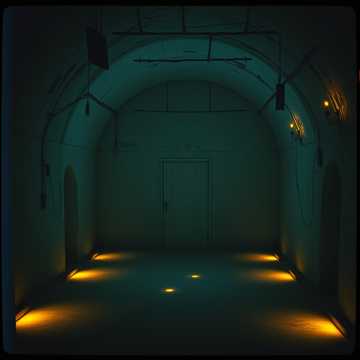
O Telefone da Agonia
moda de viola · sertanejo · 3:02
Lyrics
[Intro]
(Fast and repetitive Viola notes, sounding like an old telephone ringing)
(Tension building up)

[Verse 1]
(Male Voice 1 - Low, Calm, Cynical)
Era dia trinta de outubro, eu queria o meu café
Mas o telefone grita, quem será o "bicho-de-pé"?
Atendi contrariado, já prevendo a amolação
Era a voz do primo Carlos, tremendo de aflição

[Verse 2]
(Male Voice 2 - High, Fast, Desperate)
Alô, Borges! Me acuda! É o fim da minha vida!
A casa da Rua Garay tá com a sorte decidida!
Os doutores Zunino e Zungri, aquela gente maldita
Vão derrubar o sobrado pra ampliar a confeitaria!

[Pre-Chorus]
(Male Voice 1 - Calm)
Calma, homem, respira, isso é coisa do progresso
Muda pra um apartamento, larga mão desse excesso
Toda casa velha cai, é a lei da construção...

[Chorus]
(Male Voice 2 - Screaming, Hysterical)
Você não entende nada! Não é tijolo e chão!
Eu não ligo pra varanda, nem pra sala de jantar
O problema é o porão! O que eu tenho guardado lá!
Se a picareta bater, se a parede desabar
Eu perco a minha alma, eu paro de respirar!

[Interlude]
(Dramatic silence)
(Viola stops)

[Bridge]
(Male Voice 1 - Spoken)
Mas o que tem nesse porão? Ouro, prata ou vinho bom?

(Male Voice 2 - Whispering building to ecstasy)
Borges, cê num acredita, cê vai achar que é invenção...
Lá embaixo, no escuro, no degrau dezenove
Tem uma coisa sagrada que o homem nem se atreve...
É o Aleph, meu primo! O Aleph tá lá no chão!

[Verse 3]
(Male Voice 2 - Intense)
É o lugar onde estão todos os lugares do sertão
Onde o mundo todo cabe, sem perder a dimensão!
O universo inteiro, Borges, num pontinho de luz
Se a casa cair agora, apaga a minha cruz!

[Outro]
(Fast Tempo)
Você tem que vir agora! Vem correndo, vem ligeiro!
Antes que a Zunino e Zungri destruam o mundo inteiro!
(Abrupt cut)
(Silence)
Composer Notes
This is a moda de viola — a traditional Brazilian storytelling form built on the viola caipira, the instrument I grew up hearing at fazenda parties in Rondônia — staging a specific scene from Borges's "The Aleph": the phone call. Carlos Argentino Daneri rings his cousin Borges in a panic because the house on Calle Garay is to be demolished. His distress is not about the bricks. It is about the basement — specifically step nineteen, where the Aleph exists: a small iridescent sphere roughly two to three centimeters in diameter, containing all points of space simultaneously, observed from every angle at once, with no overlapping or transparency. Lose the house, lose the Aleph. Lose the Aleph, lose the source.
I chose the moda de viola deliberately, and not only for biographical reasons. The form has an ancestral relationship with long narrative and with the kind of story that demands dramatic weight without affectation — the causos told at a certain tempo, where the singer takes the situation seriously while the audience can see it is also absurd. What the Suno produced matched: the viola opens mimicking an old telephone ringing, the two-voice structure (one calm, one hysterical) lands exactly where the story needs it. The outro — "Antes que a Zunino e Zungri destruam o mundo inteiro!" — is genuinely funny and genuinely tragic at the same time, which is the only honest register for this material.
What interests me in Carlos Argentino is not his mediocrity but his dependency. He has access to the Aleph — to the literal infinite, to all places at all times — and what he produces with it is fifteen thousand verses about Australian cattle corrals and a gas meter in Vera Cruz. Unlimited access does not solve the problem of judgment. I think about this when people argue that more data or more compute resolves the question of discernment in AI systems. It does not. That is not where the problem lives. The Aleph gives you everything; it does not tell you what to do with everything. Carlos is a case study in the wrong aperture — he has the window, and he uses it to write a poem about a decaying sheep carcass, proud of the word "whitish-celestial."
For English readers: the lyrics are in Portuguese, split between two male voices. Voice One is Borges — low, calm, mildly cynical. Voice Two is Carlos — high, fast, desperate. The Aleph is introduced in a whisper that builds to something close to ecstasy: "É o Aleph, meu primo! O Aleph tá lá no chão!" The song cuts abruptly at the end, mid-sentence, which is Borges's narrative posture throughout — the story never fully resolves whether the Aleph in the basement was real or whether Borges saw what he says he saw.